
PPC strategy is not an art project, yet we continue to see brand leads treat it like one. The hard truth is that your aesthetic preferences do not matter to the Google Ads auction or the TikTok algorithm; only the conversion data does. If your strategy prioritizes 'brand feel' over proven performance data, you aren't marketing—you're subsidizing a vanity project that will eventually bankrupt your customer acquisition cost (CAC).
TL;DR
- Data over Dogma: Ignoring performance metrics in favor of personal creative preference is the fastest way to tank PPC effectiveness.
- The Kadi Warning: Recent insights from Dean Kadi highlight how client interference in data-backed strategies leads to immediate ROI decay.
- Algorithmic Reality: Modern platforms like TikTok and Meta reward engagement signals that often contradict traditional brand guidelines.
- The Fix: Establish a 'Data First' governance model where creative is the variable and performance is the constant.
The Dean Kadi Lesson: When Clients Override the Math
In a recent industry discussion reported by Search Engine Land in May 2026, PPC expert Dean Kadi shared a sobering account of a client who chose to ignore performance data in favor of a subjective creative direction [S1]. The results were predictable: a sharp decline in ad effectiveness and a spike in wasted spend. This isn't an isolated incident; it's a systemic friction point between agencies and brand leads.
We see this most often in the 'creative veto.' An agency identifies a high-performing ad variant—perhaps a lo-fi, user-generated-style video that is crushing it on TikTok. The client, however, feels it doesn't 'look premium enough' and insists on replacing it with high-production-value cinematic spots. The data says the lo-fi ad has a 4.2% click-through rate (CTR) and a $12 CPA. The cinematic spot, once launched, drags the CTR down to 0.8% and triples the CPA.
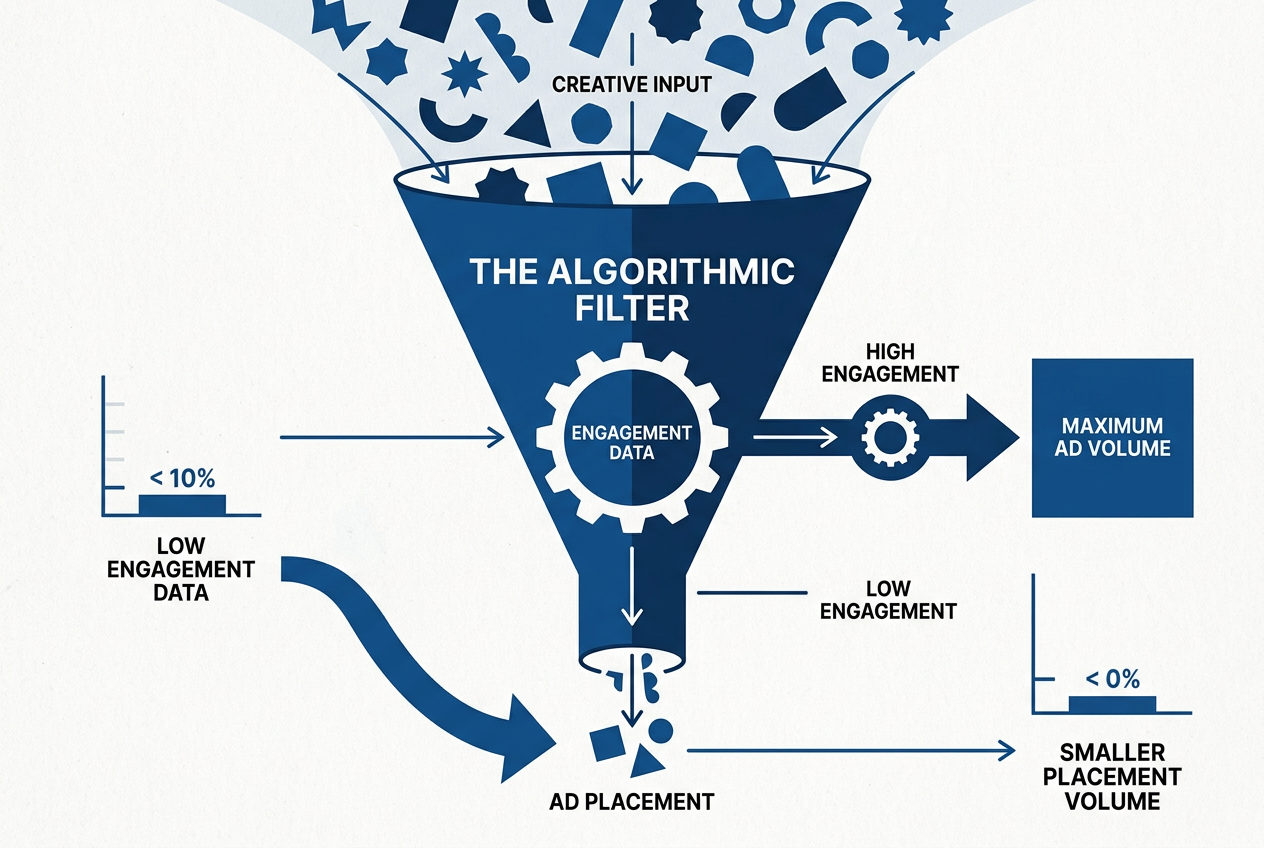
Kadi’s experience highlights that the risk of ignoring performance data isn't just about missing targets; it's about actively sabotaging the machine learning models that power modern PPC. When you force an underperforming creative into the auction, you signal to the platform that your content is irrelevant to the audience, leading to lower quality scores and higher floor bids. You aren't just paying for the ad; you're paying a 'vanity tax' imposed by the algorithm.
The Algorithmic Bias and the 'Lizzo Effect'
Understanding performance data also means understanding the biases of the platforms we use. In May 2026, Lizzo publicly challenged what she termed 'fat-phobic' algorithms [S2]. While this speaks to a broader social issue, for the PPC strategist, it underscores a critical technical reality: algorithms have built-in preferences based on historical engagement data.
If you ignore the data telling you that certain creative styles or audience segments are being throttled or boosted, you are fighting the platform rather than using it. Data-driven strategies require us to look at the 'why' behind the numbers. If the data shows a specific demographic is responding to a specific visual hook, a strategist's job is to lean into that signal, even if it feels counter-intuitive to the original brand deck.
Consider the rise of Australian agency Social Direct, which has established itself by focusing on hyper-local data signals to drive performance [S3]. They don't guess what the Australian consumer wants; they let the real-time feedback loops of the ad platforms dictate the creative evolution. This is the difference between a static PPC strategy and a dynamic one. The former is a document; the latter is a living process.
TikTok and the High Cost of 'Polished' Content
TikTok remains the most volatile and data-sensitive platform in the 2026 landscape. Per recent guides on TikTok's ecosystem [S4], the platform's 'For You' page is a brutal meritocracy. Unlike search, where intent is clear, social PPC relies on catching a fleeting moment of attention.
When we look at how much TikTok pays creators and how brands are seeing returns [S5], the common thread is authenticity. Brands that try to force traditional TV-style commercials into the feed are seeing their performance data crater. Influencer Marketing Hub's 2026 benchmarks suggest that 'brand-heavy' content sees a 40% higher skip rate than creator-led content.
If your PPC strategy involves ignoring these skip rates because you want to maintain a certain 'prestige' look, you are effectively burning cash. The performance data is telling you that the audience rejects your format. To ignore that is to fail at the fundamental task of media buying: reaching the customer where they are, in the way they want to be reached.
The Counterargument: Is Data Killing Brand Equity?
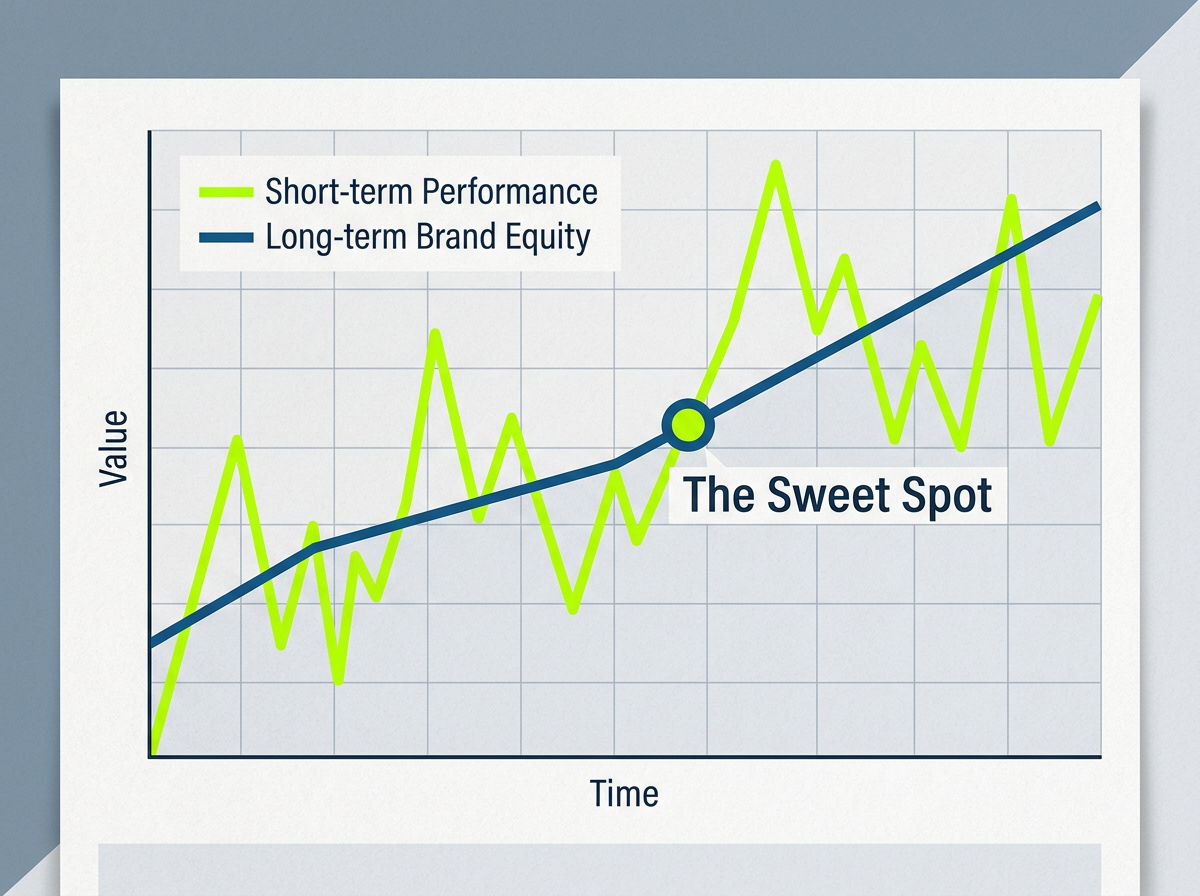
The most common defense for ignoring performance data is the 'long-term brand' argument. Strategists argue that if we only follow the data, we end up with 'bottom-of-the-barrel' creative that erodes brand equity over time. They fear a 'race to the bottom' where every ad looks like a cheap infomercial because that's what gets the clicks.
This is a false dichotomy. High-performing ads don't have to be 'ugly'; they just have to be effective. The strongest brand equity is built through consistent, positive interactions with a product. If your 'premium' ad never reaches the customer because the algorithm buried it for low engagement, it isn't building any equity at all.
True data-driven PPC strategy uses performance data to inform brand evolution, not to replace it. If the data shows that users engage more with behind-the-scenes content, the brand should find a way to make 'behind-the-scenes' look and feel like their brand. You adapt the brand to the data, not the other way around.
Implementing a Data-First Governance Model
To avoid the pitfalls Dean Kadi described, you need a framework that removes subjectivity from the decision-making process. Here is how you should restructure your PPC workflow tomorrow:
- The 72-Hour Rule: No creative is paused or promoted based on 'vibes' within the first 72 hours of a campaign. Let the statistical significance build.
- Kill Your Darlings: If a creative asset has a CPA 20% above the account average after a specific spend threshold (usually 3x the target CPA), it is cut. No exceptions for how much it cost to produce.
- The 'Why' Audit: Every month, analyze your top 5 and bottom 5 performers. Identify the commonalities. Is it the hook? The color palette? The CTA? Use these to build your next creative brief.
- Platform-Specific Benchmarking: Stop comparing TikTok CTRs to Google Search CTRs. Use platform-specific performance data to judge ad effectiveness.
How to audit your Google Ads quality score
What Happens Next: The Falsifiable Prediction
By the end of 2026, we will see a massive consolidation in the agency space. The 'creative-first' shops that refuse to integrate deep data science into their PPC strategy will lose their mid-market clients to automation-heavy, data-led firms.
I predict that by Q4 2026, Meta and Google will introduce 'Hard Performance' modes for their automated bidding—settings that will effectively bypass manual creative overrides if they don't meet engagement thresholds. If you haven't trained your clients to trust the data now, the platforms will eventually take that choice away from you entirely. Don't wait for the machine to force your hand; start trusting the numbers today.
FAQ