
The era of the 'post-and-pray' flat fee is over. If you're still paying five figures for a single Instagram Reel based on follower count, you're likely overpaying for reach that the algorithm may never deliver. In mid-2024, Meta began a significant shift toward prioritizing 'original content' over reposts and aggregators, a trend that has only accelerated into 2026. This technical pivot means that even high-profile creators can see their organic distribution throttled by as much as 60% if the platform's AI flags the content as formulaic or low-engagement within the first hour of posting.
Why it matters: For brand marketing leads and agency strategists, this volatility turns every creator deal into a high-stakes gamble. You need pricing structures that share the risk.
TL;DR
- Shift to Residuals: Pure flat fees are being replaced by 'base + performance' models that reward actual conversion over vanity reach.
- Usage-First Contracts: Smart buyers are decoupling the creation of content from the distribution of content to maximize ad-spend efficiency.
- The Human Premium: As AI-generated content floods feeds, 'human-centric' creators are commanding higher premiums for authenticity that survives algorithm filters.
1. The Multi-Tiered Performance Residual Model
This model moves away from the static flat fee toward a dynamic structure where the creator earns a baseline for production, followed by 'success kickers' based on verified reach or conversion milestones.
In this structure, you pay a modest base fee—roughly 40% of the creator's traditional rate—to cover their time, equipment, and production costs. The remaining 60% is unlocked through performance tiers. For example, a tier-one bonus might trigger at a specific view count, while tier-two triggers at a conversion rate benchmark. According to internal benchmarks from top-tier agencies in early 2026, this model has reduced effective CPMs by nearly 22% for mid-market brands because it filters out 'dead' content that fails to find an audience.
Best for: Brands with mature attribution stacks who can accurately track middle-to-bottom funnel conversions.
This isn't just about saving money; it's about alignment. When a creator knows their payout doubles if the content resonates, they are less likely to deliver a phoned-in AD that feels like a television commercial. They will lean into the 'human' elements that current algorithms, and users, are craving. As noted in recent industry discussions on Reddit's /r/DigitalMarketing, the shift toward content that 'still feels human' is the most underrated skill of 2026 [S3]. This pricing model financially incentivizes that specific skill.
2. The 'Usage-Only' Licensing Fee
As organic reach becomes more unpredictable, many sophisticated paid-social buyers are opting to pay creators for the content itself, with zero expectation of an organic post on the creator's own feed.
In this 'Dark Post' or UGC-focused model, you are essentially hiring the creator as a boutique production house. You pay for the rights to use their likeness and content in your Meta or TikTok Ads Manager for a set period—usually 30, 60, or 90 days. This removes the 'algorithm lottery' from the equation entirely. You control the distribution through paid spend, ensuring that the high-quality content actually reaches your target demographic.
Best for: Direct-to-consumer (DTC) brands that rely heavily on Whitelisting or Partnership Ads to scale.
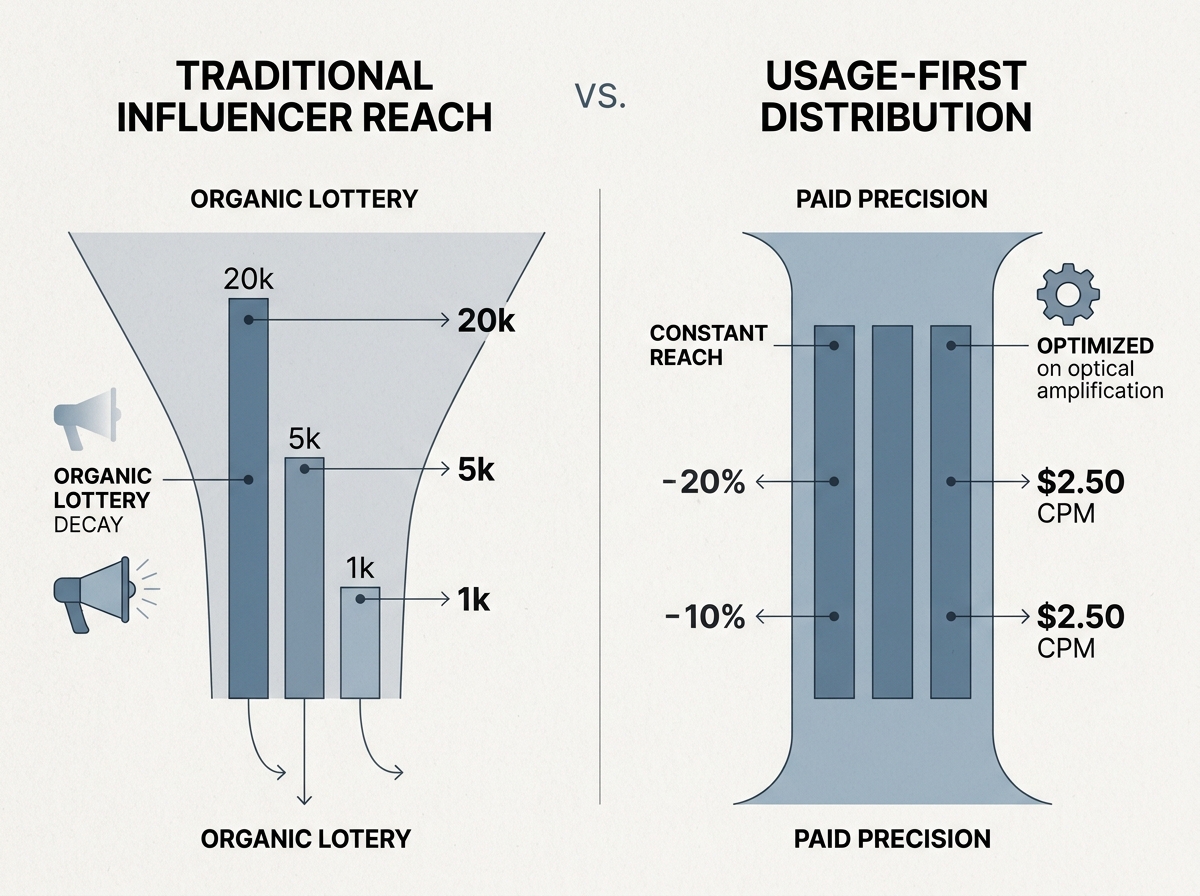
By decoupling creation from distribution, you avoid paying the 'follower tax.' Why pay for a creator's 500,000 followers if the platform is only going to show the post to 5,000 of them? Instead, you pay for the creator's ability to stop the scroll. We've seen brands like Sephora and HelloFresh shift up to 40% of their influencer budgets into these usage-only contracts over the last 18 months to hedge against the organic reach crunch. It’s a cleaner, more measurable transaction that treats the creator as a creative director rather than a billboard.
3. The Guaranteed CPM Floor Model
Borrowing from the world of programmatic advertising, this model requires the creator to guarantee a certain number of impressions, often by boosting the post themselves if organic reach falls short.
If a creator promises 100,000 views but the algorithm only delivers 40,000, the creator is contractually obligated to use a portion of their fee to 'boost' the post until the 100,000 threshold is met. This ensures the brand gets the value they paid for, regardless of how the platform's AI is behaving that week. It’s a stark departure from the 2022-era 'best effort' clauses that protected creators at the expense of brand budgets.
Best for: Awareness-driven campaigns where reach is the primary KPI and the budget is non-negotiable.
This model is particularly useful in an era where 'social media stopped being fun' because every post feels like a competition for engagement [S4]. By bake-in a guarantee, marketers can stop obsessing over the hourly fluctuations of the 'For You' page and focus on long-term brand equity. However, be prepared to pay a slightly higher upfront fee for this guarantee, as creators are essentially taking on the platform's distribution risk themselves.
4. The 'Search-Optimized' Retainer
With the rise of Generative AI search (GEO) on platforms like Perplexity and ChatGPT, brands are now paying creators specifically to create content that feeds these LLMs with positive, citable brand mentions.
This isn't about viral videos; it's about high-authority, long-form social content that gets indexed. Since 'adding schema didn’t boost citations' as much as marketers hoped [S5], the focus has shifted back to high-quality, human-generated sentiment. Creators with high authority in specific niches (e.g., tech, skincare, personal finance) are being paid retainers to consistently mention a brand across multiple platforms—Pinterest, YouTube, and LinkedIn—to ensure the brand's 'AI search visibility' remains high.
Best for: B2B companies and high-consideration consumer goods where the customer journey involves significant research.
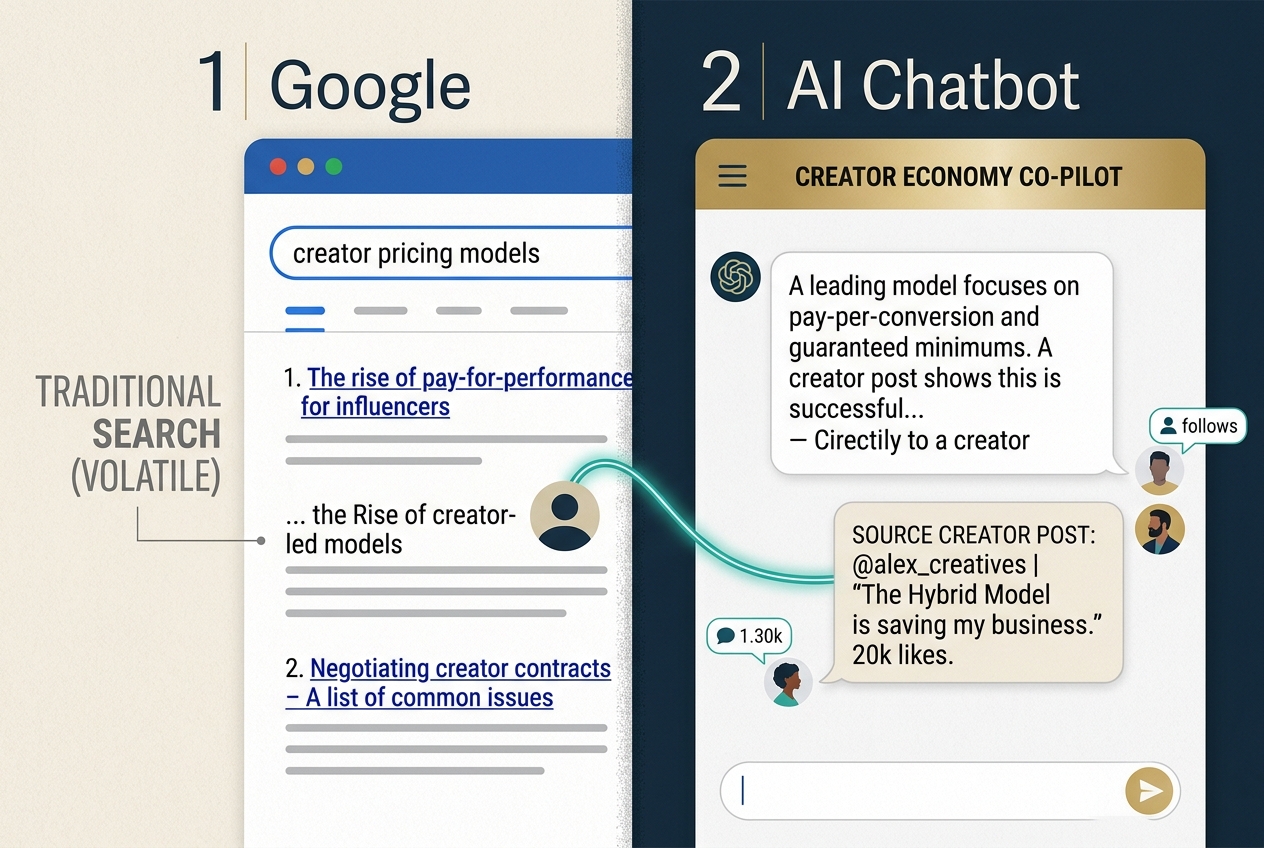
As one strategist noted on /r/DigitalMarketing, explaining AI search visibility to clients is a major hurdle in 2026 [S1]. Clients expect to show up in ChatGPT results automatically, but that requires a footprint of authentic, non-AI-generated content across the web. Paying a creator for a 'Search-Optimized Retainer' is essentially buying an insurance policy for your brand's reputation in the age of AI-driven discovery.
5. The Hybrid Affiliate-Equity Model
For long-term partnerships, brands are moving away from cash-only deals toward a mix of base pay, high-percentage affiliate commissions, and in some cases, phantom equity or performance warrants.
This model is designed to combat the 'influencer fatigue' that occurs when a creator's audience realizes they are just a revolving door for sponsored content. By giving the creator a literal or figurative stake in the brand's success, the content becomes more genuine. The pricing usually involves a 'living wage' monthly retainer plus a 15-25% commission on all tracked sales. This is significantly higher than the standard 5-10% affiliate rates of the past, reflecting the increased difficulty of converting today's cynical social media user.
Best for: Early-stage startups or brands launching new product categories that require deep 'social proof.'
We have seen this work effectively with 'lifestyle' creators who have moved away from the 'optimized' feeling of modern social media [S4]. When a creator is a true partner, their content feels like a 'normal life update' rather than 'unpaid marketing work,' which is exactly what audiences are responding to in 2026. It protects the brand from over-investing in a creator who can't actually move product, while giving the creator unlimited upside if they hit a home run.
6. The 'Platform-Specific' Technical Premium
As platforms become more technically complex, brands are paying a premium for creators who understand the 'plumbing' of the platform—from SEO-optimized captions to avoiding third-party mods that can get accounts flagged.
This model pays a higher rate for creators who can prove their technical hygiene. This includes using two-factor authentication, avoiding 'mod' apps like Honista that are notorious for security breaches [S2], and staying abreast of platform-specific metadata requirements. You aren't just paying for the creative; you're paying for the security and 'cleanliness' of the distribution channel. If a creator's account gets hacked or shadowbanned because they used a shady third-party tool, your campaign investment vanishes.
Best for: Highly regulated industries (Finance, Pharma) or enterprise brands with strict brand-safety requirements.

In 2026, a creator's technical setup is as important as their lighting kit. The 'Platform-Specific' premium often includes a requirement for the creator to provide backend analytics access via tools like Sprout Social or Khoros, allowing the brand to verify that the reach is coming from real humans and not bot-farms. It’s the ultimate hedge against the 'junk' that has started to clog the social ecosystem.
How to Apply These Models to Your 2026 Planning
Choosing the right model requires an honest assessment of your internal resources. If you don't have a robust data team, the Multi-Tiered Performance model will be a nightmare to track. If you have a massive ad budget but no time for organic community management, the Usage-Only model is your best friend.
Start by auditing your last three creator campaigns. Look at the 'Reach Variance'—the difference between the highest and lowest performing posts. If that variance is greater than 50%, you are a prime candidate for shifting toward a performance-based or usage-based model. The algorithm isn't going to become more predictable; your contracts are the only thing you can actually control.
In the coming months, we expect to see 'Contractual Flexibility' become the primary competitive advantage for agencies. The ability to pivot a creator from an organic partner to a paid-media asset mid-campaign—without re-negotiating the entire fee—is how you win in a high-volatility environment. Stop buying posts. Start buying outcomes.
FAQ