
The era of the 'post-and-pray' flat fee has officially ended. In mid-2026, the industry is witnessing a violent correction in how brands value creator partnerships. For years, pricing was a finger-in-the-wind exercise based on follower counts or arbitrary CPMs. But as platform-native commerce—led by TikTok Shop's aggressive expansion and Amazon's creator-integrated storefronts—matures, the math has changed. Brands are no longer paying for potential reach; they are paying for measurable conversion and high-utility creative assets.
Why it matters: If you are still using 2024 rate cards, you are either overpaying for ghost reach or losing top-tier talent to competitors who offer performance-linked upside. The shift toward TikTok Symphony and Dreamina Seedance 2.0 [S3] has automated the creative production floor, forcing human creators to move up the value chain toward authentic conversion or specialized usage rights.
TL;DR
- Flat fees are shrinking: Base rates have dropped 15–20% as brands shift budget toward performance bonuses.
- The 'Usage-Only' surge: Brands now frequently pay for the content without the post, treating creators as outsourced production houses for Spark Ads.
- TikTok Shop is the benchmark: Commission-only or low-base + high-commission structures are the new standard for CPG and beauty brands.
- Equity-Lite is the new retention tool: Long-term ambassadors are trading cash for phantom equity or profit-sharing to avoid 'algorithm anxiety' [S1].
1. The Performance-Plus Model: High Floor, Higher Ceiling
The most prevalent model in 2026 for mid-market and enterprise brands is the Performance-Plus structure. Unlike the binary 'paid vs. affiliate' choice of the past, this model guarantees a respectable base fee (covering production costs and a baseline reach) but ties 40–60% of the total potential payout to specific KPIs like Click-Through Rate (CTR) or ROAS within the first 30 days.
According to internal agency benchmarks from Q1 2026, creators with 100k–500k followers are seeing base fees of $2,500 to $4,500, with 'kickers' of $500 for every 0.5% increase in CTR above a baseline. This shifts the risk from the brand to the creator's ability to drive action. It also filters out creators who have inflated their follower counts through bot-heavy engagement, a persistent issue on platforms like Instagram where 'hidden' or low-quality content still plagues the feed [S2].
Best for: Established CPG brands looking for predictable volume with an incentive for high-quality creative.
2. Equity-Lite: The Anti-Burnout Hedge
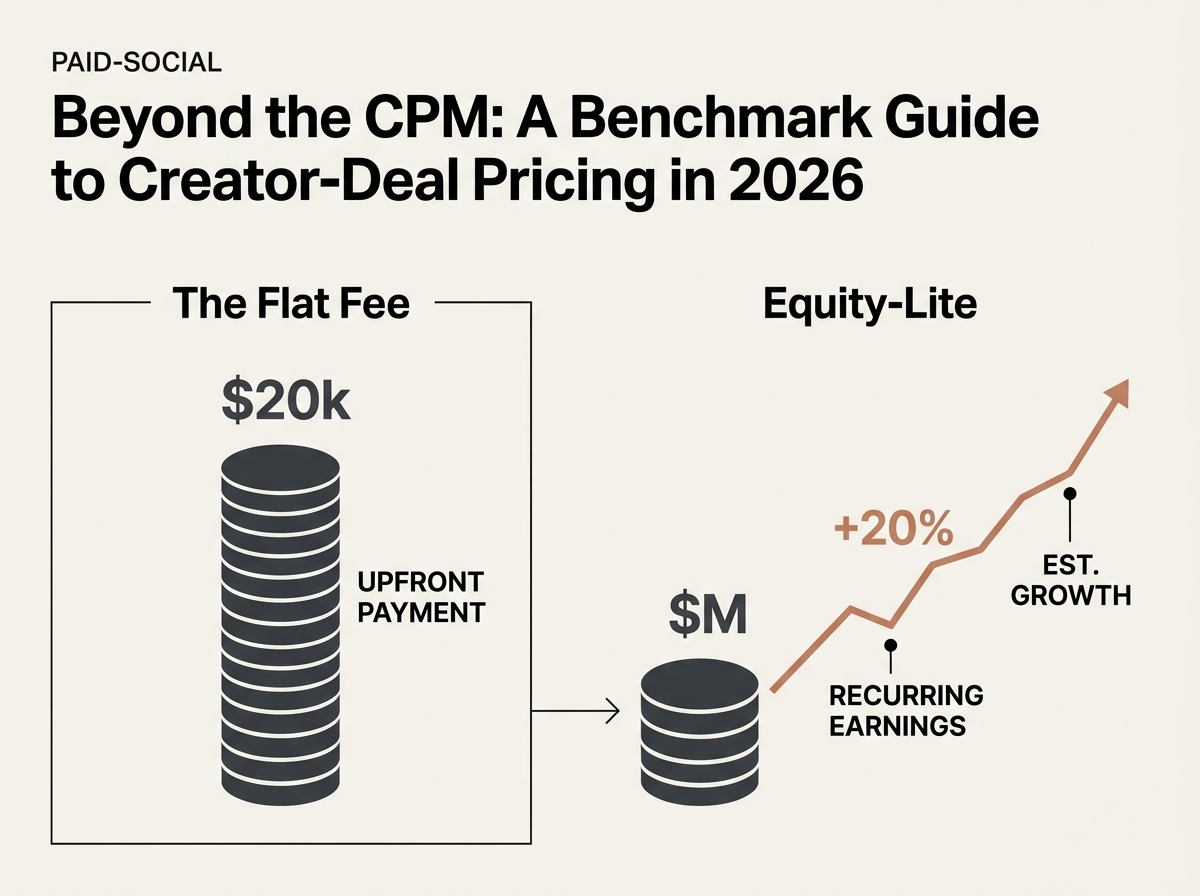
We are seeing a rise in 'Equity-Lite' deals, particularly among creators who are vocal about the mental tax of the constant content treadmill [S1]. In this model, instead of a $50,000 one-off campaign, a creator takes a $10,000 retainer plus a 1-2% share of the specific product line's net profit for 12 months. This provides the creator with financial stability that isn't tied to the daily performance of a single post.
For brands, this creates true alignment. The creator is no longer just a billboard; they are a stakeholder. Data from the May 2026 TikTok Shop Creator Awards [S4] suggests that creators on long-term profit-sharing deals have a 35% higher retention rate for the brands they represent compared to those on transactional flat-fee contracts. It solves the 'Tuesday post' anxiety by focusing on the annual brand health rather than the 24-hour engagement window.
Best for: Direct-to-consumer (DTC) startups and heritage brands launching new sub-brands.
3. Usage-Only: Content Without the Distribution
One of the biggest shifts in 2026 is the de-coupling of 'creator as a personality' from 'creator as a producer.' In a Usage-Only deal, the brand pays the creator to produce 3–5 high-quality vertical videos for the brand's own social channels or paid ad spend. The creator never posts the content to their own feed.
This model has gained massive traction due to the evolution of AI-driven creative tools like TikTok Symphony [S3]. Brands use these tools to iterate on creator-led footage, creating thousands of variations for different audience segments. Current market rates for 'Usage-Only' content hover around $800–$1,500 per asset for high-quality UGC-style production, including 12 months of paid media rights. It’s a clean transaction: the brand gets the 'vibe' of a creator without paying the premium for their audience access.
Best for: Performance marketing teams who need high-volume creative for Meta Advantage+ or TikTok Spark Ads.
4. Hybrid-Affiliate: The TikTok Shop Standard
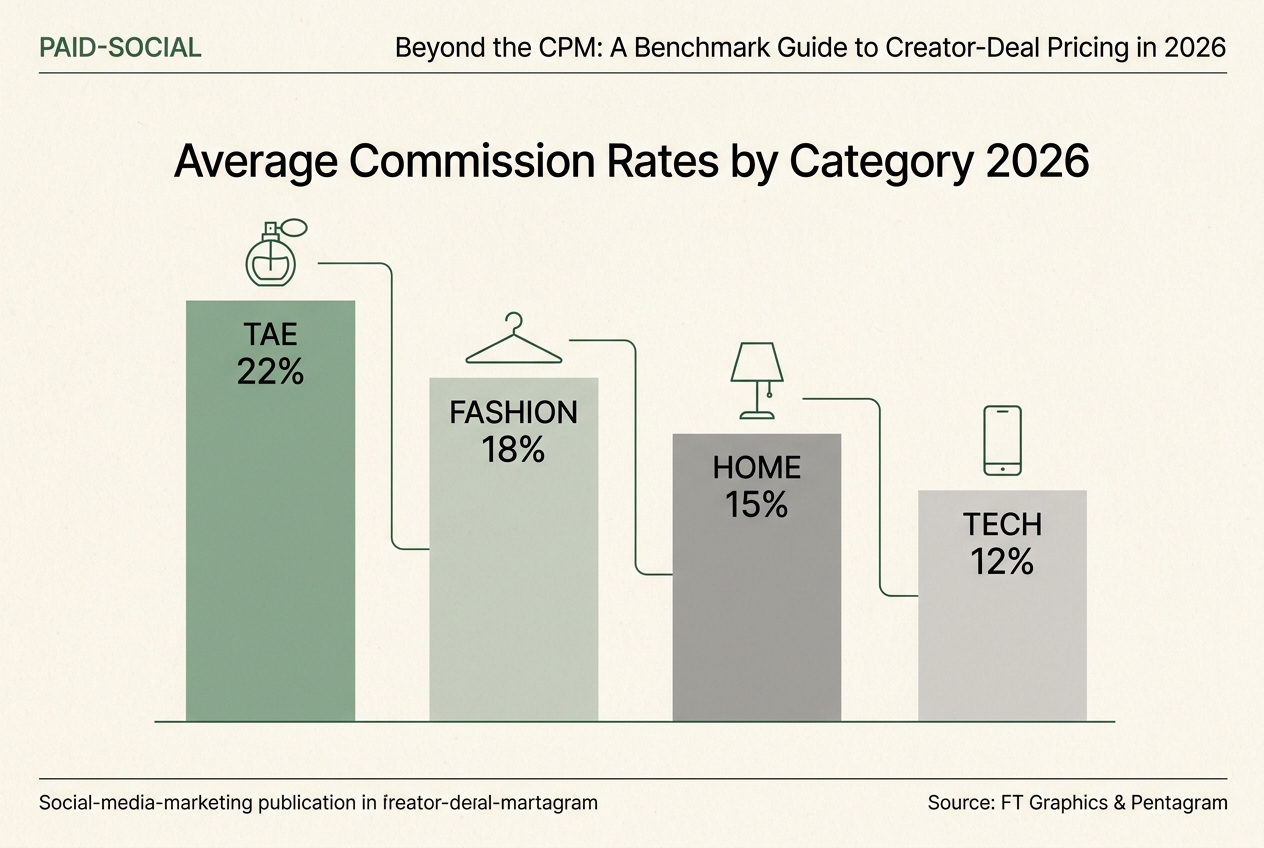
TikTok Shop has fundamentally rewritten the rules for beauty and fashion pricing. The Hybrid-Affiliate model combines a small 'gift' or 'production stipend' ($200–$500) with a significantly higher-than-average commission rate (15–25%). Before 2025, a 10% commission was standard; now, to get top-tier creators to prioritize your product in their 'Showcase,' you have to pay for the real estate.
Since Meta updated its Family Center and provided more transparency into Instagram's algorithm [S5], we've seen Instagram try to mirror this by integrating more seamless shop-tagging features. However, TikTok Shop still leads in conversion efficiency. Brands are finding that a creator who earns $5,000 in commissions is 4x more likely to re-post organically than a creator who was paid a $5,000 flat fee. The 'hustle' is baked into the pricing.
Best for: High-margin products (Beauty, Gadgets, Fashion) with strong visual appeal and immediate 'buy' triggers.
5. The 'Whitelisting' Premium: Accessing the Dark Social Funnel
In 2026, 'whitelisting'—now more commonly called 'Creator Licensing'—is no longer an add-on; it's a requirement. Brands are paying a 20–30% premium on top of the base fee to run ads through the creator’s handle. This allows brands to bypass the 'Ad' fatigue that users feel when seeing brand-owned content.
Benchmarks show that ads run through a creator's handle have a 40% lower Cost Per Acquisition (CPA) than identical creative run through a brand page. As a result, creators are now pricing their 'identity' separately from their 'production.' If you want to use their handle for 30 days, expect to pay a flat fee of $1,000–$3,000 purely for the handle access, regardless of who produced the video.
Best for: Brands with high customer acquisition costs (FinTech, SaaS, Insurance) looking to build trust through third-party validation.
6. The 'Live-Stream' Hourly: The QVC-ification of Social
Live commerce is no longer a niche experiment. Inspired by the success of the 2026 TikTok Shop Creator Awards winners [S4], brands are hiring creators for 'Live Residencies.' This pricing is strictly hourly, mirroring traditional broadcast talent.
Standard rates for a 'conversion-tier' live streamer (those who can maintain >1,000 CCV) range from $500 to $2,000 per hour. Most contracts now include a 'sales floor'—if the creator doesn't hit a certain GMV (Gross Merchandise Volume), their hourly rate for future sessions is adjusted. It is the most cut-throat pricing model in the industry, but for brands like Estée Lauder or Samsung, a single two-hour session can generate more revenue than a month of static posts.
Best for: Big-box retailers and electronics brands during peak shopping holidays (Black Friday, 6.18, Prime Day).
7. The Multi-Platform 'Bundle' (With a Platform Discount)
Smart agencies are now negotiating platform-specific discounts. Because the Instagram algorithm and TikTok algorithm prioritize different signals—Meta is leaning into teen supervision and 'safe' content [S5] while TikTok doubles down on raw commerce—creators are often better at one than the other.
Instead of paying a flat $10,000 for a cross-platform post, brands are paying $7,000 for the 'primary' platform and a $1,500 'add-on' for the secondary. This reflects the reality that 'reposting' a TikTok to Reels often results in lower engagement due to watermark penalties or different audience expectations. The 2026 benchmark for a cross-platform bundle is roughly 1.4x the single-platform rate, down from the 1.8x we saw in 2023.
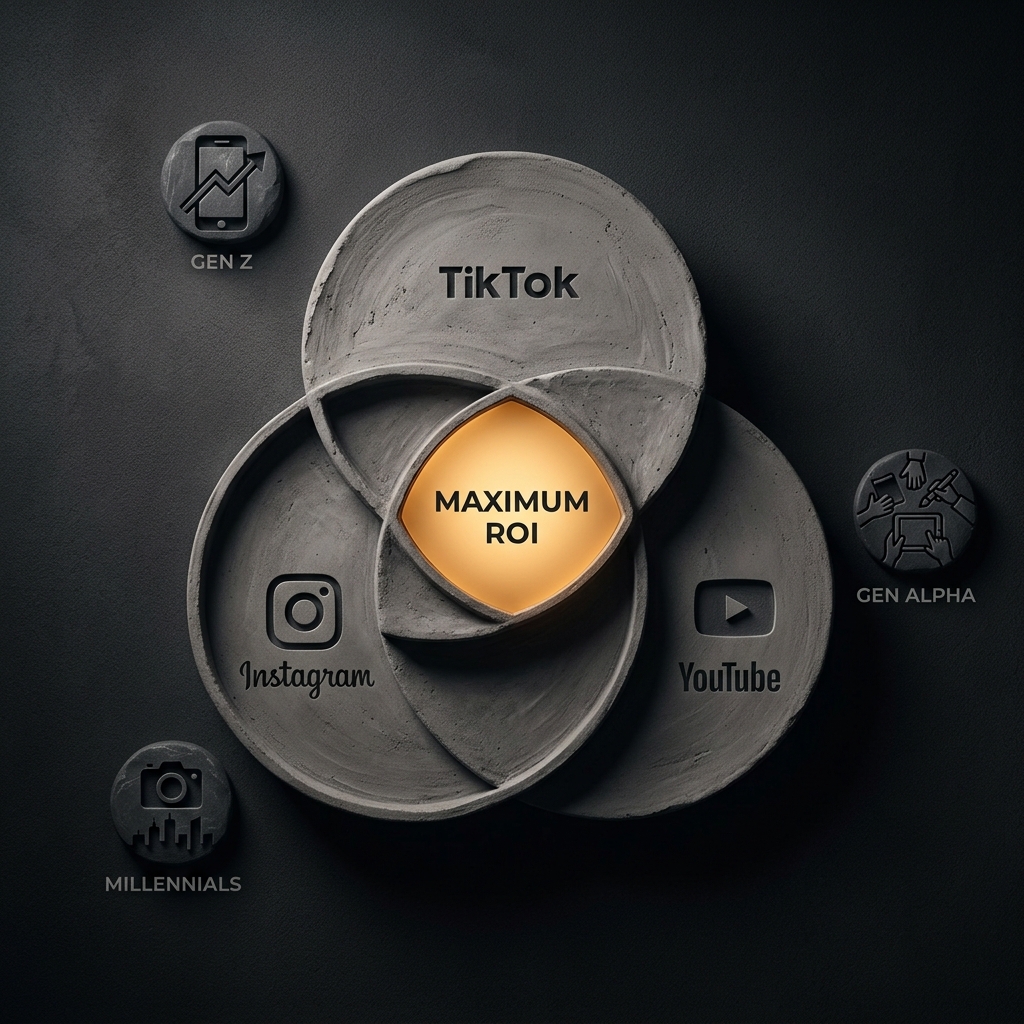
Best for: Brand awareness campaigns that need broad reach across different demographics (Gen Z on TikTok vs. Millennials on Instagram).
How to Apply These Benchmarks Tomorrow
To stay competitive in this shifting landscape, your first step is to audit your existing creator contracts. If more than 80% of your budget is tied up in flat-fee 'guaranteed' posts, you are likely over-indexed on reach and under-indexed on ROI.
Start by moving 20% of your creator budget into a 'Performance-Plus' pilot. Offer your top-performing creators a lower base but a significantly higher upside based on trackable sales or high-intent traffic. Use tools like TikTok's Symphony [S3] to help creators optimize their creative for your specific audience, reducing their production burden while increasing your conversion odds. Finally, address the human element: as creators look for 'normal' work-life balance [S1], offering longer-term, lower-stress retainers can help you lock in top talent at a more favorable rate than one-off, high-stress campaign spikes.
The market has moved from 'influence' to 'infrastructure.' The brands that win in 2026 won't be the ones with the biggest budgets, but the ones with the smartest math.
FAQ