
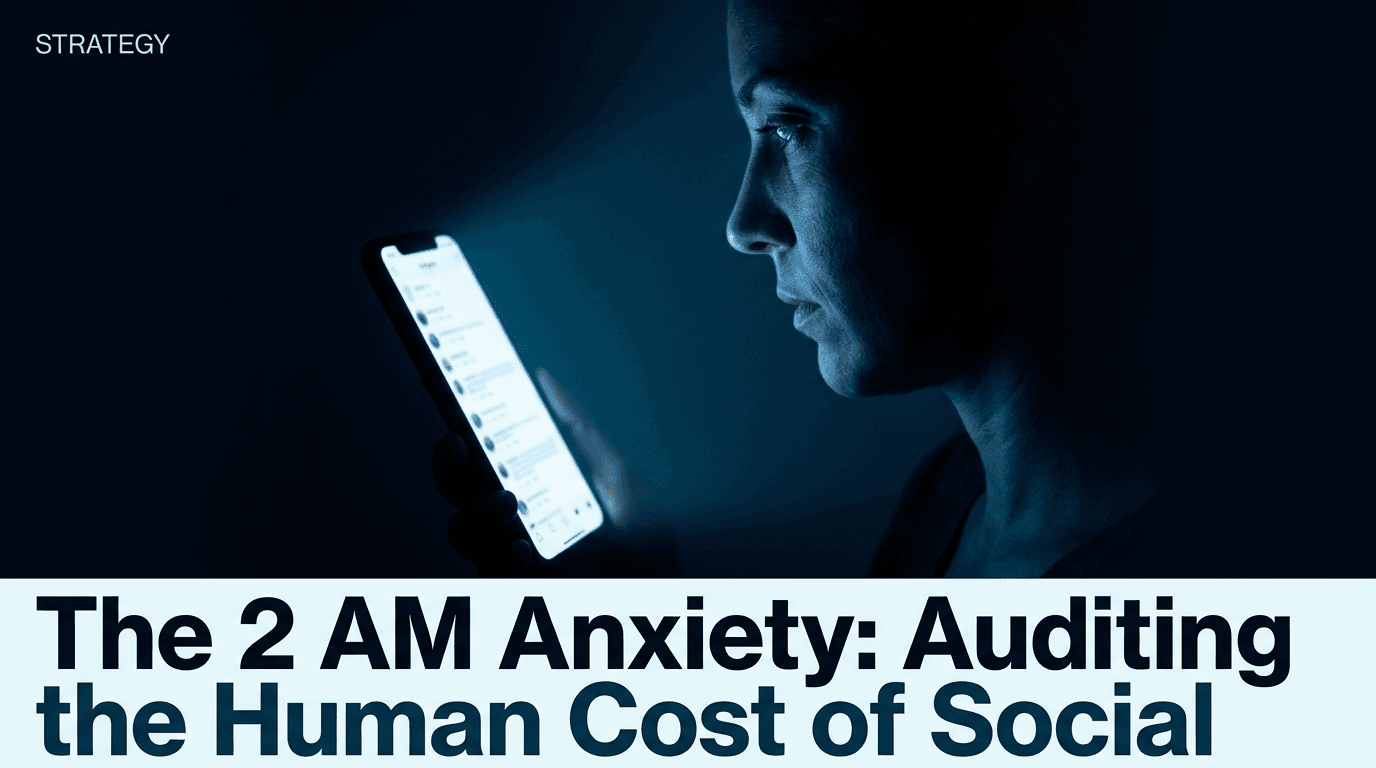
Social media marketing has reached a psychological breaking point where the price of 'staying relevant' now exceeds the value of the output. The industry's obsession with the 24/7 news cycle and algorithmic feeding has created a workforce that is technically employed but emotionally bankrupt. For brands to survive the next era of social, they must stop treating social media managers as infinite content faucets and start auditing the human cost of the calendar.
The phantom mandate of the 2 AM post
In May 2026, a viral thread in a major marketing community social media marketing reddit trends posed a question that resonated with thousands: "Do you guys ever think about just getting a 'normal' job where nobody cares if you post today or not?" The author compared their existence to a friend in accounting whose work doesn't follow them home. In social media, the work isn't just following you home; it's vibrating in your pocket at dinner, screaming for a community management response at midnight, and judging your professional worth based on a volatile engagement metric that changed while you were sleeping.
This isn't just a 'mental health' issue for HR to solve with a meditation app subscription. It is a strategic failure. When your social media manager is operating in a state of perpetual fight-or-flight, the quality of your brand's voice erodes. You stop being creative and start being reactive. You don't build a community; you just survive the day.
According to internal benchmarks from several mid-sized agencies in early 2026, teams with high turnover (defined as staff staying less than 14 months) see a 22% drop in organic reach over time. Why? Because the institutional knowledge of what the audience actually wants is lost every time a burnt-out manager walks out the door. The 'always-on' mandate isn't just exhausting your people; it's making your marketing worse.
Why the current social media team management model is broken
We have built a system that rewards volume over velocity. Platforms like TikTok and Instagram have historically incentivized daily posting, but as we see with the rollout of tools like TikTok Symphony and Dreamina Seedance 2.0 [S3], the focus is shifting toward AI-assisted generation. While these tools promise to 'save time,' they often do the opposite—they increase the expectation of output. If a machine can help you make ten videos, the brand expects twenty.
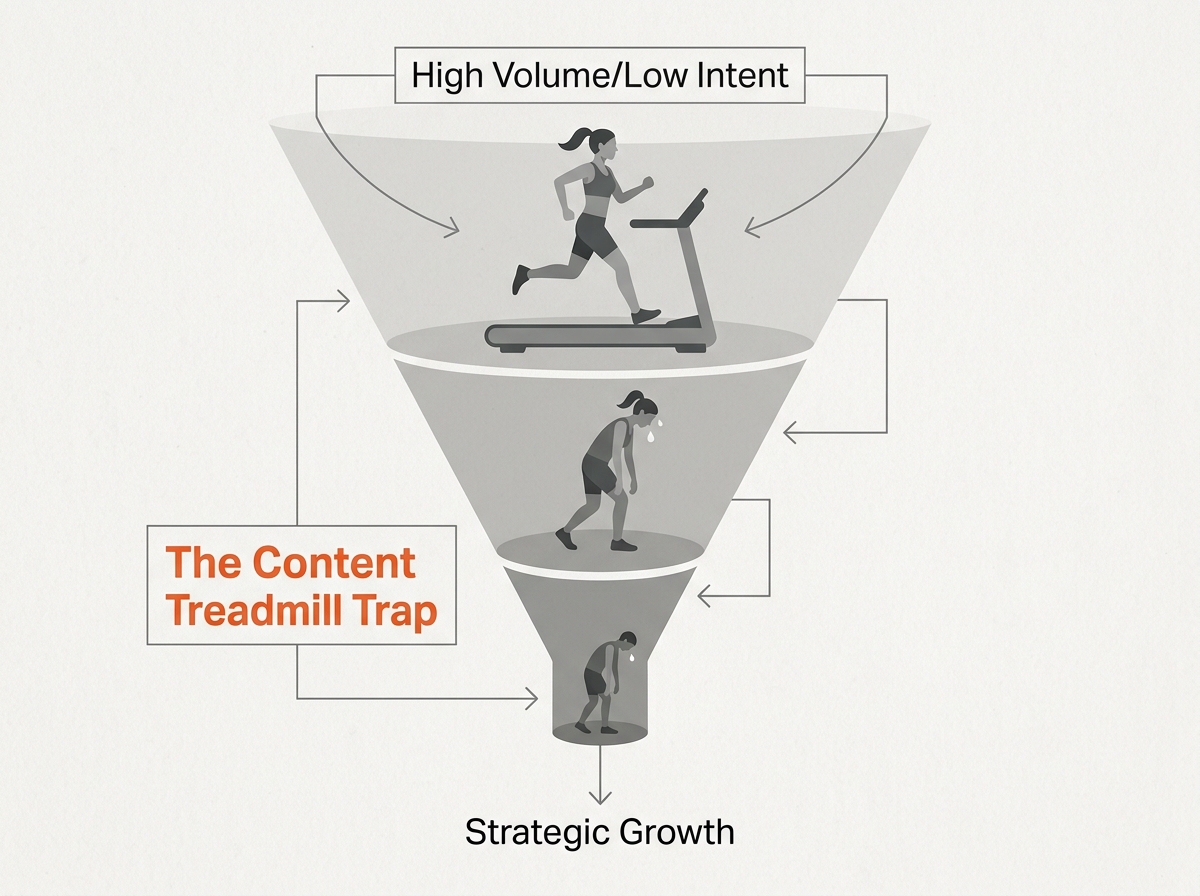
This creates a 'content treadmill' where the social media manager is no longer a strategist but a machine operator. They are managing the prompts, the uploads, the captions, and the inevitable toxic comments. Recent reports in May 2026 [S2] highlight a growing frustration with platform moderation, where users (and by extension, managers) are bombarded with low-quality or inappropriate content despite reporting it. For a professional who spends 8-10 hours a day in these feeds, the cumulative effect of this digital 'sludge' is a unique form of occupational hazard.
Furthermore, the metrics we use to judge these teams are often decoupled from reality. If a post underperforms on a Tuesday, we blame the manager's 'lack of trend awareness' rather than acknowledging that Meta or TikTok may have tweaked a ranking signal that morning. Meta's recent transparency updates in their Family Center [S4] provide some insight into algorithm mechanics, but not enough to justify the level of scrutiny managers face for daily fluctuations.
The strategic shift: Quality-floor vs. Volume-ceiling
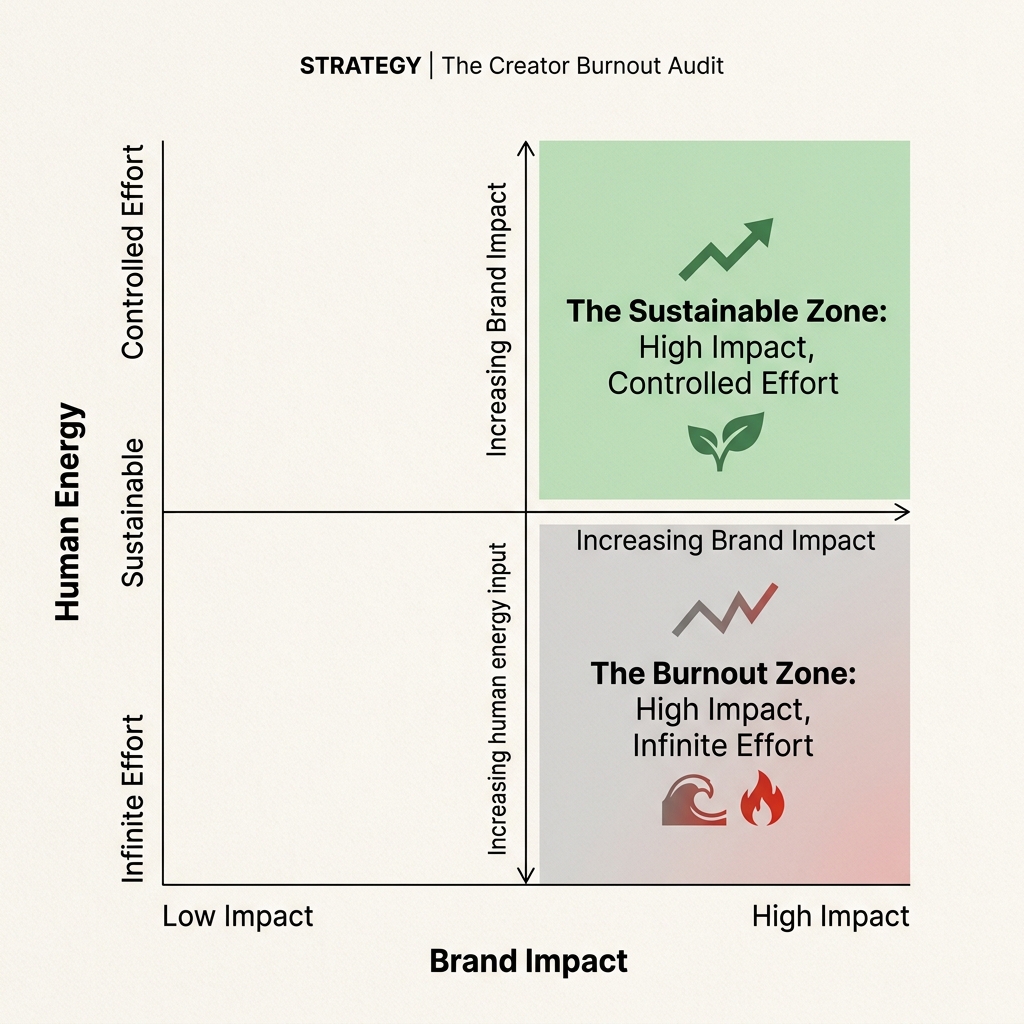
To fix this, we need to move away from the 'Volume-ceiling'—the idea that we should post as much as physically possible—and move toward a 'Quality-floor.' This means establishing a content calendar strategy that prioritizes high-impact, well-researched pieces over the desperate 'we need to stay relevant' filler.
- The 48-Hour Buffer: No post should be created and published on the same day. If your team is living 'hand to mouth' with content, they are one sick day away from a brand blackout. Build a buffer that allows for a 'normal' workflow.
- Metric Decoupling: Judge your social team on weekly or monthly growth trends, not individual post performance. This removes the '2 AM anxiety' of watching a single video fail to gain traction.
- Platform Minimalism: If your team is struggling, stop trying to win on five platforms. It is better to have a vibrant, healthy presence on LinkedIn and Instagram than a dying, automated presence on five different apps.
Refuting the 'Always-On' counterargument
The most common pushback from CMOs is simple: "If we stop posting daily, the algorithm will punish us."
This is a half-truth that hides a deeper misunderstanding of modern social signals. While consistency matters, the 2026 algorithmic landscape—evidenced by TikTok Shop's recent Creator Awards [S5]—increasingly favors 'meaningful interactions' and 'conversion-ready content' over raw frequency. A brand that posts three times a week with high-value, original insight will almost always outperform a brand that posts seven times a week with generic, AI-generated filler.
The algorithm doesn't reward 'effort' or 'attendance'; it rewards retention. Burnt-out managers don't create content that retains people. They create content that fulfills a requirement. If you want to win the feed, you have to give your team the cognitive space to actually think like your customers, not like a content-producing bot.
Implementing the Creator Burnout Audit
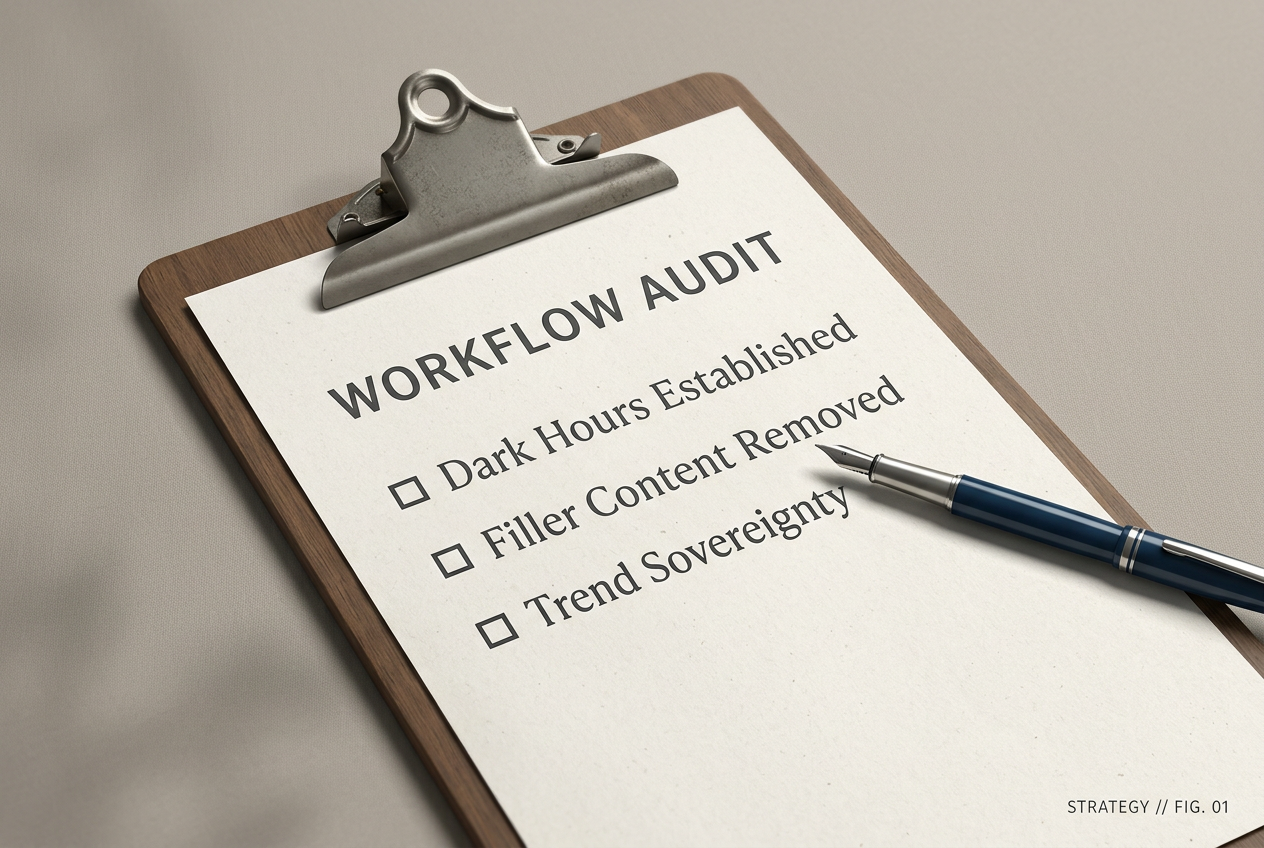
If you are a marketing lead, you need to perform a Burnout Audit this week. This isn't a survey; it's a structural review of your workflow. Ask these three questions:
- Does the team have 'dark hours'? Are there periods (e.g., 7 PM to 8 AM) where internal Slack channels and community management are strictly off-limits?
- What is the 'Filler-to-Feature' ratio? How much of your content calendar exists solely to 'hit a number'? If it's more than 30%, you are wasting money and human capital.
- Is there a 'Red-Line' for trends? Does your team feel pressured to jump on every trending audio, or do they have the agency to say 'this doesn't fit our brand'?
We must stop treating the social media manager as a 24-hour concierge. The 'normal' job described in that viral Reddit thread isn't a pipe dream; it's a requirement for sustainable growth. If your strategy relies on someone checking their phone at 11 PM on a Saturday to see if a post 'hit,' you don't have a strategy—you have a hostage situation.
The 2027 Prediction
By the end of 2027, the most successful brands will not be the ones with the highest posting frequency. They will be the ones that have successfully 'humanized' their social teams, allowing for a slower, more intentional publication cadence. We will see a mass exodus of talent from agencies that refuse to adapt, leading to a premium on 'Sustainable Content Strategists'—professionals who refuse to work in the always-on churn model. The 'Creator Burnout Audit' will become a standard part of agency onboarding, not because it's kind, but because it's the only way to protect the ROI of the social department.
FAQ