
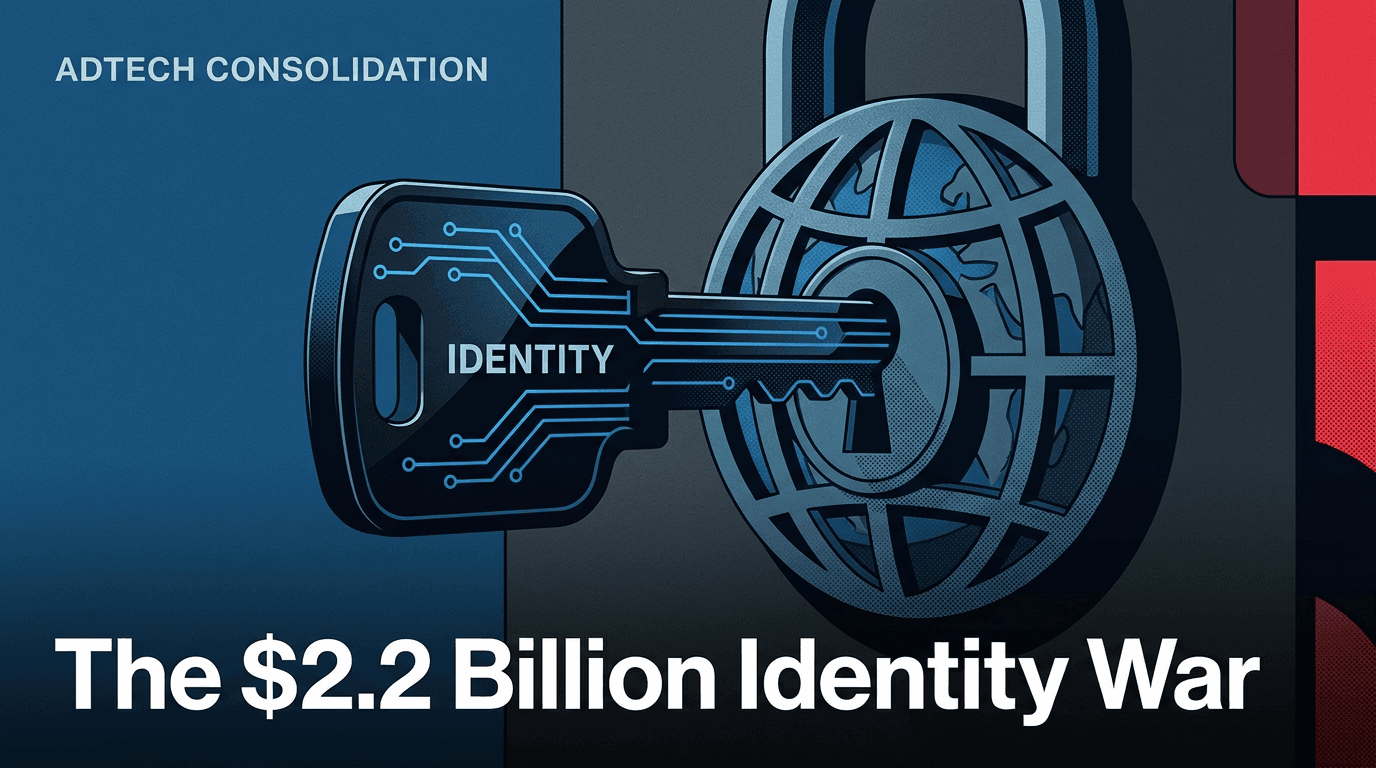
What happens to your marketing when the referee starts playing for one of the teams? That is the question circulating through agency boardrooms and brand marketing suites following Publicis Groupe’s massive $2.2 billion acquisition of LiveRamp. For years, LiveRamp stood as the 'Switzerland' of the adtech world—an agnostic identity layer that allowed brands to stitch together disparate data points without being tethered to a specific media buying platform.
That era is over. By folding LiveRamp into its existing Epsilon powerhouse, Publicis hasn't just bought a software company; it has effectively privatized the infrastructure of identity resolution.
Why it matters: If you are a brand lead, your path to deterministic measurement just got narrower. You now face a choice: lean into an agency-owned 'walled garden' that promises seamless attribution, or invest heavily in internal Data Clean Rooms to maintain strategic independence. As platforms like TikTok and Instagram shift their algorithms toward interest-based signals rather than social graphs, the ability to identify a single human across those fragmented environments is the only remaining competitive advantage.
TL;DR
- Consolidation: Publicis now owns the two largest identity pillars in the West (Epsilon and LiveRamp), creating a massive closed-loop ecosystem.
- The Death of Agnostic Identity: LiveRamp’s role as a neutral third party is compromised, forcing competitors (WPP, Omnicom) to find alternative pipes.
- The Clean Room Mandate: Brands must prioritize internal data infrastructure or risk being permanently locked into agency-specific measurement models.
- Social Shift: As social platforms move toward 'discovery engines,' deterministic identity resolution is the only way to prove ROI beyond vanity metrics.
The Identity Graph: A Simple Mental Model for the Modern Marketer
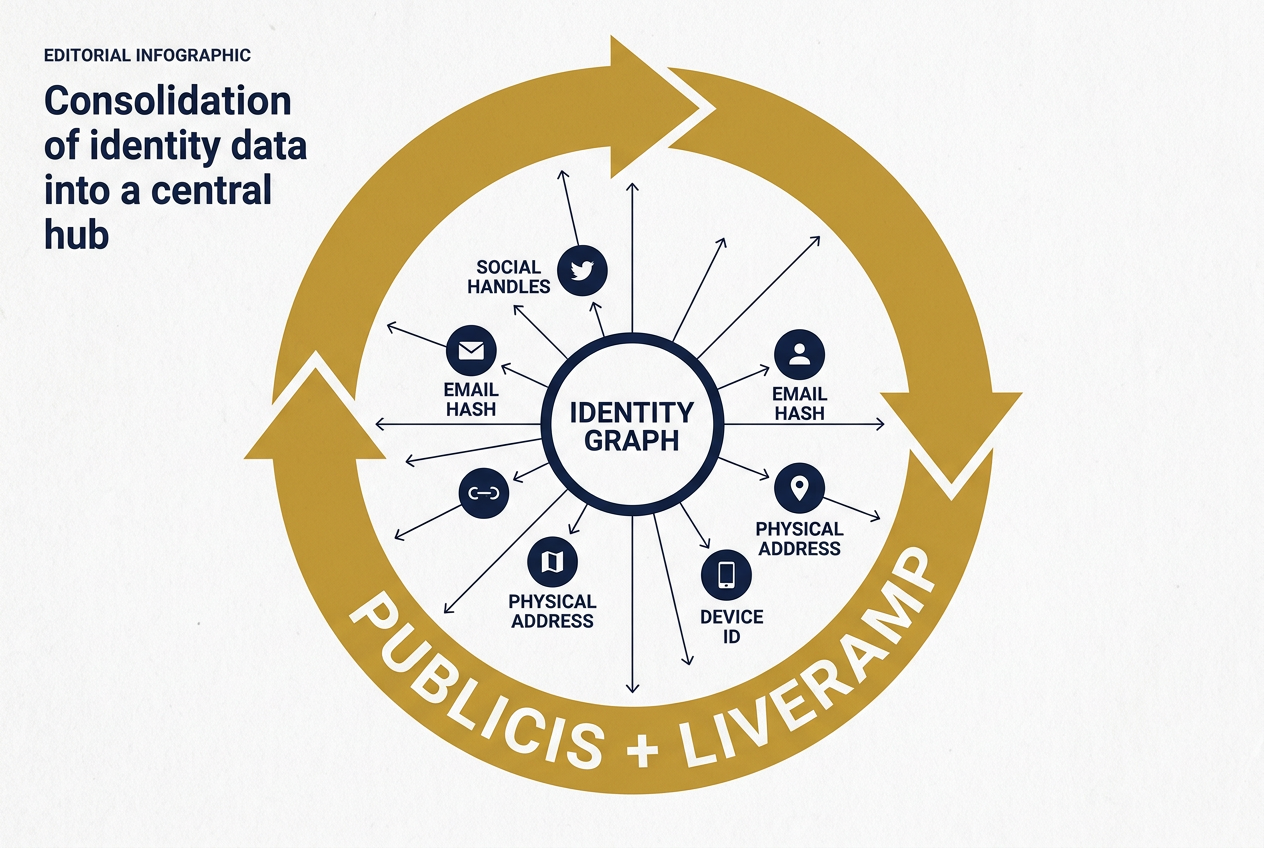
To understand why Publicis spent $2.2 billion, you have to understand the 'Identity Graph.' Think of it as a master key ring. On this ring, you have a customer’s encrypted email from a newsletter signup, their mobile advertising ID (MAID) from a shopping app, and their physical mailing address.
In a world without cookies, the identity graph is the thread that connects these beads. When a user sees a TikTok ad on their phone and later buys the product on their laptop, the identity graph is what tells the marketer, 'That was the same person.'
LiveRamp’s core product, RampID, was the industry standard for this connection. It allowed brands to 'onboard' their offline data into the digital ecosystem. By acquiring this, Publicis isn't just improving its targeting; it is owning the very language that different marketing platforms use to talk to each other.
For the practitioner, this means the 'first-party data' you’ve been collecting is only as valuable as the graph you use to activate it. If your graph is owned by your agency, your data's portability is suddenly at risk. We are moving from an era of data collection to an era of data control.
The End of Neutrality and the Rise of Agency Walled Gardens
For a decade, the industry relied on a separation of powers. Agencies bought the media, platforms hosted the ads, and third-party providers like LiveRamp or Nielsen measured the results. This acquisition shatters that tripod.
When Publicis owns Epsilon (the data) and LiveRamp (the identity link), they offer a 'closed loop' that is incredibly seductive to a CMO under pressure. They can promise a level of attribution accuracy that an unbundled strategy cannot match. But this convenience comes with a high price: the loss of an objective yardstick.
If you are an agency strategist at a competing firm like WPP or Interpublic Group (IPG), you are now in a precarious position. Do you continue to pay a competitor (Publicis) for the right to use LiveRamp’s identity services? Or do you pivot to smaller, perhaps less robust alternatives like ID5 or Unified ID 2.0?
This mirrors the shift we've seen in the social landscape. Per the platform's Q4 earnings reports, Meta and Google have increasingly focused on 'Advantage+' and 'Performance Max'—black-box tools that ask marketers to 'trust the machine.' Publicis is building the agency version of that black box.
Why Social Media Managers Should Care About Identity Resolution
The connection between a multi-billion dollar adtech deal and a social media manager’s daily workflow might seem distant, but it is actually direct. Social marketing is currently undergoing a fundamental shift from 'social' to 'entertainment.'
As noted in recent updates to the Instagram Reels algorithm Instagram Reels Algorithm Update, the platform is prioritizing content that keeps users on-site, regardless of who they follow. This makes organic tracking nearly impossible. At the same time, TikTok World ‘26 highlighted the move toward 'High Impact Brand Solutions' that rely heavily on signal-based targeting [S3].
When social platforms become discovery engines, your 'followers' matter less than your 'conversions.' But you can't track conversions without a robust identity layer. If a user discovers your brand via a TikTok vertical video but converts three days later via a Google Search, only a high-fidelity identity graph can bridge that gap.
If your brand is purely relying on 'vanity metrics' like likes and shares, you are already falling behind. Recent reports from Exchange4Media suggest that Indian and Western markets alike are seeing a total decoupling of social engagement and revenue [S2][S5]. The Publicis-LiveRamp deal is the corporate world’s response to this decoupling. They are buying the tools to prove that social spend actually drives sales, even when the platform's own analytics are murky.
The Strategic Pivot: Data Clean Rooms vs. Agency Dependency
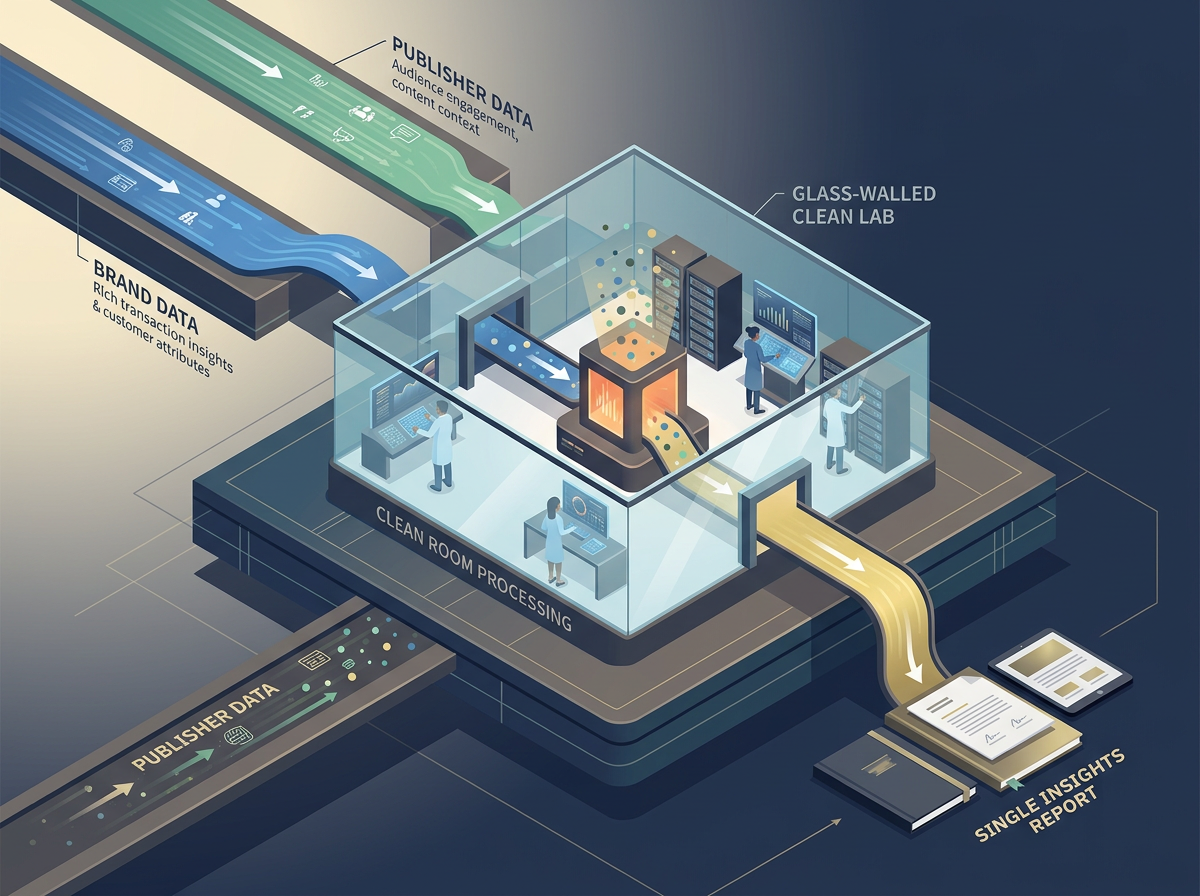
So, what is the move for a brand marketing lead? If you don't want to be locked into the Publicis ecosystem, you must master the Data Clean Room (DCR).
A DCR is a neutral digital space where two parties (like a brand and a publisher) can join their data sets without either party seeing the other's raw PII (Personally Identifiable Information). It is the privacy-safe way to do identity resolution in 2026.
Instead of letting an agency manage your identity graph, sophisticated brands are building their own 'Composed' CDP (Customer Data Platform) architectures. By using tools like Snowflake or Databricks in conjunction with privacy-safe identifiers, you can maintain a 'Portable Identity.'
This is not just a technical hurdle; it’s a budget one. Building an internal clean room capability can cost mid-six figures in headcount and licensing. However, the alternative is 'Agency Lock-in.' If you spend three years building your identity resolution through Publicis/LiveRamp, the cost of switching agencies becomes prohibitively high. You aren't just switching creative teams; you're re-wiring your entire measurement department.
How to Audit Your Data Strategy Post-Acquisition
You need to act before your next contract renewal. The consolidation of the data layer means your 'agnostic' tools are disappearing. Here is how to evaluate your current standing:
- Inventory your 'Identity Pipes': Ask your technical lead exactly which IDs you are using to track cross-channel performance. If 'RampID' is the primary connector, you are now a Publicis customer, whether you use them as an agency or not.
- Evaluate Data Portability: If you left your current agency tomorrow, would your historical attribution data come with you? If the answer is 'no' because it lives in an agency-owned graph, you have a structural risk.
- Test Alternative IDs: Start running small-scale tests with UID2.0 or ID5. You need to know how these perform in terms of match rates compared to LiveRamp before you are forced to switch.
- Bridge the Social Gap: Work with your social team to ensure they are passing 'Enhanced Conversions' or 'CAPI' (Conversions API) data correctly. This first-party signal is the only way to feed an identity graph accurately.
The Long-Term Outlook: A Bifurcated Market
We are heading toward a two-tier marketing world. On one side, you have the 'Full-Stack Brands'—those with the internal engineering talent to manage their own identity graphs and clean rooms. These brands will maintain the highest margins and the most agility.
On the other side, you have 'Managed-Service Brands'—those who outsource their data intelligence to the big holding companies. While this path is easier and requires less upfront capital, it results in a loss of strategic autonomy.
As social media continues to redefine markets—from retail to real estate [S4]—the value of knowing exactly who your customer is across the digital sprawl will only increase. Publicis just placed a $2.2 billion bet that most brands will choose the easy path. Your job is to decide if you can afford to prove them right.

Summary of Actionable Steps
For the brand marketing lead, the immediate priority is a 'Data Sovereignty Audit.' You cannot manage what you do not own. If the Publicis-LiveRamp deal teaches us anything, it's that the infrastructure of the internet is being bought up by the people who sell you the ads.
Don't wait for the next cookie-deprecation deadline or algorithm shift. Start building your internal data muscle now. Whether that means hiring a dedicated data strategist or investing in a neutral clean room provider, the goal is the same: ensure that your brand's relationship with its customers isn't mediated by a third-party competitor.
The identity wars have begun. Make sure you aren't just a piece of someone else's graph.
FAQ