
Scaling your social ad spend without a CRM data feedback loop is like pouring high-octane fuel into a car with no steering wheel: you’ll go fast, but you’ll inevitably hit a wall. In the current B2B landscape, the gap between ad spend and actual performance isn't a creative problem; it's a data plumbing problem. If your CRM is a black hole where lead data goes to die, your social algorithms are optimizing for the wrong signals.
Most performance marketers are still trapped in a 2019 mindset. They optimize for "leads"—the sheer volume of form fills—while the sales team drowns in a sea of junk. You've seen the dashboard: Meta reports a $40 Cost-Per-Lead (CPL), but your Salesforce data shows that 90% of those leads never make it past the discovery call. This disconnect exists because you aren't telling the platform which leads actually converted into revenue. Without CRM social integration, you are effectively training the algorithm to find more people who like to fill out forms, not more people who like to buy your product.
TL;DR
- The Signal Problem: Algorithms prioritize volume over value unless you feed them down-funnel conversion data via APIs.
- The Solution: Use Meta and LinkedIn’s Conversion APIs (CAPI) to send CRM milestones (MQL, SQL, Closed-Won) back to the ad account.
- The Result: A shift from CPL-based optimization to ROAS-based bidding that reflects actual business impact.
The Fallacy of the Lead Volume Metric
For years, the industry has relied on the pixel to do the heavy lifting. But the post-iOS-14 world, combined with the rise of privacy-first browsing, has rendered the standard web pixel a blunt instrument. When you run a lead generation campaign on LinkedIn or Meta, the platform knows who clicked and who submitted a native form. It doesn't know if that person was a CEO at a Fortune 500 company or a bot using a burner email.
If you don't close the loop, the algorithm assumes every lead is equal. It will naturally gravitate toward the cheapest leads available. Often, these are the users most likely to click on anything—not the high-intent buyers your sales team needs. According to internal benchmarks from top-tier B2B agencies, companies that fail to integrate CRM data see a 30-40% higher "waste" rate in their ad spend compared to those using a robust conversion API strategy.
Consider the recent delay of Google's Gemini 3.5 Pro AI search trends and marketing. While platforms struggle with their own technical hurdles, marketers cannot afford to wait for "smarter" automated solutions. You have to provide the intelligence yourself. By the time a lead hits your CRM, the platform’s job shouldn't be over; it should be just beginning.
Why Conversion APIs are the New Standard
To fix the spend-vs-performance gap, you must implement a server-side tracking solution. Meta’s Conversions API (CAPI) and LinkedIn’s version of the same are no longer optional extras for high-growth brands. They are the foundational infrastructure for any B2B social attribution model that actually works.
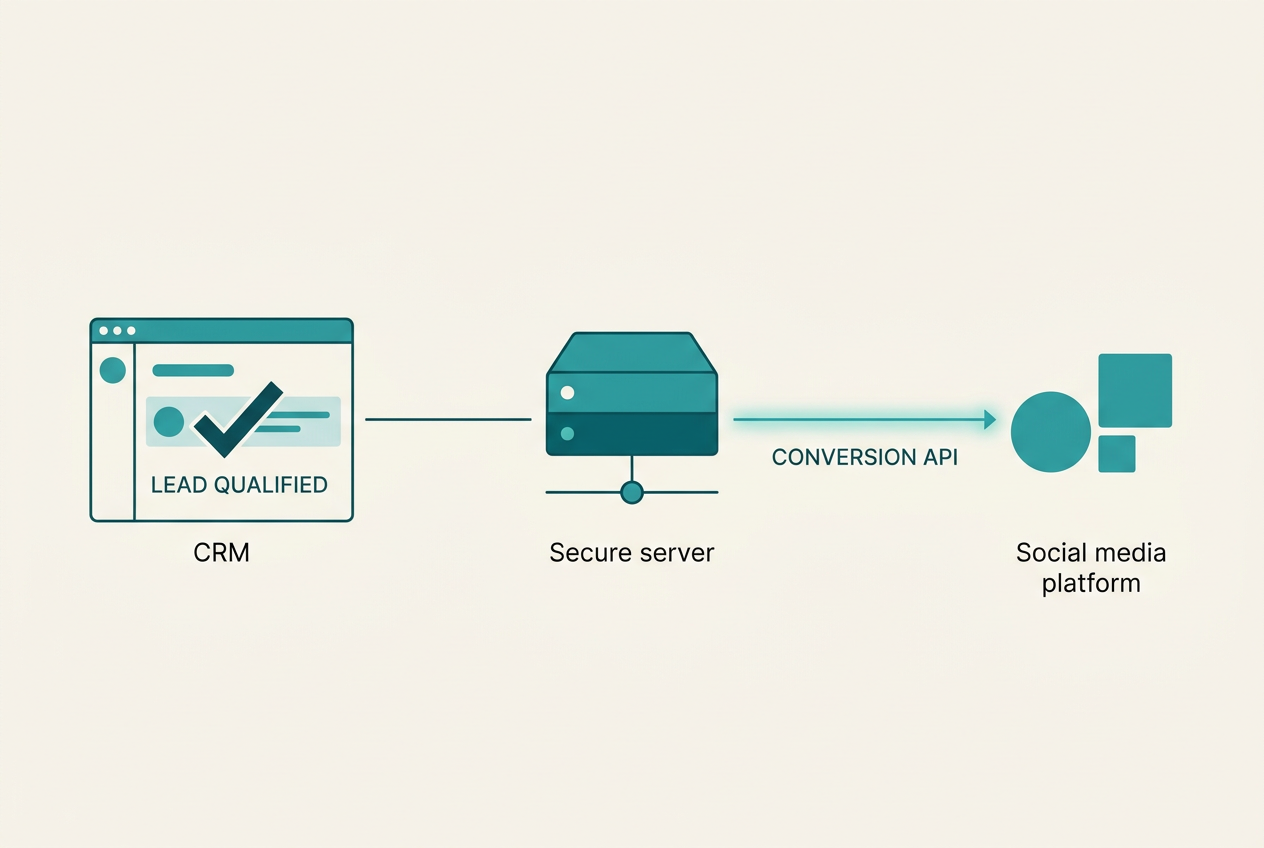
When a lead moves from "New" to "Qualified" in HubSpot or Salesforce, a server-side trigger should fire that data back to the social platform. This allows the algorithm to look at the profile characteristics of the qualified lead rather than just the initial lead.
This isn't just about better reporting. It’s about bidding. When you feed the platform revenue data, you can move away from "Maximize Leads" and toward "Maximize Value." This shift allows you to bid more aggressively for prospects that look like your best customers. If you know a "Closed-Won" deal is worth $50,000, you can afford to pay a $500 CPL, even if your average CPL is $50. Without the feedback loop, your account-level caps would likely kill that high-value lead before it ever converted.
The Counterargument: Is the Privacy Risk Worth It?
Critics of deep CRM integration often point to data privacy and security. They argue that sending hashed customer data back to Meta or LinkedIn exposes the brand to unnecessary risk and potentially violates GDPR or CCPA. They suggest that keeping a "clean room" between the CRM and the ad platforms is the only way to remain compliant.
This is a valid concern, but it’s a manageable one. Modern CRM social integration tools like Zapier, Tray.io, or native integrations within Salesforce and HubSpot use advanced hashing (SHA-256) to ensure that personally identifiable information (PII) is never shared in plain text. Furthermore, the risk of not integrating is the slow death of your marketing efficiency. As platforms like Netflix move toward more complex ad deals Netflix ad strategy shift and TikTok expands its local advertiser partnerships via providers like Vendasta, the competition for attention is only getting more expensive. You cannot afford to be the only brand in the auction bidding with one eye closed.
Building the Feedback Loop: A Tactical Roadmap
If you want to stop the bleed, you need to move through three stages of maturity in your data strategy.
- Stage One: The Native Integration. Most CRMs now have one-click connectors for Meta and LinkedIn. This is your baseline. It allows you to sync audiences for retargeting and exclusion lists. If you aren't excluding your current customers from your top-of-funnel ads, you're already wasting 5-10% of your budget.
- Stage Two: Offline Conversion Import. This is where you manually or automatically upload CSVs of your converted leads once a week. It’s better than nothing, but the latency is too high for the algorithm to learn in real-time.
- Stage Three: Real-Time CAPI Sync. This is the gold standard. When a sales rep changes a deal stage, the platform knows within minutes. This creates a tight reinforcement loop for the AI-driven bidding systems.
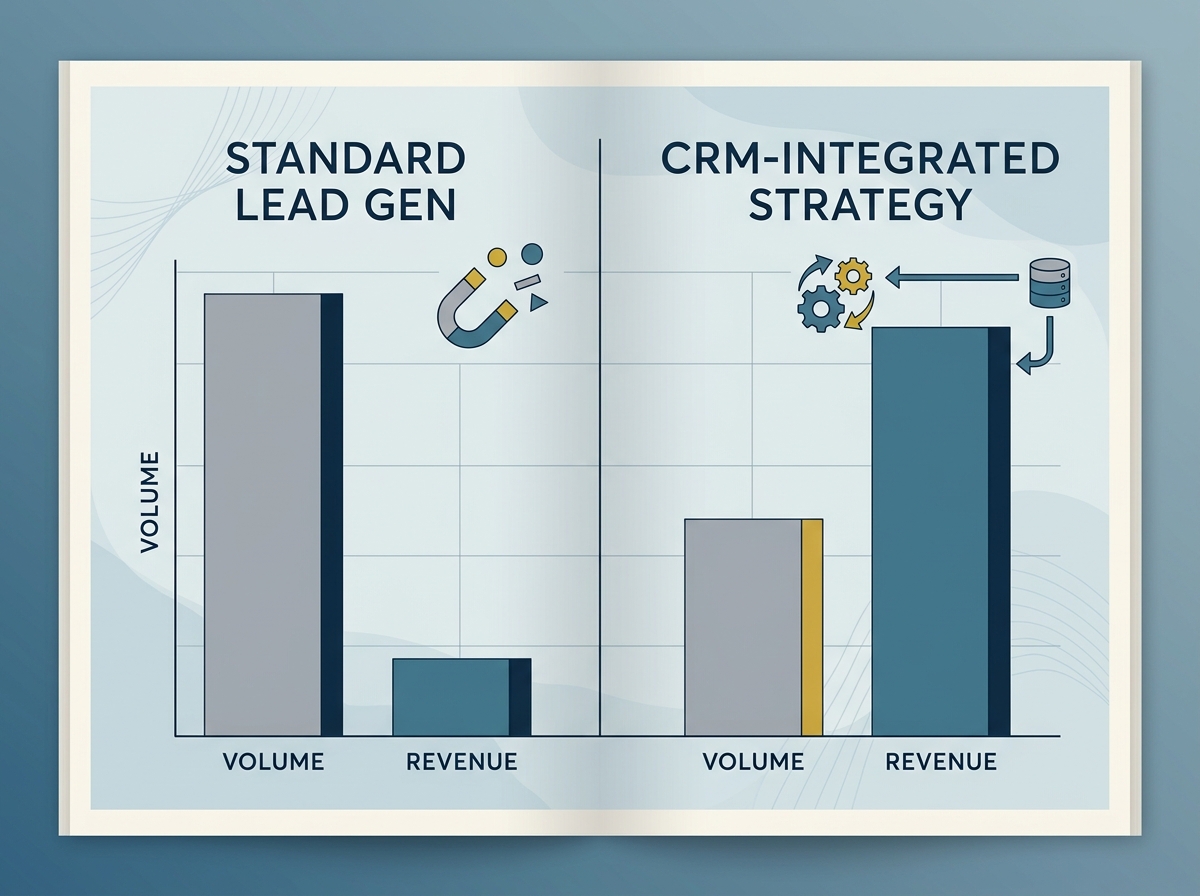
Don't let the technical jargon scare you. You don't need a team of engineers to build this. Tools like Segment or even the native HubSpot-to-LinkedIn integration can handle the heavy lifting. The goal is to ensure that your ad spend vs performance reports align with the reality of your bank account, not just your click-through rates.
The Future of Attribution is First-Party Data
We are moving toward a world where the only data you can truly trust is the data you own. As third-party cookies continue their slow crawl toward extinction, your CRM becomes your most valuable marketing asset. It’s not just a database; it’s a signal generator.
Brands that treat their CRM as a static list of names will continue to see their CAC (Customer Acquisition Cost) skyrocket. Meanwhile, the brands that treat their CRM as a real-time feedback loop for their paid social efforts will dominate the auction. They will be able to outspend the competition because they know exactly what a lead is worth.
My prediction for 2027: Within eighteen months, Meta and LinkedIn will make Conversion API integration a prerequisite for using their most advanced “Advantage+” or “Predictive” audience tools. If you haven't built the bridge between your sales data and your ad account by then, you won't just be inefficient—you'll be locked out of the best-performing features the platforms have to offer.
How to Apply This Tomorrow
You don't need to overcomplement your stack to start seeing results. Start by auditing your current lead quality. Ask your sales team: "Which 20% of the leads we sent you last month were actually worth calling?" Then, find a way to tag those leads in your CRM and send that specific tag back to your ad platform as a custom conversion.
Even a manual weekly upload of your "SQL" list as an offline conversion will give the algorithm more to work with than it has today. Once you see the CPL for qualified leads start to drop, you'll have the internal buy-in you need to invest in a full-scale conversion API strategy. Stop guessing and start feeding the machine the only thing it actually cares about: revenue.
FAQ