
TikTok Shop isn't a retail feature anymore; it's a broadcast network. When Skims launched its high-production livestream events, it didn't just sell out inventory—it reset the floor for what a 'social commerce' event looks like. The era of a creator holding a ring light and shouting at a tripod is fading for top-tier brands. In 2026, the movement is toward 'Live-Entertainment-Commerce,' a hybrid of late-night talk shows, drop culture, and real-time inventory management.
Why it matters: For brand marketers and agency leads, the cost of entry has shifted. You aren't just competing for the 'For You' page; you're competing for the same viewer attention as Netflix and Twitch. If your production value doesn't match the prestige of your brand, your conversion rates will suffer in an increasingly crowded marketplace where TikTok Shop's GMV is driven by high-retention live sessions.
TL;DR
- Production Tiering: Move from 'Lo-Fi' to 'Studio-Grade' to maintain premium brand positioning.
- Conversion Benchmarks: Successful high-production streams are seeing 8-12% conversion rates, doubling the industry average for standard affiliate lives.
- The New Agency Stack: You need a mix of traditional broadcast directors and real-time social community managers.
- Cost Realities: Professional-grade setups now range from $15k to $100k+ per event depending on the model.
1. The 'Drop-Event' Extravaganza (The Skims Model)
This model treats a livestream like a cinematic premiere. It’s characterized by multi-camera setups, professional lighting grids, and a script that mirrors a variety show. When Kim Kardashian’s Skims utilizes this, they aren't just showing products; they are creating a cultural moment that demands synchronous viewing.
In 2026, this model has evolved to include 'Interactive Drop Mechanics.' This means the production team isn't just filming—they are triggering limited-edition inventory releases based on real-time engagement milestones. If the stream hits 50,000 concurrent viewers, a specific colorway of a bodysuit drops for 180 seconds. Per Vogue Business’s TikTok Trend Tracker [S2], these high-stakes moments drive the highest 'time-spent-watching' metrics on the platform.
Best for: Luxury and hype-driven fashion brands with massive existing followings and high-velocity inventory.
2. The 'Always-On' Studio Residency
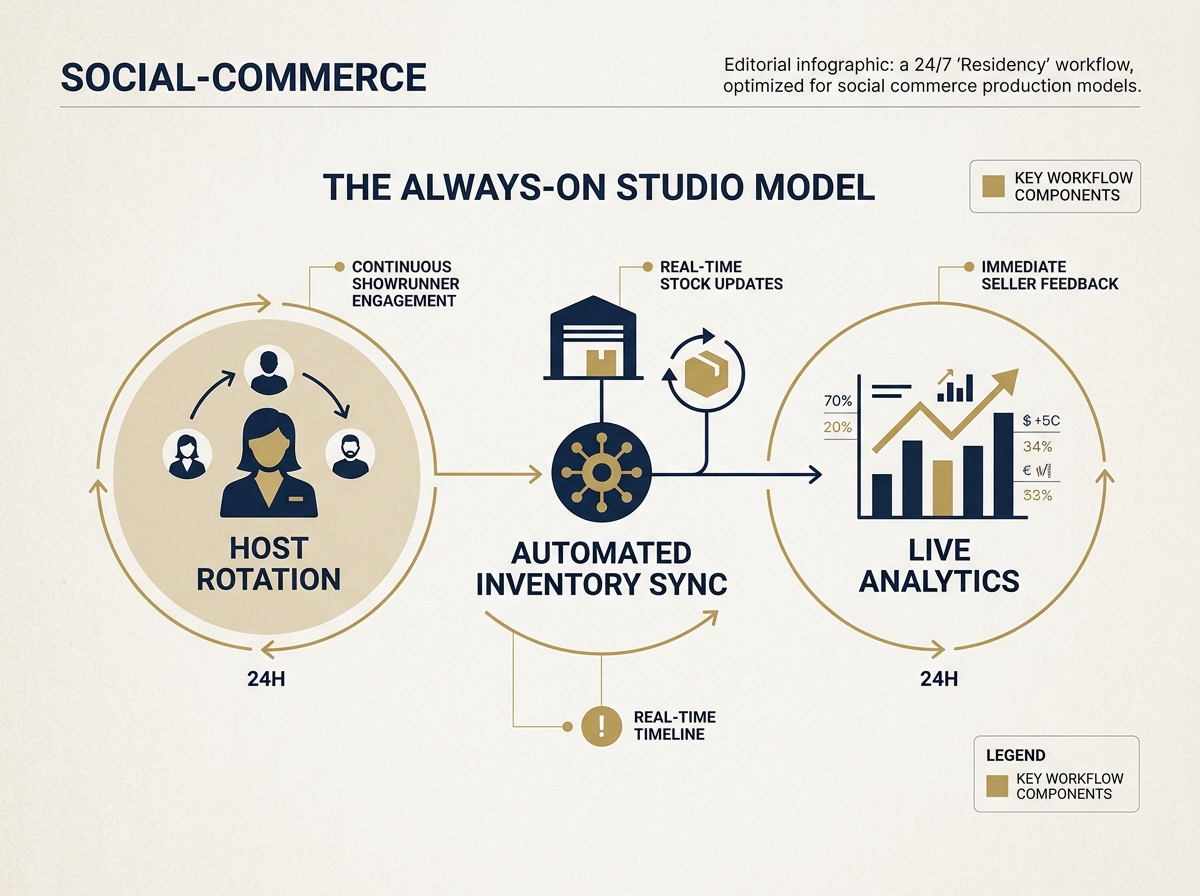
Unlike the one-off extravaganza, the Residency model focuses on consistency. Brands are now building in-house studios or partnering with agencies that provide 24/7 or 12/5 livestreaming capabilities. This is the industrialization of social commerce.
We’re seeing brands in the beauty and electronics sectors move toward this 'Residency' approach. The production is standardized: fixed cameras, automated graphics overlays, and a rotating roster of trained 'Live Hosts.' These hosts aren't necessarily influencers; they are retail specialists trained in the art of the 'Live Pitch.' According to recent industry benchmarks, while the conversion rate per individual stream might be lower than a 'Drop-Event,' the cumulative GMV (Gross Merchandise Volume) is significantly higher due to the sheer volume of hours live.
Best for: CPG, beauty, and tech brands with deep SKUs that require ongoing education and constant customer acquisition.
3. The 'Creator-Led' Variety Hour
This model flips the script by putting the production power in the hands of a top-tier creator but providing them with a brand-funded professional crew. Instead of the creator filming in their bedroom, the brand rents a location—a loft, a kitchen, a workshop—and brings in a 3-person production team (Director, Audio Tech, Community Manager).
This maintains the 'authenticity' that TikTok users crave while removing the technical friction that kills conversions (bad audio, laggy connections). The community manager is the unsung hero here, managing the TikTok Shop 'pins' and responding to comments in real-time so the creator can stay in character. This model bridges the gap between the 'Skill & Care' of local business engagement [S5] and the scaling power of national brands.
Best for: Mid-market brands looking to leverage creator trust without sacrificing professional visual standards.
4. The 'Gamified Warehouse' Tour
There is a growing fascination with the 'behind-the-scenes' of logistics. The Gamified Warehouse model takes the camera into the fulfillment center. Viewers watch as orders are picked, packed, and labeled in real-time.
This isn't just voyeurism; it's a trust-building exercise. By showing the physical reality of the product—how it’s stored, how it’s handled—brands are overcoming the 'scam' stigma that sometimes plagues social commerce. High-production versions of this use stabilized gimbal cameras and 'GoPro' style POV shots to make the viewer feel like they are part of the process. In 2026, integrating SMM panels for real-time social proof [S4] helps maintain the energy during slower packing periods.
Best for: Direct-to-consumer (DTC) brands that pride themselves on sustainability, handmade quality, or rapid shipping.
5. The 'Immersive Tutorial' Workshop
This is the high-production evolution of the 'How-To' video. Instead of a static tutorial, this is a live, interactive workshop where viewers can ask questions and see the product applied to their specific needs in real-time.
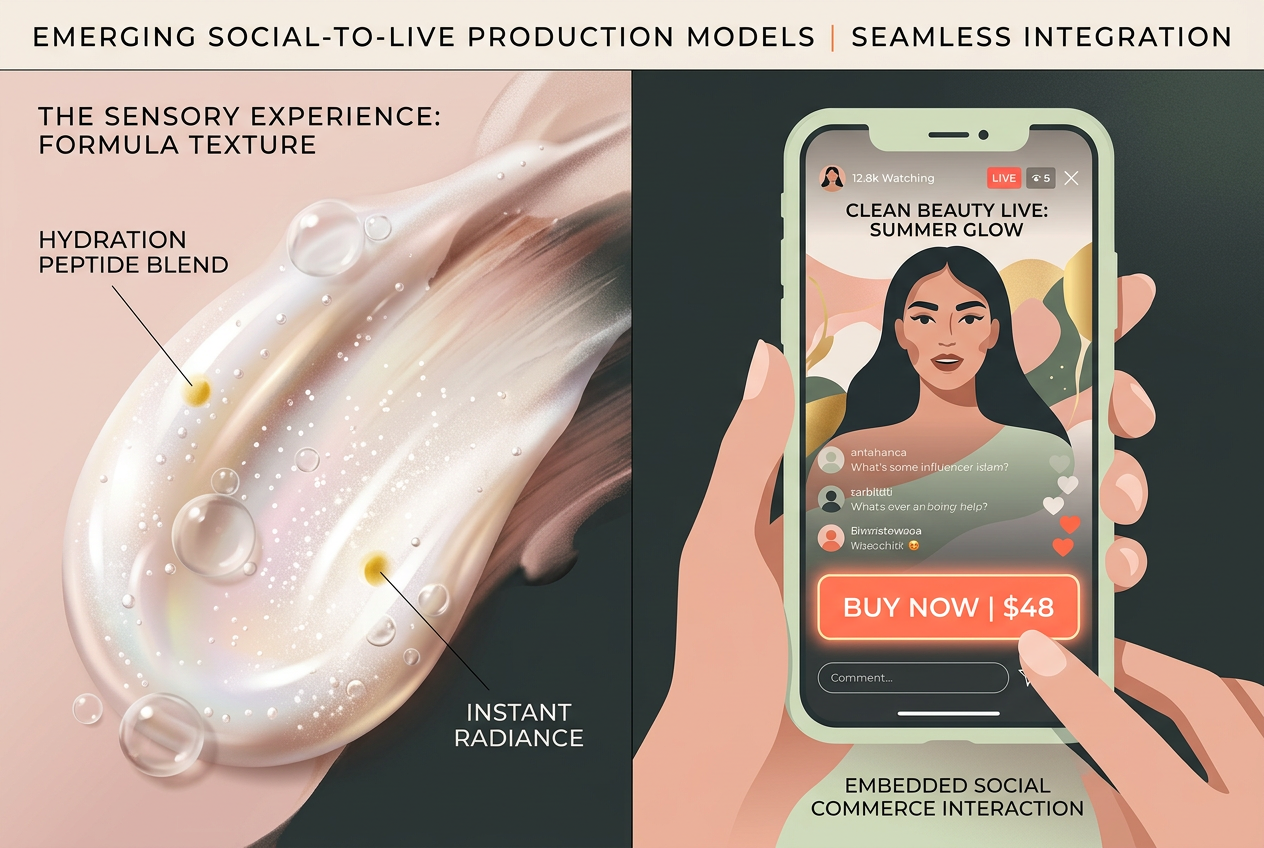
Think of a professional makeup artist doing a 'Live Masterclass' where the production includes macro-lenses to show skin texture and product finish in 4K. Or a home improvement brand showing a live installation of a smart-lock. The value proposition here is education-first, commerce-second. However, because the 'Buy' button is right there, the friction between 'Learning' and 'Owning' is eliminated. Business.com notes that Instagram continues to be a strong secondary platform for these educational lives [S3], often used to funnel high-intent traffic back to the primary TikTok Shop event.
Best for: High-consideration products (skincare, tools, tech) where the customer needs to see the 'how' before the 'buy.'
The Technical Stack: What You’re Actually Paying For
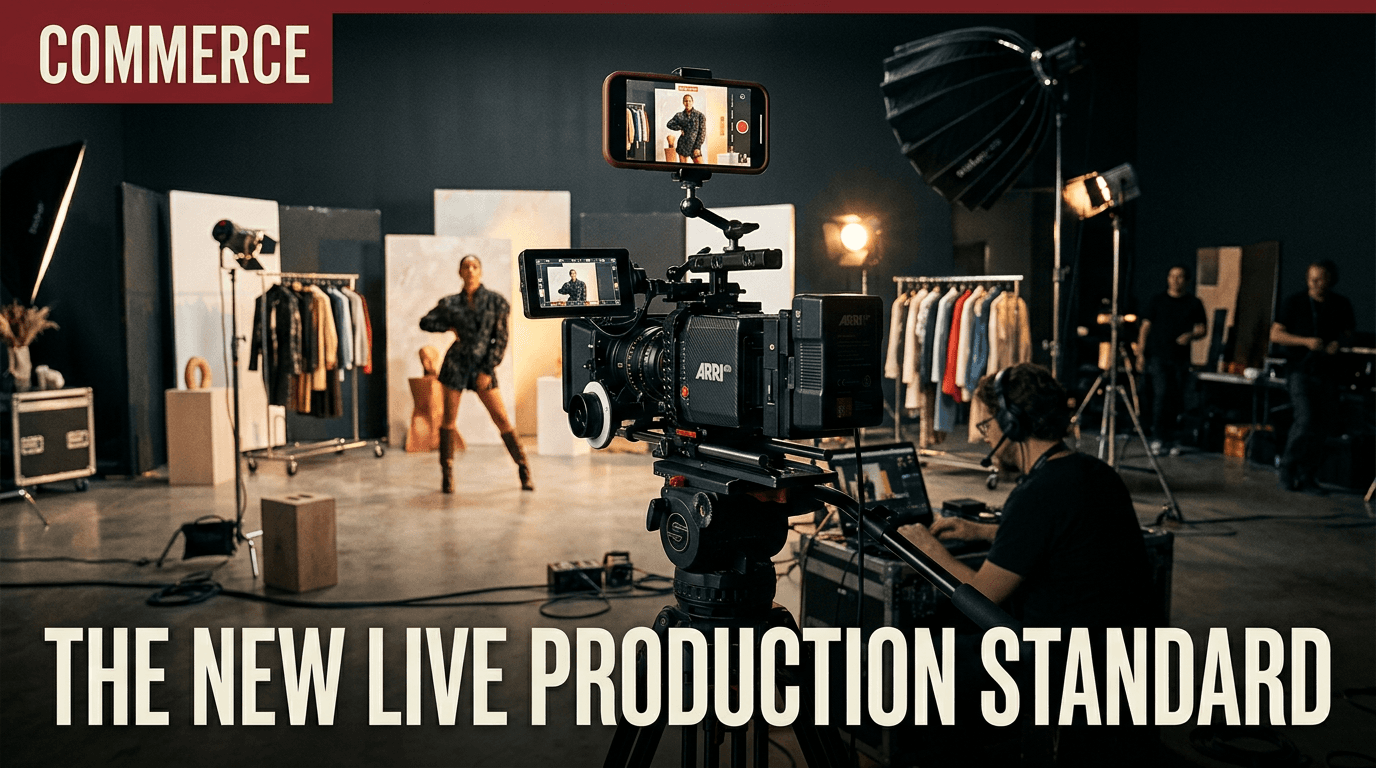
If you're planning a 2026 livestream strategy, your budget shouldn't just go to 'talent.' The shift in production models means your line items now look more like a television pilot. You are paying for:
- Low-Latency Encoding: Ensuring your 4K feed doesn't lag. If the video and audio are out of sync by even 200ms, your 'Add to Cart' rate will drop by an estimated 15%.
- Live Graphics Operators: These are the people managing the 'L-Bar' graphics, the countdown timers, and the inventory stock levels displayed on screen.
- Audio Engineering: In a world of 'silent scrolling,' the audio must be crisp. Lapel mics are the bare minimum; you need a soundboard to mix in background music and sound effects that trigger during 'wins' (sales).
- Real-Time Analytics Integration: Using tools that monitor the TikTok Shop dashboard and feed data directly to the host’s teleprompter or earbud. "We only have 4 Blue XLs left!" needs to be a fact, not a guess.
Benchmarking Success: Beyond the View Count
In 2026, 'Total Views' is a vanity metric. The pros are looking at Average Watch Time and Conversion per Mille (CPM-Sales). A stream with 5,000 highly engaged viewers who stay for 12 minutes is infinitely more valuable than a stream that 'goes viral' with 1,000,000 drive-by viewers who stay for 3 seconds.
Data from Programming Insider suggests that the best-performing SMM strategies now prioritize 'Retention-Based Distribution' [S1]. This means the algorithm rewards streams where people stay. High-production values—better lighting, clear audio, and varied camera angles—are the most effective ways to 'hook' a viewer into staying past the initial 3-second scroll.
How to Transition Your Agency Skill Set
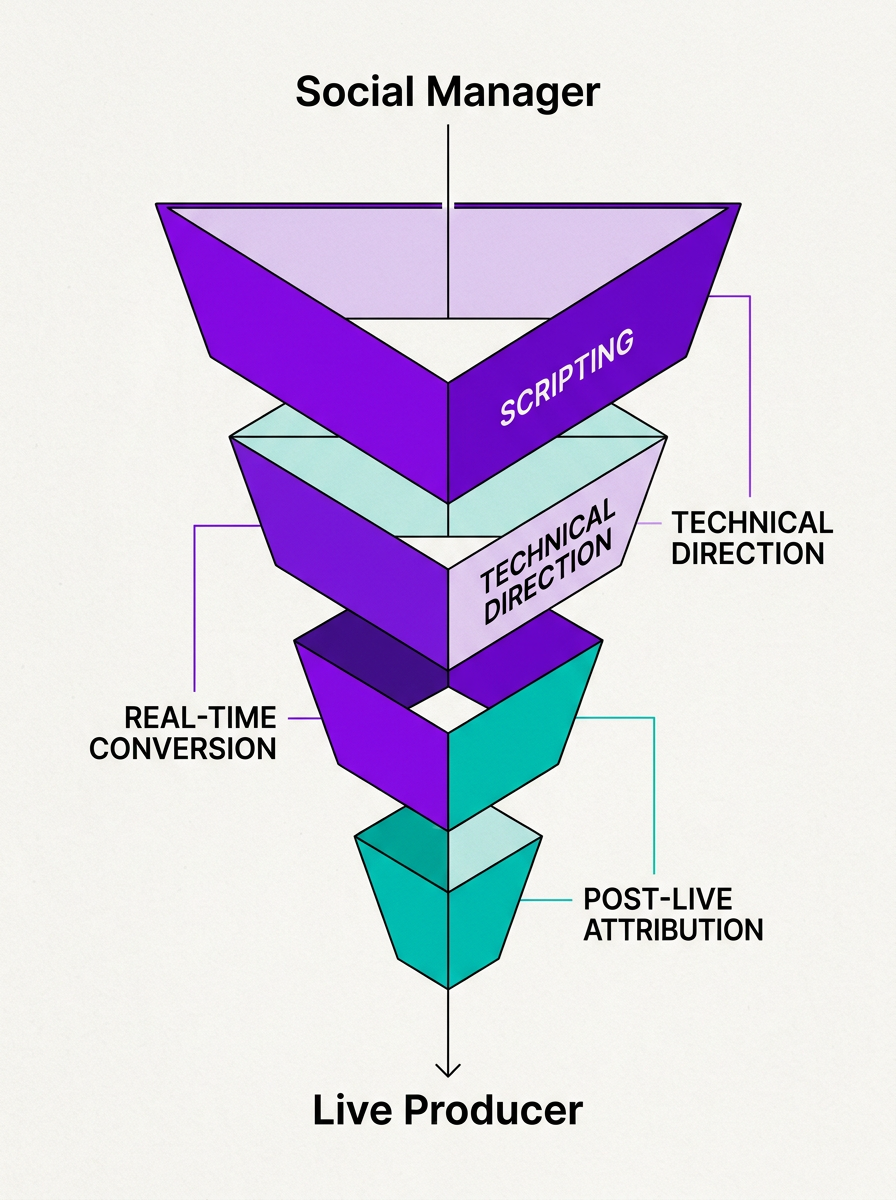
If you are a social media manager or an agency strategist, your job description is changing. You are no longer just a 'poster.' You are becoming a 'Live Producer.' This requires a move away from static planning toward dynamic, real-time crisis and opportunity management.
Start by mastering 'Live Scripting.' This isn't a word-for-word script, but a 'Run of Show' (ROS) that dictates the energy of the stream. When do we do a giveaway? When do we shift the camera angle? When do we bring in the guest?
Secondly, invest in 'Social Commerce Attribution' knowledge. Understanding how a livestream on Tuesday impacts organic search on Wednesday is the key to proving ROI to CMOs who are still skeptical of the 'Live' spend. As we see more local businesses adopting these tools with 'Skill & Care' [S5], the expectation for national brands to deliver flawless, high-converting experiences will only grow.
Future-Proofing for 2027 and Beyond
The trajectory is clear: Social commerce is moving toward a 'Phygital' (Physical + Digital) integration. We are already seeing the first tests of AR (Augmented Reality) mirrors integrated into livestreams, allowing viewers to 'try on' the product the host is wearing without leaving the app.
For now, the focus must remain on the fundamentals of production. The 'Skims' effect has taught us that the audience is ready for high-end entertainment on their phones. They are ready to be sold to, provided you don't bore them. The brands that win in 2026 will be those that stop treating TikTok Shop like a catalog and start treating it like a stage.
FAQ