
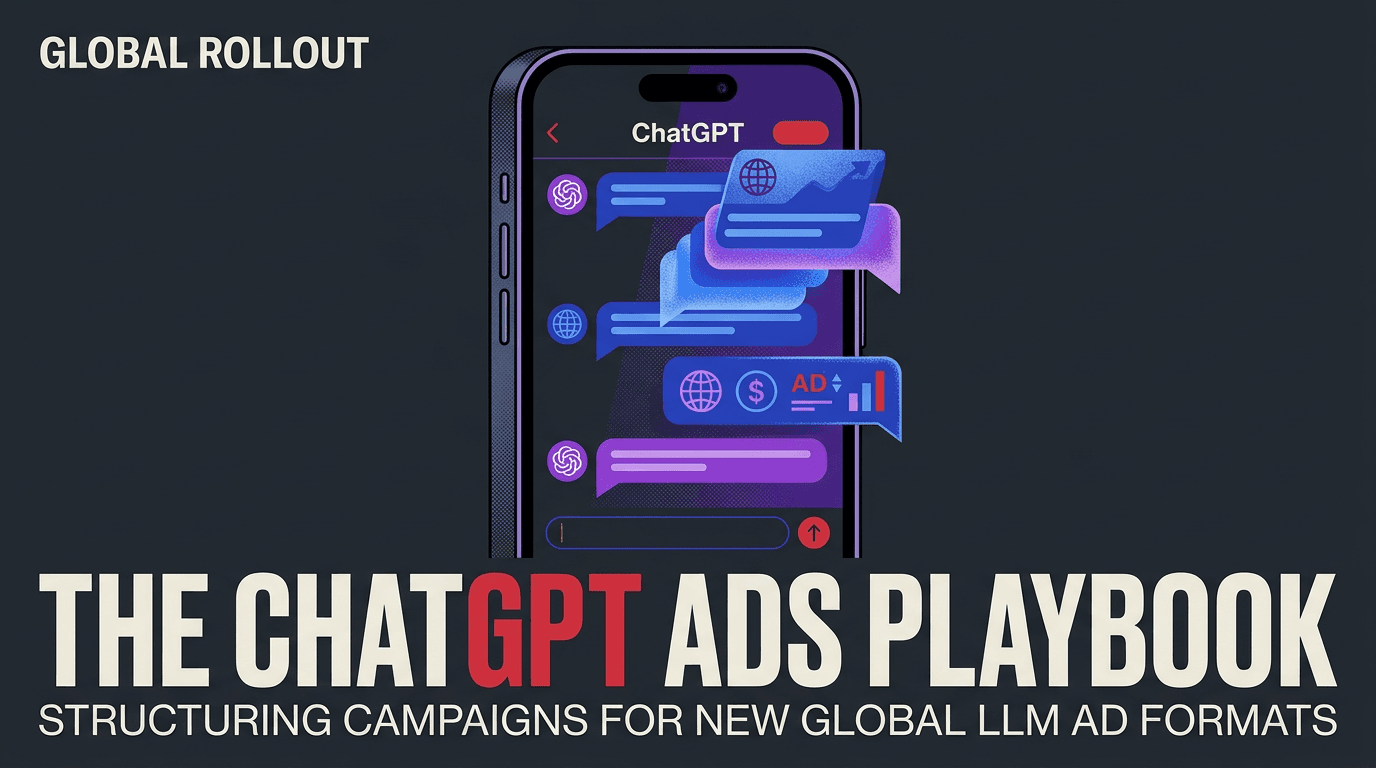
OpenAI is scaling its advertising infrastructure, moving beyond initial testing into a broader rollout of ChatGPT Ads across the Japan and South Korea markets. This expansion introduces specific ad drafting tools and a centralized overview tab designed to help performance buyers manage conversational placements. The push comes as the company navigates a leadership transition within its monetization team.
For social media marketers and paid search specialists, this signals the formalization of conversational search as a distinct line item in media plans. You aren't just bidding on keywords anymore; you are bidding on the context of a multi-turn dialogue. Understanding how OpenAI's new suggested drafts and overview features function is now a prerequisite for any brand looking to capture intent within the LLM ecosystem.
The Shift from Static Keywords to Conversational Context
Traditional search advertising relies on the immediate intent of a single query. ChatGPT Ads operate on a different logic. Because the user is engaged in a continuous thread, the ad placement must account for the history of that conversation. OpenAI's latest update to its ad manager—currently in limited release to enterprise partners—emphasizes "Ad Drafts" that the system generates based on your brand's landing page and the likely trajectory of a user's research path.
In the Japan and South Korea rollouts, we are seeing a focus on highly localized conversational cues. Unlike a standard Google Search ad, these placements appear as "Suggested Resources" or inline citations within the AI's response. The goal isn't just a click; it's to be the authoritative source the AI references to solve the user's problem. This requires a fundamental shift in creative strategy. You aren't writing a headline to grab attention; you are providing a data point that completes a thought.
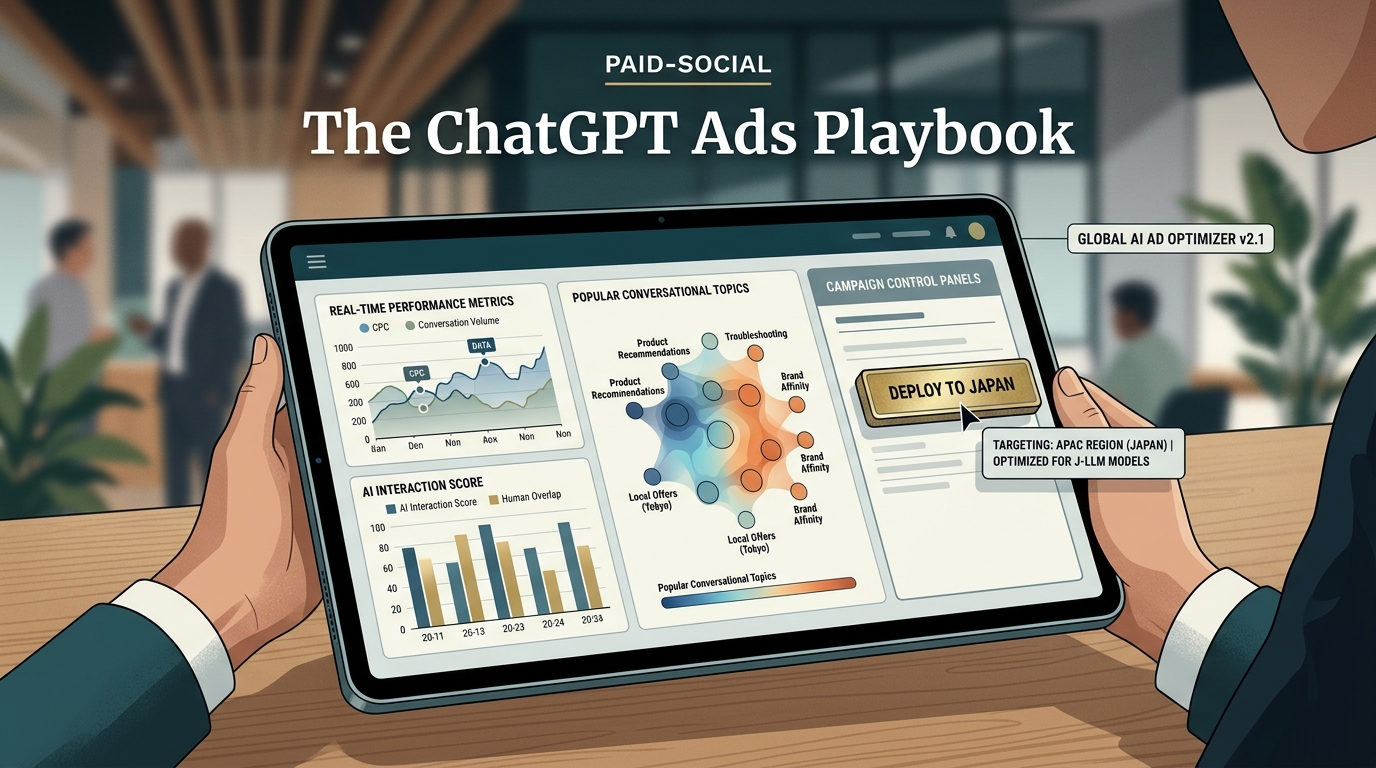
Media buyers in the APAC region are already reporting that the "Overview Tab" provides a level of sentiment analysis not found in Meta Ads Manager or Google Ads. It tracks how often your brand is mentioned in a positive or neutral context within the LLM's training data versus how often it is surfaced in live ad auctions. This gap analysis is becoming the new benchmark for LLM marketing effectiveness.
Leadership Changes and the Path to AGI Monetization
The timing of this global expansion coincides with a significant shift in OpenAI’s internal leadership. Fidji Simo, the former Instacart CEO and Meta executive who was spearheading OpenAI’s AGI and monetization efforts, is stepping back. Per a report from Adweek on July 10, 2026, Simo will transition to a part-time advisor role to focus on her health following a prolonged recovery from chronic illness [INTERNAL: fidji-simo-steps-back-from-openai -> news-archive].
Simo’s influence on the current ad product cannot be overstated. Her tenure at Meta was defined by scaling mobile monetization, and she brought that same rigor to OpenAI’s nascent ad platform. While her departure creates a temporary vacuum, the roadmap for the Japan and South Korea launches appears set. The focus remains on "low-friction" ad formats that don't interrupt the user's flow—a lesson learned from the early days of Facebook’s News Feed ads.
For marketers, this means the platform’s philosophy is likely to remain stable in the short term. OpenAI is prioritizing utility over volume. They are looking for ads that function as tools. If you are a CPG brand like those in the Conagra portfolio—which recently appointed WPP’s Barrows as its commerce agency of record [INTERNAL: conagra-wpp-commerce-agency -> agency-news]—your ChatGPT strategy should focus on recipe integration or product utility rather than pure brand awareness.
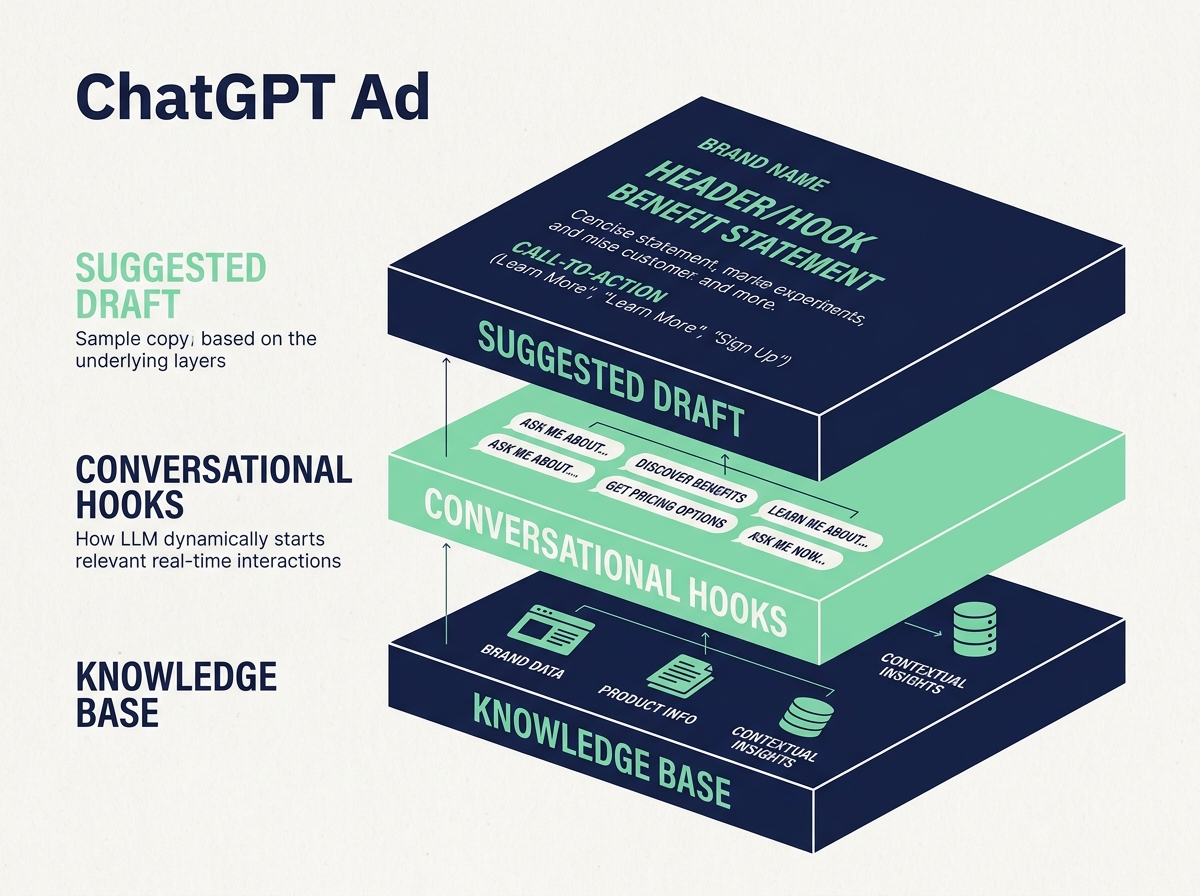
Structuring Ad Drafts for Conversational Search
The new "Suggested Drafts" feature in the OpenAI Ad Manager uses a proprietary fine-tuning layer to suggest copy. However, savvy buyers are already finding that manual overrides are necessary to maintain brand voice. When you set up a campaign for the Japan or Korea markets, the system asks for three primary inputs: a core knowledge base (usually a URL), a set of "Conversational Hooks," and a list of negative contexts.
The Knowledge Base
Instead of a landing page designed for conversion, the AI prefers a structured data sheet or a deep-dive FAQ. The LLM uses this to verify the claims it makes when it inserts your ad. If your site is thin on technical details, the ad drafts will be generic and low-performing. We recommend creating dedicated "AI Landing Pages" that are rich in schema markup and bulleted facts.
Conversational Hooks
These are not keywords. They are scenarios. For a travel brand, a hook might be "planning a 7-day trip to Seoul on a budget." The ad doesn't just trigger on the word "Seoul"; it triggers when the conversation reaches the logistics phase of the planning. This is where the "Overview Tab" becomes vital, as it shows you which hooks are currently underserved by competitors.
Negative Contexts
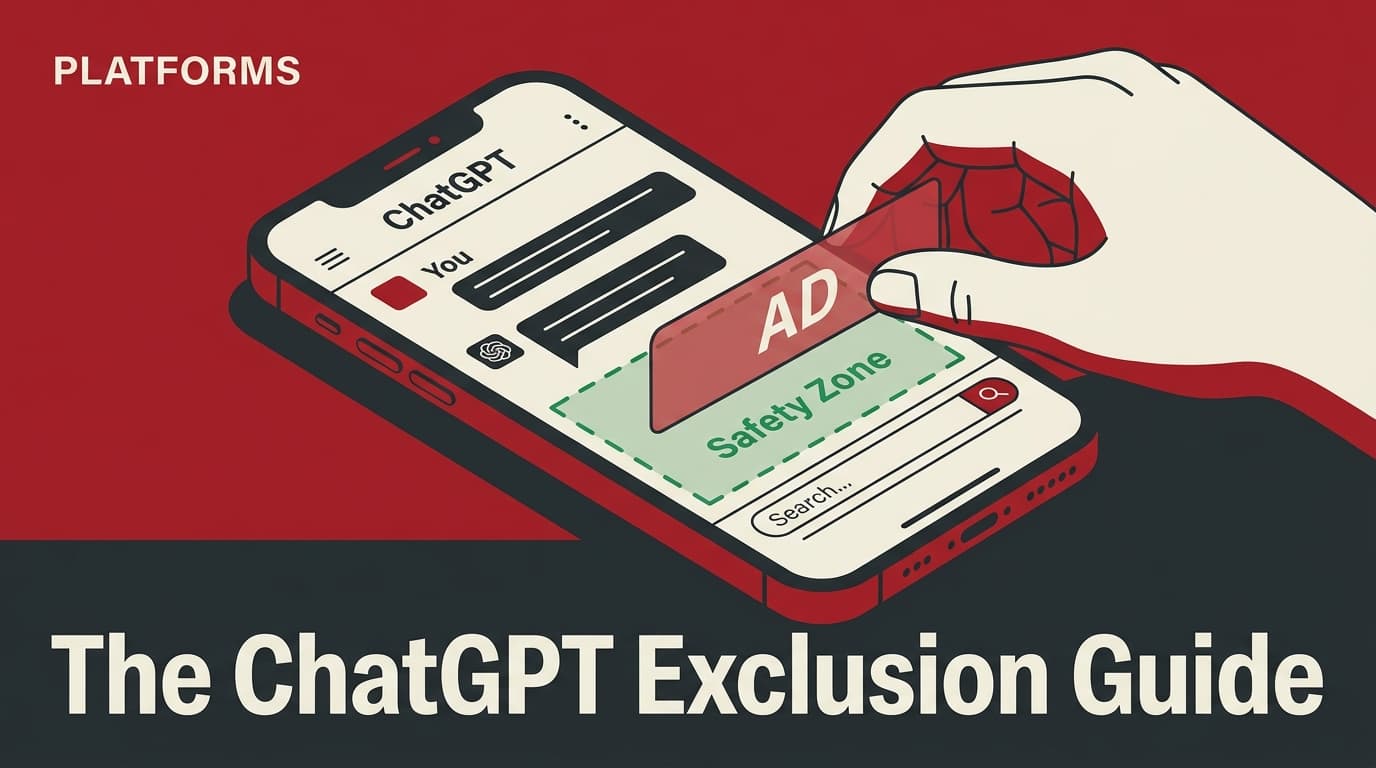
This is the LLM equivalent of negative keywords, but it’s more nuanced. You can exclude your ads from appearing in conversations that are purely academic, critical of your industry, or involve sensitive topics. This ensures brand safety in a medium where the "search results" are generated in real-time and can be unpredictable.
Competitive Pressures and the Commerce Media Landscape
OpenAI isn't operating in a vacuum. The broader commerce media landscape is becoming increasingly crowded. While OpenAI scales in APAC, other players are consolidating their tech stacks. Criteo is currently facing takeover bids, and platforms like Pacvue and The Trade Desk are winning new deals to streamline how retail data is used in programmatic buying [INTERNAL: commerce-media-trends-2026 -> industry-trends].
For a major player like Reckitt, which recently saw Zenith retain its $400M US media business, the challenge is integrating these new LLM formats into a global strategy that still relies heavily on traditional retail media. The advantage of ChatGPT Ads is the ability to influence the consumer at the very top of the funnel—the moment they ask "How do I remove a wine stain?" rather than when they search for "stain remover" on Amazon.
We are also seeing the emergence of "Brainrot Marketing" styles from companies like Vmake Labs, aimed at viral social video. While these high-energy, chaotic video styles work on TikTok, they are the polar opposite of what works in ChatGPT. The contrast is sharp: social media is for entertainment and discovery; conversational search is for utility and validation. Your creative assets must reflect this dichotomy. Don't try to use viral social tactics in an LLM interface.
Measurement and the Death of the Click-Through Rate
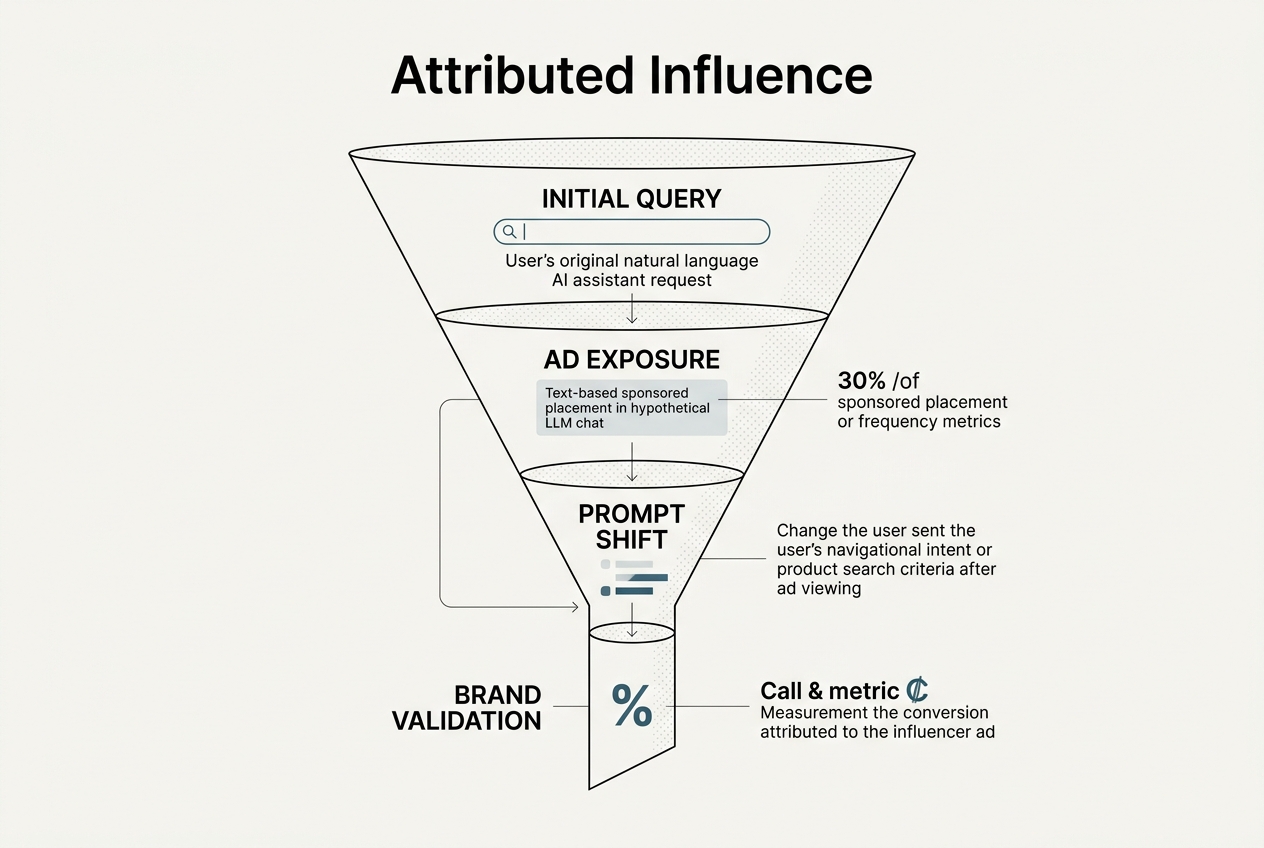
One of the most disruptive aspects of the ChatGPT Ads Playbook is the move away from CTR as a primary KPI. In a conversation, a user might see your ad, acknowledge the information, and continue the chat without ever clicking. However, that information is now part of the LLM's context window for that session.
OpenAI is introducing a metric called "Attributed Influence." This measures how the user's subsequent prompts change after being exposed to your ad. Did they start asking about your specific product features? Did they ask where to buy it? This is a form of mid-funnel attribution that social media managers have struggled to quantify for years. In the Japan rollout, this data is being visualized through "Influence Paths" in the overview tab.
To prepare for this, you need to rethink your tracking. UTM parameters still matter for the clicks you do get, but you should also be looking at branded search lift on other platforms (Google, Amazon) during the periods your ChatGPT campaigns are active. The synergy between LLM exposure and retail media conversion is where the highest ROI currently resides.
What to Watch Next in the OpenAI Ad Ecosystem
As OpenAI settles into its post-Simo leadership structure, expect a rapid iteration of the ad manager interface. The Japan and South Korea launches are a litmus test for how well the LLM can handle high-density, non-English markets. If successful, a wider European rollout is inevitable.
Keep a close eye on the "Review" process for ad drafts. Currently, OpenAI is manually auditing a high percentage of ads to ensure the AI isn't hallucinating brand claims. As this becomes automated, the speed at which you can deploy and pivot campaigns will increase significantly.
You should also monitor how the platform handles "Competitive Poaching." In traditional search, you can bid on a competitor's name. In conversational search, the ethics are murkier. If a user is talking about a competitor, will OpenAI allow your ad to steer the conversation toward your product? The current guidelines suggest a "neutral assistance" policy, but the pressure to monetize will likely test those boundaries.
For now, the move is to secure early access, build your AI-specific knowledge bases, and start experimenting with the suggested drafts. The brands that define their conversational footprint now will be the ones the AI defaults to when the training data for the next generation of models is collected.
Key Takeaways for Early Adopters
- Shift to Utility: ChatGPT Ads are tools, not billboards. Your creative must provide factual value that assists the user's current task.
- Optimize for Context: Use the new "Conversational Hooks" to target stages of a dialogue rather than isolated keywords.
- Monitor Attributed Influence: Move beyond CTR. Use the Overview Tab to see how your ads shift the trajectory of user prompts.
- Build AI-Ready Assets: Ensure your brand has structured, high-authority data available for the LLM to pull into its draft suggestions.
- Localization Matters: The Japan and Korea rollouts show that OpenAI is prioritizing local context; don't just translate your English search ads.
FAQ