
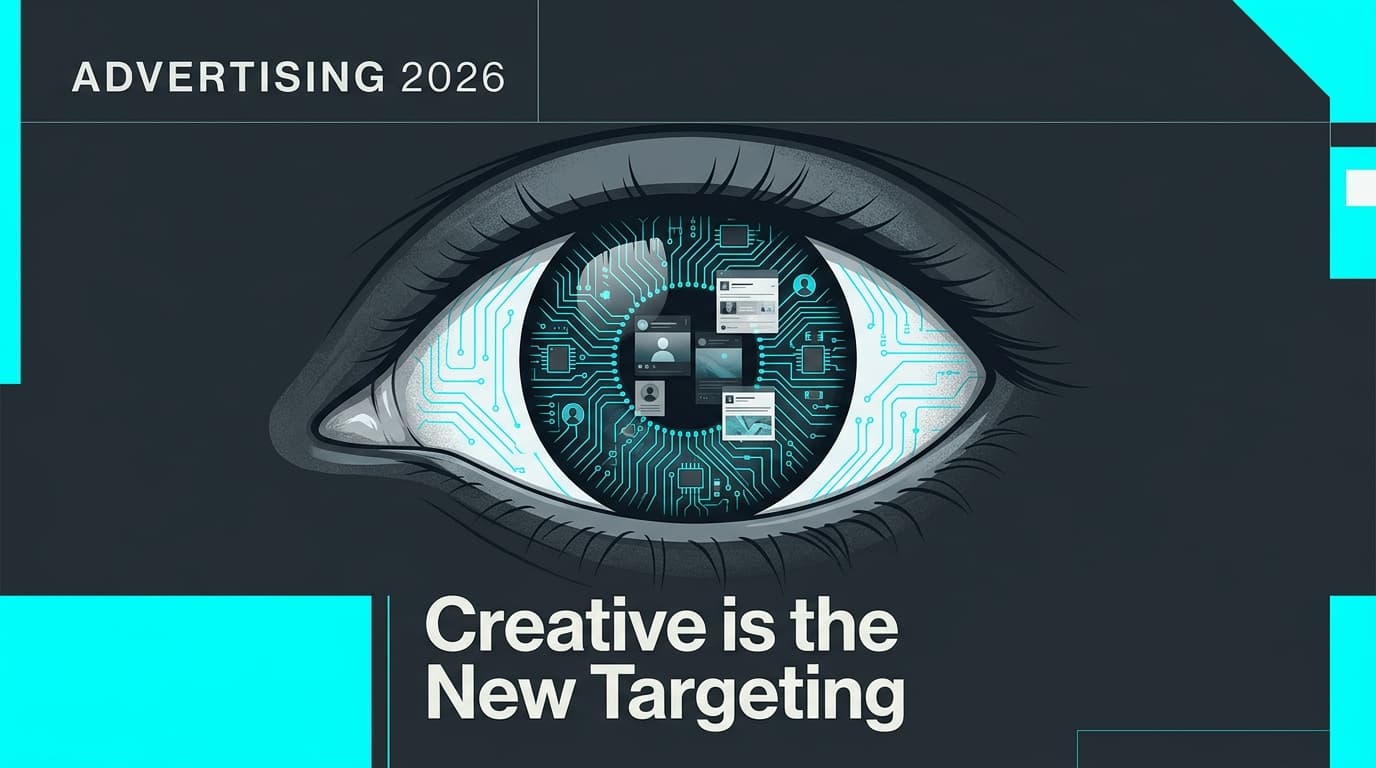
If you are still obsessing over age brackets, zip codes, and interest groups in your social ad manager, you are optimizing for a version of the internet that no longer exists. The question most marketers are googling right now isn't 'how do I find my audience?' but rather 'why is the algorithm ignoring my targeting settings?' The answer is uncomfortable: the platforms don't need your input anymore. They have something better—your creative.
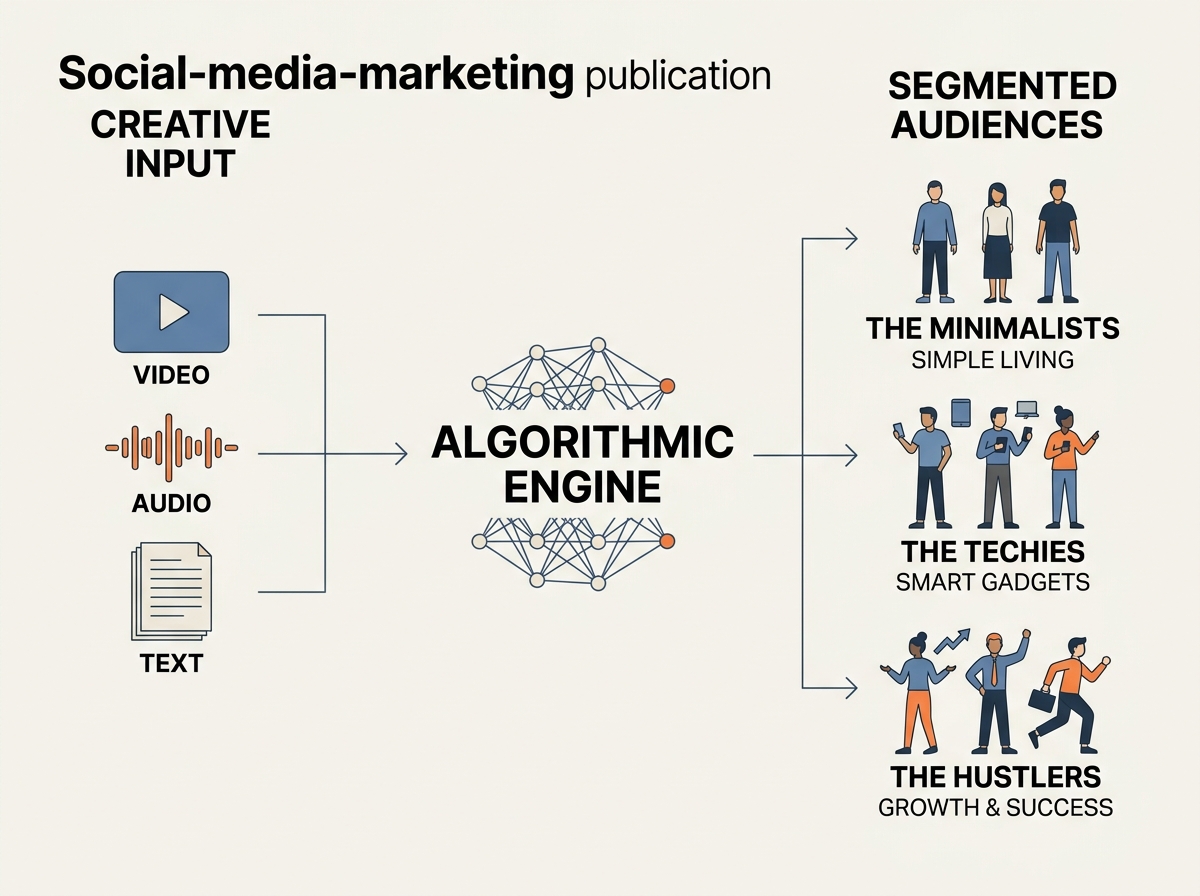
In 2026, we have reached the logical conclusion of the automation trend that began with Meta's Advantage+ and TikTok's Smart Targeting. Manual levers have been deprecated or rendered toothless. Today, the creative asset itself is the targeting. When you upload a video to TikTok or a Reel to Instagram, the machine learning models don't wait for you to tell them who should see it. They 'watch' the video, transcribe the audio, analyze the objects in the frame, and then test it against a micro-segment of users whose recent behavior suggests they'll resonate with that specific aesthetic and message.
TL;DR
- Demographics are secondary: Algorithmic systems now prioritize visual and auditory signals over manual interest toggles.
- The Hook is the Filter: Your first three seconds determine which 'neighborhood' of the internet your ad is served to.
- Broad is the new Narrow: Running ads with zero targeting constraints allows the algorithm to find buyers you didn't know you had.
- Creative Diversification: Success in 2026 requires testing multiple 'creative angles' rather than multiple 'audience sets.'
The Mechanism: How Creative Signals Replace Interest Toggles
To understand why creative is the new targeting, we have to look at how the 'black box' of modern social advertising actually functions. Five years ago, you might have targeted 'people interested in luxury travel.' Today, Meta's systems look at the 150,000 signals a user generates daily—everything from how long they linger on a specific shade of blue to the speed at which they scroll past a certain type of font.
When you launch an ad on Meta or TikTok today, the platform performs a multi-stage analysis known as 'Content-Based Filtering.' First, the Computer Vision (CV) and Natural Language Processing (NLP) models scan your asset. If your video features a creator talking about 'morning skincare routines' while holding a glass bottle in a brightly lit bathroom, the algorithm immediately buckets this into 'High-End Beauty' and 'Wellness.'
How the Instagram algorithm works in 2026
According to recent internal benchmarks from leading performance agencies, ads with 'Broad' targeting (age 18-65+, no interests) are now outperforming interest-stacked campaigns in 74% of A/B tests. This isn't because the audience doesn't matter; it's because the algorithm is better at finding the audience through the creative than you are through a list of keywords. If your creative looks like a 'mom-vlog,' the algorithm will find moms. If it looks like a 'tech-review,' it will find the early adopters. Your creative is the signal; the algorithm is the amplifier.
The Three-Second Filter: Using Hooks to Qualify Leads
Because the algorithm uses initial engagement to determine who to show the ad to next, your 'hook'—the first three seconds—is your most powerful targeting tool. If your hook is too broad, you attract 'cheap' engagement from people who will never buy, which trains the algorithm to keep showing your ad to non-buyers. This is the 'Engagement Trap.'
Consider a brand selling high-end ergonomic office chairs.
- Bad Hook: 'Do you sit at a desk?' (Too broad. Everyone sits at a desk. You'll get clicks, but the algorithm will serve the ad to students, gamers, and retirees alike, driving up your CPA.)
- Good Hook: 'If your lower back hurts after 8 hours of deep-work coding, listen up.' (Highly specific. It uses industry jargon—'deep-work coding'—and a specific pain point. Only your target audience will stay past the three-second mark.)
By the time the user reaches the five-second mark, they have 'self-segmented.' The algorithm notices that 90% of the people who watched past five seconds have 'Software Engineer' in their LinkedIn profile or follow 'Productivity' accounts. It then doubles down on that segment. You didn't have to select 'Engineers' in the ad manager; your hook did it for you.
The best time to post on Instagram 2026
The Aesthetic Signal: Why 'Vibe' is a Demographic
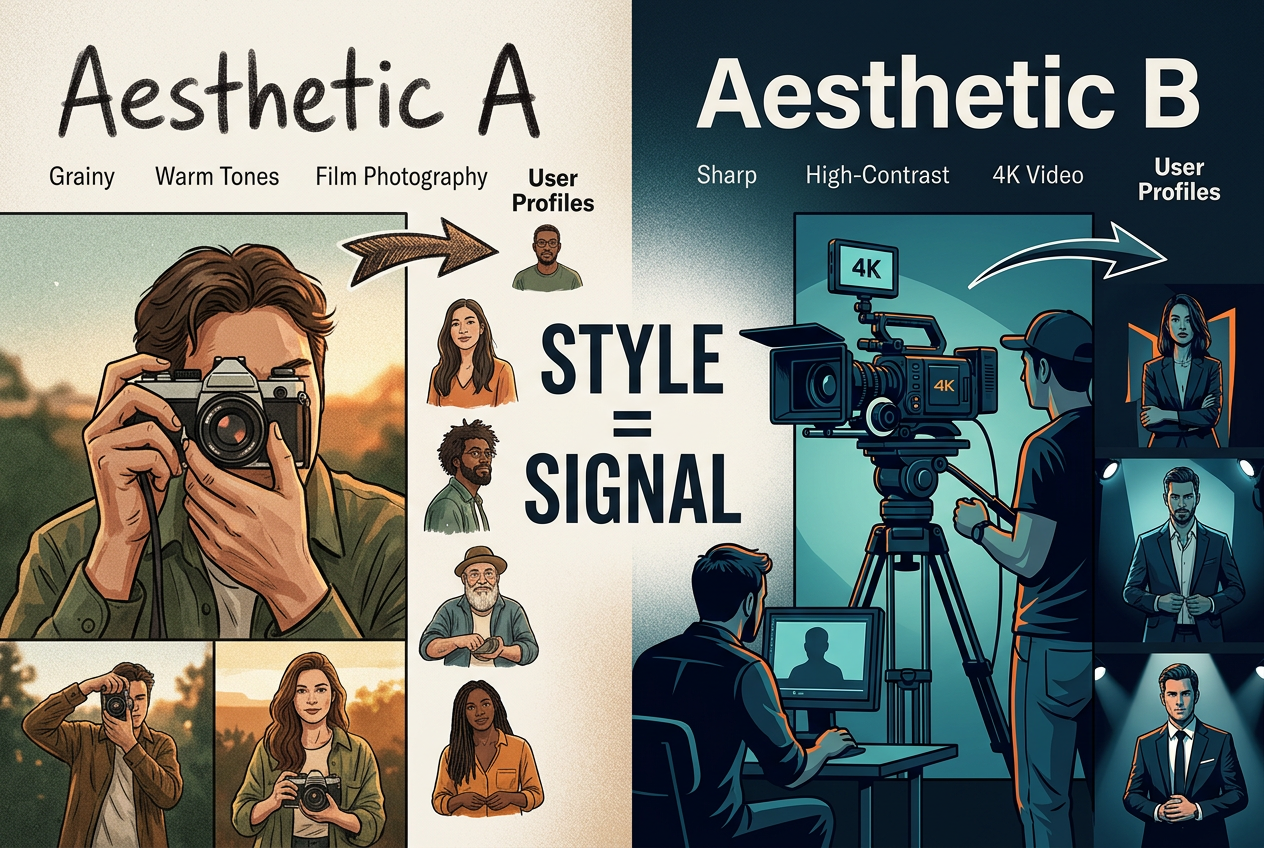
In 2026, the visual aesthetic of your ad—the color grading, the pacing of the cuts, the choice of music—acts as a demographic filter. We see this clearly in the 'Wanderlust Week' initiative recently launched by TikTok and the Philippine Department of Tourism [S5]. By using creator-led storytelling, the campaign doesn't just 'target travelers'; it targets specific types of travelers based on the visual language of the creators.
A high-energy, fast-cut video with trending phonk music signals to the algorithm that this content belongs in the feeds of Gen Z 'adventure seekers.' Conversely, a slow-paced, cinematically shot video with lo-fi beats and soft pastel colors signals 'luxury relaxation' or 'digital nomad wellness.'
This is why 'Brand Guidelines' are increasingly being replaced by 'Creative Personas.' If your brand only has one visual style, you are effectively only targeting one demographic. To scale, you must diversify your aesthetic. A brand like Liquid Death doesn't just run 'funny' ads; they run 'horror' ads, 'punk' ads, and 'health-parody' ads. Each visual style unlocks a different pocket of the algorithm's vast user base.
The Complexity Gap: Solving the Local and B2B Hurdles
While automation works wonders for global e-commerce, it presents unique challenges for local businesses and B2B marketers. A recent report noted that 61% of CMOs find local marketing too complex in the age of AI [S1]. The 'Creative as Targeting' model requires a high volume of assets, which is difficult for a business with 500 local branches.
For local brands, the 'creative signal' must include geographic cues. The algorithm is smart, but it still needs help. Including a local landmark in the background of your video or mentioning the city name in the first text overlay provides the necessary metadata for the 'Smart Targeting' systems to prioritize local delivery without you having to manually draw a 5-mile radius (which often leads to high CPMs due to audience fragmentation).
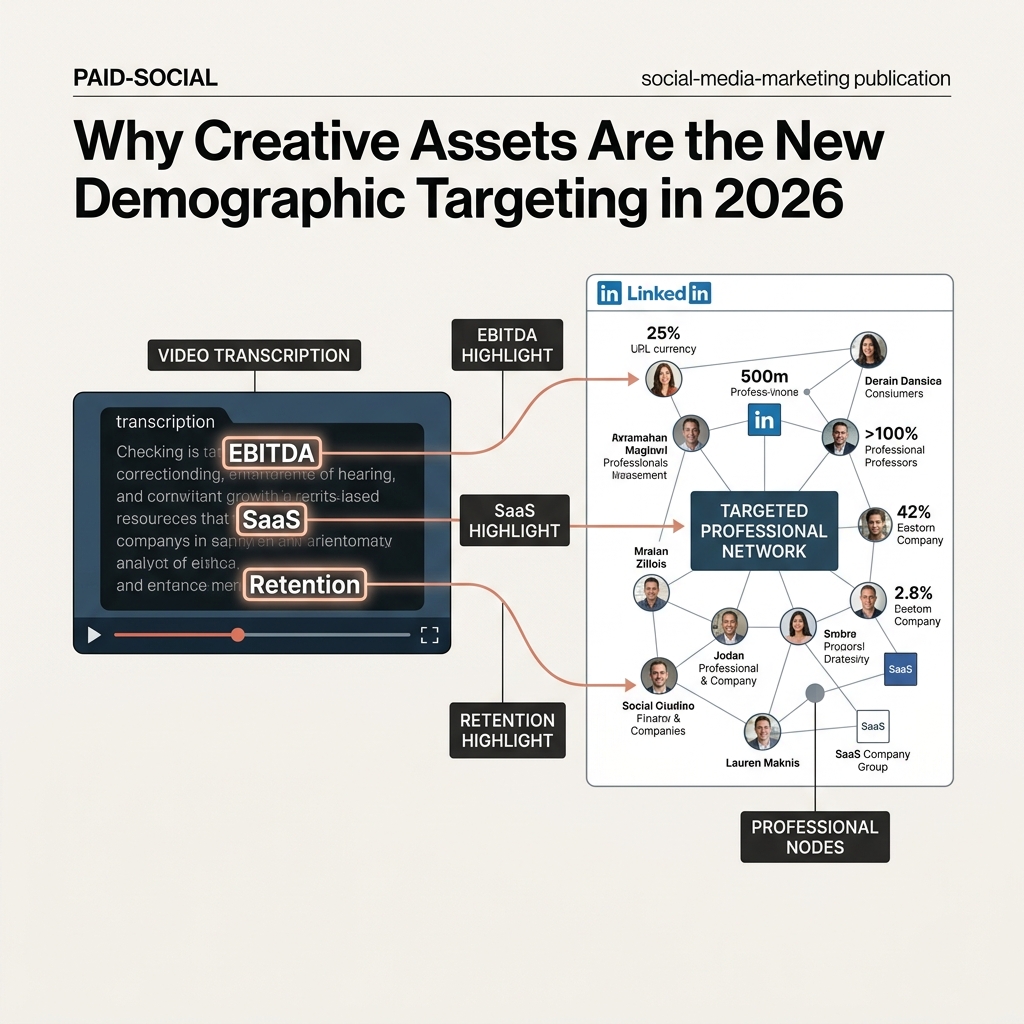
In the B2B space, LinkedIn has followed suit. The LinkedIn algorithm in 2026 now prioritizes 'Dwell Time' on specific professional topics over job-title targeting [S4]. If you post a long-form video discussing 'EBITDA multiples in SaaS acquisitions,' the algorithm analyzes the transcript. It then delivers that content to users who have recently engaged with similar financial content, regardless of whether their job title is 'CEO' or 'Analyst.' The content itself defines the professional circle.
Strategic Pivot: How to Manage Ads in the Creative Era
So, what does this mean for your daily workflow? The role of the 'Media Buyer' is evolving into the 'Creative Strategist.' You are no longer a pilot tweaking dials; you are a scientist running experiments.
- Stop Fragmenting Budgets: Instead of 10 ad sets with different interests, run one 'Broad' ad set with 10 different creative concepts. Let the algorithm's 'Predictive Modeling' decide which creative goes to which person.
- Speak the Platform's Language: Use native tools. Meta's 'Standard Enhancements' and TikTok's 'Creative Assistant' aren't just suggestions; they are ways to feed the algorithm's preferred data formats.
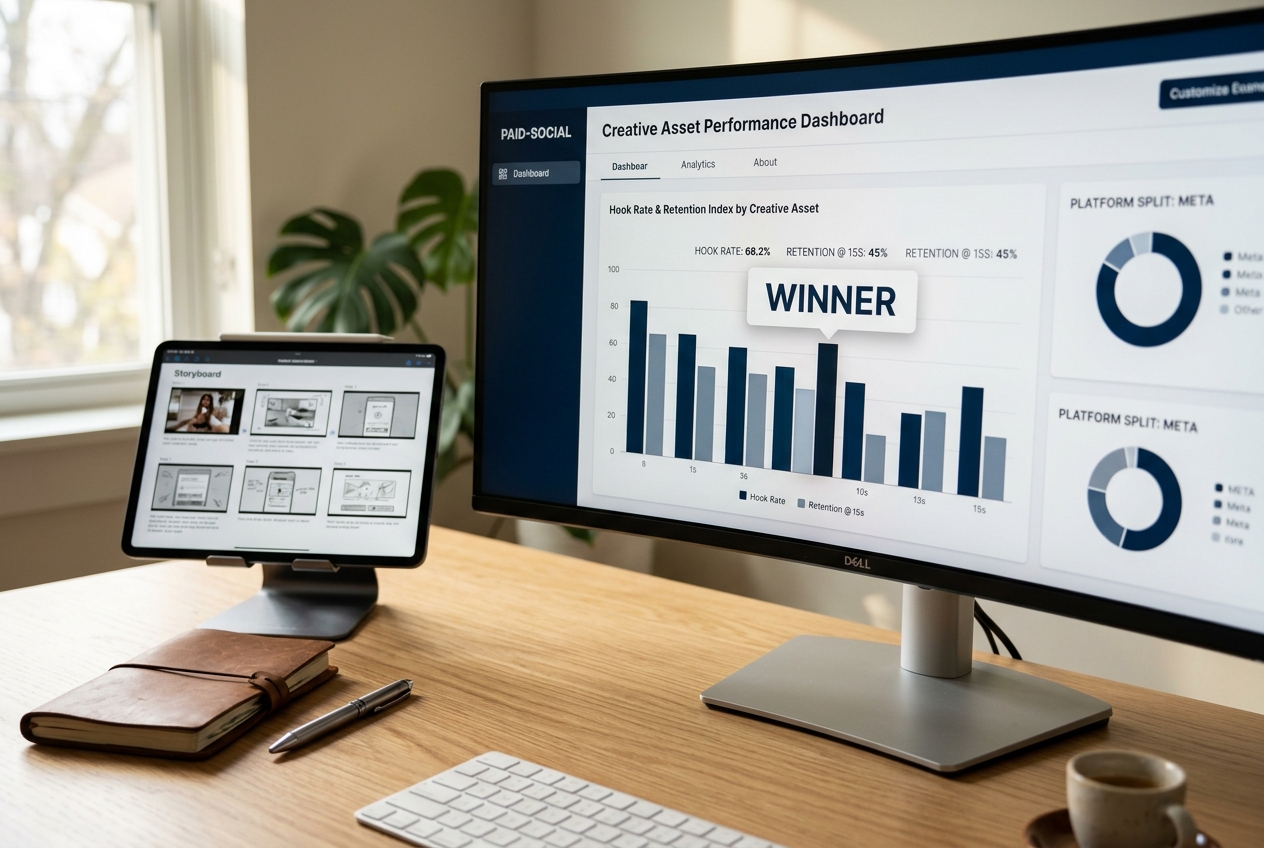
- Analyze 'Hook Rates' over 'CTR': Click-through rate tells you if someone went to your site. 'Hook Rate' (the percentage of people who watched 3+ seconds) tells you if your targeting is working. If your hook rate is high but your conversion is low, your creative is targeting the wrong people.
- Iterate on 'Winning' Signals: If a video featuring a 'Green Screen' background outperforms a 'High-Production' studio shoot, don't just make more videos. Analyze why. Is it the informal tone? The fast pacing? The visual clarity of the text? Double down on the signal, not just the format.
As we look toward the second half of 2026, the divide between 'content' and 'targeting' will vanish entirely. Your ad doesn't find an audience; it is the audience. Build it with that intentionality, and the algorithm will do the rest.
FAQ