
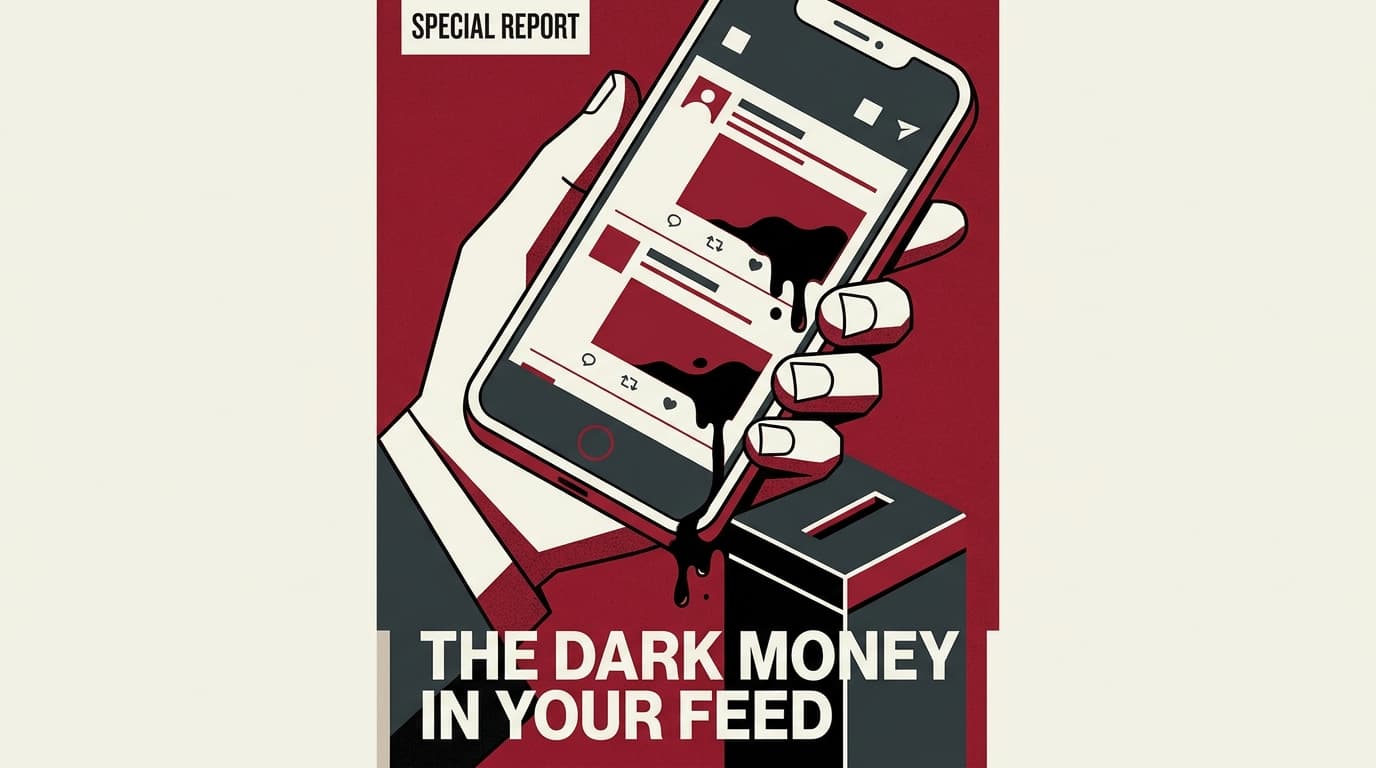
If you’re scrolling through your Reels or TikTok feed lately and feel like every second video is a ‘day in the life’ that somehow ends in a subtle nod to a local zoning board candidate or a state senator, you aren't imagining things. You’re witnessing the largest, least-regulated pivot in the history of political campaigning.
For decades, the math of political advertising was simple: buy the local news block, hit the 50+ demographic, and file your disclosures with the FCC. But in the 2026 election cycle, the money has moved. It has flowed into the pockets of micro-influencers and regional creators who don't just command attention—they command trust. The problem? Unlike a 30-second spot on ABC, these endorsements often lack the 'Paid for by' disclaimer, creating a massive accountability gap that is currently warping the digital landscape.
TL;DR
- The Shift: Political spending is moving from high-CPM linear TV to low-cost, high-trust creator networks.
- The Loophole: Current FTC and FEC rules are struggling to catch 'organic' political endorsements that are actually paid placements.
- Brand Safety: Non-political advertisers are seeing their content sandwiched between undisclosed political propaganda, risking brand association issues.
- Algorithm Impact: New features allowing users to reset their algorithms (per May 2026 updates) are being weaponized by political operatives to 're-seed' specific narratives.
The Mechanism of Undisclosed Political Influence
To understand why this is happening now, we have to look at the economics of the 2026 cycle. Traditional ad inventory on Meta and Google is increasingly expensive and heavily scrutinized. Meta’s ad library provides a transparent look at every dollar spent on 'Issues, Elections, or Politics.' For a campaign manager, that transparency is a bug, not a feature.
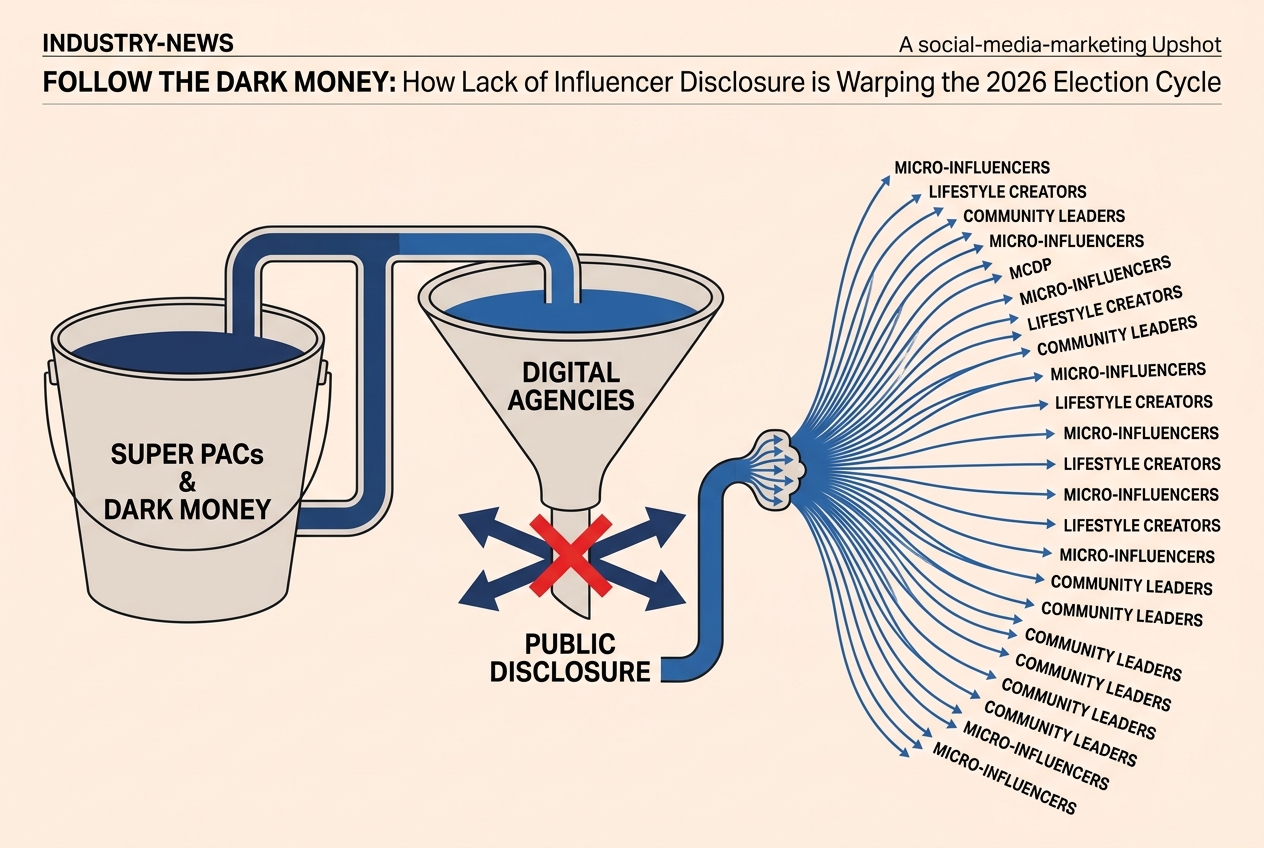
By contrast, hiring 500 micro-influencers in a swing district to 'mention' a candidate’s stance on a local issue—without using the official ad tools—is nearly impossible to track. This isn't just a theory. According to internal benchmarks from agency strategists specializing in 'earned' reach, these shadow campaigns can deliver a 4x higher engagement rate than traditional sponsored posts because they bypass the 'ad' label that triggers a user's skepticism.
Think of it like a restaurant review. If a food critic tells you the steak is good, you might believe them. If you see a 'Sponsored' tag on their post, you know they were paid. But if they just happen to mention they had a great meal while talking about their day, your guard is down. Political operatives are now applying this 'lifestyle' veneer to partisan messaging. They aren't asking for a vote; they’re 'sharing their concerns' about a policy, funded by a 501(c)(4) that doesn't have to disclose its donor list.
Why the FTC Disclosure Rules Are Failing the 2026 Cycle
The FTC’s Endorsement Guides are clear on paper: if there is a 'material connection' between an endorser and an advertiser, it must be disclosed. However, the enforcement mechanism is built for consumer goods, not ideological warfare. When a creator promotes a skincare brand without a tag, the harm is a misled consumer. When they promote a political candidate, the harm is a distorted democratic process.
How the FTC is updating its influencer guidelines
Furthermore, the definition of 'payment' has become blurred. We are seeing a rise in 'experiential' political compensation. A creator isn't given a check; they are given exclusive access to a high-profile event, a private briefing with a candidate, or 'consulting fees' for a non-existent project. Since no direct 'ad' was purchased, the platforms' automated detection systems—which look for keywords like 'vote' or 'election' in paid headers—often miss the content entirely.
In May 2026, Instagram introduced a feature allowing users to 'reset' their Reels algorithm [S1]. While intended to give users a fresh start, political firms are already using this to their advantage. By flooding the 'fresh' feeds of users who have just reset their preferences with high-engagement, undisclosed political content, they can effectively 're-capture' an undecided voter’s feed before the algorithm learns to filter for diversity of thought.
The Brand Safety Crisis for Non-Political Advertisers
If you are a brand marketing lead for a CPG or SaaS company, you might think this is a 'politics problem.' It’s not. It’s a brand-safety nightmare.
When you buy a 'Reach and Frequency' campaign on TikTok or Instagram, your ad is placed in a feed. If that feed is currently being manipulated by a network of undisclosed political influencers, your brand is effectively subsidizing that content. More importantly, your 15-second spot for a new energy drink might appear immediately after a creator delivers a highly divisive, undisclosed political rant.
We’ve seen this before, but the scale in 2026 is unprecedented. Per recent data from a leading social listening platform, nearly 30% of 'viral' political content in the first half of 2026 originated from accounts that do not primarily identify as political. They are fitness influencers, 'mom-bloggers,' and tech reviewers. For a legacy brand, appearing next to this content is a high-risk gamble. If the creator is eventually 'outed' as a paid operative, every brand that appeared in their feed during that period faces a guilt-by-association backlash.
Navigating brand safety in a polarized social climate
The Algorithm Arms Race: AI and Unoriginal Content
Platforms are trying to fight back, but they are playing catch-up. Meta recently announced it would penalize 'unoriginal' posts more heavily [S4]. This is a direct shot at political 'bot farms' that rip and re-upload the same partisan clips across thousands of ghost accounts. By prioritizing the original creator, Meta hopes to cut off the oxygen for low-quality political spam.
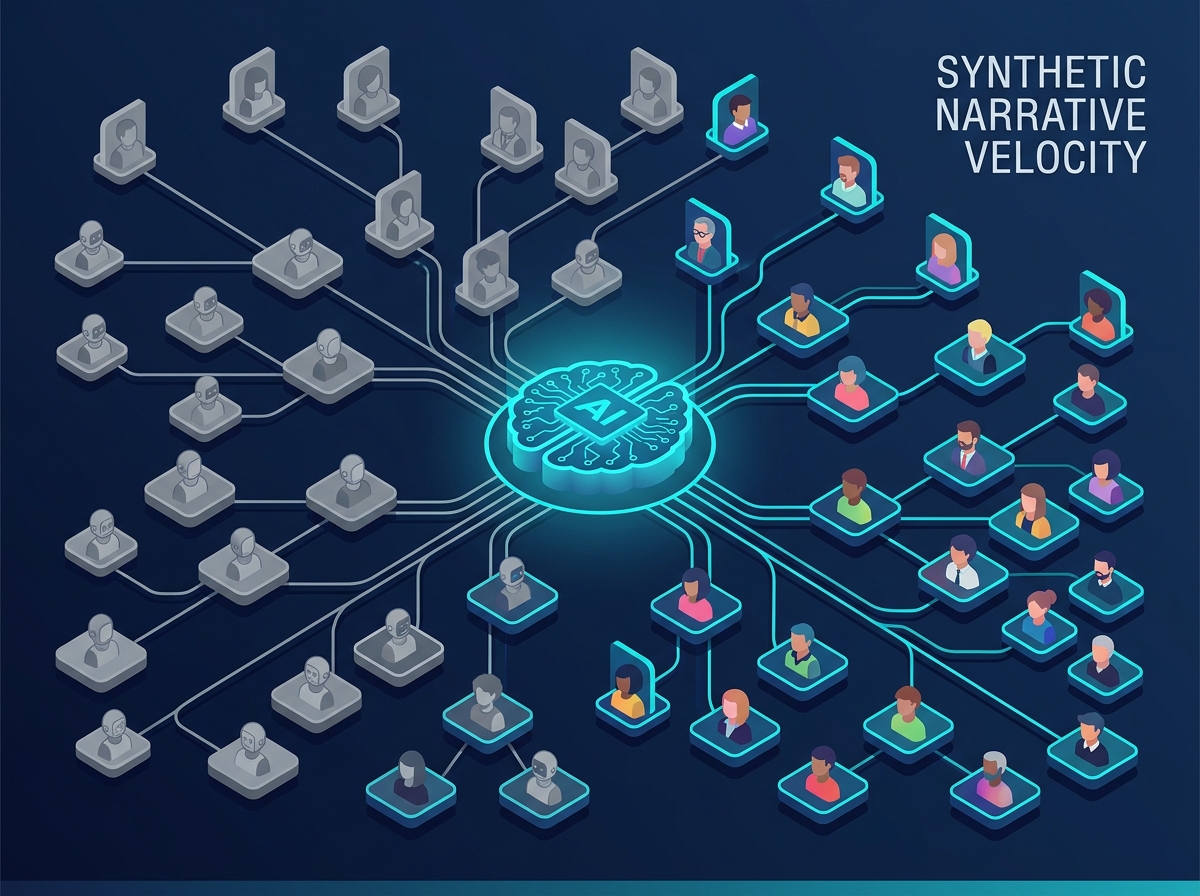
However, AI is making this defense obsolete. Tools like those recently expanded by Famoid [S2] and others use AI to generate 'unique' engagement patterns and even slightly modify video content so it passes as 'original' to the algorithm. A political message can now be rewritten by an LLM 1,000 times, voiced by 1,000 different AI avatars, and distributed across 1,000 different accounts. Each one looks original to the platform’s current detection systems.
TikTok is also leaning into AI ad formats [S5], which further muddies the waters. As AI-generated creators become more indistinguishable from real people, the line between a 'personal opinion' and a 'programmed message' disappears. If a virtual influencer doesn't disclose its funding source, who does the FTC fine? The developer? The PAC that rented the API? The legal framework is currently a sieve.
Measurement Gaps: How Much 'Influence' Is Actually Being Bought?
The most frustrating part for strategists is the lack of a 'Single Source of Truth.' In traditional media, we have Nielsen. In digital ads, we have the Meta Ad Library. In political influencer marketing, we have... nothing.
We know the money is moving because we see it in the FEC filings of the agencies—not the creators. When a 'Digital Strategy Firm' receives $5 million from a Super PAC, that money is often subdivided into hundreds of $500 Venmo payments to college-aged creators. These transactions are invisible to the public and to the platforms.
Professor Watson’s recent work on advanced analytics in social marketing [S3] suggests that we need a new way to measure 'narrative velocity' rather than just 'ad spend.' If a specific political talking point suddenly appears across 400 disparate accounts in 24 hours without a corresponding ad buy, that is a 'synthetic' trend. Until we have tools that can flag these patterns in real-time, marketers are flying blind.
What This Means for Your Strategy Tomorrow
You cannot wait for the FEC or the FTC to save your brand’s feed. You have to take proactive steps to ensure your 2026 budget isn't caught in the crossfire of a dark-money influence campaign.
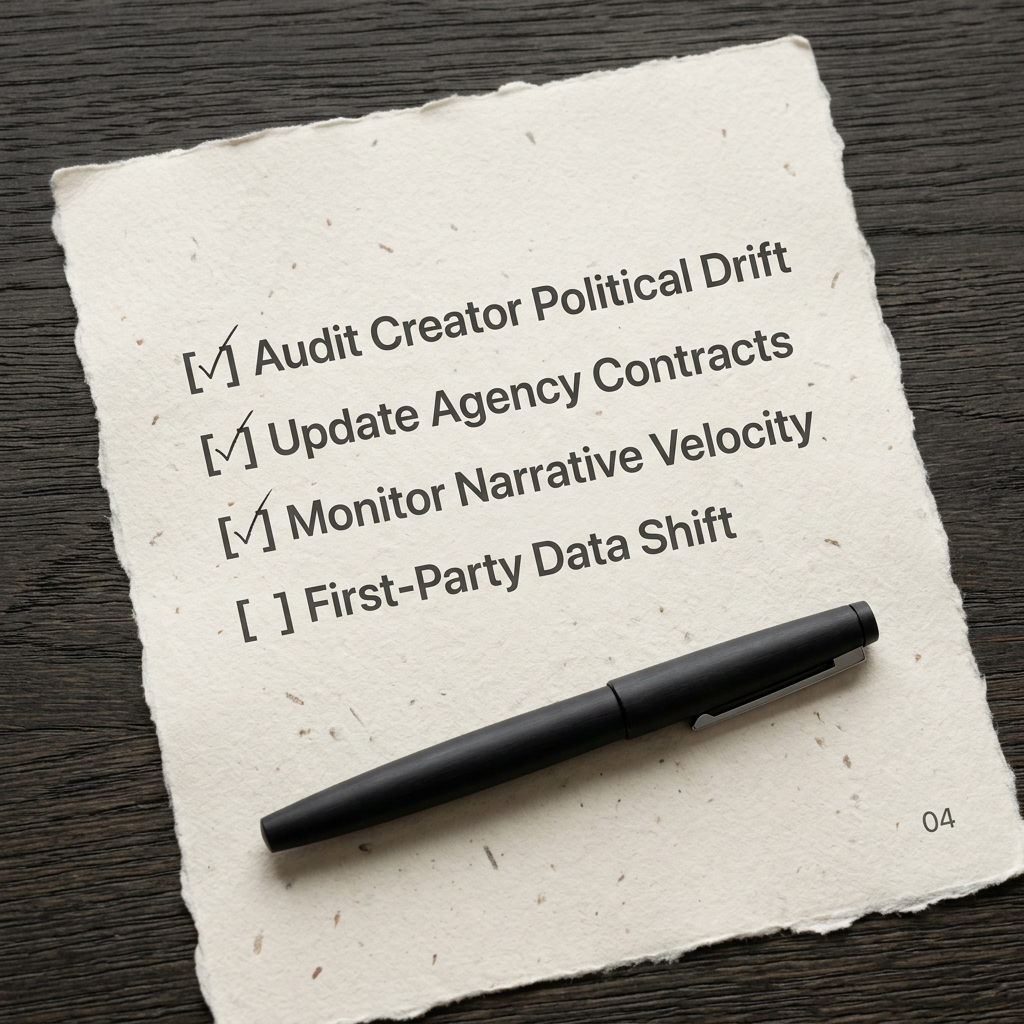
1. Audit Your 'Whitelists' Monthly If you are running creator-led campaigns, don't just look at their engagement rates. Look at their 'political drift.' Use tools like Brandwatch to see if a creator you’ve worked with in the past has started echoing specific partisan talking points without disclosure. If they have, they are a brand-safety risk.
2. Demand Transparency in Agency Contracts If you use a third-party agency for influencer sourcing, add a 'Political Neutrality and Disclosure' clause. Ensure that the creators they hire for you are not simultaneously on the payroll of a political consulting firm. The conflict of interest is real, and the reputational damage is yours to bear.
3. Shift to 'Verified' Environments As the 2026 election nears, consider moving a larger portion of your budget to environments with higher barriers to entry. This might mean more spend on YouTube Select or specific 'Premium' inventories where the platform has a higher level of oversight over the surrounding content.
4. Monitor the 'Algorithm Reset' Behavior With Instagram's new reset feature, expect volatility in your organic reach. Users who reset their feeds will be 'up for grabs' by every algorithm-gaming political firm in the country. This is the time to lean into your own first-party data. Don't rely on the 'For You' page to find your customers; use your email lists and SMS channels to bring them back to your owned properties where the environment is controlled.
The 2026 cycle will be the first 'post-disclosure' election, where the most effective messages aren't the ones you see in the sidebar, but the ones you hear from the people you follow. As a marketer, your job is no longer just about reaching an audience—it's about ensuring that the audience you reach hasn't been systematically misled by the very platform you're paying to be on.
FAQ