
Most performance marketers suffer from the 'Launch Day Itch.' You've spent weeks on creative, the offer is live, and you want to see results immediately. So, you frontload. You dump 40% of your total campaign budget into the first 14 days, hoping to 'force' the algorithm to find your audience.
It’s a mistake that costs mid-market brands millions in wasted spend every Q4. When you frontload, you aren't just buying reach; you are buying into the most volatile period of an ad set's life. You trigger a violent 'learning phase' where the platform's delivery system—whether it's Meta’s Advantage+ or TikTok’s Smart Performance Campaigns—is essentially guessing who your customer is. By the time the algorithm actually figures it out, your budget is depleted, and you're forced to scale down just as efficiency begins to peak.
By following this guide, you will transition to the Momentum Scaling model. You'll learn how to protect your margins during the high-CPM spikes of late November and December, and how to use data-backed 'stopping rules' to ensure you aren't chasing statistical noise.
Key takeaways:
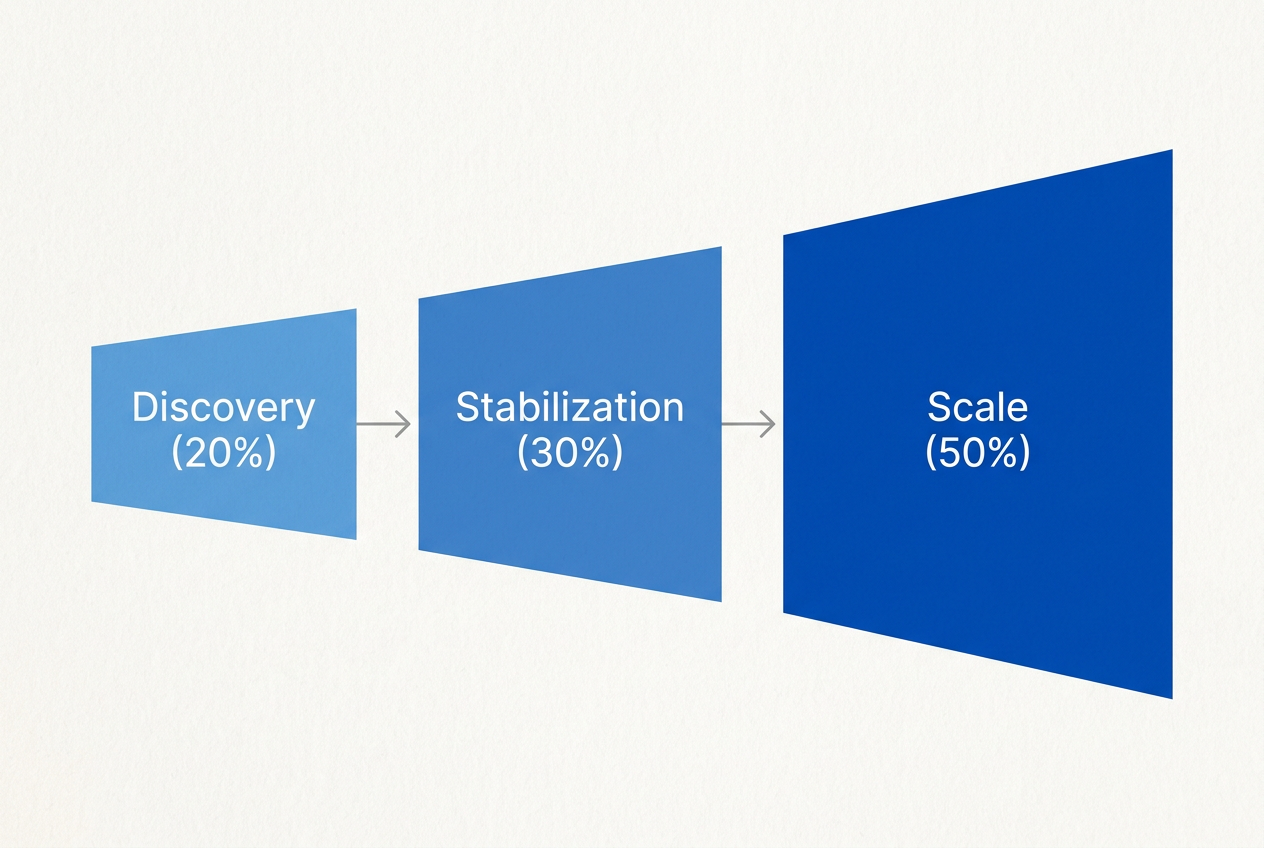
- The 20/30/50 Rule: Allocate only 20% of budget to the initial learning phase, 30% to stabilization, and 50% to the high-intent window.
- Learning Phase Protection: Avoid budget edits larger than 20% to prevent resetting the algorithm’s progress.
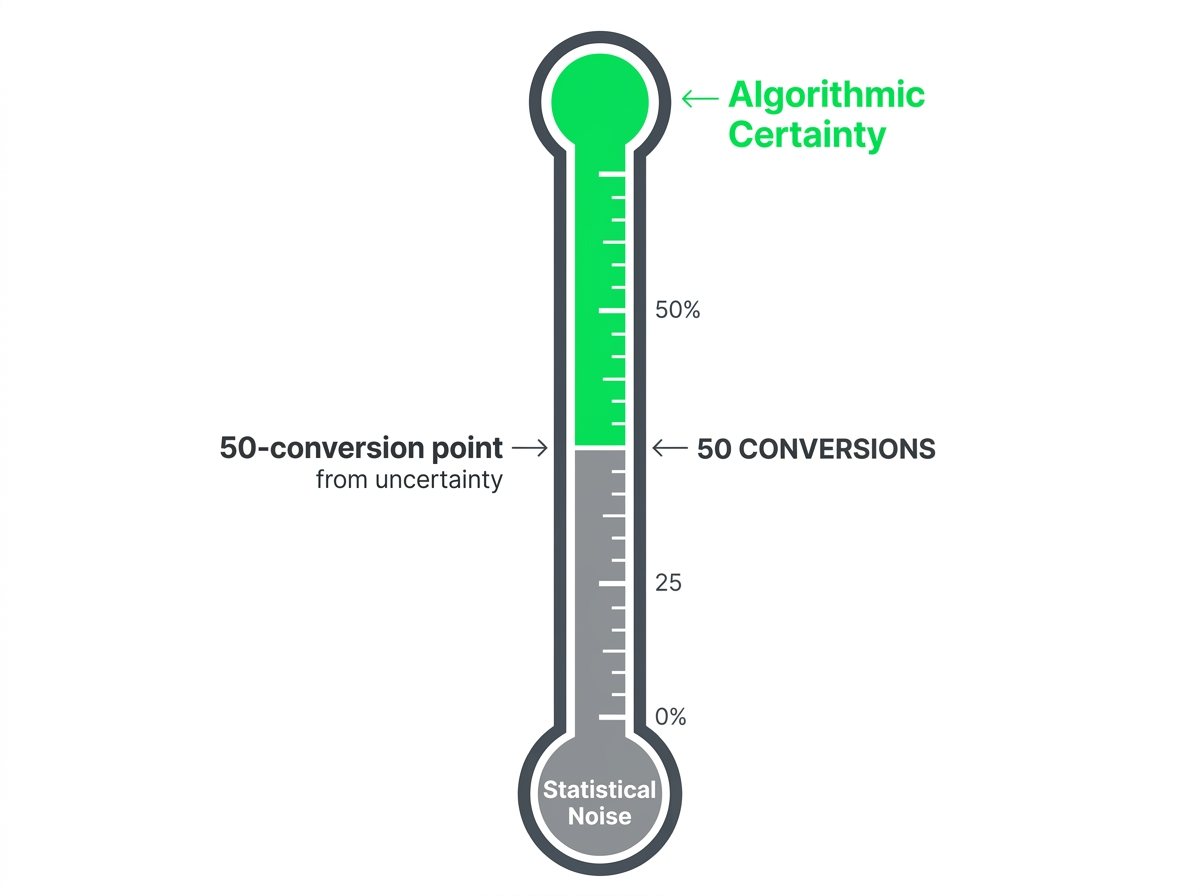
- Statistical Significance: Use a 50-conversion threshold before making major directional pivots.
- Competitive Pacing: Shift spend away from 'peak noise' days where CPMs can rise 300% without a proportional increase in intent.
Step 1: Establish Your Baseline Conversion Threshold
Before you touch a budget slider, you must define what a 'win' looks like in terms of data volume, not just ROI. The biggest killer of Q4 momentum is reacting to early statistical noise. As recently noted by research published in Search Engine Journal regarding AI visibility, data rankings are often unstable and represent statistical noise rather than true performance shifts until a specific volume is reached. The same applies to social auctions.
What to do: Calculate your 'Learning Phase Exit Number.' For Meta, this is typically 50 conversions per ad set per week. For TikTok, it’s closer to 20–30 conversions within a 48-hour window. If your daily budget cannot mathematically achieve these numbers based on your average Cost Per Acquisition (CPA), your campaign is dead on arrival.
Why it matters: If you underfund the start, you stay in the learning phase forever. If you overfund it (frontloading), you pay a 'volatility tax'—high CPMs for low-quality placements while the AI tests different pockets of the audience.
Common Pitfall: Setting a budget based on 'what we can afford to lose' rather than the platform's data requirements. If your CPA is $50 and you set a $20/day budget, you will never exit the learning phase. You aren't being conservative; you're being inefficient.
Step 2: Implement the 20/30/50 Pacing Framework
Traditional pacing is a flat line or a front-heavy curve. Momentum Scaling uses a back-heavy 'J-curve.' You want your highest daily spend to align with the period of highest historical conversion rate, not the start date of your campaign.
What to do: Divide your campaign duration into three phases.
- Phase 1 (Discovery - 20% Budget): First 7–10 days. Run at the minimum spend required to hit conversion thresholds.
- Phase 2 (Stabilization - 30% Budget): Days 11–20. Identify the top 20% of creatives and move budget into these winning assets.
- Phase 3 (Scale - 50% Budget): The final 10 days or the 'Peak Window.' This is where you aggressively scale the winners.
Why it matters: This prevents the 'Q4 Burnout' where brands are out of cash by December 15th, precisely when holiday shoppers are most desperate to buy. By protecting 50% of your spend for the end, you can outbid competitors who are currently scaling back due to exhausted budgets.
Common Pitfall: Moving into Phase 3 too early. If your ROAS isn't 15% above your break-even point by the end of Phase 2, do not increase spend. You cannot 'spend your way' out of a creative problem.
Step 3: Use Automated Rules to Prevent 'Manual Over-Optimization'
One of the most frequent errors social media managers make is 'tinkering.' Every time you change a budget by more than 20%, or change a targeting parameter, you risk resetting the learning phase. This is particularly dangerous during high-competition windows where every hour of downtime allows a competitor to snatch your auction placement.
What to do: Set up automated rules in Meta Ads Manager or TikTok Ads Manager to handle the heavy lifting.
- Rule A (The Floor): If ROAS is below [X] for the last 3 days, decrease budget by 10% (once every 48 hours).
- Rule B (The Ceiling): If ROAS is above [Y] and conversions > 10, increase budget by 15% (once every 48 hours).
- Rule C (The Kill Switch): If spend > 2x CPA with 0 conversions, pause the ad.
Why it matters: Automation removes the emotional impulse to 'do something' when you see a bad morning of performance. As The Guardian Nigeria recently explored regarding algorithmic reach, the system needs consistent signals to deliver content effectively. Constant manual changes break that signal.
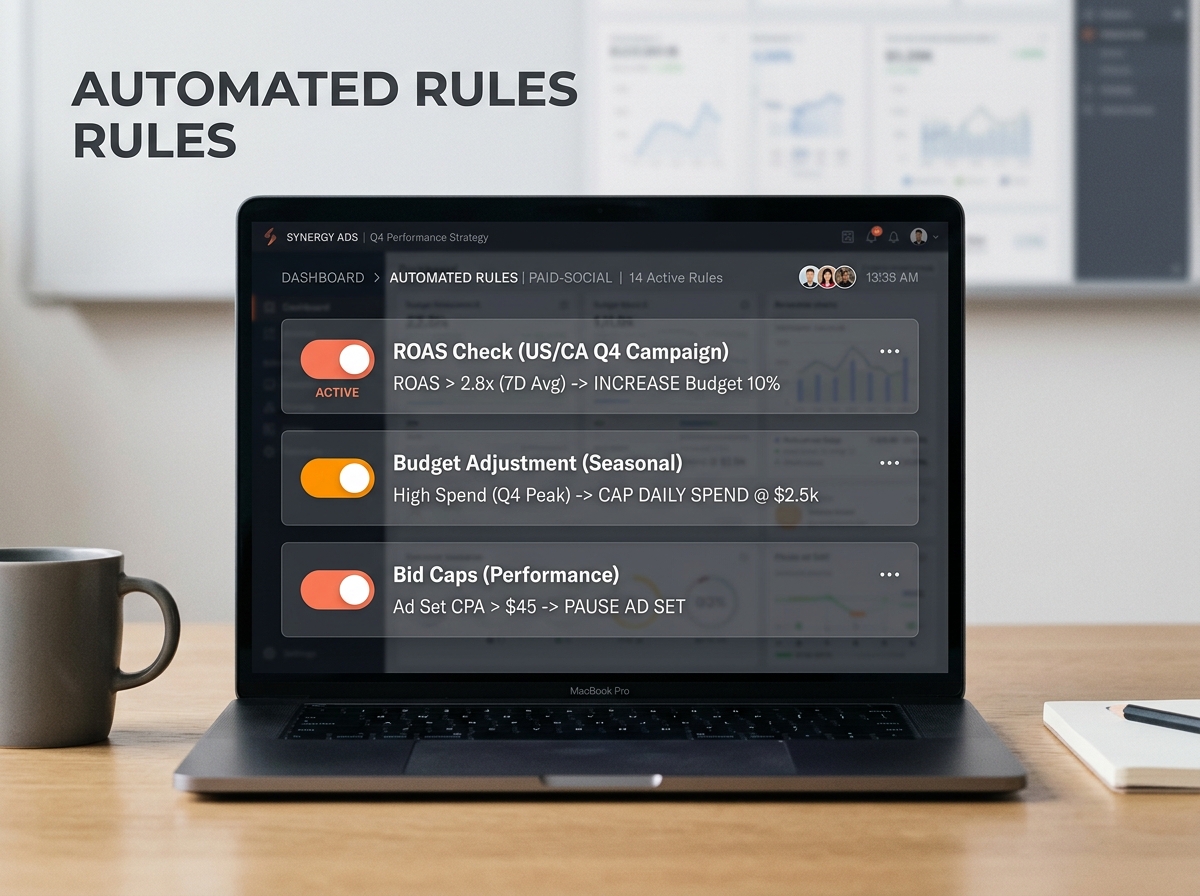
Common Pitfall: Setting rules that check performance on 'Today's Data.' Attribution lag (especially post-iOS 14) means today's data is always incomplete. Always set your rules to look at a 3-day or 7-day window.
Step 4: Diversify Creative by 'Intent Stage' to Sustain Reach
If you spend all your money on one 'hero' video, you will hit frequency fatigue within 14 days. To maintain momentum, you need a creative pipeline that mirrors your budget scaling.
What to do: Map your creative assets to your spend phases.
- Phase 1: Broad, educational content or 'problem-aware' ads.
- Phase 2: User-generated content (UGC), testimonials, and 'solution-aware' ads.
- Phase 3: High-urgency, offer-driven creative (e.g., 'Last Chance,' 'Limited Stock').
Why it matters: According to recent Influencer Marketing Hub reports on SaaS and travel campaigns, the most successful brands don't just spend more; they rotate creative to maintain high Click-Through Rates (CTR). High CTR signals to the algorithm that your ad is 'relevant,' which lowers your effective CPM in the auction.
How to lower ad frequency without cutting spend
Common Pitfall: Using 'Phase 3' urgency creative in 'Phase 1.' If you scream 'Sale Ends Now' to someone who doesn't know your brand, your engagement will be low, and the algorithm will bury your content.
Step 5: Verification — How to Know Momentum Scaling is Working
You know your strategy is working when your 'Efficiency Ratio' improves as spend increases. In a frontloaded model, ROAS typically drops as you spend more. In a Momentum Scaling model, ROAS should remain stable or even increase during the final 50% of spend.
What to do: Monitor your Incremental ROAS. Don't just look at the dashboard; look at your total business revenue relative to ad spend (MER - Marketing Efficiency Ratio). If you are scaling spend in Phase 3 and your total revenue is climbing without a spike in CAC (Cost Per Acquisition), you have successfully bypassed the learning phase volatility.
Verify that your 'Time in Learning Phase' metric in Meta is decreasing. If your ad sets are exiting the learning phase within 5 days and staying in 'Active' status for the remainder of the month, your pacing is optimized.
Understanding MER vs ROAS in 2026
Three Tactics to Try Next
Once you have mastered budget pacing, you can layer on these advanced tactics to further squeeze efficiency out of your Q4 spend:
- Bid Caps for Stability: Instead of 'Highest Volume' bidding, use Bid Caps during Phase 3. This prevents the platform from spending your money on overpriced impressions during peak auction times (like Black Friday morning).
- Creative Sandboxing: Run a separate 'Testing' campaign with a tiny budget to find winning creatives before moving them into your main Momentum Scaling campaign. This ensures Phase 3 is only fueled by proven winners.
- Cross-Platform Retargeting: Use your Phase 1 and 2 data from TikTok to create high-intent retargeting audiences on Meta. Often, the 'Discovery' phase is cheaper on TikTok, while the 'Conversion' phase is more stable on Meta.
[INTERNAL: The ultimate guide to cross-platform retargeting -> cross-platform-strategy-2026]
FAQ