

Why is there a static banner covering the bottom third of your $50,000 hero video? If you’ve spent any time on the YouTube mobile app in the last week, you might have noticed a shift that feels like a regression to 2012-era web browsing. YouTube is currently testing static image ads that appear during horizontal (landscape) mobile playback—a space previously reserved exclusively for high-engagement video content.
For brand marketing leads and agency strategists, this isn't just another placement. It’s a fundamental change to the visual hierarchy of the world’s most powerful video platform. If your creative team spent months perfecting the lower-third graphics of a tutorial or the framing of a cinematic wide shot, YouTube’s new experiment just put a 'buy now' sticker over their hard work.
Key takeaways
- The Format Shift: YouTube is testing static image overlays during full-screen landscape mobile playback, moving beyond the traditional 'below the video' placement.
- Viewability Risks: These ads directly obscure video content, potentially driving down organic engagement metrics and frustrating premium viewers.
- Reporting Complexity: While Google recently added dedicated reporting for new customer acquisition [S2], tracking the specific cannibalization of video by these static overlays remains opaque.
- Strategic Audit: Brands must now audit their 'safe zones' for video production to ensure critical information isn't blocked by dynamic ad overlays.
The anatomy of the interruptive static overlay
Think of your YouTube video as a high-end storefront window. For years, YouTube has allowed you to place posters next to the window (sidebar ads) or play a commercial before customers look through the glass (pre-roll). This new test, first reported in August 2026 [S1], is the equivalent of YouTube walking up and taping a flyer directly onto the glass while the customer is mid-gaze.
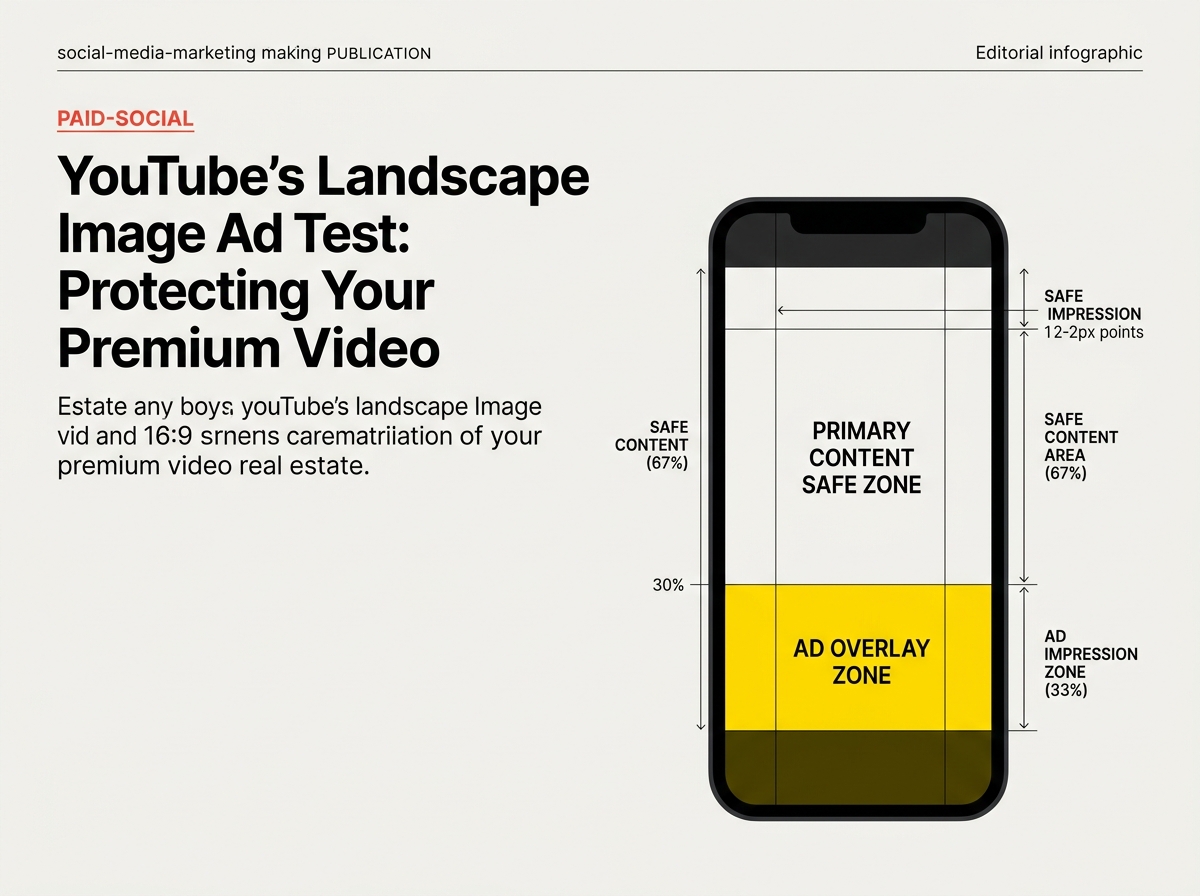
Technically, these ads function as dynamic overlays. They appear to be triggered by specific timestamps or user interactions within the mobile environment. Unlike the small, dismissible 'X' banners of the desktop past, these are designed for the mobile-first thumb. They are high-contrast, high-intent, and—most importantly—unavoidable if you want to keep watching the video in landscape mode.
This isn't happening in a vacuum. As platforms like Instagram test 'real-time' algorithm customization [S4], YouTube is under pressure to squeeze more revenue out of every second of attention. The problem? Video is a lean-back experience. Static images are lean-forward actions. Mixing the two creates a cognitive friction that most premium brands try to avoid.
How horizontal image ads threaten premium viewability
Viewability used to be a binary metric: was the ad on screen or not? In the era of the Nielsen and DoubleVerify merger [S3], the definition of 'quality' viewability is tightening. If an image ad for a competitor appears over your brand’s organic video, does your video still count as 'viewed' in a premium context?
For paid-social buyers, the concern is twofold: cannibalization and clutter. If you are running a TrueView campaign, you are paying for the user’s undivided attention to your video asset. If YouTube overlays a third-party static image ad from a different advertiser during your paid video, the value of that view is effectively halved. You are sharing the screen you thought you bought.
We are seeing early indications that these overlays are most prevalent on long-form content—educational videos, product reviews, and documentaries. These are the exact environments where 'safe zones' matter most. If a creator is showing a 'how-to' step at the bottom of the screen and a static ad for a VPN service pops up, the utility of the video drops to zero. The user doesn't blame the advertiser; they blame the platform and, by extension, the brand whose content is being obscured.
Auditing your placements in a 'static-first' mobile world
If you are managing a mid-to-large scale Google Ads account, you can't afford to wait for the 'test' to end. You need to know if your assets are being compromised now. While Google hasn't released a specific 'Image Overlay' toggle yet, the data is hidden in your placement reports.
Start by looking at your 'Mobile App' vs. 'Mobile Web' performance within the Google Ads dashboard. Historically, landscape overlays have been a desktop-only nuisance. The transition to mobile landscape means your high-production 16:9 assets are now vulnerable.
How to master Google Ads placement exclusions
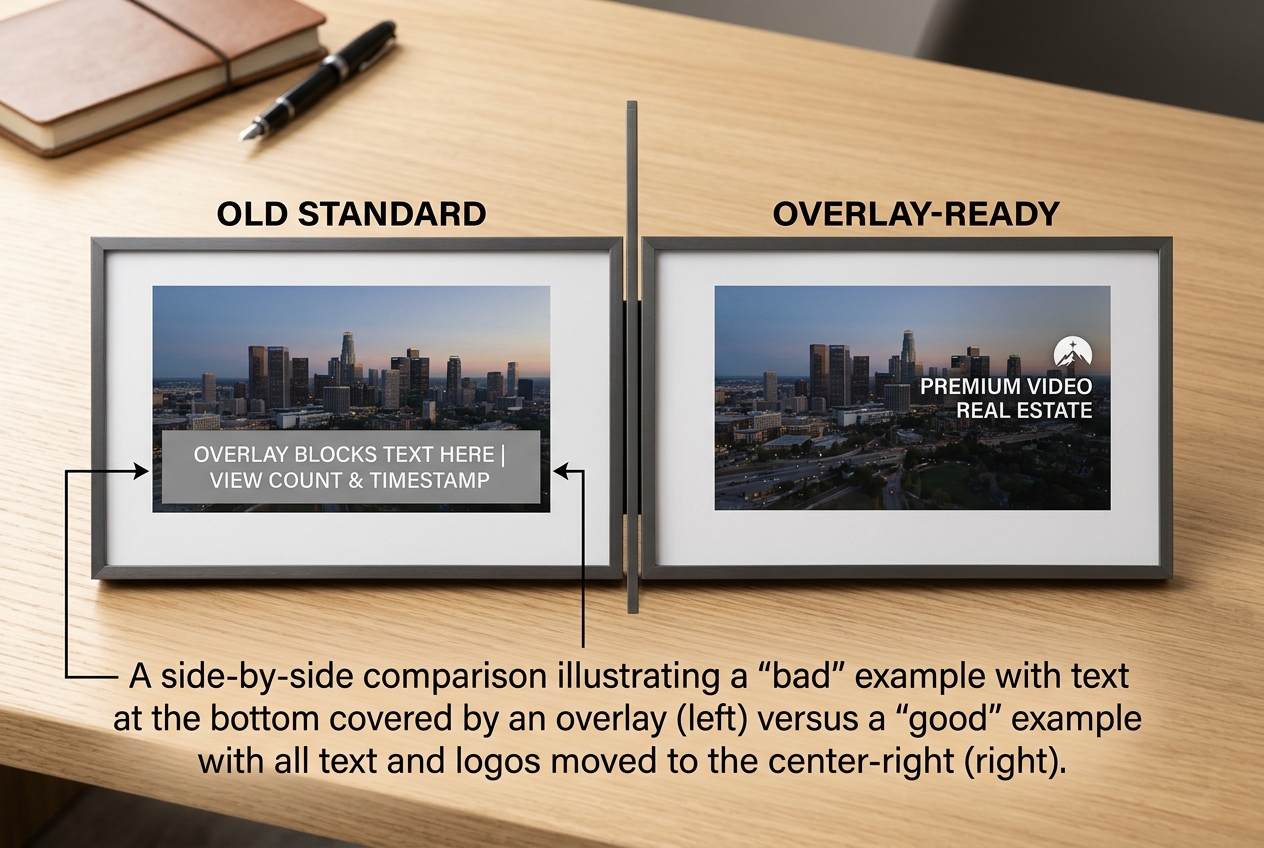
The 'Safe Zone' production shift
Until we have more control over these overlays, creative teams must adapt. This is similar to how we adjusted for the 'TikTok Safe Zone'—the areas blocked by the UI, captions, and profile picture.
- Elevated Lower-Thirds: Move all critical text, captions, and brand logos at least 25% up from the bottom of the frame.
- Center-Weighted Action: Keep the 'hero' of your shot in the middle horizontal band.
- Negative Space Strategy: Use the bottom third for non-essential environmental detail rather than crucial product shots.
Will static ads cannibalize TrueView performance?
There is a real risk that these ads will inflate 'interaction' rates at the expense of brand lift. A user might click the static image ad simply because they were trying to tap the video to pause it or reveal the playback bar. This 'fat-finger' traffic looks great in a spreadsheet but does nothing for your bottom line.
Compare this to the recent changes in Google Ads reporting, where they’ve added dedicated tracking for new customer acquisition [S2]. Google is clearly trying to give marketers more granular data to justify spend. However, if that spend is being directed toward 'accidental' clicks on landscape overlays, the ROI is illusory.
We recommend running a split test: one campaign targeting 'All Devices' and another excluding 'Mobile App' placements where these landscape overlays are most aggressive. Monitor the 'Earned Views' and 'Brand Lift' metrics closely. If your brand lift drops while your CTR spikes, you’re likely falling victim to interruptive clutter.
The broader industry context: Consolidation and transparency
The timing of this test is notable. As the industry watches the fallout of the Nielsen-DoubleVerify merger [S3], the demand for independent verification of ad quality is at an all-time high. Marketers are tired of 'black box' placements.
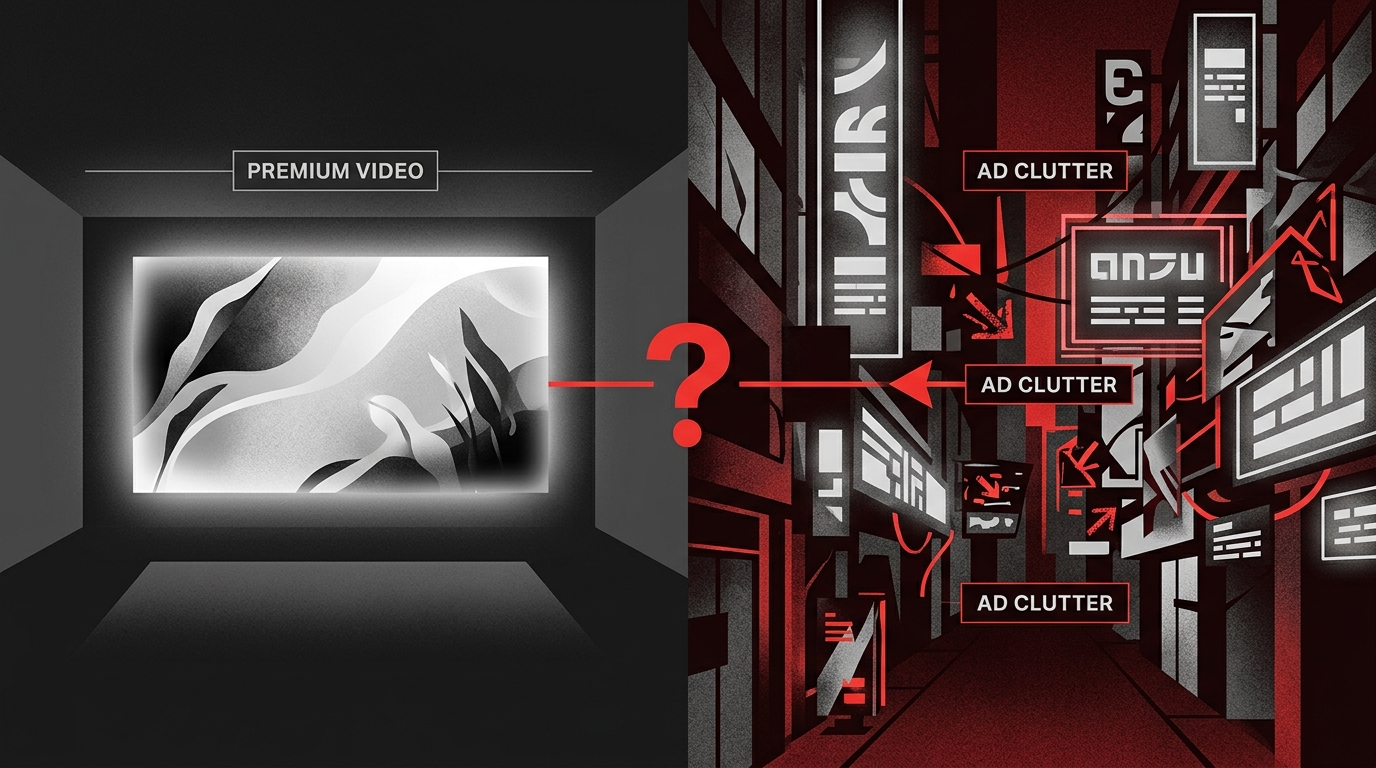
If YouTube continues to blur the lines between organic content, video ads, and static overlays, the push for third-party verification will become a roar. We’ve seen similar tensions in the TV world, with figures like David Ellison noting how mergers and delays impact the stability of the ad market [S5]. YouTube is a behemoth, but it isn't immune to the 'clutter tax.' If the platform becomes too noisy, premium spend will inevitably migrate to cleaner environments like Netflix or Disney+, which are currently allergic to the kind of overlay clutter YouTube is testing.
What this means for your strategy tomorrow
You don't need to pause your YouTube spend, but you do need to stop treating it as a 'set and forget' channel. The landscape has literally changed.
1. Update your Creative Briefs: Every video produced from this point forward needs a 'Landscape Overlay' safe-zone check. If your legal disclaimers are in the bottom 10% of the screen, they might as well not exist during this test.
2. Demand Granular Reporting: Use your Google account team to ask for specific data on image overlay impressions. Even if it isn't in the standard UI yet, they have access to internal beta reporting that can show how often your video is being shared with a static partner.
3. Re-evaluate 'Value' Placements: Often, we chase low CPMs by allowing our ads to run across all YouTube inventory. If these image ads are more prevalent on 'Made for Kids' or low-tier viral content, it might be time to tighten your inclusion lists to only include premium channels where YouTube is less likely to risk the user experience with aggressive overlays.
YouTube’s strength has always been its status as the 'big screen' of the pocket. By introducing static image ads into the landscape experience, they are testing the limits of that prestige. As a marketer, your job is to ensure your brand doesn't get lost in the noise.
[INTERNAL: The rise of ad-supported streaming tiers -> streaming-ad-wars-2026]
Conclusion: Navigating the new visual hierarchy
We are entering an era where the 'frame' is no longer sacred. Whether it’s Instagram’s real-time algorithm shifts [S4] or YouTube’s overlay experiments, the platforms are prioritizing immediate click-revenue over long-term aesthetic integrity.
For the practitioner, this means becoming a guardian of the viewer's experience. If you wouldn't want to watch your own ad with a giant 'Buy Insurance' banner covering the lead actor's face, your customers won't either. Audit your placements, protect your safe zones, and keep a close eye on your brand lift data. The 'landscape' is changing—make sure your brand is still visible in it.
FAQ