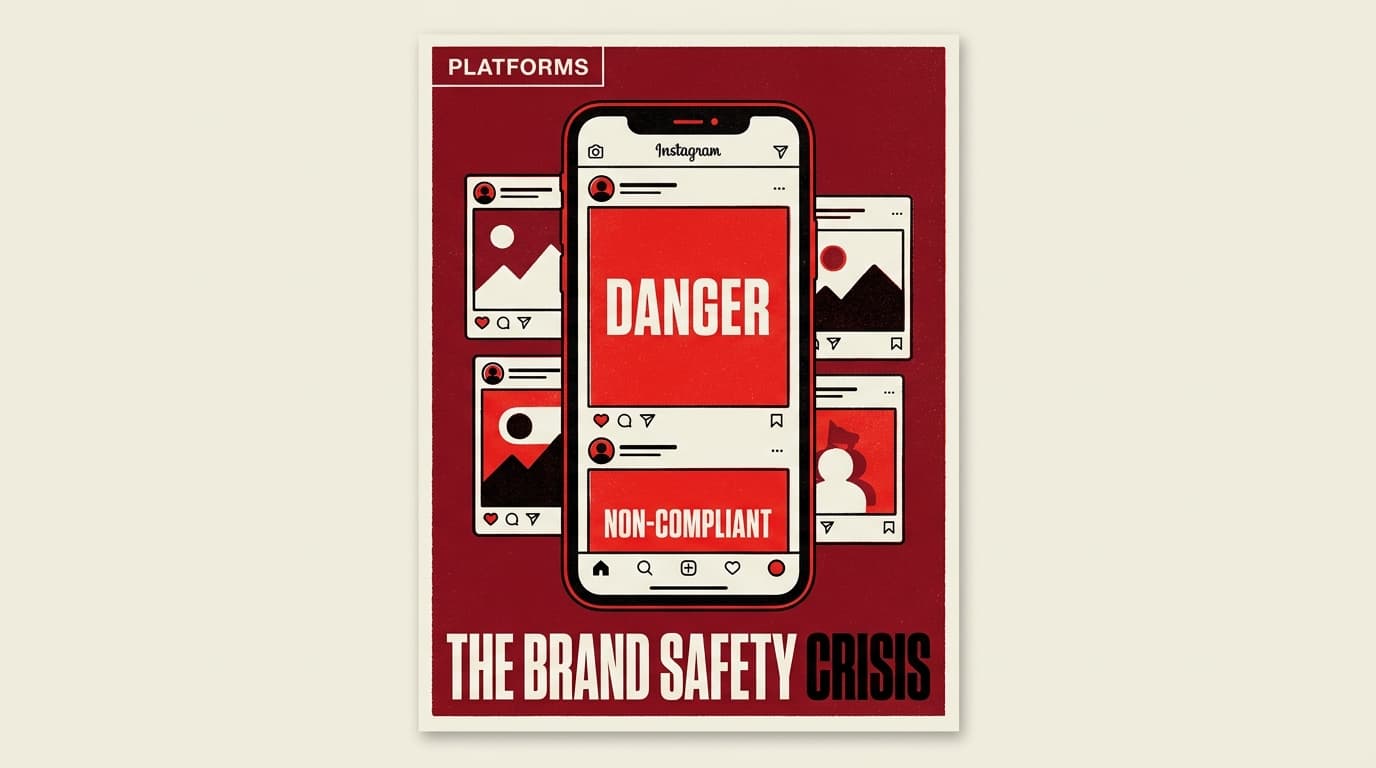

Meta’s Advantage+ suite has moved from a helpful suggestion engine to a black-box creative director. The core problem is 'AI Drift': the phenomenon where Meta’s autonomous systems alter approved assets—adjusting brightness, cropping subjects, or generating new backgrounds—in ways that violate brand standards. The thesis is simple: If your agency hasn't updated its Master Service Agreement (MSA) to explicitly define 'algorithmic negligence,' you are currently operating in a liability vacuum.
For years, the workflow was linear. The brand approved a file; the agency uploaded the file; the platform served the file. Today, that file is merely a 'seed.' Meta’s AI takes that seed and iterates. Sometimes it improves performance. Other times, it places a luxury watch against a neon-pink background that screams 'discount bin.' When that happens, the client points at the agency, the agency points at Meta, and Meta points at the 'Opt-out' toggle the agency forgot to check. This isn't just a workflow hiccup; it’s a multi-million dollar accountability crisis.
The Illusion of Control in Advantage+ Creative
We need to stop calling Meta’s creative tools 'optimizations.' They are transformations. According to internal agency benchmarks from Q2 2026, roughly 40% of all Advantage+ campaigns now involve some form of generative AI expansion or image enhancement that was not present in the original upload. The allure is clear: lower CPAs and higher efficiency. But the cost is the slow erosion of brand integrity.
Consider the case of a mid-sized beauty brand that recently saw its high-end serums placed in a generated 'bathroom' environment that looked like a cluttered dorm room. The AI prioritized 'relatability' signals it had gathered from similar high-performing ads, but it completely ignored the brand’s $500,000 style guide. The agency argued they didn't 'make' the ad; the algorithm did. The brand argued the agency is paid to manage the algorithm.
This mirrors the sentiment shared by Greg Jarboe in Search Engine Journal, where he argues that AI isn’t killing accountability, but rather exposing who never had it in the first place. If you are a media buyer, 'set it and forget it' is no longer a viable strategy—it’s professional malpractice. You are responsible for the drift because you are the one who gave the machine the keys.
Defining Algorithmic Negligence in Agency Contracts
Traditional agency contracts are built on the concept of 'Deliverables.' You deliver a video; the client pays. But how do you define a deliverable that changes after it's been delivered? We are seeing a shift toward 'Supervision Clauses.'
How to audit your Meta ad account for AI waste
Modern social media agency contracts must now include specific language regarding autonomous tools. A robust contract in 2026 should address three specific pillars:
- The Monitoring Cadence: How often is a human reviewing the 'variations' Meta produces? If a brand-breaking variation runs for 48 hours without being paused, is that the agency's financial burden?
- The Opt-In Default: Brands should mandate that all 'Generative' features are toggled OFF by default, requiring a signed 'Experimentation Waiver' for any campaign that allows the AI to generate new backgrounds or copy.
- Liability Caps for AI Errors: If Meta’s AI accidentally uses a copyrighted song or generates an offensive image (a rare but real 'hallucination' risk), agencies need to cap their liability, as they do not control the underlying model code.
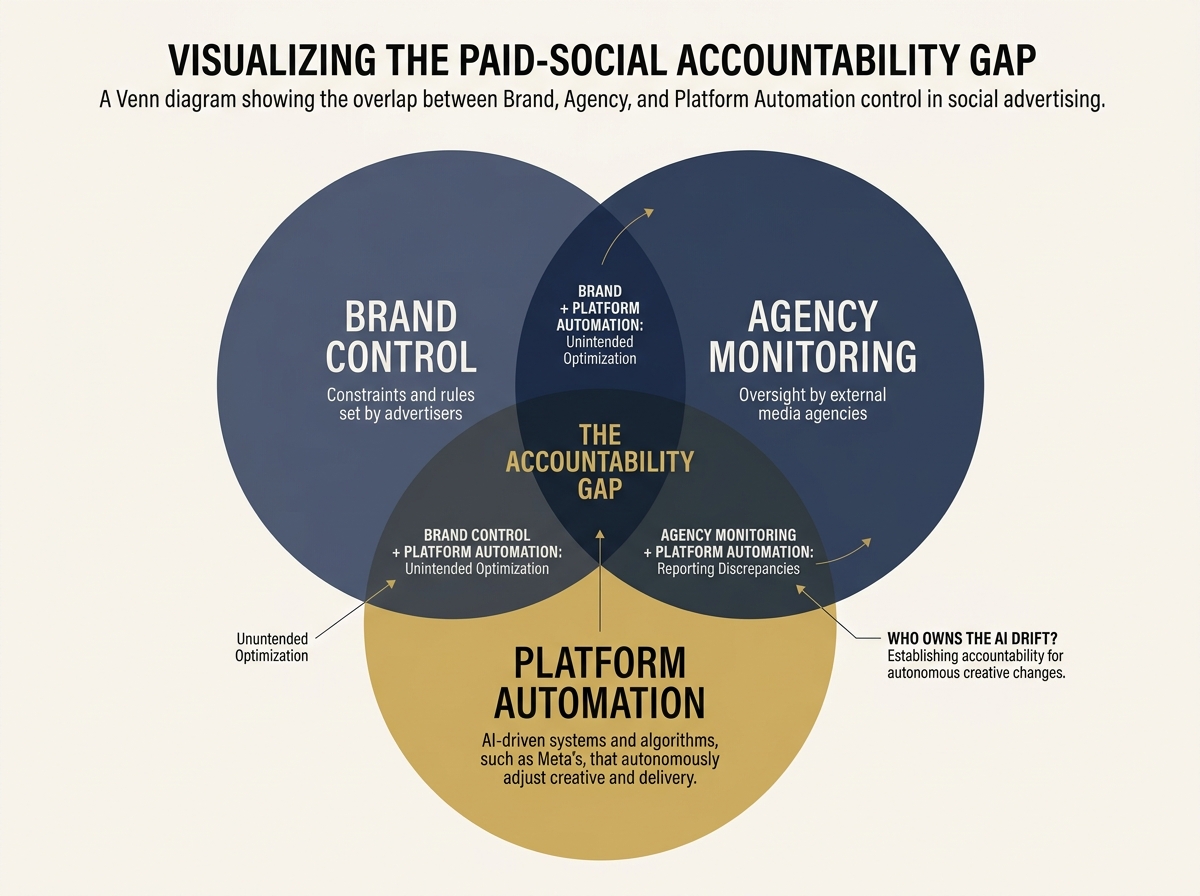
As Kim Sizemore, the new head of integrated media at Finn Partners, noted in her recent move from Wieden+Kennedy, the integration of media and creative is no longer optional. You cannot buy media in 2026 without understanding the code that alters the creative. The 'silo' is where liability hides.
The Counterargument: Is 'Brand Safety' Just an Excuse for Poor Performance?
The strongest argument against strict AI accountability is that it stifles the very technology that makes modern advertising profitable. Meta’s AI works because it has more data than your creative director. It knows that the 'ugly' ad with the messy background will convert at a 30% lower CPA. By forcing agencies to micromanage every pixel, brands are effectively paying a 'brand tax' that makes them uncompetitive against AI-native D2C startups.
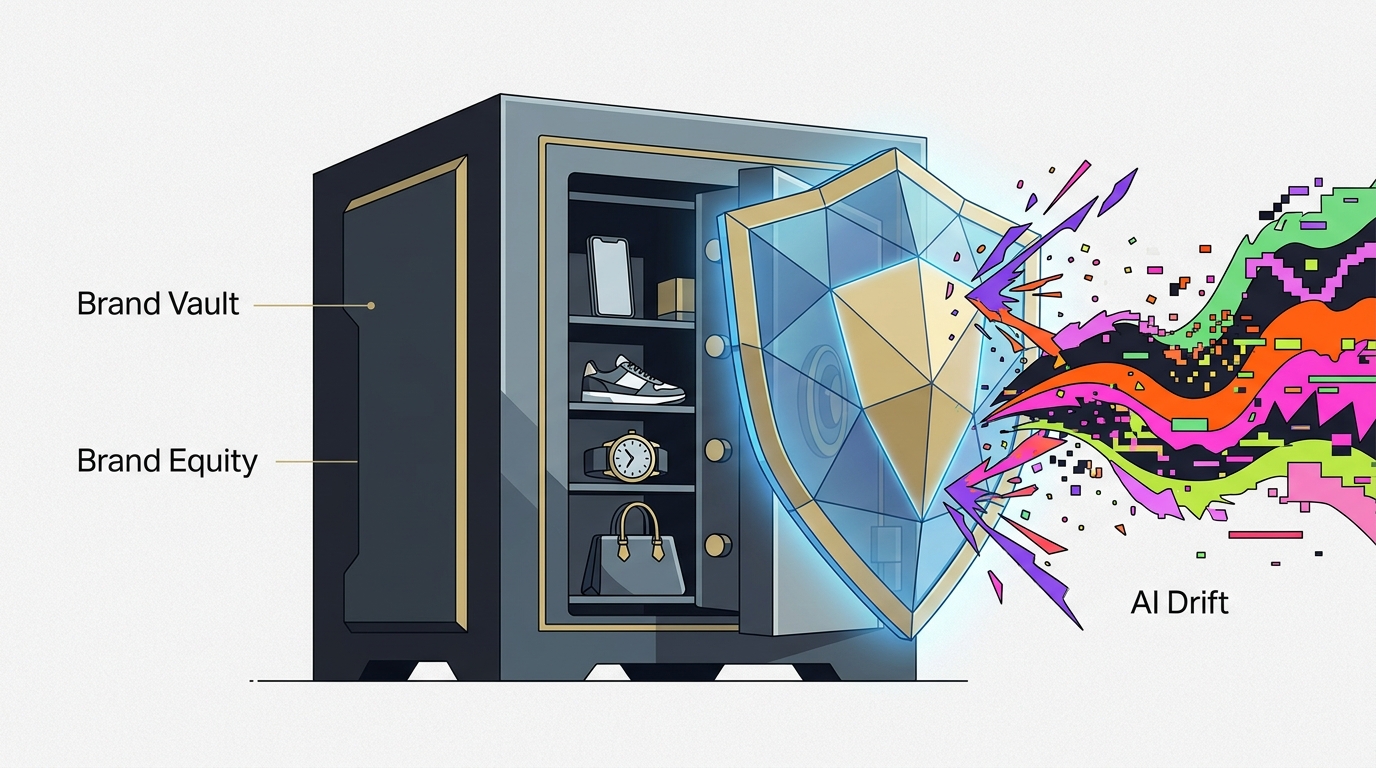
However, this argument ignores the long-term value of brand equity. A short-term win in CPA that degrades the premium perception of a product is a net loss. The solution isn't to ban AI, but to treat it like a junior designer. You wouldn't let a junior designer publish directly to a million-dollar account without a senior review; why let Meta do it? Accountability doesn't mean 'no AI'—it means 'monitored AI.'
The 'Buffer' Approach: Internal Tools for External Safety
Some agencies are taking a leaf out of the tech world’s book. Recently, the team at Buffer spent a week building 57 new internal tools to streamline their workflows. Forward-thinking agencies are doing the same—building 'wrapper' tools that sit on top of the Meta API to alert managers the moment a new AI variation is generated.
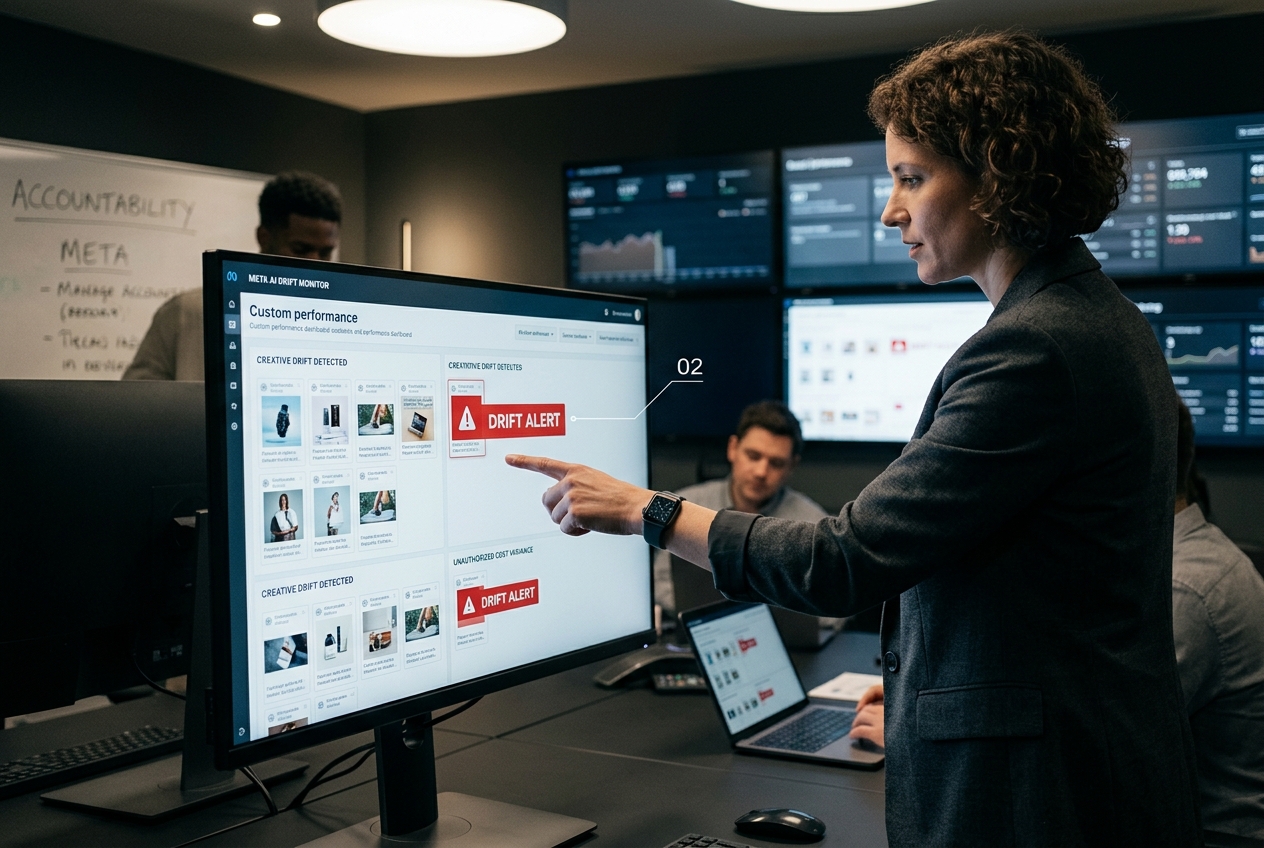
If you aren't building or buying these monitoring layers, you are relying on manual checks in the Meta Ads Manager interface, which is notoriously cluttered. By the time you find the 'drift,' the budget is spent. We are moving toward an era where the agency's value isn't just in the creative they make, but in the guardrails they maintain.
Implementation: How to Update Your Workflow Tomorrow
If you are a brand marketing lead, you need to ask your agency for a 'Variation Audit' today. Don't look at the primary ads; look at the 'Dynamic Creative' breakdowns. You might be surprised at what your brand looks like in the wild.
Key takeaways for 2026 AI Governance:
- Audit the Toggles: Ensure your agency has a documented checklist for every Advantage+ feature. 'Standard Enhancements' should be scrutinized, not accepted as default.
- Update the MSA: Add a clause defining 'Algorithmic Drift' and assign a human responsible for the daily review of AI-generated variations.
- Shift from 'Output' to 'Outcome' Monitoring: Stop measuring agencies solely on the assets they produce. Start measuring them on the health of the entire automated ecosystem.
The rise of the AI Prompt Engineer in social agencies
The 2027 Prediction: The Great Decoupling
I predict that by mid-2027, we will see the first major 'Class Action' style fallout between a holding company and a global brand over AI-driven brand damage. This will lead to the 'Great Decoupling,' where brands will move away from 'Black Box' automation in favor of 'Private AI' instances—where the algorithm is trained only on the brand’s approved assets, not the entire internet’s messy data.
Until then, the responsibility lies with the humans in the middle. If the AI drifts, and you didn't see it coming, you own the crash. Meta provides the engine, but you are still the driver. Don't let the 'Advantage' become a liability.
Summary of Accountability Frameworks
| Stakeholder | Responsibility | Liability Trigger |
|---|---|---|
| The Brand | Defining clear, machine-readable brand guidelines. | Failure to provide negative constraints. |
| The Agency | Constant monitoring of AI-generated variations and 'drift' alerts. | Ignoring automated changes for >24 hours. |
| Meta | Providing transparency into what changes are being made. | Systemic failure of opt-out toggles. |
As we navigate this transition, the agencies that survive will be those that stop acting like vendors and start acting like insurers. They will be the ones who can look a client in the eye and say, 'The AI will experiment, but we are the ones who will stop it from going too far.'
FAQ