
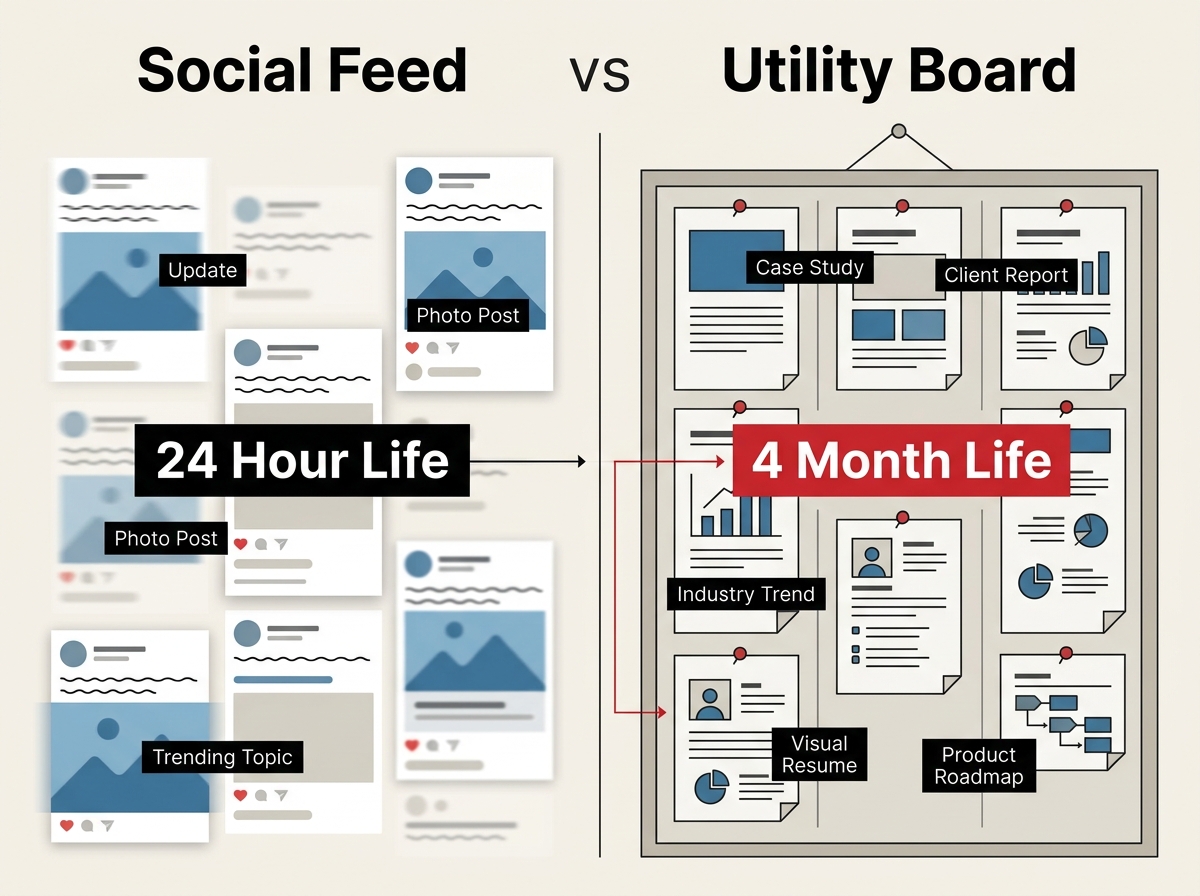
LinkedIn is the digital equivalent of a high-stakes cocktail party where everyone is shouting their job titles; Pinterest is the quiet, organized library where the actual work gets done. For years, B2B marketers have treated Pinterest as the ‘wedding and wallpaper’ platform, leaving it out of the serious professional mix. That is a strategic blunder. Pinterest is winning the B2B visual resume war because it prioritizes utility over vanity, offering a shelf-life for content that makes LinkedIn’s 24-hour feed cycle look like a rounding error.
The Shelf-Life Disparity: From 24 Hours to 4 Months
If you post a high-value white paper summary on LinkedIn, you have roughly six hours to catch the algorithm’s eye before it is buried by a CEO’s morning coffee musings. On Pinterest, a well-optimized workflow diagram or infographic doesn't just survive; it compounds. According to internal data from several mid-market SaaS agencies, the half-life of a Pinterest Pin is approximately 3.5 months. Compare that to 24 hours for a LinkedIn post or a mere minutes for a tweet.
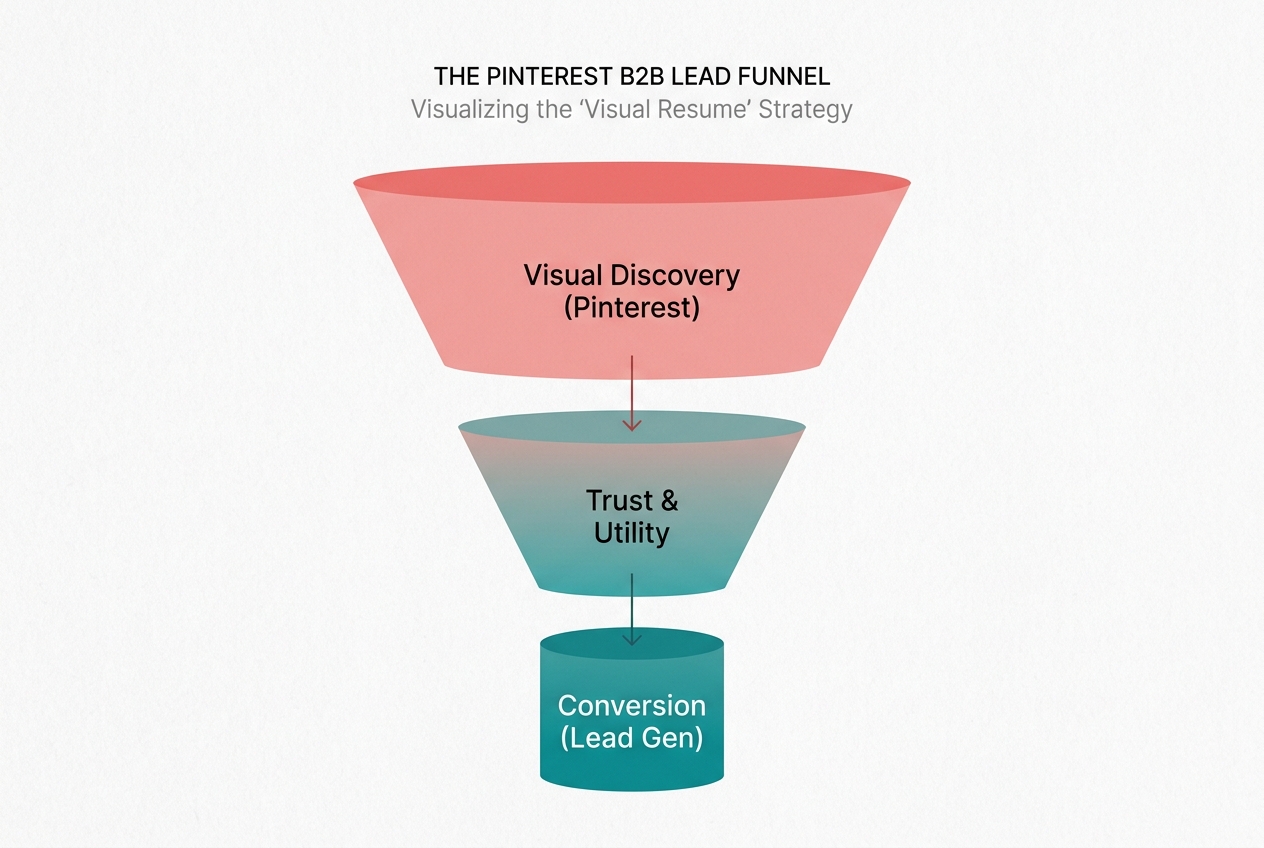
For B2B marketers, this is a fundamental shift in ROI calculation. You aren't paying for a flash in the pan; you are building an evergreen asset. When a user searches for "Agile workflow diagram" or "SaaS pricing models," they aren't looking for a social connection. They are looking for a solution. By positioning your brand as the visual answer to a professional query, you bypass the friction of the traditional sales funnel.
[INTERNAL: How to maximize content shelf-life across platforms -> content-longevity-strategies]
The Rise of the 'Visual Resume' and Professional Utility
We are seeing a surge in what we call 'professional utility' content. This isn't just aesthetic; it's functional. Brands like Adobe, Shopify, and Salesforce are increasingly using Pinterest to host templates, cheat sheets, and technical diagrams. These act as a 'visual resume' for the brand’s expertise.
Consider the way a social media manager uses Pinterest. They aren't looking for inspiration for their living room; they are searching for "2026 social media holiday calendars" or "TikTok influencer rate benchmarks." When they find a Pin from a platform like Influencer Marketing Hub that breaks down these costs, they don't just look at it—they save it to a professional board. That 'Save' is a high-intent signal that LinkedIn’s 'Like' cannot replicate. It signifies that your content has become part of their permanent workflow.
The CPM Arbitrage: Why B2B Buyers are Switching
Let's talk about the math. LinkedIn is expensive. Depending on your industry, B2B CPMs on LinkedIn can easily hover between $30 and $80. Competition for the 'Decision Maker' audience is fierce, and the ad inventory is limited by the number of people scrolling their feed at any given moment.
In contrast, Pinterest offers a massive arbitrage opportunity. Because most B2B brands still ignore the platform, the auction is less crowded. We have seen B2B tech brands achieve CPMs as low as $5 to $10 while targeting the exact same job titles through interest-based and keyword-based targeting.
Furthermore, the intent on Pinterest is fundamentally different. On LinkedIn, you are interrupting a professional networking session. On Pinterest, you are assisting a research session. The user is already in a 'discovery' mindset. This leads to lower friction in lead generation, particularly for top-of-funnel assets like e-books or webinar registrations.
Refuting the 'Consumer-Only' Counterargument
The most common pushback we hear is that "my customers aren't on Pinterest for work." This is a misunderstanding of how the human brain—and the modern worker—operates. The line between 'personal' and 'professional' digital time has blurred into non-existence.
A CTO might start their morning looking for backyard patio ideas, but the Pinterest algorithm, which is world-class at recognizing visual patterns and user intent, knows they also engage with data visualization and cybersecurity infographics. The idea that a B2B buyer stops being a buyer because they changed tabs is a relic of 2010 marketing thinking.
Moreover, the 'Visual Resume' aspect applies to the creators themselves. Designers, developers, and strategists are using Pinterest to curate their own professional toolkits. If your brand’s infographic is the one they save to their 'Q4 Strategy' board, you have won a level of mindshare that a sponsored LinkedIn post can never achieve.
The Tactical Pivot: How to Win on Pinterest Tomorrow
If you want to capitalize on this shift, you cannot simply cross-post your LinkedIn carousels. Pinterest requires a vertical-first, utility-heavy approach.
- Think in Systems, Not Statements: Don't post a quote from your CEO. Post a decision tree that helps a manager decide which software to buy.
- Optimize for Search, Not Engagement: Pinterest is a search engine. Your titles and descriptions should be loaded with the specific keywords your audience uses when they are in 'problem-solving' mode.
- Create 'Save-Worthy' Assets: The 'Save' is the ultimate currency. Ask yourself: "Would a professional put this on their digital corkboard to refer back to next month?" If the answer is no, don't post it.
The complete guide to B2B infographic design
The 2027 Prediction: The Great Re-Platforming
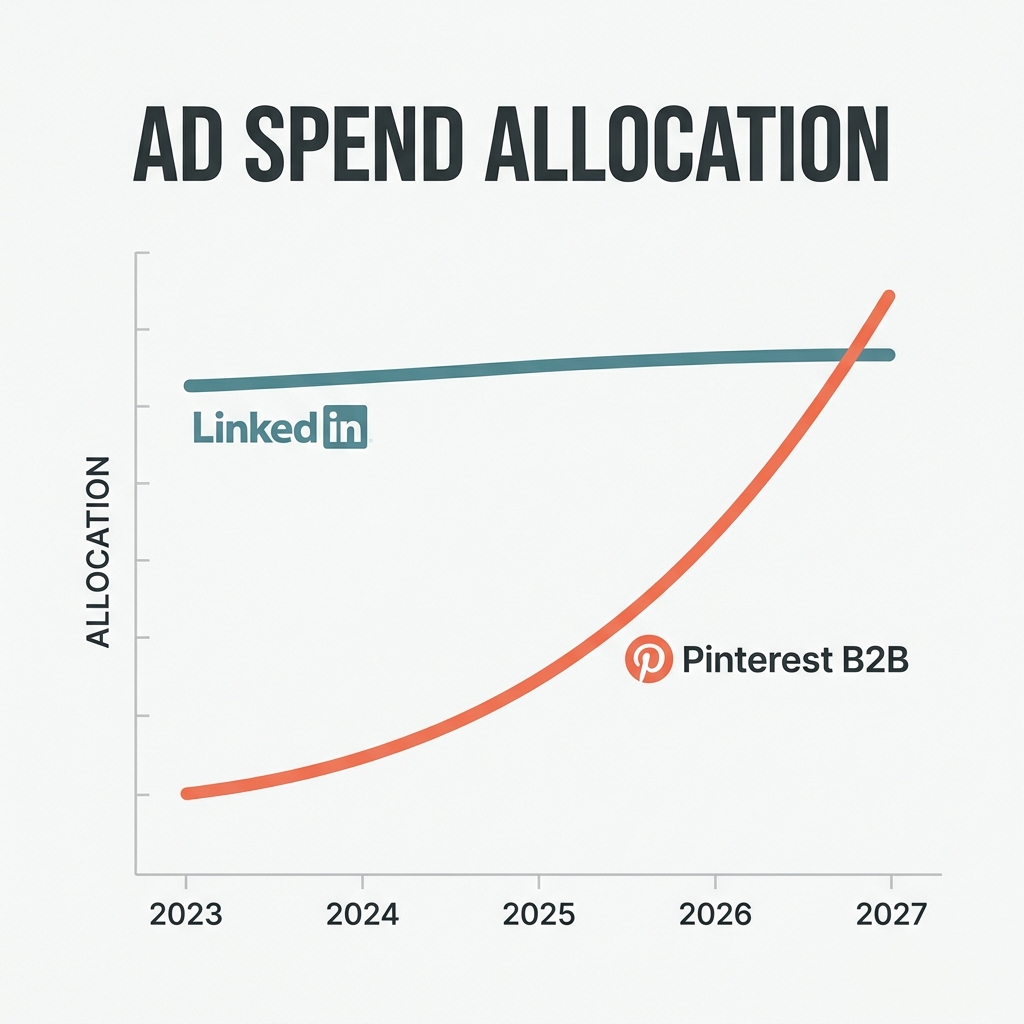
Here is my prediction: By the end of 2027, we will see at least one major SaaS unicorn (think Slack or Zoom) shift more than 30% of their top-of-funnel social budget away from LinkedIn and into Pinterest. The cost-per-lead disparity will become too large to ignore, and the 'professional utility' trend will move from the fringes to the mainstream.
Marketers who continue to view Pinterest as a hobbyist site will find themselves paying a 5x premium on LinkedIn for the same audience that was ready to engage for a fraction of the price on a Pinterest board. The war for the visual resume is already happening; it's time to decide which side of the board you're on.
Conclusion: The Utility Mandate
The shift toward Pinterest for B2B isn't just about saving money; it's about respecting the user's intent. In an era of AI-generated noise and feed fatigue, providing a clear, visual, and permanent utility is the only way to stay relevant. LinkedIn will always be the place for the 'who,' but Pinterest is rapidly becoming the place for the 'how.' For the modern B2B brand, the 'how' is where the revenue lives.
FAQ