
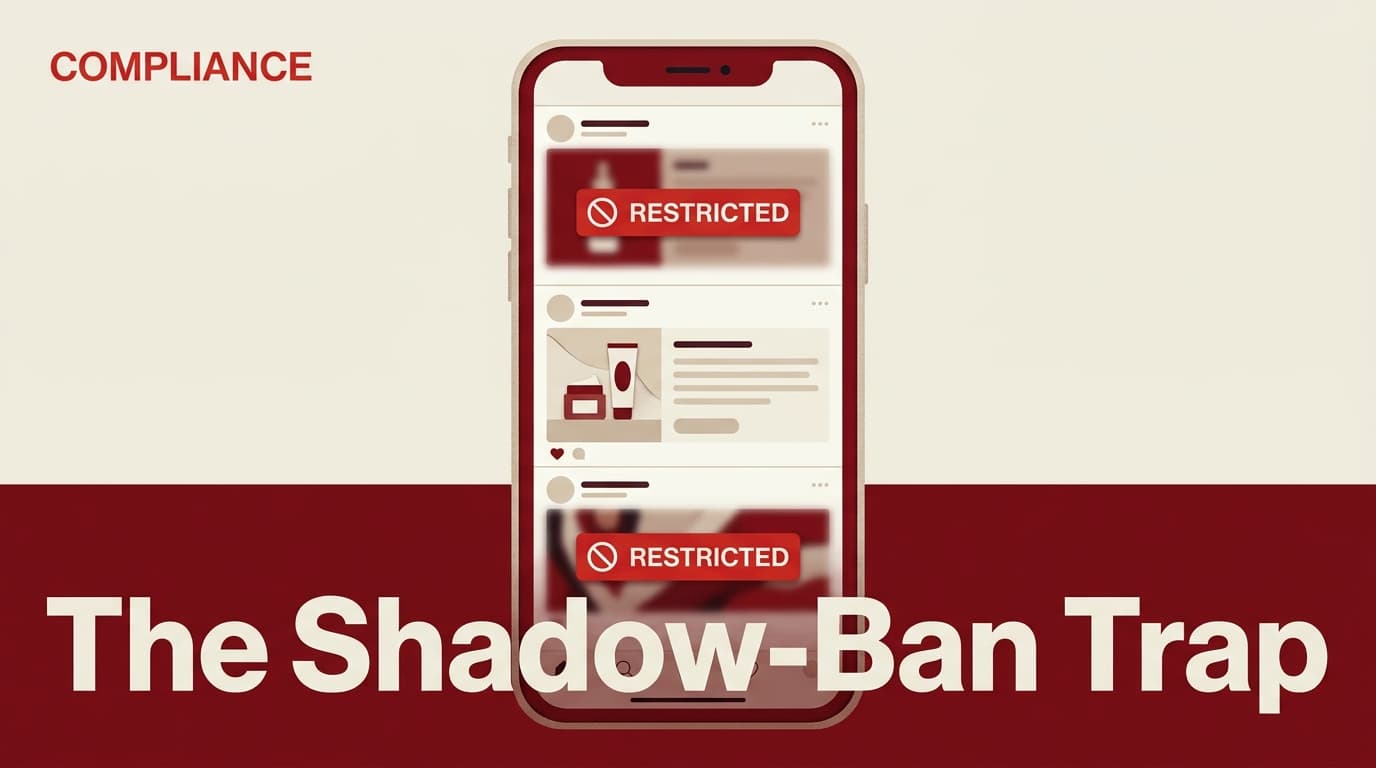
Navigating the social media landscape as a cannabinoid brand in 2026 feels like walking through a digital minefield. While the farm-bill-era novelty has worn off, the automated gatekeepers at Meta and ByteDance have only become more sophisticated. A recent industry audit of over 500 CBD and hemp-derived product accounts suggests that nearly 40% of these brands are currently experiencing some form of 'shadow-banning'—a state where content isn't removed, but its distribution is restricted to a fraction of the existing follower base.
Why it matters: For brand marketing leads, a shadow-ban isn't just a vanity metric issue; it's a structural failure that spikes Customer Acquisition Cost (CAC) and renders organic community building impossible. If your Reels aren't hitting the 'Explore' page or your TikToks are stuck at 200 views despite a 50k follower count, you're likely caught in a safety flag loop.
Key takeaways
- Direct Sales Language is Lethal: Using 'Buy Now' or linking directly to product pages in captions triggers immediate commerce policy flags.
- Visual Recognition is Real: AI now identifies hemp leaves and product packaging shapes even without text, categorizing them as 'restricted goods.'
- Engagement Baiting Backfires: High-velocity engagement on posts containing restricted keywords triggers 'spam' flags more aggressively for regulated brands.
- Educational Pivot is Mandatory: The only way to sustain long-term reach is to shift from product-centric to benefit-centric or lifestyle-centric content.
The State of Regulated Marketing in 2026
The environment has shifted significantly since TikTok's $400 million settlement in August 2026 regarding children's privacy. Platforms are no longer just looking for illegal content; they are proactively shielding younger demographics from 'age-restricted' categories, even when those products are federally legal hemp derivatives. According to internal benchmarks from top TikTok marketing agencies, the threshold for what constitutes 'promoting restricted substances' has lowered, moving from explicit sales to implicit lifestyle promotion.
Meta's 2026 algorithm update, as detailed in recent Shopify analysis, emphasizes 'meaningful social interaction,' but for CBD brands, this is a double-edged sword. When your followers tag friends in a giveaway post for a cannabinoid product, the spike in engagement often triggers a manual review or an automated temporary suppression. You aren't just fighting for attention; you're fighting a system designed to treat your product category as a liability.
1. Using Direct Transactional Language in Captions
The Error: Including phrases like "Shop now," "Discount code in bio," or "Available on our website" alongside images of CBD tinctures or gummies.
This is the most common trigger for the 'shadow-ban' trap. Platforms distinguish between 'organic expression' and 'commercial promotion.' When you use transactional language, the post is categorized as an ad. However, because most cannabinoid products are restricted in the paid ad auctions, the algorithm suppresses the organic post to prevent you from bypassing the paid-ad compliance checks. Based on 2026 platform data, posts with 'Buy' or 'Price' in the first three lines of the caption see a 65% lower reach on average.
Best for: Brands trying to drive direct-to-consumer (DTC) sales who haven't yet built a robust email or SMS list to handle the conversion side of the funnel.
2. Over-Reliance on 'Coded' Language and Emojis
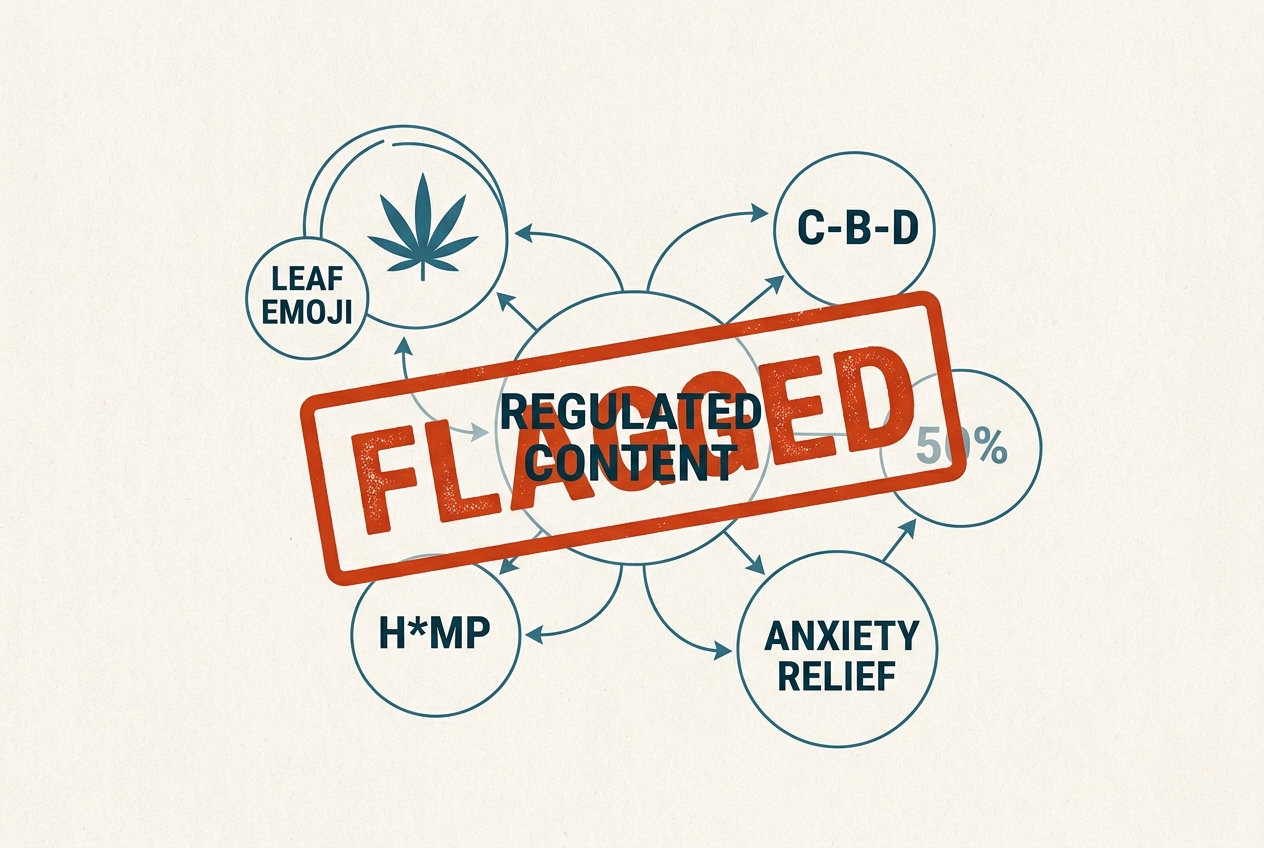
The Error: Swapping "CBD" for "C-B-D," "hemp" for "h*mp," or using the leaf emoji as a primary identifier.
There was a time when 'leetspeak' could bypass basic keyword filters. That era is over. As noted by former TikTok employees, the platform's moderation AI now uses semantic clustering. It knows that a green leaf emoji next to a bottle icon in a health-and-wellness context likely refers to a regulated substance. When you use these workarounds, you aren't hiding; you are signaling to the algorithm that you are intentionally trying to evade safety filters, which often results in a more severe 'account-level' flag rather than just a 'post-level' suppression.
Best for: Legacy brands that are still using 2021-era growth hacks that no longer work against modern neural networks.
3. Direct Linking to Product Pages in Bio
The Error: Using a Linktree or direct URL that lands on a product collection or checkout page.
Instagram and TikTok both crawl the destination URLs in your bio. If the landing page contains words like 'cannabinoid,' 'THC,' or 'dosage,' the referring social account is flagged. We've seen brands lose 80% of their 'Explore' page reach within 48 hours of updating their bio link to a new product launch page. The solution is an 'educational buffer'—a landing page that hosts blog content, newsletters, or third-party press reviews without direct 'Add to Cart' buttons on the fold.
Best for: Strategists who need to maintain a link in bio but want to decouple their social profile from their e-commerce backend.
4. Visual 'Product-Porn' Without Context
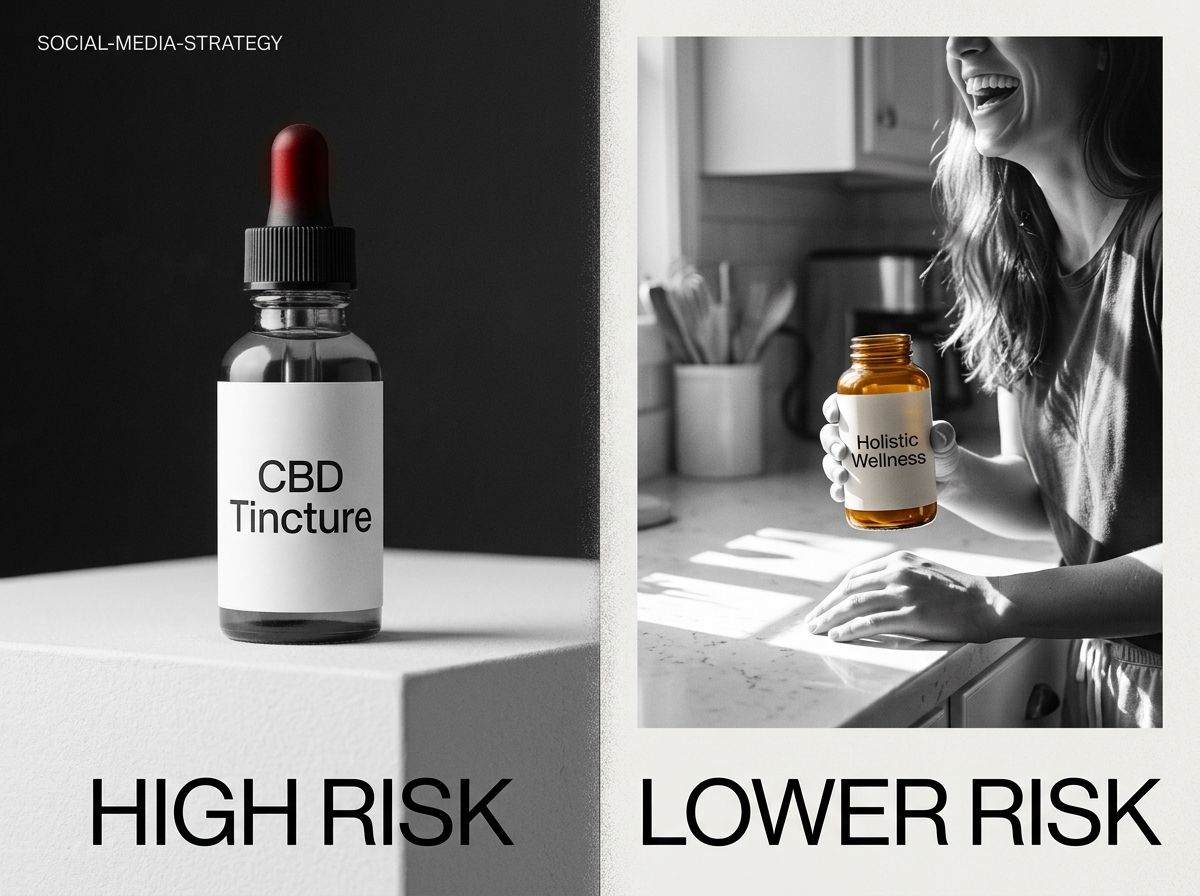
The Error: High-resolution, close-up shots of gummies, oils, or flower without human interaction or educational overlays.
Object recognition AI is now a standard part of the ingestion pipeline for Reels and TikToks. A bottle of CBD oil looks remarkably like a bottle of any other restricted tincture to a machine. Without a human face, a lifestyle setting, or clear educational text overlays (e.g., "How to read a COA"), the system defaults to the safest option: restricting the content's visibility to users under 21. Since the 'For You' page and 'Explore' feed rely on broad demographic reach, this age-gating effectively kills the post's viral potential.
Best for: Creative directors who are still treating social feeds like a static product catalog rather than a narrative platform.
5. Ignoring the 'Medical Claims' Redline
The Error: Sharing testimonials or creating content that claims CBD "cures anxiety," "fixes insomnia," or "stops pain."
Even if the FDA isn't knocking on your door today, the platform's AI is. In the wake of the 2025-2026 crackdown on health misinformation, social platforms have become extremely sensitive to unverified medical claims. When a brand account posts a customer review claiming a medical miracle, the algorithm identifies it as 'potentially harmful health content.' This doesn't just hurt the post; it lowers the 'Trust Score' of the entire account, making every subsequent post harder to distribute.
Best for: Customer service teams and community managers who frequently repost user-generated content (UGC) without vetting the claims made by the creators.
6. High-Frequency Tagging and Engagement Groups
The Error: Joining 'pods' where other cannabis brands all like and comment on each other's posts immediately after publishing.
In a regulated industry, your 'neighborhood' matters. If your account is constantly interacting with other accounts that have been flagged for compliance issues, the algorithm uses 'guilt by association.' Automated systems look for clusters of accounts that behave similarly. If ten CBD brands all engage with each other in a coordinated fashion, and three of those brands get flagged, the rest of the cluster is often throttled as a preventative measure. Authentic engagement from non-industry accounts is the only signal that truly moves the needle in 2026.
Best for: Small brand owners trying to 'hack' the algorithm through manual engagement groups.
7. Failing to Use Platform-Native Educational Tools
The Error: Posting external video content with watermarks or failing to use the platform’s own 'sensitive content' toggles where appropriate.
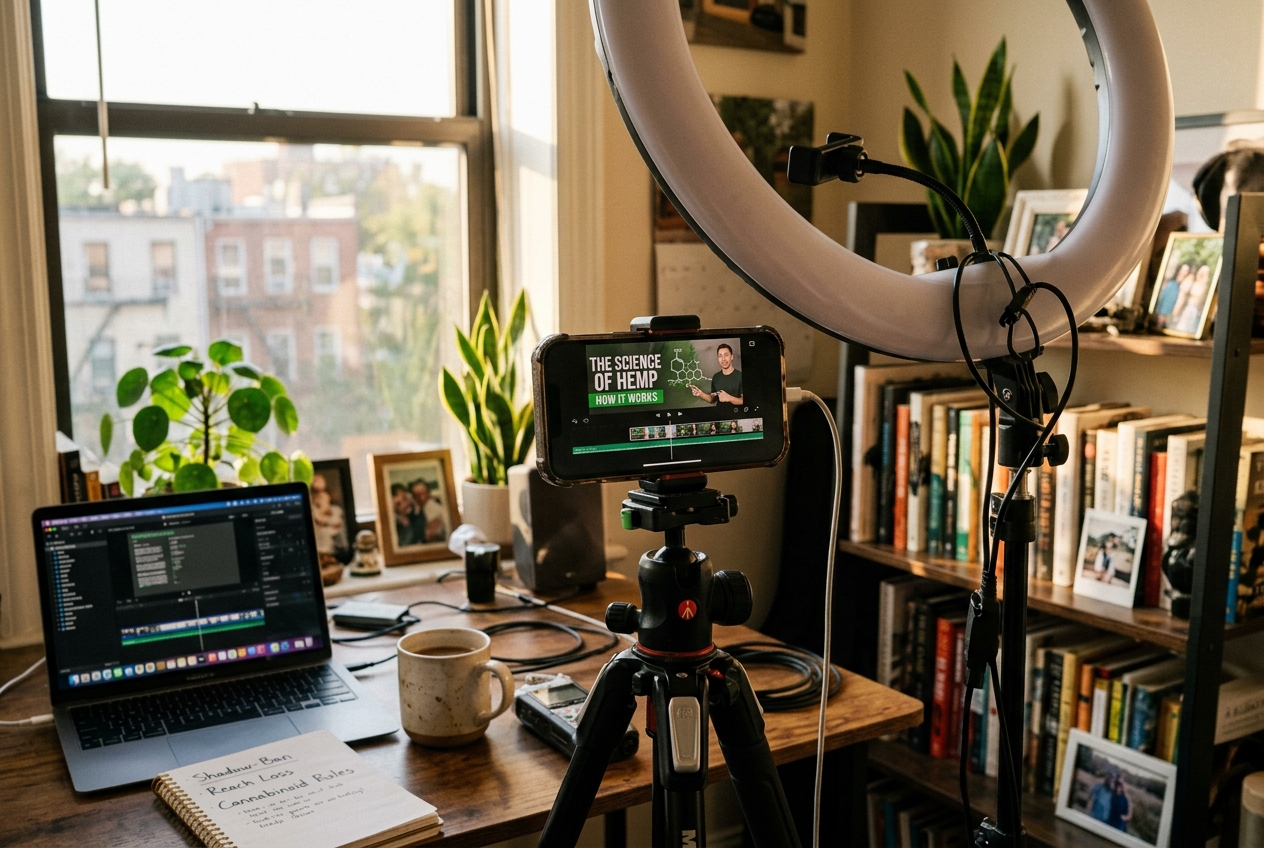
TikTok ads in 2026 require a specific cadence and style to succeed, but organic content requires even more finesse. Brands that succeed today are those that lean into the 'educational' tag. By using H3 headers in the video, clear voiceovers, and focusing on the science of the endocannabinoid system rather than the sale of the product, you can often bypass the primary safety filters. Platforms want to be seen as places of learning; if your content helps that narrative, you're rewarded with reach.
Best for: Content creators who are willing to trade 'aesthetic' shots for 'educational' value to maintain account health.
How to Audit Your Account Health
If you suspect you've been caught in the shadow-ban trap, the first step is a 'compliance scrub.' Remove direct links from your bio for 72 hours. Delete or archive posts from the last 30 days that used heavy transactional language or medical claims. Switch your content strategy to 100% lifestyle or educational content—showing the 'why' behind the brand rather than the 'what.'
Check your 'Account Status' in Instagram settings or the 'Creator Tools' in TikTok. If you see 'Feature Access' restricted, you have a hard flag. If you don't see any restrictions but your reach is still bottoming out, you have a soft suppression. The latter can usually be fixed with 14 days of 'clean' posting. The former may require a formal appeal or, in extreme cases, a fresh start on a new handle.
How to appeal a TikTok account restriction
The Future of Cannabinoid Content
As we move into late 2026 and early 2027, the gap between 'compliant' and 'non-compliant' brands will widen. The platforms are moving toward a 'Whitelisted' model where only brands that have verified their business credentials and maintain a clean track record will be allowed to reach broad audiences. Investing in compliance today isn't just about avoiding a ban; it's about ensuring your brand survives the next wave of automation.
The rise of whitelisted brand accounts in 2027
Stop trying to beat the algorithm. Start trying to feed it what it wants: safe, educational, and high-quality content that keeps users on the platform without creating legal or regulatory headaches for the parent company. That is the only sustainable way to market CBD in the current era.
FAQ