
Australia is currently witnessing a tectonic shift in how tourists choose their next getaway. We call it the 'Wild Discovery' trend. It isn't driven by Google searches for 'best beaches in Queensland' or 'hotels in Hobart.' Instead, it's fueled by the unpredictable, high-velocity distribution of short-form video. When a niche swimming hole in the Northern Territory goes viral on TikTok, local infrastructure often buckles under the sudden weight of thousands of visitors who didn't know the place existed 48 hours prior.
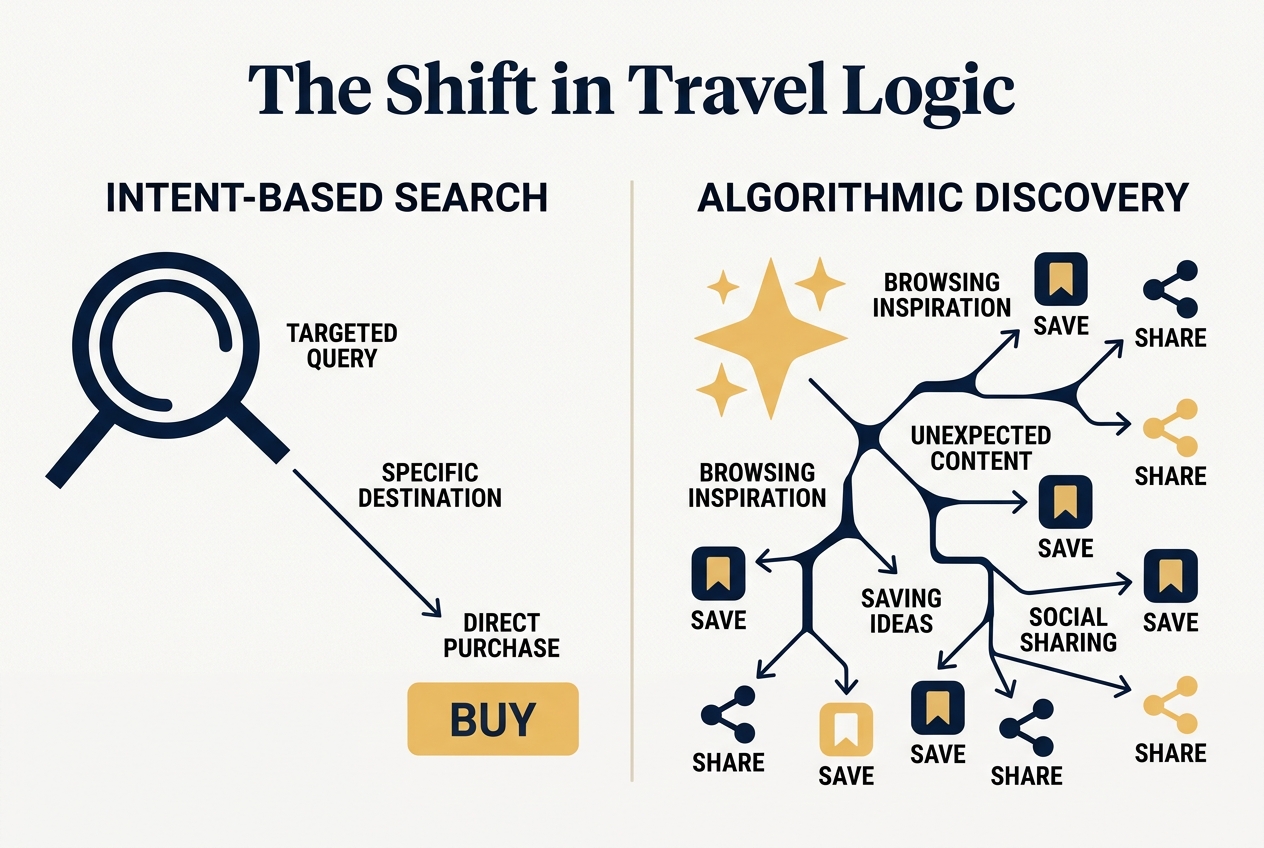
For destination marketing organizations (DMOs) and travel brands, this presents a problem: your traditional budget structure is likely built for intent, not discovery. You're spending on keywords when you should be spending on triggers. By the time a traveler is searching for a destination, the discovery phase—where the real influence happens—is already over.
This guide provides a clinical framework for reallocating your social media marketing spend to capitalize on algorithmic discovery. You will learn how to move away from static 'awareness' campaigns and toward a high-retention video ecosystem that forces the algorithm to do your prospecting for you.
Key takeaways
- Shift from Intent to Trigger: Discovery-based marketing requires spending on content that creates demand rather than just capturing it.
- The 70/20/10 Budget Split: Allocate 70% to algorithmic fuel (high-retention video), 20% to community amplification, and 10% to experimental 'wildcard' creators.
- Retention is the New Reach: CPMs are secondary to average watch time and completion rates in the current TikTok and Reels environment.
- Agile Reallocation: Discovery trends move faster than quarterly budget cycles; you need a weekly 'slush fund' for viral response.
Step 1: Audit Your Current Intent-to-Discovery Ratio
Before you move a single dollar, you need to understand how much of your current budget is 'lazy' spend. Lazy spend is money allocated to bottom-of-funnel retargeting or high-intent search terms that would likely convert anyway. In the 'Wild Discovery' era, the value lies in the top-of-funnel spark.
Look at your last six months of data. If 80% of your spend is sitting in Google Ads or Meta 'Sales' objectives, you are invisible to the discovery audience. These users are scrolling TikTok or Instagram Reels not to find a specific hotel, but to be told where they should want to go. According to recent industry benchmarks, including the Influencer Marketing Hub's 2026 cost guide, the cost of acquisition via discovery is often 30% lower than search-intent when the content hits the right algorithmic triggers.
You need to categorize your spend into two buckets: 'Demand Capture' (Search, Retargeting) and 'Demand Generation' (Algorithmic Discovery). For the Wild Discovery trend, your Demand Generation bucket needs to grow from the industry standard of 30% to at least 60%.
Common Pitfall: Many marketers mistake 'Awareness' ads for 'Discovery' ads. A static image of a sunset with a 'Visit Australia' logo is awareness. A 15-second clip of a hidden waterfall with a specific audio hook and 'How to get here' text overlays is discovery. The latter feeds the algorithm; the former just costs money.
Step 2: Implement the 'Algorithmic Fuel' Budget Framework
Once you've audited your spend, you must restructure your monthly social budget. We recommend a 70/20/10 split specifically designed for the Australian travel market's current volatility.
The 70%: High-Retention Video Production and Seeding
The bulk of your budget—70%—must go toward creating and boosting high-retention short-form video. This isn't just about production costs; it's about 'fueling' the content that shows early organic promise. On TikTok, the algorithm prioritizes watch time above all else. If a video has a 40% completion rate in its first 1,000 views, that is your signal to put paid spend behind it to push it into the next tier of distribution.
The 20%: Community and Creator Amplification
Influencer rates in 2026 have stabilized, but the focus has shifted from follower count to 'niche authority.' Use 20% of your budget to partner with creators who don't just have large audiences, but who have high engagement in specific sub-cultures (e.g., 4WD enthusiasts, solo female hikers, luxury glampers). As noted in the TikTok Shop Q3 2026 report, social commerce and discovery are now inextricably linked. Even for travel, the 'shopability' of a destination—how easily a user can save a location or book a tour via a link in bio—is critical.
The 10%: The Viral Response Slush Fund
This is the most important 10% you will ever spend. The Wild Discovery trend is unpredictable. A random creator might post a video of a 'secret' beach in Esperance that starts trending on a Tuesday morning. If you have to wait for a meeting on Friday to approve spend, you've missed the window. This 10% is pre-approved for immediate boosting of third-party content that features your destination.
Why it matters: Algorithms like TikTok's are momentum-based. By the time a trend is 'official,' the CPMs have already spiked. Early intervention with a small amount of paid spend can prolong the organic tail of a viral moment by weeks.
Step 3: Shift KPIs from CPM to 'Retention Hooks'
If your agency is still reporting on 'Impressions' as a primary success metric for social, they are failing you. In discovery marketing, an impression is a vanity metric. A user scrolling past your video in 0.5 seconds counts as an impression but provides zero value.
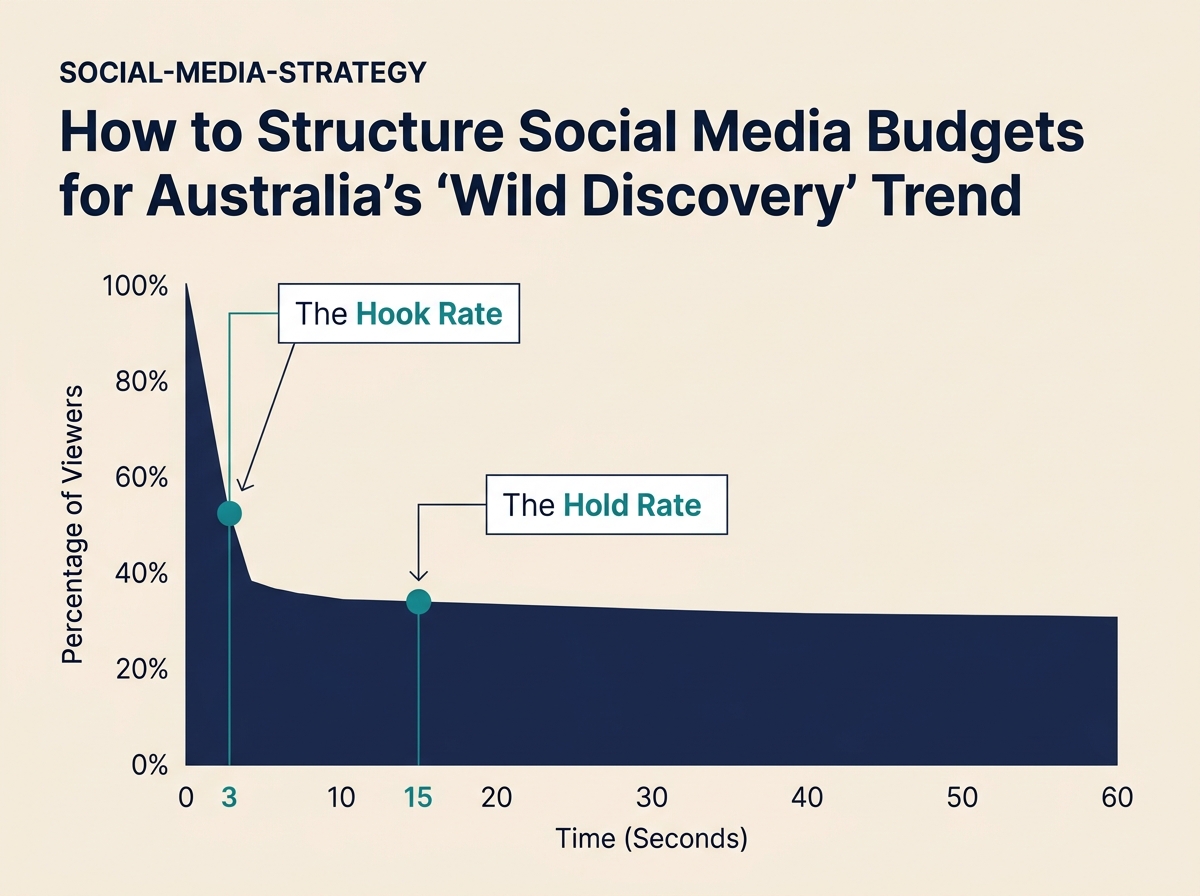
Instead, you must manage your budget based on Hook Rate (the percentage of people who watch past the first 3 seconds) and Hold Rate (the percentage of people still watching at the 15-second mark).
For Australian travel content, we see a direct correlation between a Hook Rate over 35% and a significant increase in 'Save' actions. 'Saves' are the ultimate indicator of discovery intent. A user who saves a video is planning a future trip. Budget should be aggressively shifted toward creative assets that maintain a high Hold Rate. If a video drops off at the 5-second mark, kill the spend immediately, regardless of how 'beautiful' the cinematography is.
Common Pitfall: Over-valuing 'Likes.' In the travel space, people like everything. They only save what they actually intend to visit. Optimize your paid social bidding for 'Saves' or 'Profile Visits' rather than generic engagement.
Step 4: Leverage Longer-Form Discovery Content
While short-form is the entry point, TikTok and Instagram are both pushing for longer content to compete with YouTube. TikTok's recent $50 million investment in Korean creators to produce longer videos is a clear signal of where the platform is headed globally. For Australian DMOs, this means your budget needs to accommodate 'mini-vlogs'—videos between 60 and 90 seconds.
These longer pieces serve as the 'consideration' layer of your discovery strategy. If the 15-second clip is the hook, the 90-second vlog is the itinerary.
- Phase 1 (Short-form): The 'Wow' factor. High-impact visuals of a destination.
- Phase 2 (Mid-form): The 'How-to.' Logistics, pricing, and timing.
Allocate your production budget to shoot 'modularly.' One day of filming should yield three 15-second hooks and one 60-second deep dive. This maximizes your ROI and ensures you have the right asset for every stage of the discovery journey.
[INTERNAL: How to optimize long-form TikTok content for travel brands -> tiktok-long-form-strategy]
Step 5: Navigate the Regulatory and Privacy Landscape
As you scale your discovery spend, you cannot ignore the tightening legal environment. TikTok’s recent $400 million settlement regarding US children’s privacy is a reminder that data handling is under intense scrutiny. While this specific case was in the US, Australian regulators often follow suit with similar privacy frameworks.
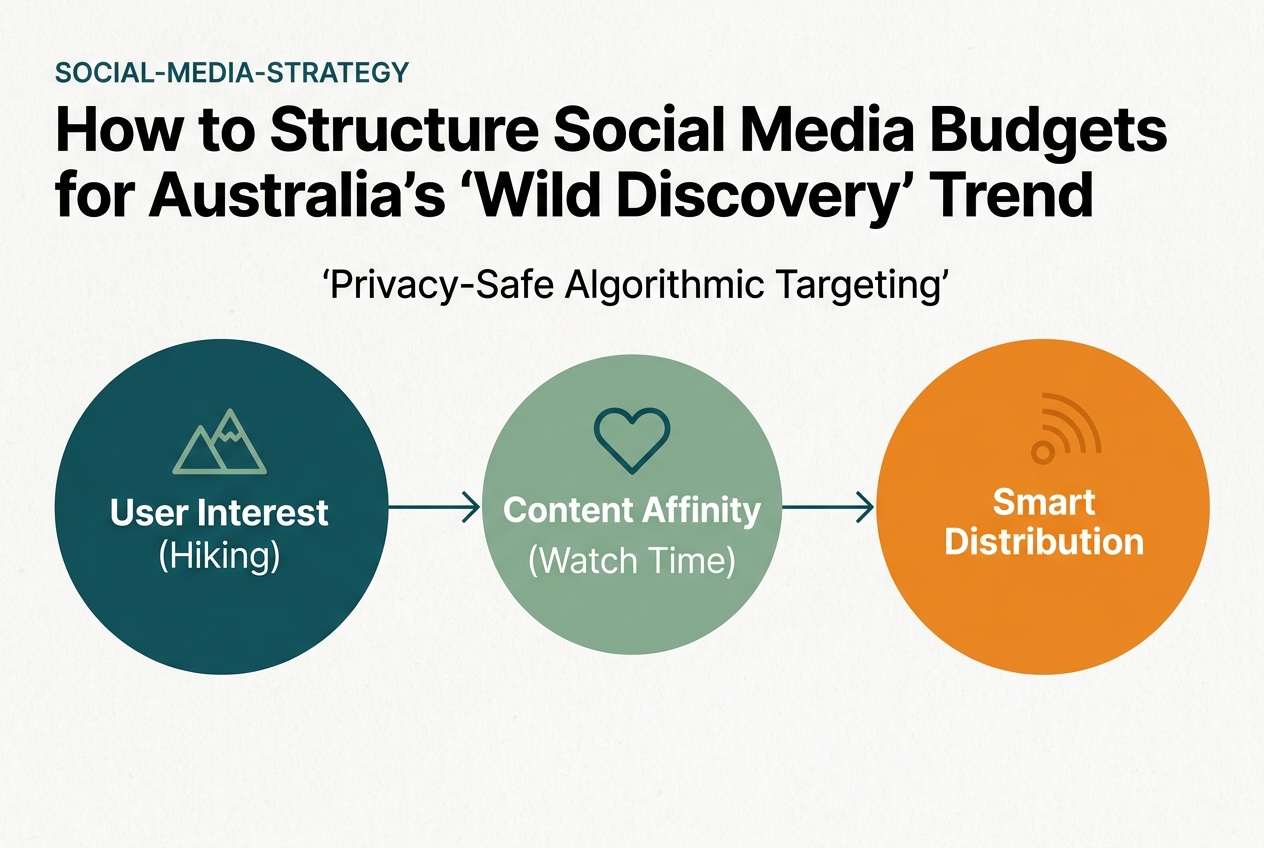
When structuring your budget, ensure a portion is allocated to 'Clean Data' practices. Avoid overly aggressive third-party data scraping for targeting. Instead, lean into the platform's own interest-based targeting. The beauty of algorithmic discovery is that the platform already knows who likes 'off-grid camping' based on their behavior. You don't need to 'stalk' them with cookies; you just need to provide the content that matches their interests.
Why it matters: Brands that rely too heavily on invasive tracking are seeing their ROAS (Return on Ad Spend) crater as privacy protections increase. Algorithmic discovery is 'privacy-safe' because it relies on content-affinity rather than identity-tracking.
Step 6: Verify Success Through 'Search Lift' and 'Physical Footfall'
How do you know if your Wild Discovery budget is actually working? You won't see it in a direct-click conversion path in Google Analytics. Discovery is rarely linear.
To verify success, look for Search Lift. When a discovery campaign is running on TikTok/Reels, monitor the volume of branded searches on Google and YouTube for that specific destination. If you spend $10,000 on a 'Hidden Gems of the Kimberley' video and see a 400% spike in Google searches for 'Kimberley tours' within 7 days, your discovery trigger worked.
Additionally, use location-based services like Near or Advan Research to track physical footfall in the target region. For niche destinations, this is the only true metric of success. If the local visitor center reports a surge in visitors mentioning 'that video I saw on Instagram,' your budget reallocation is justified.
Common Pitfall: Stopping the campaign too early. Discovery has a 'lag effect.' The travel cycle for an international or interstate trip is often 3-6 months. You must maintain a baseline of discovery spend to keep the funnel full, rather than turning it on and off like a tap.
Three Related Tactics to Try Next
- AI-Driven Creative Iteration: Use tools like Canva’s Magic Studio or CapCut’s AI features to create 20 different versions of a single high-performing hook. Test these with small $50 budgets to find the 'unicorn' creative before scaling.
- Audio-First Strategy: Instead of choosing music as an afterthought, build a campaign around a trending Australian audio clip. Reach out to local indie musicians for custom tracks that creators can use, creating a unique 'sound' for your destination.
- User-Generated Content (UGC) Whitelisting: Instead of posting from your brand account, put your paid budget behind a creator’s organic post (with their permission). This 'whitelisting' approach often sees 2x higher engagement rates than traditional brand ads because it feels like a genuine recommendation.
The rise of UGC whitelisting in the travel sector
By shifting your mindset from 'buying clicks' to 'fueling discovery,' you position your brand to ride the wave of Australia's most potent travel trend. The algorithm is the new travel agent; make sure you're the one giving it the best brochures.
FAQ