
The era of the 'free vacation' in exchange for a dreamy Instagram carousel is effectively over. If you're a travel creator in 2026, your aesthetic is no longer your primary product—your attribution data is. For years, hospitality brands and tourism boards operated on a 'spray and pray' model, hoping that beautiful drone shots of the Amalfi Coast would eventually lead to room nights. But as measurement tools have matured and CMO budgets have tightened, the industry has pivoted hard toward hard-line performance metrics.
Why it matters: For brand marketing leads and agency strategists, this shift means moving away from massive awareness campaigns toward granular, trackable conversion funnels. If you aren't using stay-codes or deep-linked booking engines, you aren't just behind the curve; you're likely wasting 40% of your creator budget on non-converting 'ghost' reach.
Key takeaways
- Attribution is the new aesthetic: Brands now prioritize creators who can prove a direct line to a booking via affiliate links or unique discount codes.
- The 'Stay-Code' mandate: 2026 contracts frequently include base fees tied to minimum conversion thresholds, moving closer to a performance-hybrid model.
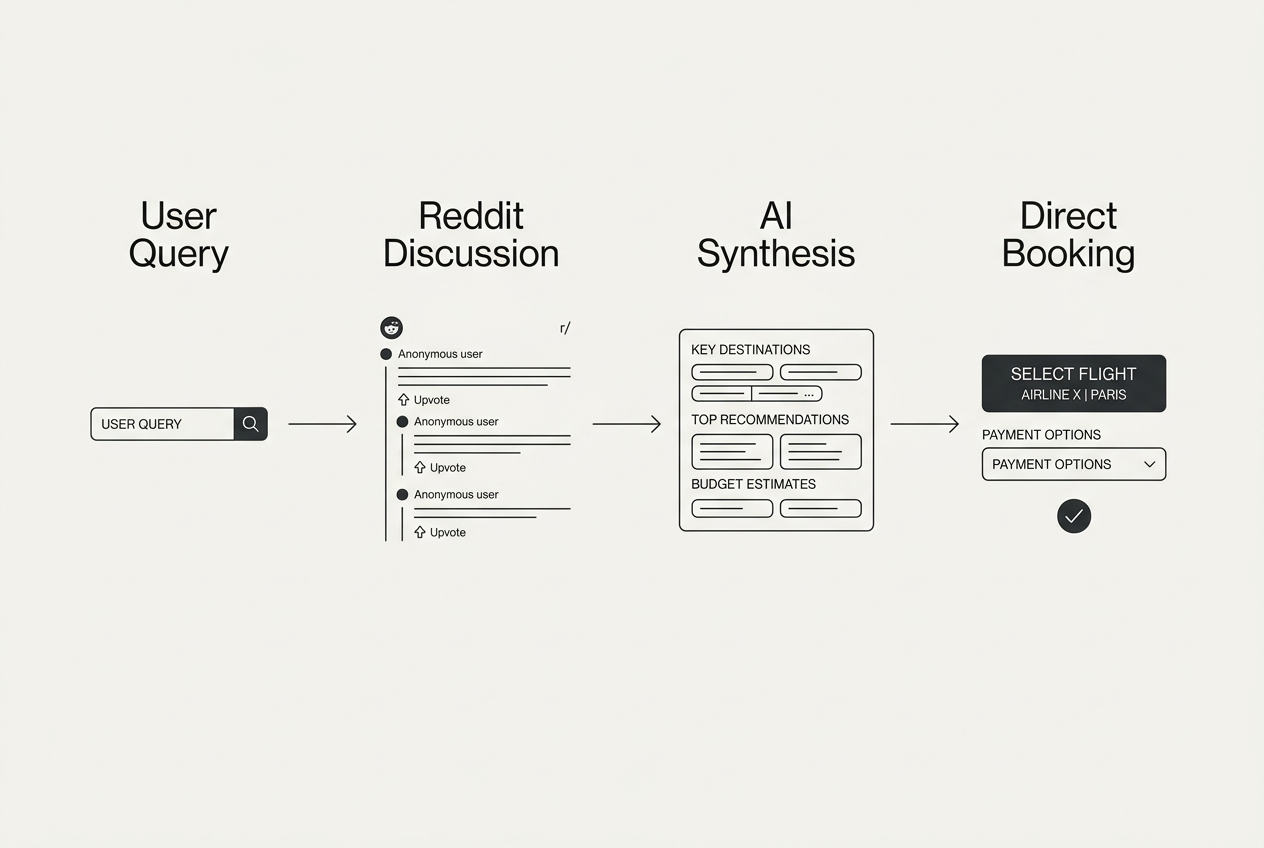
- Reddit is the new search engine: As AI search increasingly cites Reddit for 'authentic' travel advice, brands are paying creators to seed discussions in niche subreddits.
- TikTok Local is the dark horse: New partnerships, such as Vendasta's TikTok Channel Sales status, allow local travel operators to target high-intent travelers with surgical precision.
The Death of the Vanity Impression and the Rise of the 'Booking-First' Mandate
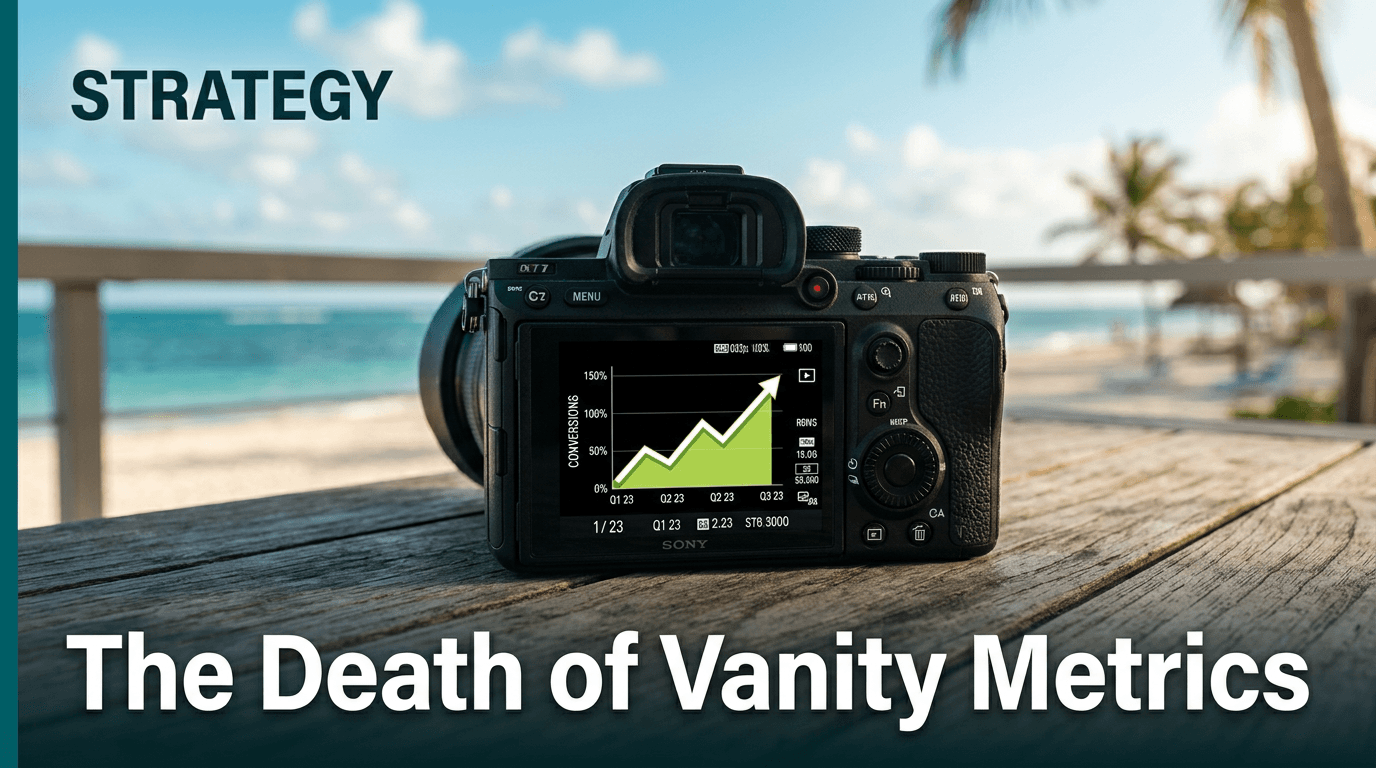
For most of the 2020s, the travel industry relied on 'estimated media value' (EMV)—a metric that was always more fiction than fact. We've seen a massive correction. According to recent internal benchmarks from leading hospitality agencies, nearly 75% of travel contracts signed in the first half of 2026 now include some form of conversion-tracking requirement. The industry has moved from 'how many people saw this?' to 'how many people clicked the link in bio and actually checked a calendar?'
This isn't just about skepticism; it's about the tools. With the rise of advanced attribution windows and the integration of social platforms directly with booking engines like Sabre and Amadeus, the 'black box' of travel influence has been cracked wide open. Marketers are no longer satisfied with a 2% engagement rate if that engagement doesn't translate into a $400-a-night stay. We are seeing a resurgence of the 'stay-code'—a simple but effective tool that gives creators a unique identifier for their audience to use at checkout. It provides the kind of clean data that a million likes simply cannot match.
1. The Performance-Hybrid Contract
Summary: A contract structure where a creator receives a modest base fee plus a tiered commission based on confirmed bookings.
Analysis: In 2026, the flat-fee model is reserved only for the top 0.1% of 'mega' creators. For everyone else, the performance-hybrid is the standard. This structure aligns the creator's incentives with the brand's bottom line. If a creator claims their audience is 'high-intent,' they should have no problem betting on their ability to convert. We're seeing base fees drop by 30% while commission percentages for direct bookings have climbed as high as 12% for boutique luxury properties. This shift filters out creators who bought their following or whose audience is purely aspirational rather than transactional.
Best for: Boutique hotels and mid-sized resorts looking to maximize localized ROI.
2. The Reddit Seed-and-Cite Strategy
Summary: Paying creators to participate in and lead travel discussions on Reddit to influence AI-driven search results.
Analysis: As highlighted by recent Search Engine Journal reports AI search impact on local visibility, AI models like Google's Gemini and OpenAI's SearchGPT are increasingly citing Reddit as a source of 'human' truth. Travel brands are now hiring creators not just for their Instagram Feed, but for their ability to provide 'authentic' recommendations in subreddits like r/TravelHacks or r/SoloTravel. This isn't about spamming links; it's about long-form, high-effort posts that the AI interprets as high-authority. If an AI search for 'best eco-resort in Costa Rica' cites a Reddit thread you influenced, that's a permanent organic win that outlasts any 24-hour Story.
Best for: Destination Marketing Organizations (DMOs) seeking long-term SEO and AI-search authority.
3. TikTok Local Channel Partnerships
Summary: Utilizing specialized sales partners like Vendasta to bridge the gap between local travel operators and TikTok's short-form ad platform.
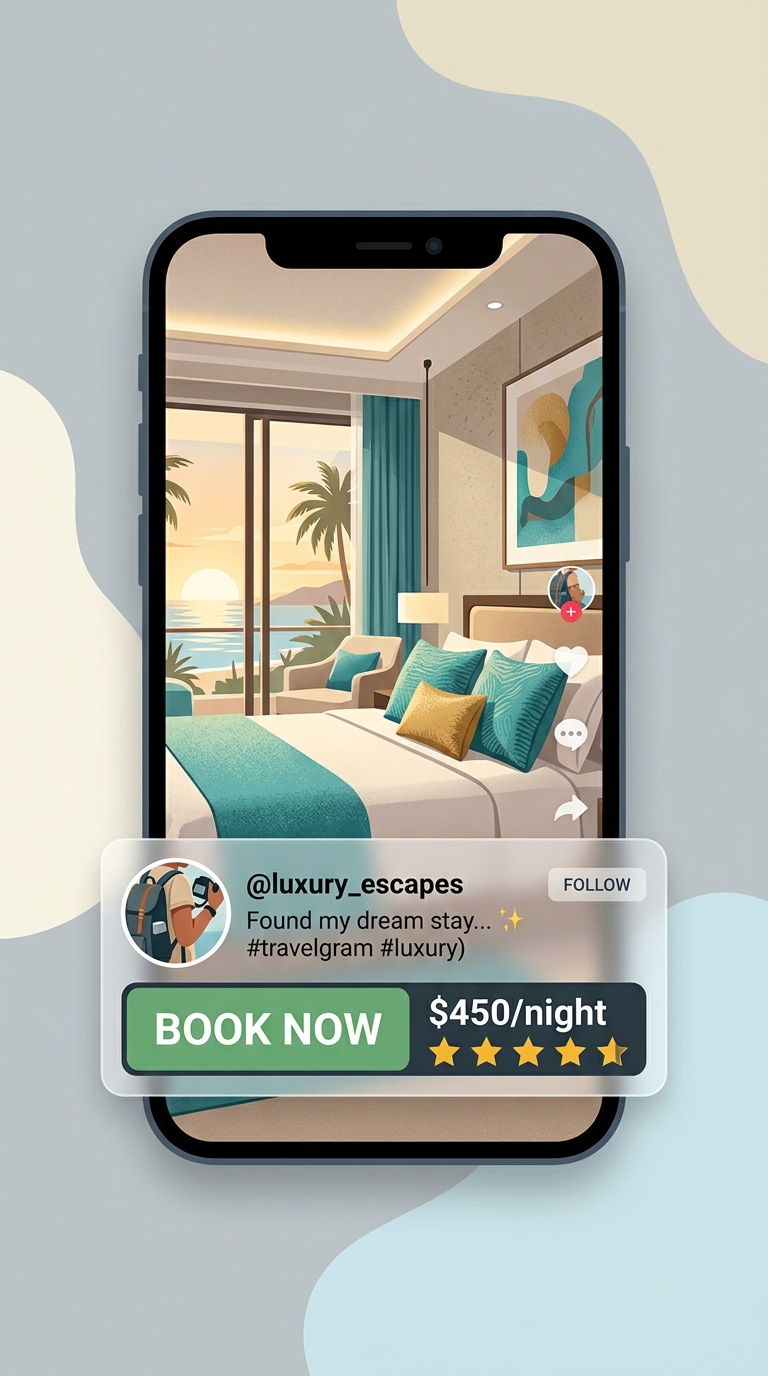
Analysis: The recent news of Vendasta becoming a TikTok Channel Sales Partner TikTok local ad partnerships signals a major shift for small-scale travel operators. You no longer need a $50k agency retainer to run sophisticated TikTok campaigns. Local tour operators, bed-and-breakfasts, and regional attractions can now use these 'bridge' platforms to run localized ads that feel like organic creator content. The focus here is on 'near-me' searches and immediate conversion. By pairing a local creator's video with a 'Book Now' button that leads directly to a mobile-optimized checkout, the friction between inspiration and transaction is nearly eliminated.
Best for: Small-to-medium-sized local attractions and regional tour operators.
4. The 'Spontaneous Moment' Ad Buy
Summary: A strategy where brands maintain a 'slush fund' to partner with creators who go viral in real-time for travel-related cultural moments.
Analysis: As discussed at the recent ADWEEK Sports Marketing Summit Spontaneous brand marketing, the future belongs to brands that can react within hours, not weeks. In the travel sector, this means having pre-approved creator contracts ready to go when a specific destination starts trending or a flight-related meme takes off. Brands are moving away from six-month content calendars toward 'reactive pods.' If a creator posts a raw, unedited video about a 'hidden gem' that starts gaining traction, a savvy brand will swoop in with a paid boost and a tracking link within four hours. This requires a level of trust and legal agility that most legacy brands are still struggling to develop.
Best for: Aggressive travel tech brands (OTAs) and airline social desks.
5. Netflix-Style 'Upfront' Creator Deals
Summary: Securing long-term, multi-quarter exclusivity with high-converting creators to stabilize customer acquisition costs (CAC).
Analysis: While Netflix is currently in talks for major ad deals and pulling back on public viewership reporting Netflix ad strategy shifts, travel brands are taking a page from the TV playbook. Instead of one-off 'trips,' they are signing creators to 'seasons.' By locking in a creator for four trips a year, the brand can normalize the data and account for seasonal fluctuations in travel intent. This also allows the creator to build a deeper narrative with their audience, which historically leads to higher trust and better conversion rates than a single, disconnected 'ad' post. The data becomes more reliable because the sample size is larger and the audience becomes familiar with the brand's booking interface.
Best for: Major hotel chains and international airline carriers.

6. The AI-Enhanced Personal Concierge Model
Summary: Creators using custom AI agents to handle booking inquiries and provide personalized itineraries based on their content.
Analysis: Despite delays in models like Gemini 3.5 Pro AI development delays, the travel creator space isn't waiting. We're seeing a rise in creators building their own 'GPTs' or custom chatbots that live on their websites. A follower sees a video of a Tokyo street-food tour, clicks a link, and is greeted by an AI that has been trained on that specific creator's preferences and past videos. The AI can then serve up a direct booking link for the exact hotel the creator stayed in. This turns a passive viewer into a managed lead, providing the brand with a level of intent data that was previously impossible to capture from social media alone.
Best for: Luxury travel consultants and 'niche-expert' creators.
7. The Attribution-First 'Stay-Code' Integration
Summary: Direct integration of unique creator codes into the hotel’s Property Management System (PMS) to track offline and long-tail conversions.
Analysis: The 'stay-code' is the 2026 version of the affiliate link, but it's far more robust. By integrating these codes directly into the PMS (like Mews or Cloudbeds), brands can track if a guest who used a creator's code re-booked a year later. This allows for a 'Lifetime Value' (LTV) calculation for creator partnerships. If Creator A brings in 10 guests who never return, but Creator B brings in 5 guests who become rewards members and stay three times a year, Creator B is the more valuable partner—even if their initial 'reach' was lower. This is the ultimate proof of ROI in a high-ticket industry like travel.
Best for: High-end resort groups and loyalty-focused hospitality brands.
8. Short-Form Video 'Shoppable' Itineraries
Summary: Using platforms like TikTok and Instagram's native shopping features to sell entire travel packages directly from a video.
Analysis: We are moving past the 'link in bio' era. Shoppable video allows a user to tap a product tag on a video and see a full itinerary price. In 2026, this is becoming the standard for 'flash sales.' If an airline has empty seats on a Tuesday flight to Reykjavik, they can push a shoppable video to a creator's audience with a 'Book This Trip Now' button. The conversion data is instantaneous. There is no 'attribution window' to worry about because the transaction happens within the platform's ecosystem. For the brand, this provides a clear, undeniable ROI that can be measured in real-time, allowing them to adjust ad spend on the fly.
Best for: Low-cost carriers and adventure travel companies.
The New Metrics of Travel Success
To succeed in this environment, you must stop reporting on 'likes' and start reporting on 'Leads per Mille' (LPM). If you are an agency lead, your reports to the CMO should focus on how creator content decreased the overall Customer Acquisition Cost (CAC) compared to traditional search ads. We are seeing that creator-led traffic often has a 15-20% higher 'intent score' than generic display traffic, simply because the trust factor acts as a pre-qualification layer.
Don't be afraid to demand deeper data from your creator partners. Ask for screenshots of their link-click demographics. Ask for their historical conversion rates on similar properties. If they can't provide it, they aren't a performance partner—they're an expensive billboard. In 2026, the brands that win will be those that treat creators as a high-precision sales force rather than a vague awareness tool.
What should you do tomorrow? Audit your current creator contracts. If they don't mention a unique tracking link, a stay-code, or a specific conversion goal, rewrite them. The technology exists to track every dollar; it’s time to start using it.
FAQ