
TikTok’s future in the U.S. has once again entered a period of extreme volatility. As we approach the critical 2026 benchmarks, the platform's ownership status remains a moving target, leaving brand leads and paid-social buyers in a precarious position. If your current growth model relies on TikTok-exclusive creators or platform-specific viral loops, you aren't just building on rented land—you're building on a fault line.
By following this guide, you will transition your brand from a TikTok-first dependency to a platform-agnostic creator engine. You'll move from buying "TikToks" to buying high-performance video assets that live across Instagram Reels, YouTube Shorts, and your own paid channels. Before we start, you will need your current creator roster, your standard influencer contract template, and a clear view of your Q3-Q4 2026 budget allocations.
TL;DR
- Diversify Rights: Move from platform-specific usage to broad "all-digital" rights in every creator contract.
- Decouple Content: Brief for "Vertical Video Assets" rather than "TikTok Trends" to ensure longevity on Reels and Shorts.
- Audit for Ownership: Shift focus to creators with multi-platform footprints (Instagram/YouTube/Email) to mitigate 2026 whiplash.
- Automate Workflows: Use agentic AI tools like Claude to manage the deployment of these assets across disparate CMS and ad managers.
1. Audit your roster for multi-platform resilience
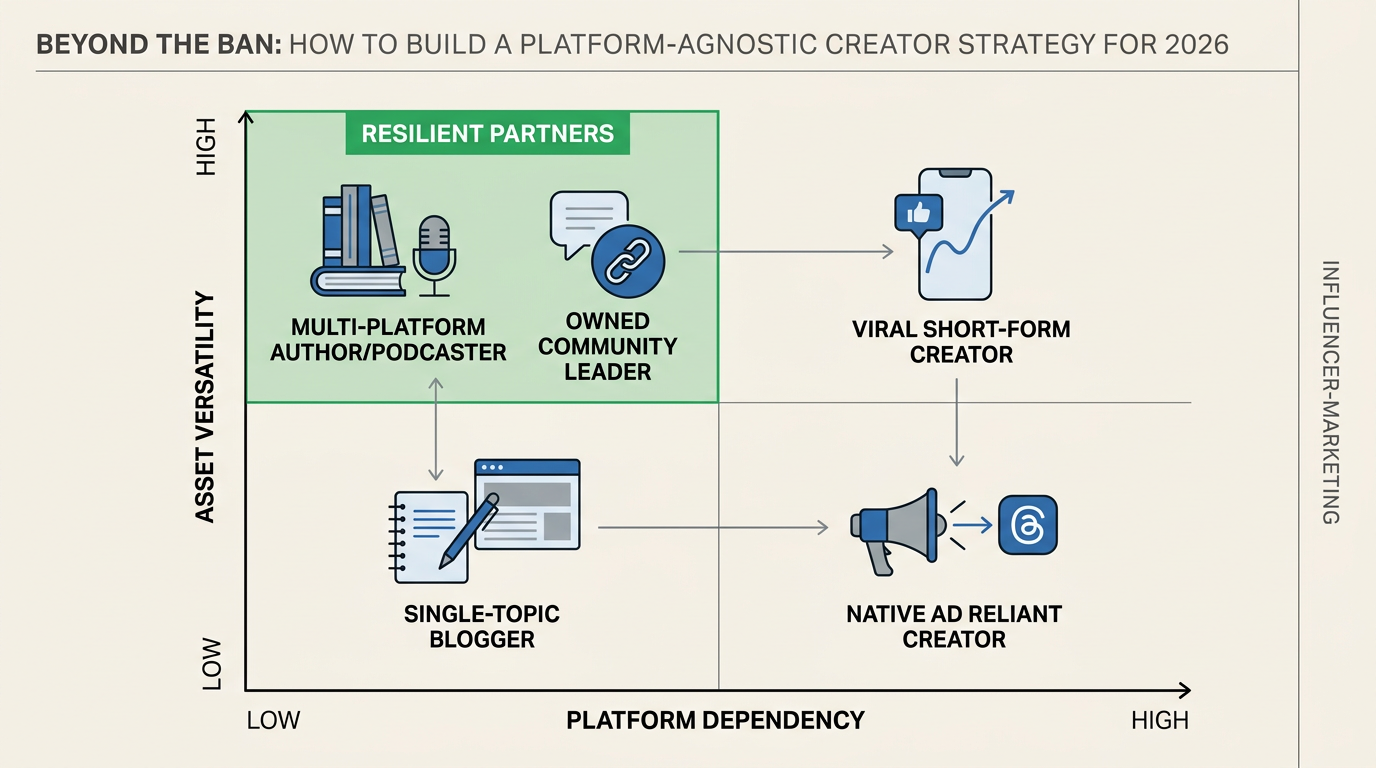
The first step isn't hiring new people; it's identifying which of your current partners will survive a TikTok blackout. Many creators who exploded in 2023 and 2024 are "TikTok-native," meaning their style, audience, and engagement metrics don't translate to the more polished aesthetic of Instagram or the search-driven nature of YouTube.
You need to categorize your current roster into three buckets: Platform Loyalists, Cross-Platform Natives, and High-Value Assets. Digiday recently noted that marketers are bracing for "TikTok whiplash" similar to the volatility seen on X (formerly Twitter) after its ownership change. You cannot afford to have 90% of your reach tied to a single point of failure. Use tools like Brandwatch or HypeAuditor to check the audience overlap between their TikTok and Instagram accounts. If a creator has 1 million followers on TikTok but only 12,000 on Instagram, they are a risk, not an asset.
Why it matters: Diversification is your insurance policy. If TikTok’s US operations are disrupted in 2026, your brand shouldn't lose its entire creator-led community overnight. You want partners who have already done the hard work of building a YouTube Shorts or Reels presence.
Common pitfall: Don't assume a high follower count on TikTok translates to influence elsewhere. Many TikTok stars are products of the algorithm, not a loyal community. Check their Instagram Story views or YouTube community tab engagement to verify real influence.
2. Rewrite creator contracts for "All-Digital" usage
If your contracts still specify "one (1) TikTok post with 30 days of Spark Ad rights," you are already behind. In a platform-agnostic world, you aren't paying for a post; you are paying for the creation of an asset and the right to distribute it wherever you see fit.
Update your standard Influencer Services Agreement to include "Perpetual, worldwide, all-digital usage rights." This allows you to take a video originally intended for TikTok and immediately pivot it to a Meta Advantage+ campaign or a YouTube Shorts ad if the TikTok landscape shifts. Given the recent news of Youxin Technology acquiring a stake in TikTok partner YATOP for $10.8 million, the infrastructure of TikTok marketing is becoming more complex and potentially more siloed. You need the legal freedom to move your assets out of that silo.
Why it matters: Buying rights upfront is significantly cheaper than trying to extend them during a crisis. If TikTok is banned or sold in 2026, and you suddenly need to move all your creative to Reels, you don't want to be stuck renegotiating with 50 different creators for additional rights.
Common pitfall: Forgetting to include "Raw Footage" or "Whitelisting" rights in the new contract. You need the raw files to re-edit for different platform ratios and safe zones (e.g., keeping text out of the way of the Instagram UI).
3. Transition from "Trends" to "UGC Pillars"
TikTok thrives on ephemeral trends—specific sounds, filters, or challenges. While these are great for short-term spikes, they are the hardest assets to repurpose. A video built around a TikTok-specific trending sound is legally and aesthetically difficult to move to YouTube Shorts.
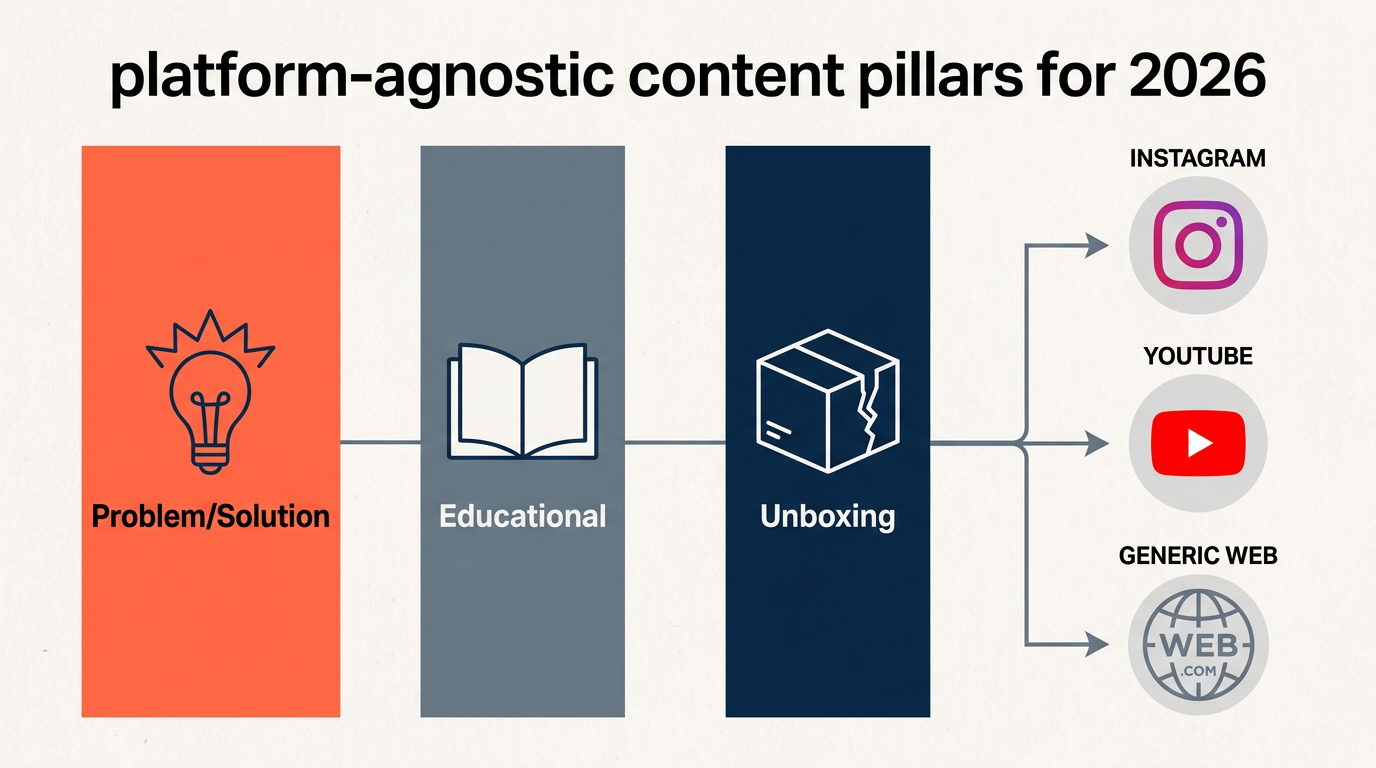
Shift your creative briefing process to focus on "UGC Pillars": Problem/Solution, How-to/Educational, and Unboxing/First Impressions. These formats are evergreen and platform-agnostic. They rely on the creator’s personality and the product’s value proposition rather than a fleeting platform gimmick. This approach also protects you from the "disheartening" experience of platform-specific moderation, such as Instagram’s aggressive (and sometimes erroneous) content takedowns for "nudity or sexual activity" in innocuous videos, as reported by users on Reddit recently. Having multiple versions of your UGC allows you to bypass single-platform censorship or technical glitches.
Why it matters: Evergreen UGC has a much higher ROI because it can be used in your email marketing, on product pages, and in paid social ads for 6-12 months. Trend-based content dies in 72 hours.
Common pitfall: Being too prescriptive in the brief. You want the creator’s authentic voice, but you need them to avoid platform-specific language like "Link in my TikTok bio" or "Check out my TikTok shop."
4. Implement a cross-platform distribution workflow
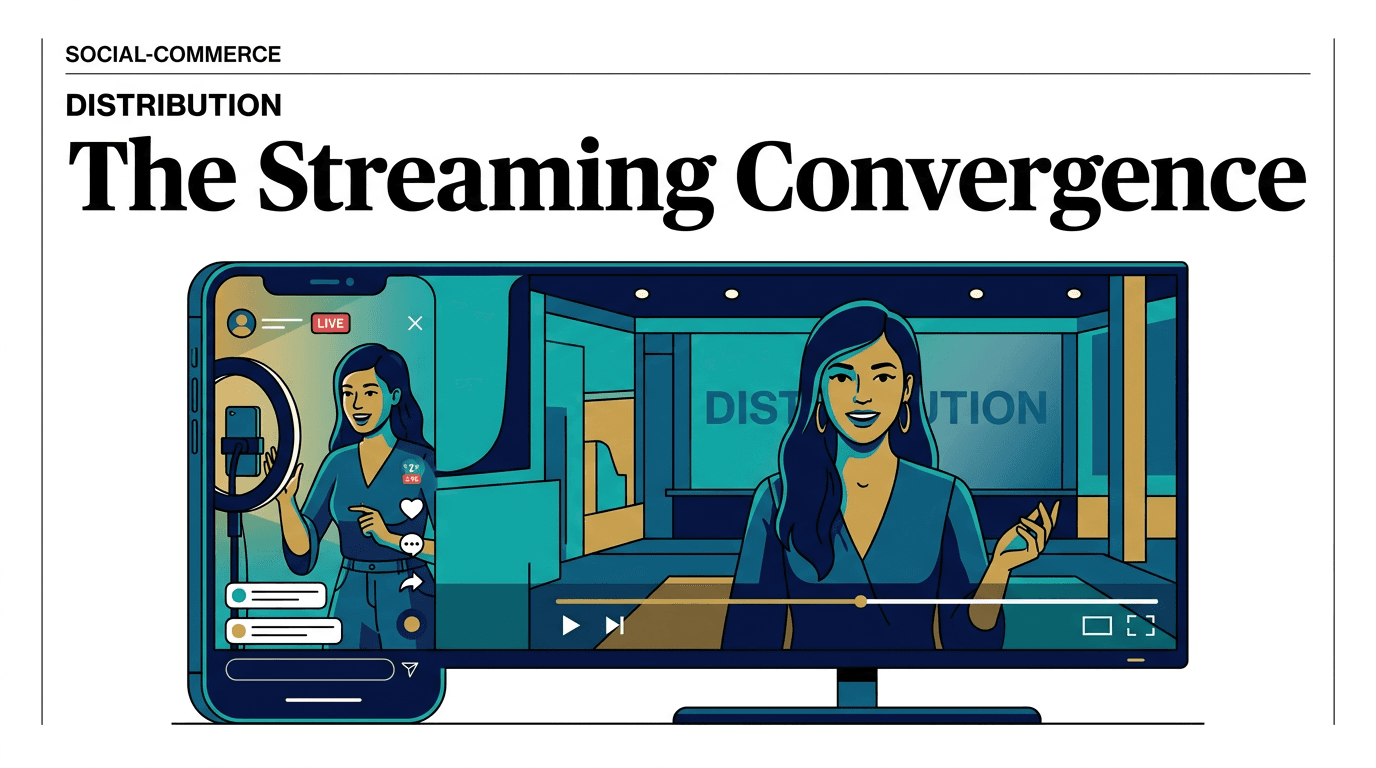
Once you have the assets and the rights, you need a system to deploy them. This is where many teams fail because they try to manually manage dozens of creators across three different platforms. You should be utilizing agentic AI tools to streamline this. As highlighted in recent digital marketing discussions, tools like Claude can now handle complex coding and deployment tasks that previously required freelancers.
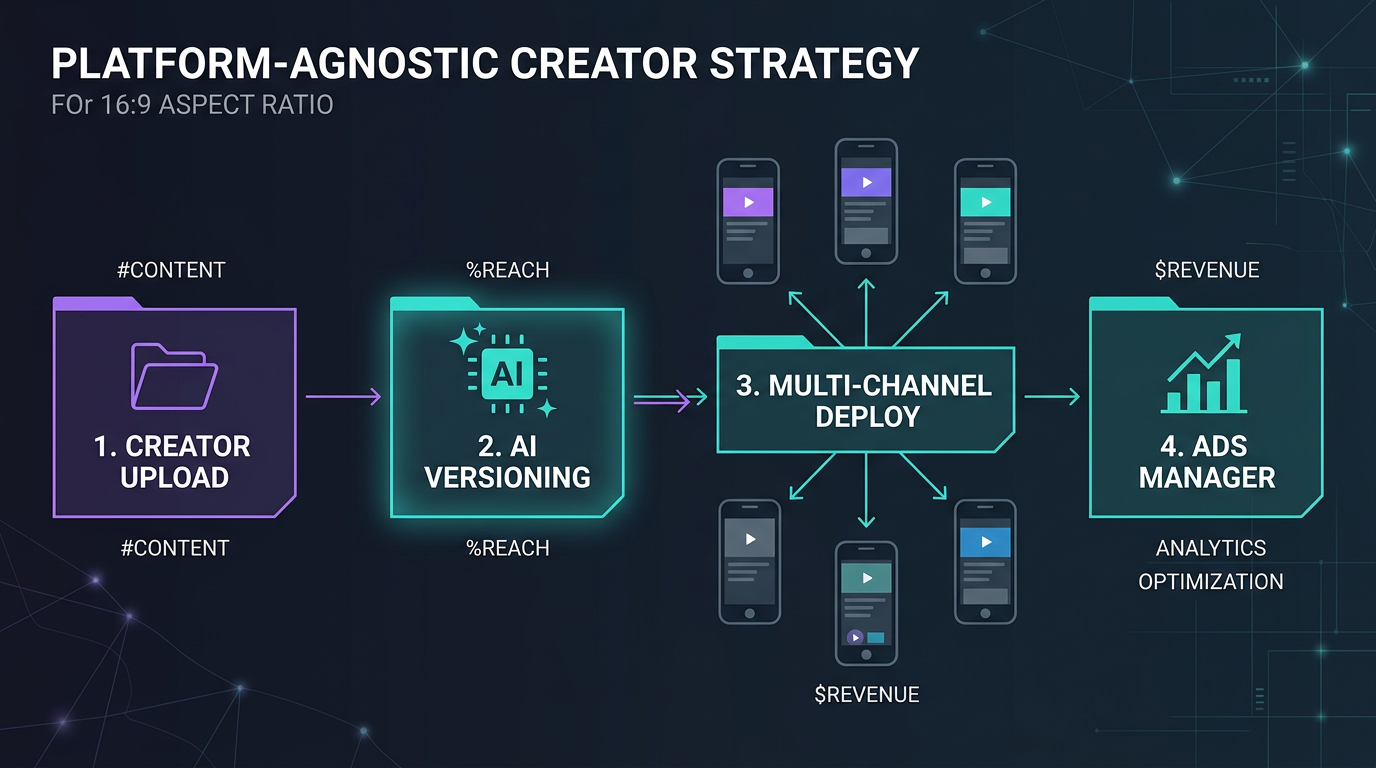
Your workflow should look like this:
- Receive Raw Asset: Creator uploads high-res vertical video to a shared folder (Frame.io or Google Drive).
- AI-Assisted Versioning: Use tools like Munch or Descript to automatically generate versions with platform-specific captions and safe-zone adjustments.
- Simultaneous Launch: Schedule the content across TikTok, Reels, and Shorts using a unified social management tool like Sprout Social or Khoros.
- Paid Amplification: Immediately move the top-performing 10% of organic posts into Meta’s Advantage+ and YouTube’s Demand Gen campaigns.
Why it matters: Speed is a competitive advantage. If a piece of content starts to take off on TikTok, you should have it live on Reels within hours to capture the cross-platform momentum.
Common pitfall: Using the "Share to Instagram" button within the TikTok app. This often leaves a TikTok watermark on the video, which Instagram’s algorithm actively penalizes, significantly reducing your reach.
5. Verify your strategy with a "Platform Stress Test"
How do you know if your strategy is truly platform-agnostic? You must run a stress test. For one week, act as if TikTok does not exist. Stop all organic posting and paid spend on the platform and move that focus entirely to Instagram Reels and YouTube Shorts.
Monitor your Customer Acquisition Cost (CAC) and Return on Ad Spend (ROAS) during this period. If your business experiences a catastrophic drop in revenue, your diversification has failed. If, however, you see that your repurposed UGC is performing at 80-90% of the efficiency of your TikTok-native ads, you have successfully built a resilient brand. This verification step is crucial as we head into 2026; you need to know now where your vulnerabilities lie so you can fix them before the market dictates your next move.
Why it matters: Data-backed confidence allows you to make calm decisions when the headlines start screaming about 2026 ownership changes. You'll know exactly where to reallocate your budget for maximum stability.
Common pitfall: Only testing organic reach. Organic reach is volatile; the real test is whether your paid social engine can maintain efficiency on Meta and Google using the same creator assets.
Three tactics to try next
Now that you've established a platform-agnostic foundation, consider these three advanced tactics to further insulate your brand:
- Creator-Led Email Sequences: Take the high-performing UGC assets and embed them into your post-purchase or abandoned cart email flows. This moves the "influence" off the social platforms entirely and into a channel you own (your email list).
- YouTube Search Optimization for UGC: Unlike TikTok, YouTube is a search engine. Re-title your creator videos using high-volume search keywords and detailed descriptions. This gives your influencer content a multi-year shelf life in Google Search results.
- Whitelisted Dark Posts on Meta: Instead of just posting to your brand's Instagram account, use the creator's "Partnership Ads" feature to run the content from their handle on Facebook and Instagram. This often results in higher trust scores and lower CPMs than standard brand ads.
By decoupling your creative from the platform, you're no longer at the mercy of the next algorithm update or geopolitical headline. You're building a brand that can live anywhere.
FAQ