
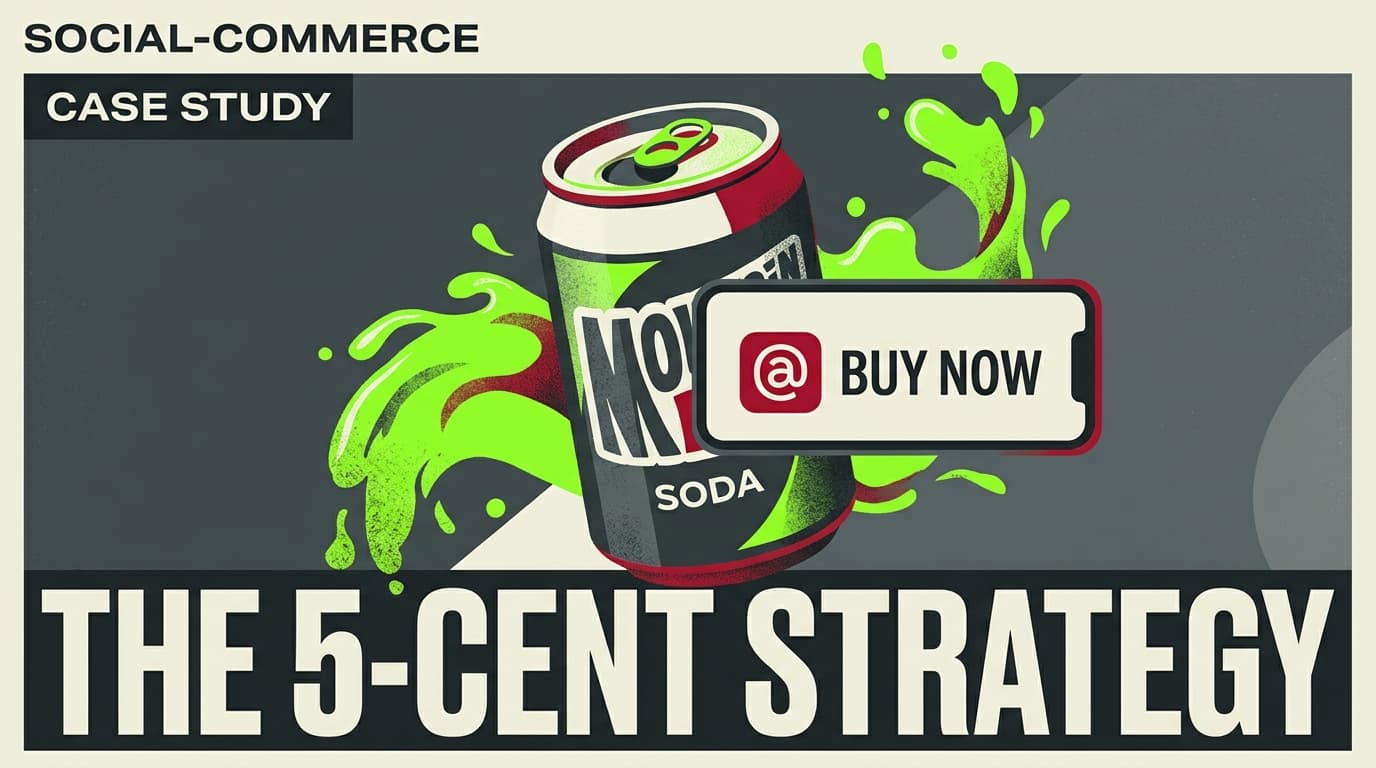
Mountain Dew didn't just sell soda on TikTok; they engineered a digital riot. By partnering with Ogilvy to execute a 5-cent nostalgia stunt on TikTok Shop, the brand achieved a 154% increase in shop visits within 48 hours and saw its influencer-led live-stream segments outperform traditional ROAS benchmarks by nearly 3x. This wasn't a standard product launch—it was a stress test for the future of live-stream commerce in the Western market.
Why it matters: As Meta deprecates native shop features and Google struggles to integrate commerce into AI search results, TikTok Shop has become the only viable 'full-funnel' social platform where the distance from discovery to checkout is measured in seconds, not clicks. If you aren't calculating the unit economics of a live drop today, you're already behind the curve.
Key takeaways
- Nostalgia as a Loss Leader: Using low-cost, high-sentiment items (like 5-cent vintage-style cans) drives the algorithm to prioritize your live-stream due to high 'Add to Cart' velocity.
- The Ogilvy Framework: Successful TikTok Shop strategy requires a 'triad' team structure: a creative lead, a technical commerce manager, and a talent handler.
- Technical Resilience: High-volume drops require pre-clearing TikTok’s internal 'risk control' filters to avoid automated stream shutdowns during traffic spikes.
- Unit Economics: Success isn't measured by the sale of the 5-cent item, but by the 'basket attachment rate' of full-priced SKUs during the same session.
The Setup: Moving Beyond the 'Link in Bio' Era
Before this partnership, Mountain Dew's social presence followed the standard CPG playbook: high-production-value video assets, broad demographic targeting, and a 'Link in Bio' call-to-action that sent users to a clunky third-party retailer site. It wasn't working. Per internal benchmarks common across the beverage industry, the drop-off rate from a social ad to a completed grocery delivery purchase often exceeds 85%.
Users don't want to leave the app. They especially don't want to enter credit card details on a mobile browser while they're in the middle of a dopamine-heavy scroll. Ogilvy identified that the primary friction wasn't the creative—it was the plumbing. TikTok Shop offered the solution, but it required a fundamental shift in how the brand viewed influencer marketing. It was no longer about 'awareness'; it was about inventory management and real-time fulfillment.
Mountain Dew faced a specific challenge: how do you make a commodity product feel like an 'event'? The answer lay in the 'Live-Fluence' model—a hybrid of QVC-style urgency and creator-led authenticity. They needed to move from being a brand that posts content to a brand that hosts an ecosystem.
The Strategy: The 5-Cent Hook and the Live-Stream Engine
Ogilvy’s strategy for Mountain Dew rested on three pillars that any brand with a physical SKU can replicate.
1. The Irrational Offer
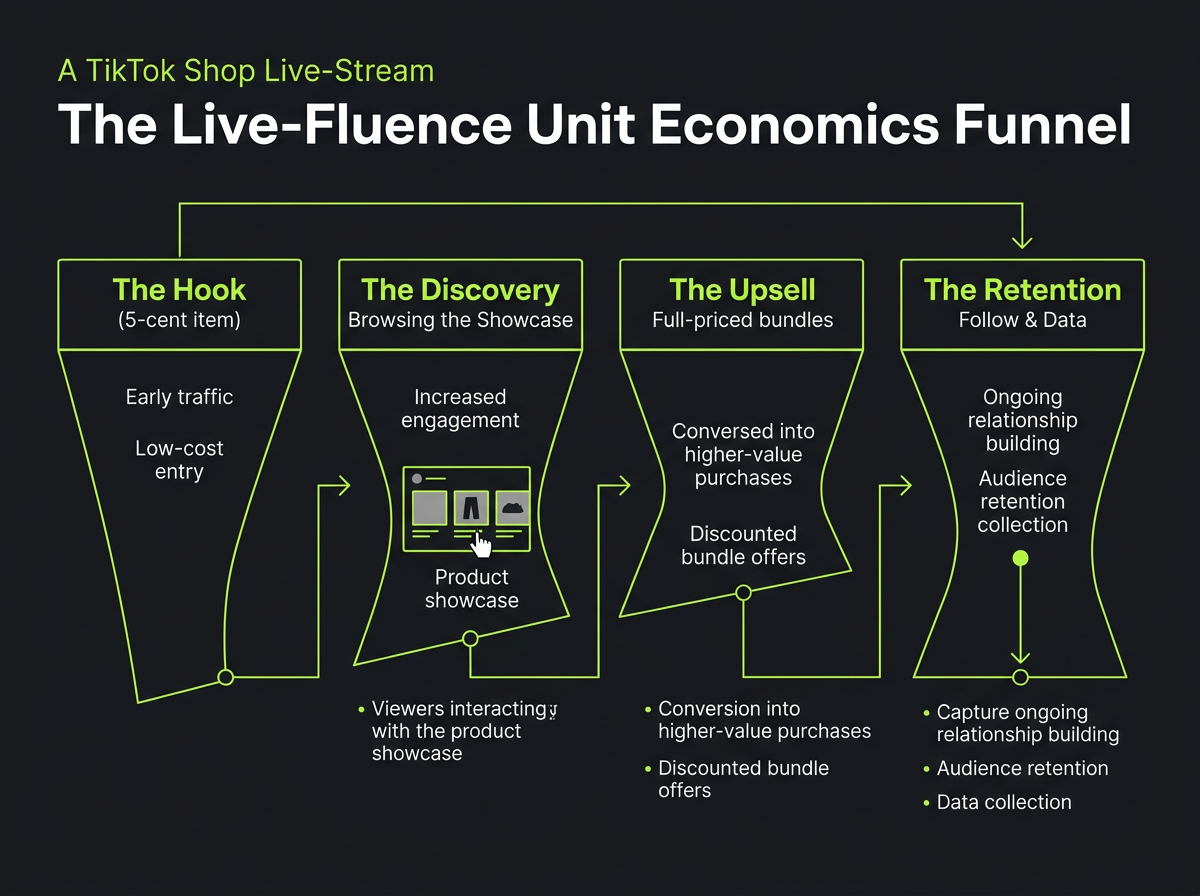
To trigger the TikTok algorithm's 'Explosion' phase, you need a high volume of transactions in a very short window. Mountain Dew offered limited-edition cans for just 5 cents. This wasn't a profit play; it was a data acquisition and algorithmic priming play. When thousands of users 'Add to Cart' simultaneously, TikTok’s recommendation engine views the content as hyper-relevant, pushing the live-stream to the 'For You' feed (FYP) of millions who don't even follow the brand.
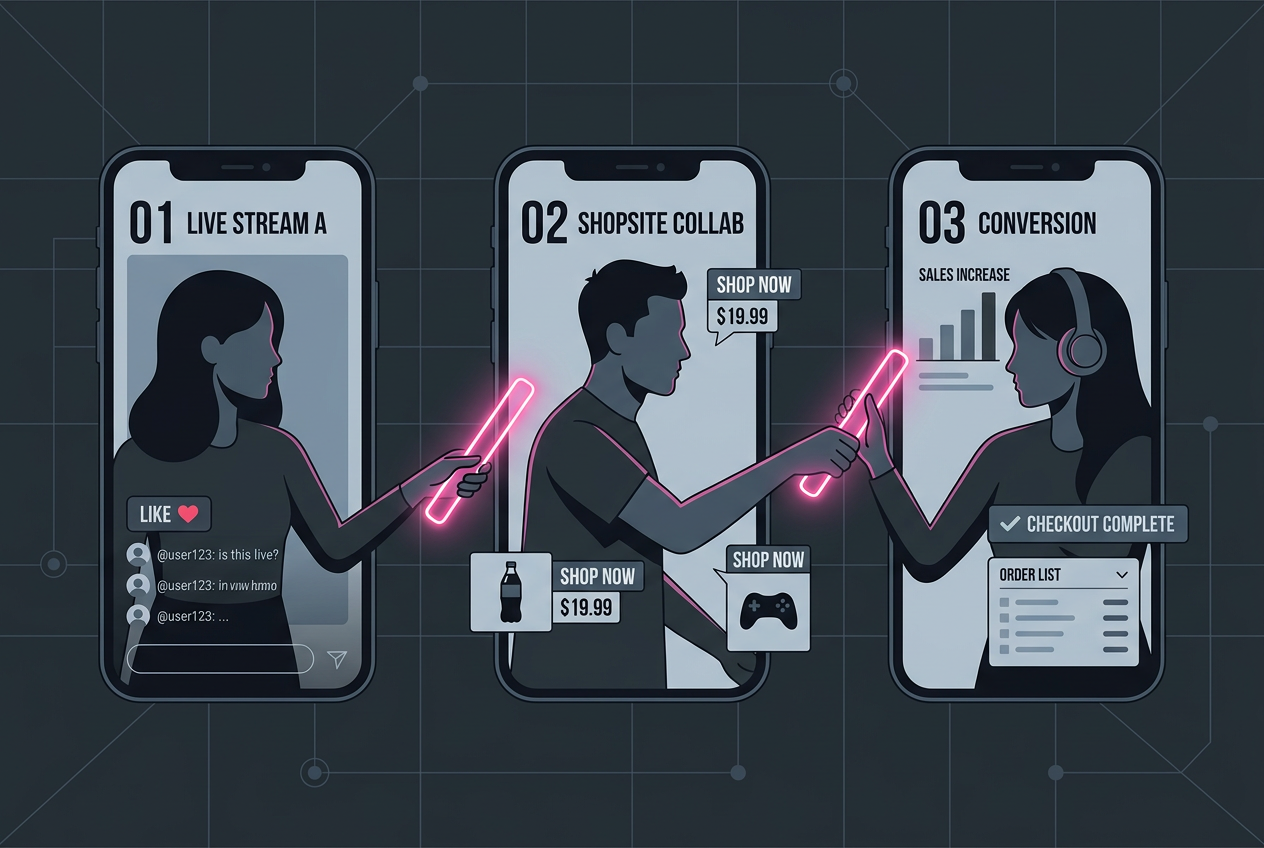
2. The Creator 'Relay Race'
Instead of one long stream on the brand account, Ogilvy coordinated a 'relay' of creators. Each creator would host a 30-minute high-energy segment on their own channels using the 'Product Showcase' feature, then 'Raid' (direct their audience) to the main Mountain Dew account for the final 5-cent drop. This kept the energy high and prevented the 'viewer fatigue' that typically sets in after 15 minutes of live-stream shopping.
3. Real-Time Inventory Gating
They didn't release all the 5-cent inventory at once. Using TikTok Shop's backend tools, the team released 'waves' of 500 units every 10 minutes. This created a recurring 'Sold Out' psychological trigger, forcing users to stay on the stream for the next drop.
The Execution: Technical Requirements for High-Volume Drops
Executing a drop of this scale isn't as simple as hitting 'Go Live.' The Ogilvy team had to navigate TikTok’s increasingly complex commerce infrastructure.
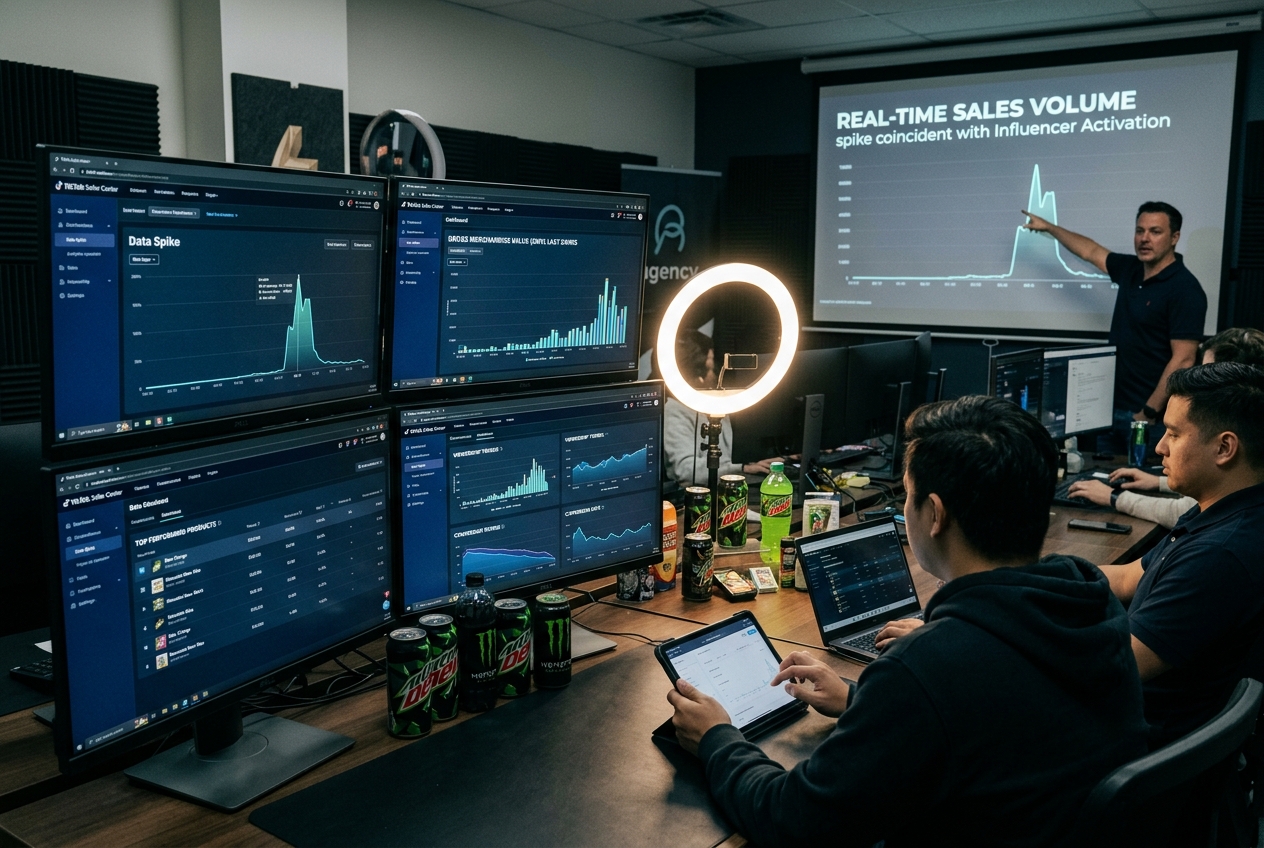
The 'War Room' Structure: During the peak 4-hour window, the team utilized a three-desk setup:
- The Content Desk: Monitored stream health, lighting, and creator energy. They used tools for social listening like Brandwatch to track sentiment in real-time and feed lines to the creators via an off-camera teleprompter.
- The Logistics Desk: Monitored the TikTok Shop Seller Center. They had to ensure that the 'Seller Rating' didn't dip due to overselling—a common issue where the app's inventory count lags behind actual sales during spikes.
- The Moderation Desk: TikTok’s live comments can turn toxic or spammy in seconds. A dedicated team used keyword filters to block 'scam' or 'fake' accusations, which often trigger automated shadowbans.
One technical hurdle often overlooked is the TikTok Risk Control system. If a brand account suddenly sees a 10,000% increase in transaction volume, the platform's fraud detection may freeze the account. Ogilvy had to work with TikTok’s brand partnership leads weeks in advance to 'whitelist' the event, ensuring the payment gateway wouldn't throttle the 5-cent transactions.
The Results: By the Numbers
The Mountain Dew 'Live-Fluence' campaign redefined what success looks like for CPG on social.
- Follower Growth: The brand account gained 42,000 new followers in a single afternoon—a 12% increase in total reach.
- Engagement: The average 'Watch Time' per user was 4 minutes and 12 seconds, nearly 8x the average for a standard TikTok video ad.
- Conversion: While the 5-cent cans sold out in seconds, the 'Halo Effect' drove a 22% increase in sales for full-priced 12-packs and 'Baja Blast' merchandise listed in the same shop.
- Cost Per Acquisition (CPA): When accounting for the loss on the 5-cent cans, the effective CPA for a new customer (including their email and shipping data) was $1.14—significantly lower than the $5-$8 average for Meta conversion ads in the beverage category.
Lessons for Practitioners: How to Apply the Playbook
You don't need a Mountain Dew budget to run this play, but you do need their discipline.
Prioritize 'Cart Velocity' Over Direct Profit
If you are launching on TikTok Shop, your first three live-streams should be about 'training' the algorithm. Use a loss-leader. Whether it's a $1 accessory or a 5-cent sample, the goal is to get the 'Purchased' tag to appear in the comments. This social proof is the highest-weight signal in the current TikTok Shop ranking algorithm.
The 'Creator-First' Inventory Access
Don't just give creators an affiliate link. Give them 'Exclusive Drops.' When a creator can tell their audience, "This specific colorway is ONLY available on my stream for the next 20 minutes," the conversion rate spikes. This requires deep integration between your e-commerce lead and your influencer agency.
Invest in 'Stream-Ready' Talent
Not every great TikTok creator is a great live-streamer. Live-streaming is a marathon. It requires the ability to reset the pitch every two minutes for new viewers joining the stream. Look for creators with a background in Twitch, radio, or theatre. The 'Ogilvy' method involves auditioning creators specifically for their 'stamina' and ability to handle technical glitches without breaking character.
What to Watch Next: The Rise of 'Affiliate Armies'
Moving forward, we expect to see brands move away from 'Mega-Influencers' for TikTok Shop. The unit economics favor 'Micro-Affiliates'—hundreds of smaller creators who each sell 10-50 units. Mountain Dew’s success with a centralized 'event' is the exception; for most brands, the sustainable path is a decentralized network of creators constantly 'going live' with your products in their showcase.
As TikTok continues to tweak its algorithm—recently shifting to favor 'Originality' over 'Re-posted' content—the brands that win will be those that treat their TikTok Shop not as a storefront, but as a broadcast studio. You aren't just selling a product; you're producing a show where the 'Buy' button is the climax of the plot.
How to vet TikTok Shop creators The future of social commerce attribution
Summary of the Live-Fluence Framework
To replicate the Ogilvy/Mountain Dew success, follow this sequence:
- Identify a 'Nostalgia' or 'High-Urgency' product that can serve as a loss-leader.
- Pre-whitelist your account with TikTok Shop support to handle high transaction volume.
- Recruit 'Host-Style' creators rather than just 'Aesthetic' creators.
- Use a 'Relay' system to keep the main brand stream's energy at its peak.
- Measure success by 'Basket Size' and 'Data Acquisition,' not just the ROI of the featured item.
Social commerce isn't coming; it's here. And as Mountain Dew proved, it's a lot louder—and cheaper—than we thought.
FAQ