
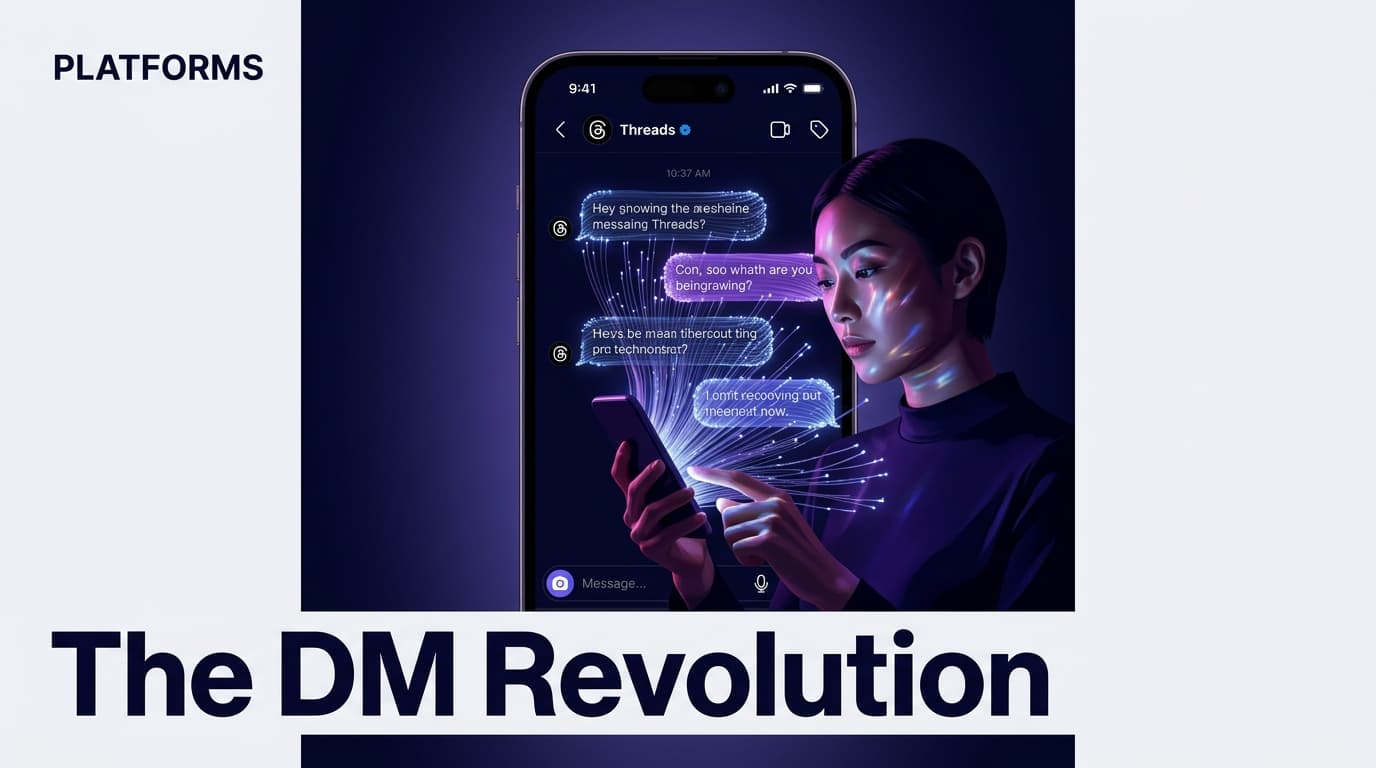
Can a chatbot actually keep the 'vibe' of Threads alive while handling five thousand customer inquiries an hour? That is the question hitting every social media manager's inbox as Meta begins the aggressive rollout of its AI assistant into Threads DMs. For a platform that was ostensibly built on the promise of 'unfiltered' human connection and text-based intimacy, the introduction of a synthetic layer in the private inbox feels like a paradox. But for brand marketing leads, it is a necessary evolution.
Why it matters: As Threads matures into a primary customer touchpoint, the volume of direct queries is outstripping the capacity of manual community management teams. Meta's AI integration allows brands to scale their presence without a linear increase in headcount, but it carries the risk of eroding the very authenticity that drew users to the platform in the first place.
TL;DR
- Automation at Scale: Meta AI can now handle tier-one support queries directly within Threads DMs, reducing response times from hours to seconds.
- Brand Voice Guardrails: New API hooks allow managers to feed brand-specific style guides into the AI to prevent 'robotic' responses.
- The Human Handoff: Success hinges on a seamless transition from AI to human agents for complex or high-emotion issues.
- Platform Context: This move follows a broader trend of Meta unifying its messaging infrastructure across Instagram, WhatsApp, and now Threads.
The architecture of the Threads DM shift
To understand why this matters, you have to look at the plumbing. For the first year of its life, Threads was a broadcast-heavy platform. You posted, people replied, and maybe you replied back in the public thread. DMs were an afterthought, eventually bridged through Instagram's infrastructure. Now, Meta is treating Threads as a standalone ecosystem. The integration of Meta AI isn't just a 'chat' feature; it is a logic layer that sits between the user and the brand's inbox.
Think of it like a high-end hotel concierge. In the old model, every guest had to wait for the one person at the desk. In the new model, an AI assistant handles the 'Where is the gym?' and 'What time is breakfast?' questions instantly. The human concierge is still there, but they are only paged when a guest needs something nuanced, like a custom itinerary or a sensitive complaint. Per Meta's recent developer documentation, the AI can now access a brand's 'Knowledge Base'—a set of uploaded documents or FAQs—to provide answers that are factually grounded in that brand's specific reality.
This is a significant departure from the early days of social automation. We aren't talking about 'If/Then' logic trees. We are talking about Large Language Models (LLMs) that can interpret intent. If a user asks, 'Is this safe for my toddler?', the AI doesn't just look for the word 'safe'; it understands the context of child safety and pulls the relevant data from your product specs.
Balancing automation with the Threads 'vibe'
Threads has a specific culture. It is snarkier than LinkedIn, more conversational than Instagram, and less chaotic than X. When brands like Jazzercise or Wendy’s interact on Threads, they aren't just providing information; they are performing a brand identity. The fear among agency strategists is that a Meta AI chatbot will revert to 'Corporate Speak'—the dreaded 'We value your feedback and will get back to you shortly'—which acts as a repellent on this specific platform.
To combat this, Meta is testing 'Tone Profiles.' This allows you to toggle the personality of the AI. However, savvy community managers know that a toggle isn't enough. You need to use the platform’s custom instructions to inject specific brand quirks. For example, if your brand uses lowercase only or specific emojis, those need to be hard-coded into the AI's steering instructions.
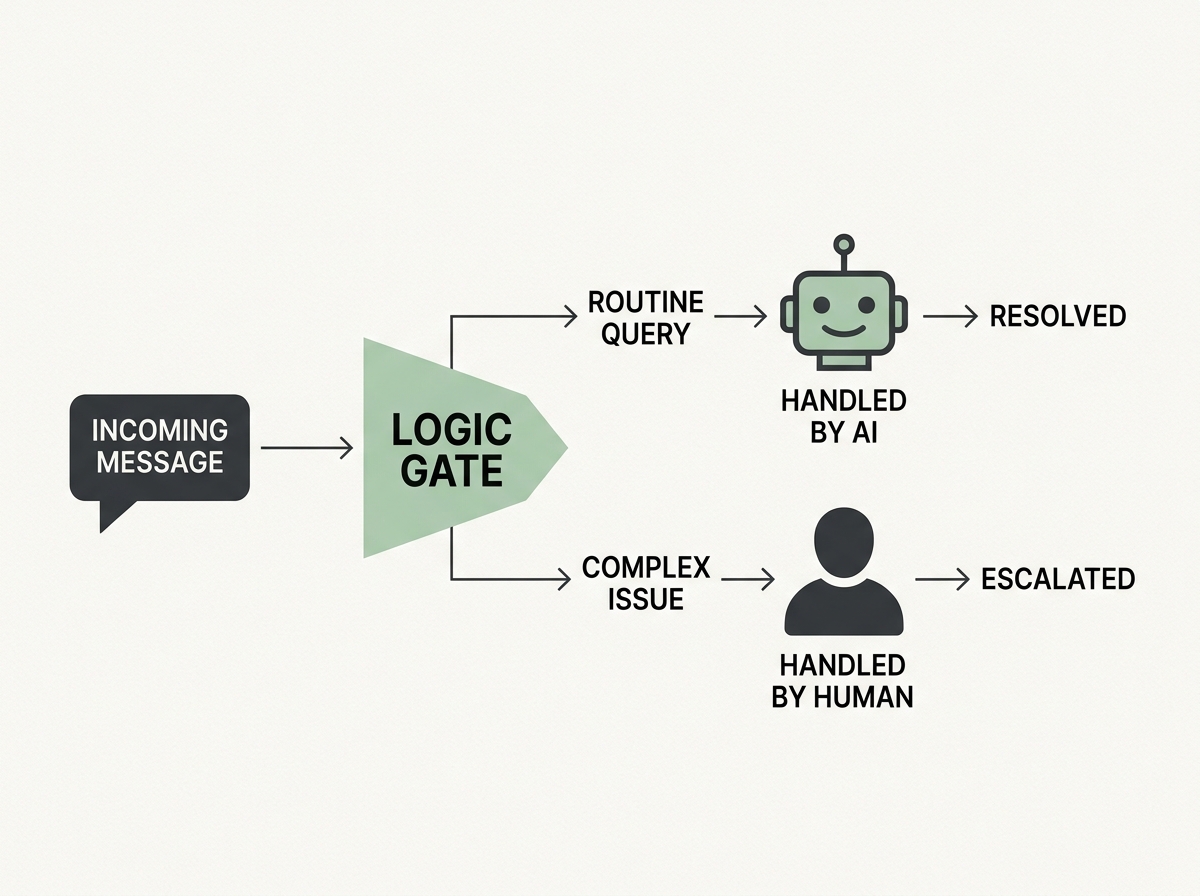
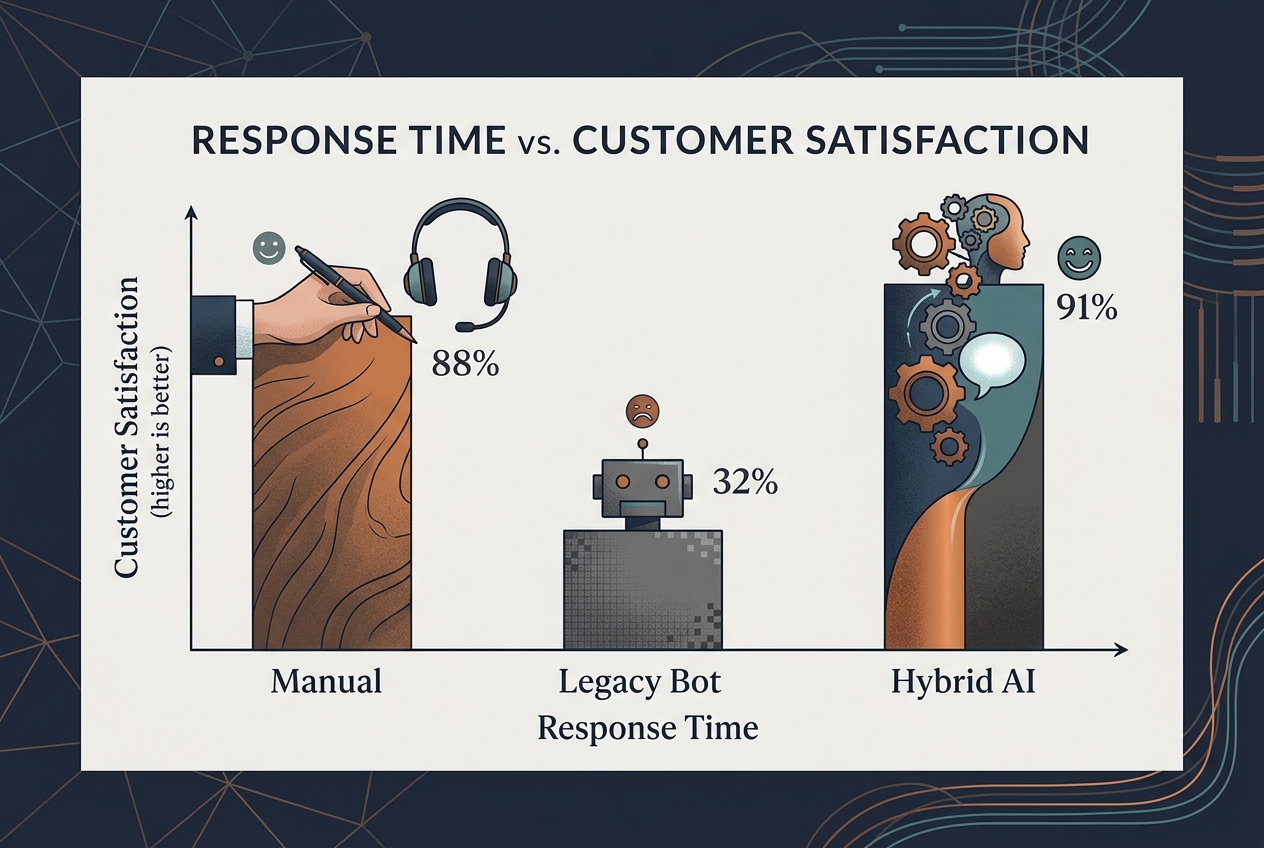
We are seeing brands move toward a 'hybrid' model. According to internal benchmarks from early-access agencies, roughly 70% of inbound Threads DMs are repetitive (e.g., 'Where is my order?', 'Do you ship to the UK?', 'What are your hours?'). By automating these, you free up your human community managers to spend their time on the 30% that actually builds brand equity—the witty banter, the deep-dive community support, and the proactive outreach.
The risk of the 'Uncanny Valley' in social DMs
There is a cautionary tale in how other platforms are handling AI. Recently, Snapchat began clamping down on wholly AI-generated videos in its Spotlight feed to preserve 'authentic human-authored experiences' [S3]. This signals a growing user fatigue with content that feels 'fake.' If your Threads DMs feel like you are talking to a brick wall, users will simply stop messaging you.
The rise of authentic video content
Furthermore, security remains a massive hurdle. We recently saw how vulnerabilities in social login plugins can lead to full site takeovers [S4]. When you integrate an AI into your DM flow, you are essentially giving a third-party tool access to your customer data. If that AI is tricked via 'prompt injection'—where a user gives it instructions to reveal private info or change its own programming—the brand takes the hit. You must ensure that your Meta AI implementation has strict data-siloing. The AI should be able to read your shipping policy, but it shouldn't be able to write to your customer database without a human intermediary.
Strategic implementation: How to roll this out tomorrow
If you are a brand marketing lead, you shouldn't turn on every AI bell and whistle at once. Start with 'Assisted Replies.' This is the middle ground where the AI drafts a response in the dashboard, but a human has to hit 'Send.'
- Audit your top 20 queries: Look at your Instagram and Threads DMs from the last 90 days. What are the questions that make your team roll their eyes? These are your first candidates for AI training.
- Define the 'Escalation Trigger': At what point does the AI stop? Usually, this should be triggered by keywords related to 'refund,' 'manager,' 'frustrated,' or 'broken.'
- Tone Check: Run a 'Turing Test' with your team. Have the AI generate ten responses based on your brand voice and see if your team can spot the bot. If they can, your steering instructions aren't specific enough.
Remember that the Instagram algorithm—and by extension, the Threads ecosystem—is increasingly prioritizing 'meaningful interactions' [S5]. If the AI helps a user get an answer faster, that is a positive signal. If it leads to a 'blocked' or 'muted' action because the user is annoyed by the bot, your organic reach will likely suffer. Meta’s ranking systems are sophisticated enough to track the sentiment of a DM conversation; a frustrated user in the DMs is a signal that your content shouldn't be pushed to their main feed.
The future of the 'Social CRM'
We are moving toward a world where the DM is the storefront. With the integration of WooCommerce and other e-commerce tools, the distance between a question in a Threads DM and a completed transaction is shrinking. But as we've seen with recent security flaws in social login plugins [S4], the more we integrate, the more we risk.
Securing your social commerce stack
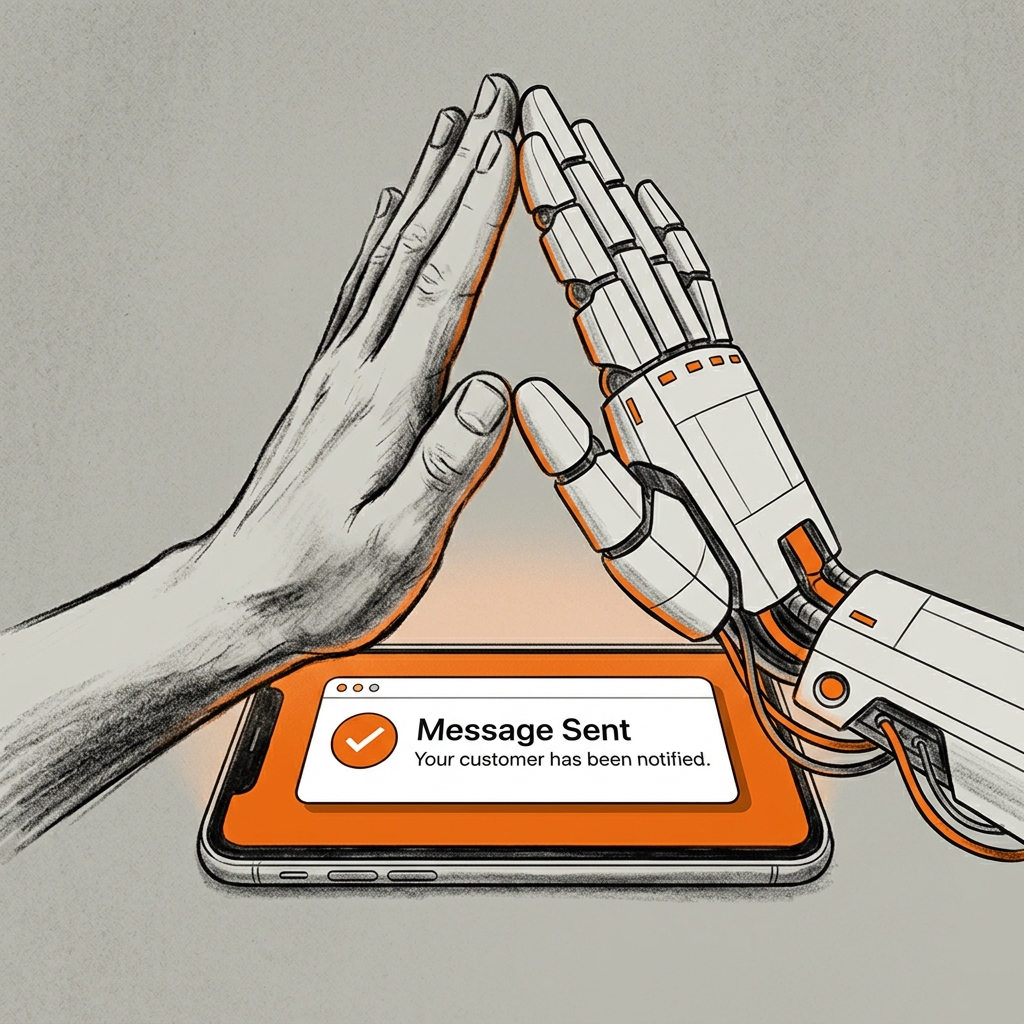
Your goal isn't to replace your community manager. It is to turn them into an 'AI Editor.' Their job is no longer to type 'Thanks for the feedback!' a hundred times a day. Their job is to manage the model, monitor for hallucinations, and step in when the conversation requires a human heart. The 'Threads DM Revolution' isn't about the technology; it's about who uses that technology to stay more human, more often, at a larger scale.
As brands like Jazzercise have shown, staying relevant requires riding the wave of new technology without losing the nostalgia and personal touch that built the brand in the first place [S1]. Whether you are a 50-year-old fitness icon or a Gen Z startup, the rules of the inbox remain the same: be helpful, be fast, and for heaven's sake, don't sound like a machine.
How to measure success in the AI-DM era
Standard metrics like 'Response Time' are now obsolete. If an AI is answering, your response time will be sub-five seconds. That is no longer a competitive advantage; it is the baseline. Instead, you need to track 'Resolution Rate'—how often did the AI solve the problem without a human needing to step in?
Another critical metric is 'Sentiment Shift.' Use a tool like Brandwatch or Sprout Social to analyze the sentiment of a conversation at the start of the DM versus the end. If the AI is doing its job, the sentiment should move from 'Inquiry' (neutral) to 'Resolved' (positive). If it stays neutral or turns negative, your AI is failing the 'vibe check'.
Ultimately, the Threads DM revolution is a test of brand maturity. It forces you to define exactly what you sound like and exactly what your customers need. Those who treat it as a 'set it and forget it' tool will see their community engagement crater. Those who treat it as a high-powered exoskeleton for their existing team will dominate the conversation.
What should you watch next? Keep an eye on Meta's 'Business Suite' updates. We expect to see more granular controls over 'AI Memory'—the ability for the chatbot to remember a user's previous interactions across Instagram and Threads. When the bot can say, 'Hey, did you ever get that issue with your blue leggings fixed?' that is when the line between automation and community management truly disappears.
FAQ