
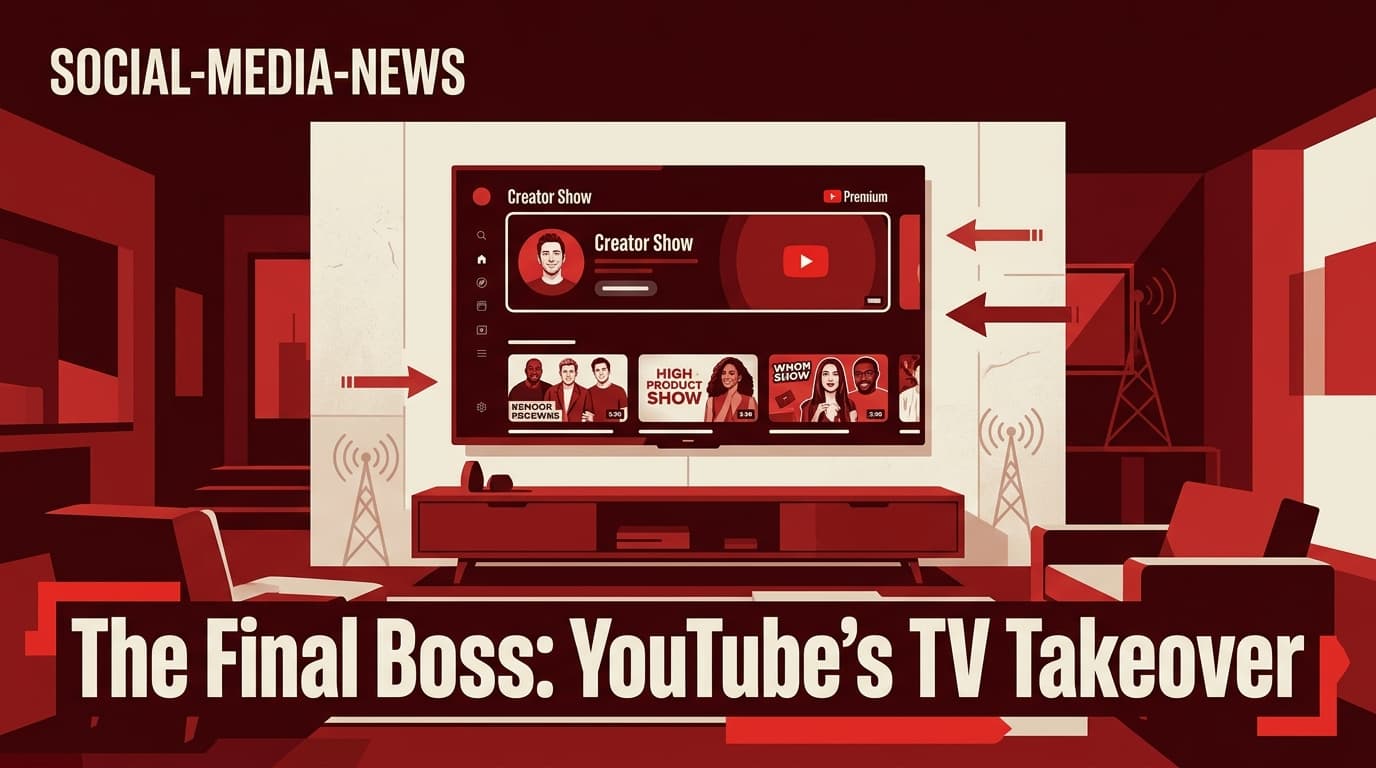
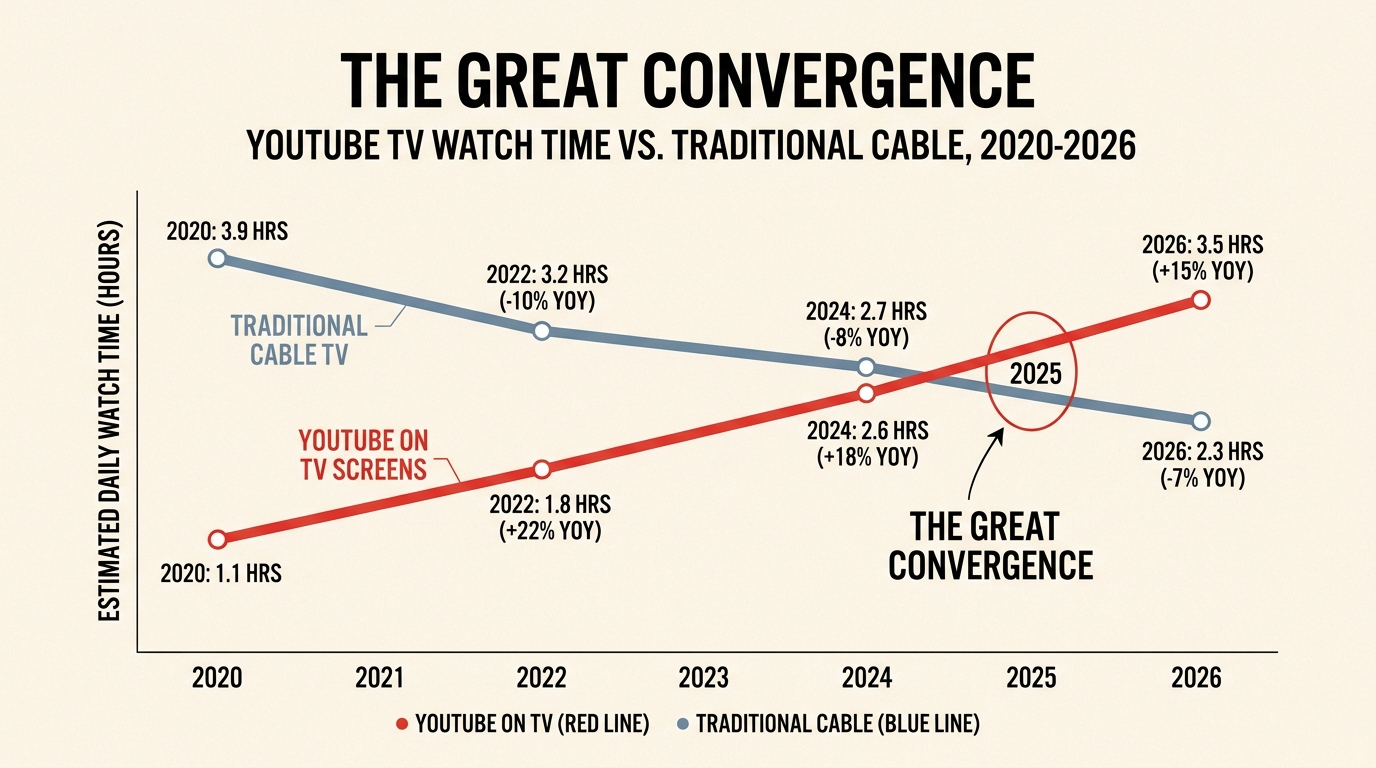
Is YouTube still a social media platform, or has it finally become the world’s largest television network? If you watched the 2026 YouTube Brandcast presentations, the answer is leaning heavily toward the latter. The introduction of 'Creator Shows'—a specific, high-production-value content tier designed for the living room screen—represents the platform's final boss move against traditional linear TV.
Why it matters: For brand marketing leads and paid-social buyers, this isn't just another feature rollout. It’s a structural shift in how premium inventory is bought, how brand safety is managed on the big screen, and how the floor for creator CPMs is being permanently raised. You aren't just buying 'social video' anymore; you're buying prime-time slots on the most-watched screen in the house.
Key takeaways
- The CTV Pivot: Over 45% of YouTube watch time now happens on Connected TV (CTV), driving the need for 'Creator Shows' that mirror traditional TV formats.
- CPM Floor Rising: Premium serialized content is commanding a 30-40% premium over standard YouTube Select inventory.
- Brand Safety 2.0: New AI-driven metadata frameworks are being deployed to assure upfront advertisers that 'Creator Shows' are as safe as network sitcoms.
- The End of the 'Clip': YouTube is incentivizing long-form, multi-episode arcs to capture the 'appointment viewing' habits that once belonged to cable.
The fundamental shift from clips to serialized destinations
For a decade, YouTube was where you went to see 'the clip.' You saw the highlight from a late-night talk show, the 3-minute tutorial, or the viral prank. But as of the May 2026 data released during the upfront season, the behavior has inverted. Users are now treating YouTube as a destination for serialized, episodic entertainment. This is the birth of the 'Creator Show.'
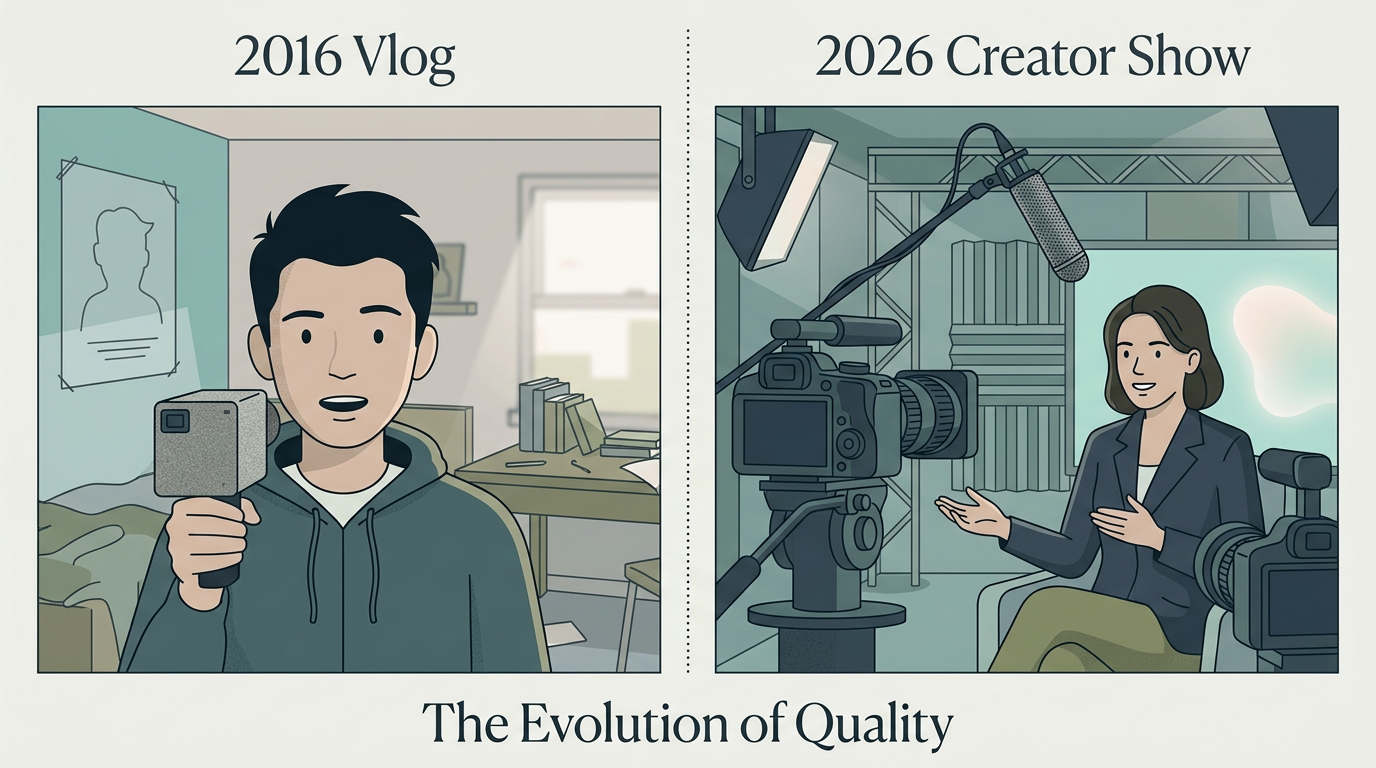
Unlike traditional influencer content, which often feels ephemeral and personality-driven, Creator Shows are built with a 'TV-first' mindset. We’re talking about 22-to-44 minute episodes, high-fidelity audio, and multi-camera setups. Think of MrBeast’s latest competition series or the high-production travelogues from creators like Sam Kolder. These aren't just videos; they are intellectual properties (IP) with seasonal arcs.
For the marketer, this solves the 'fragmentation problem.' Instead of spreading a budget across 500 disparate creators to reach a target audience, you can now buy against a specific 'Show' with the same confidence you once had buying a spot on The Voice. This is about moving from a reach-and-frequency model to a sponsorship-and-association model.
How YouTube Brandcast 2026 redefined the upfronts
The most recent Brandcast wasn't just a celebration of creators; it was a direct pitch to the $60 billion linear TV ad market. YouTube introduced a specific 'Creator Show' designation within the YouTube Select lineup. This isn't just a label; it’s a technical gate. To qualify, creators must meet specific benchmarks for average view duration (AVD) on CTV, production quality, and historical brand safety.
This shift is a direct response to the 'algorithm anxiety' currently plaguing the industry. As seen in recent discussions on creator burnout and the mental tax of engagement metrics, creators are looking for more stable, predictable ways to monetize. By moving into serialized 'Shows,' they move away from the daily grind of the 'post or perish' cycle and into a more traditional production schedule.
From the buyer’s perspective, this creates a 'guaranteed' environment. When you buy into a Creator Show, you aren't just buying an audience; you're buying a context. This is the 'contextual targeting' revival that the industry has been clamoring for since the deprecation of third-party cookies. If the show is about high-end automotive restoration, your car brand isn't just appearing 'near' a car enthusiast—it's appearing inside the premium content they specifically sat down on their couch to watch.
The mechanics of the new CPM floor
Let's talk about the money. Historically, YouTube CPMs have fluctuated wildly based on seasonal demand and niche. However, the 'Creator Show' tier is introducing a price floor that looks much more like Hulu or Roku than traditional social media.
According to internal agency benchmarks from Q1 2026, standard YouTube Select inventory might hover around a $20-$25 CPM. However, the newly minted 'Creator Show' inventory is starting at $35 and scaling up to $55 for top-tier entertainment and tech niches. Why the premium?
- Unskippable Formats: On CTV, the tolerance for unskippable 15- and 30-second ads is higher. YouTube is leveraging this to increase completion rates.
- Co-Viewing: CTV isn't a solo experience. YouTube’s internal research suggests that for every 'view' on a TV screen, there are an average of 1.4 viewers. You're getting 'bonus' impressions that aren't fully captured in standard mobile metrics.
- Brand Association: Being the 'exclusive sponsor' of a creator’s 10-episode season carries more weight than being one of ten ads in a random scroll.
This is a massive win for creators who have reached a certain scale. It allows them to fund higher production costs because the platform is finally valuing the quality of the view, not just the quantity.
Solving the brand safety crisis on the big screen
You cannot talk about YouTube without talking about the perennial fear of 'bad neighbors.' Recent reports on [INTERNAL: the rise of problematic content in short-form feeds -> instagram-reels-content-moderation] highlight the ongoing struggle platforms face with moderation. On a mobile phone, a bad ad placement is a momentary glitch. On a 75-inch TV in a family living room, it’s a brand disaster.
To combat this, YouTube has integrated new AI-driven 'Content DNA' tools. These tools don't just scan for banned keywords; they analyze the sentiment, pacing, and visual themes of a video to ensure it matches the 'premium' expectations of a TV advertiser. This is crucial for the 'Creator Show' designation. If a creator wants that premium CPM, their content undergoes a more rigorous, often human-augmented, review process.
This creates a 'walled garden within a walled garden.' Advertisers who were previously spooked by the 'wild west' nature of user-generated content (UGC) now have a safe harbor. It’s the same reason brands still spend billions on the NFL or the Oscars—the risk of a 'brand-unsafe' moment is effectively zero.
The technical shift: YouTube's new CTV ad products
It isn't just about the content; it's about the ad tech. YouTube has rolled out several CTV-specific ad units designed to mimic—and then exceed—traditional TV commercials.
- The 'Pause' Ad: A non-intrusive, high-impact static or short-looping video that appears when a user pauses their Creator Show.
- Interactive Overlays: Using the smartphone as a remote, viewers can 'send to phone' a coupon or a product link directly from the TV screen. This bridges the gap between the lean-back TV experience and the lean-forward commerce experience.
- Brand Extensions: Similar to what we've seen with TikTok Shop’s expansion into creator awards, YouTube is now allowing creators to link their own merchandise or integrated brand products directly into the CTV interface.
This is where YouTube beats linear TV. A traditional TV ad is a dead end. A YouTube CTV ad is a portal. You can measure the 'hand-off' from the TV to the mobile device, giving performance marketers the attribution they’ve always craved from 'top-of-funnel' TV spend.
What this means for your 2026/2027 strategy
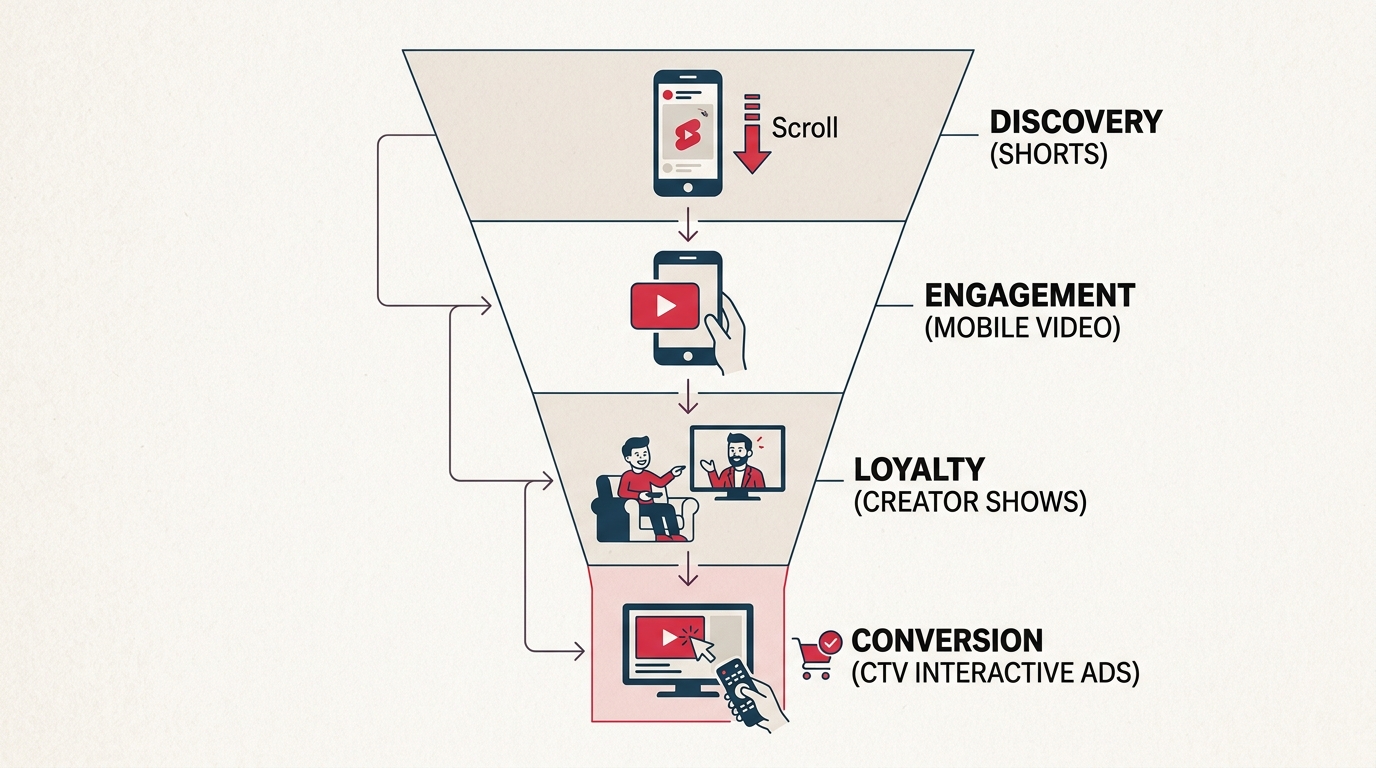
If you are managing a brand budget, your approach to YouTube needs to bifurcate. You have your 'Social' budget for Shorts and trending clips, and you have your 'Broadcast' budget for Creator Shows.
1. Re-evaluate your 'TV' spend. If you are still putting 80% of your video budget into linear or even standard streaming services like Hulu, you are likely overpaying for a shrinking audience. Compare the CPM and engagement of a 'Creator Show' sponsorship against your traditional buy. You might find that the 'influencer' actually has more authority and better reach than the sitcom lead.
2. Demand better attribution. Don't settle for 'impressions' on CTV. Use the new interactive ad units to track how many users are actually engaging with your brand on their secondary devices while watching.
3. Partner, don't just place. The real power of the Creator Show is the integration. Instead of just running a pre-roll, look for 'Presented by' opportunities. This is the return of the 'Golden Age' of TV, where brands were baked into the fabric of the show itself.
The creator's dilemma: From artist to studio executive
For the creators themselves, this shift is a double-edged sword. While the 'Creator Show' status offers higher pay and more prestige, it also demands a level of consistency and 'corporate' readiness that many aren't prepared for. We are seeing a professionalization of the creator economy. Creators are hiring showrunners, directors of photography, and legal teams to manage these 'Show' assets.
As noted in [INTERNAL: the shift toward AI-assisted production in social video -> tiktok-symphony-ai-tools], the barrier to entry for 'premium' content is rising. You can no longer just 'vlog' your way to a $40 CPM. You need a concept, a script, and a production value that justifies the big-screen experience.
YouTube’s final boss move isn't just about beating Netflix or NBC; it’s about redefining what 'Television' means. In the 2020s, TV was defined by the delivery mechanism (cable vs. streaming). In the late 2020s, TV is being defined by the relationship. And right now, the relationship between a creator and their audience is the most valuable currency in the media landscape.
Final thoughts for the practitioner
Stop thinking of YouTube as a 'social' channel. In your media plan, move it into the 'Video/OTT' bucket. Treat 'Creator Shows' as your premium anchor, and use Shorts as your discovery engine. The brands that win in the next 24 months will be those that realize the living room has been conquered—not by a network, but by an individual with a camera and a community.
FAQ