
Meta's text-first platform has quietly graduated from a reactionary Twitter alternative into a core engine for organic B2B demand generation. While growth teams spent the last two years fighting algorithm suppression and soaring ad costs on legacy networks, early adopting B2B brands quietly carved out highly profitable, low-noise niches on Threads. The window for easy organic arbitrage is narrowing, but the playbook has officially matured.
This shift is not merely about audience migration; it is a fundamental reconfiguration of how business buyers consume information. With LinkedIn becoming increasingly saturated with highly polished, ghostwritten corporate monologues, Threads offers a stark, text-dominant contrast. It rewards rapid-fire industry commentary, raw product logs, and open-web distribution.
Key takeaways
- The Fediverse is a distribution multiplier: Enabling ActivityPub syndication on Threads distributes your content to decentralized networks, bypassing traditional algorithmic gatekeepers.
- Text-only is the default: On Threads, rich media often acts as a friction point. High-density, text-only threads outperform image-heavy carousels by double-digit margins.
- AI search optimization starts here: Public, conversational platforms are the primary training grounds for next-generation search engines. Threads activity directly influences your brand's footprint in AI-generated search summaries.
Why B2B brands are abandoning the polished LinkedIn playbook for Threads
For years, B2B social media marketing was synonymous with LinkedIn. However, the economics of organic reach on LinkedIn have deteriorated. Algorithmic shifts now favor paid boost campaigns, and the platform's feed has become an echo chamber of hyper-polished, repetitive corporate announcements. Buyers have developed banner blindness to corporate PDF carousels and executive PR speak.
Threads offers an escape hatch. Its algorithmic feed weights active, real-time conversation far more heavily than corporate follower counts. More importantly, Threads is built on an open architecture that plays directly into the hands of modern search engine optimization.
Consider the broader search landscape. A May 2026 study by Victorious revealed that a staggering 90% of brands have zero mentions in AI-driven search engine results. This gap exists because traditional corporate websites and walled-garden social networks block or rate-limit the web crawlers feeding modern LLMs.
At the same time, Google's massive search overhaul—which introduced Gemini 3.5 Flash as the default engine and deployed continuous-scanning information agents—has fundamentally changed how buyers find software. With Google's intelligent search box supporting longer, highly conversational queries, buyers are no longer just searching for static keywords. They are asking AI search agents to evaluate real-time industry sentiment and platform reliability.
Because Threads integration with the Fediverse makes its data highly indexable and public, the conversations happening on the platform serve as high-authority signals for these continuous-scanning search agents. When a buyer uses Google's agentic tools to build a custom application or compare software solutions directly within search, the conversational footprint your brand establishes on Threads directly influences the data those agents retrieve. To win the AI search battle, you must win the conversational social battlefield.
Read our full analysis of dark social attribution
The 7 unconventional Threads tactics for organic B2B growth
Success on Threads requires unlearning the production-heavy habits of other social platforms. You do not need a design team to build high-converting Threads assets. In fact, heavy design assets can actively hurt your performance.
We analyzed the top-performing B2B accounts on Threads over the past two quarters to isolate the specific, repeatable tactics driving real pipeline. Here are the seven strategies you can implement immediately.
1. Fediverse-first syndication to bypass algorithmic gatekeepers
Enable ActivityPub sharing in your Threads account settings to distribute your content directly to decentralized platforms like Mastodon without creating separate accounts.
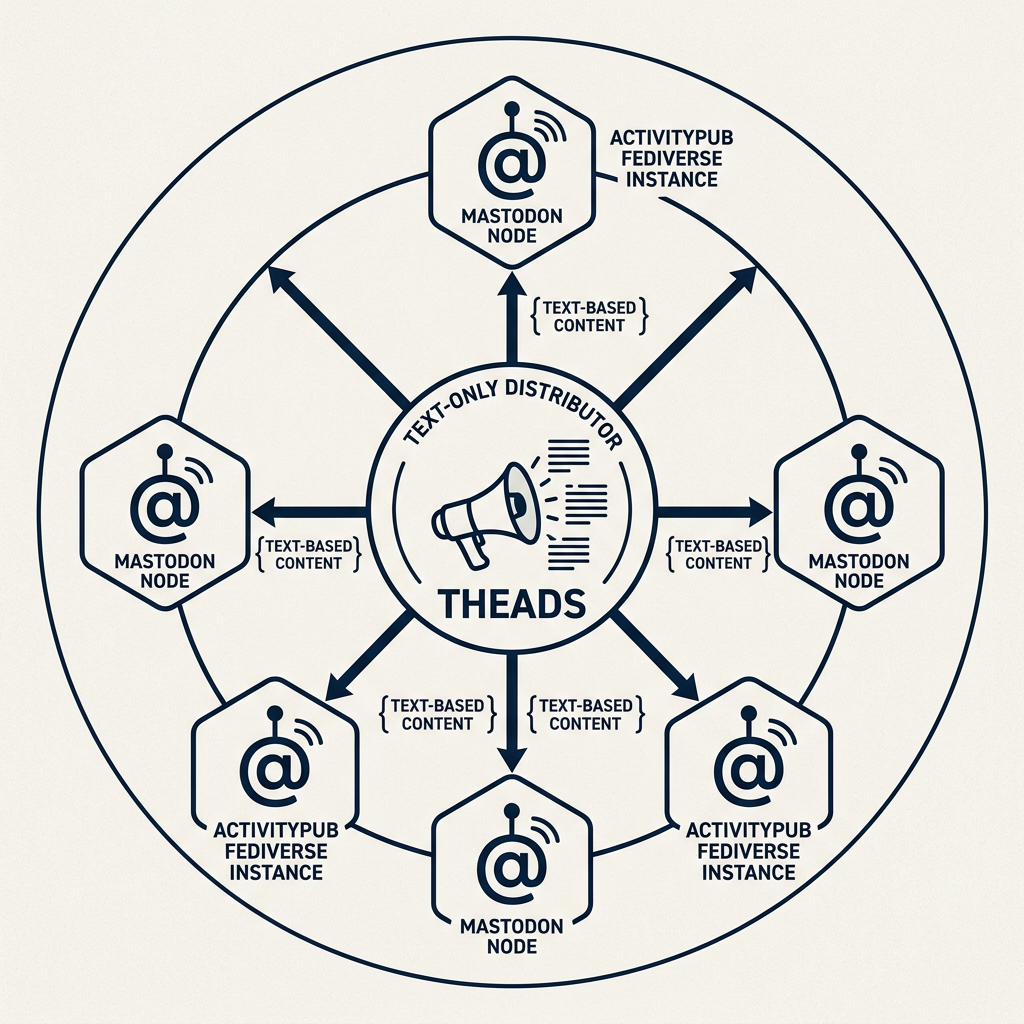
By turning on this setting, your B2B content is syndicated to a highly technical, developer-centric audience that actively avoids mainstream corporate social networks. This is not just cross-posting; it is a direct pipeline into self-hosted professional communities. When Mastodon users interact with your syndicated Threads posts, their replies sync back to your primary Threads feed, creating a cross-platform engagement loop that Meta's algorithm rewards with increased visibility.
- Best for: Infrastructure SaaS, developer tools, and highly technical B2B services targeting open-source advocates and security engineers.
2. Text-only "micro-framework" thread storms
Publish high-density, text-only threads consisting of 5 to 7 nested posts that break down a single, highly specific operational workflow.
Avoid the temptation to include explainer graphics, brand logos, or external links in the body of the thread. Instead, write in a sparse, punchy style that focuses entirely on execution steps. Use line breaks aggressively to make the text highly skimmable on mobile screens. Place your call-to-action or external resource link exclusively in the final reply of the thread, and only after you have delivered massive standalone value in the preceding posts.
- Best for: B2B consultancies, agency founders, and enterprise software companies looking to establish deep domain authority without relying on design resources.
3. Zero-link narrative commenting on industry giants
Write 150-word, high-value mini-essays in the reply sections of prominent industry voices, completely devoid of self-promotion or external links.
Instead of posting generic agreements like "Great insights!", treat the reply section of high-traffic accounts as your primary publishing canvas. Analyze the original post, find a counter-intuitive angle or a missing operational step, and write a structured, authoritative response. This tactic hijacks the high-volume traffic of industry giants and redirects it to your profile. Because Threads ranks replies based on engagement and depth, your high-value commentary will consistently sit at the top of the thread, earning thousands of impressions from qualified buyers.
- Best for: Individual B2B creators, executive positioning programs, and early-stage startup founders looking to build an audience from scratch.
4. The raw, uncurated "build-in-public" log
Share daily, raw updates of your product development, operational failures, and strategic pivots, utilizing unedited mobile screenshots and code snippets.
Move away from the polished PR announcements of the past. If a server goes down, post the post-mortem on Threads while your engineering team is fixing it. If you are designing a new user interface, share three raw Figma screenshots and ask your audience to vote on the layout in the comments. This level of transparency builds intense brand affinity and positions your company as human, responsive, and deeply committed to its user base.
- Best for: Early-stage SaaS startups, product-led growth (PLG) companies, and engineering-heavy organizations.
5. Interactive prompt-sharing and agentic utility threads
Provide copy-pasteable prompt templates, automation scripts, or API configurations directly within your threads to give buyers immediate, functional utility.
With the rise of agentic coding and custom search applications, buyers are constantly looking for pre-built logic blocks they can run in their own environments. By sharing highly optimized prompts or lightweight scripts that solve a specific B2B pain point, you turn your Threads account into a utility resource. Users will bookmark, share, and reference these threads repeatedly, signaling to the algorithm that your content has exceptionally high utility and retention value.
- Best for: AI-adjacent software platforms, digital transformation consultancies, and marketing technology brands.
6. The decentralized Q&A repository for AI search optimization
Draft short, highly structured posts that directly answer common, long-tail customer support and technical implementation questions.
Format these posts clearly with a "Question:" and "Answer:" structure, using the exact phrasing your buyers use when searching Google or asking AI assistants. Because Threads is open and rapidly indexed, these public Q&A posts act as highly authoritative, conversational search landing pages. When Google’s information agents continuously scan the web for real-time answers, these structured, highly relevant posts are easily parsed and cited as sources in AI search results, driving high-intent organic traffic back to your brand.
- Best for: Customer-success-driven B2B enterprises, complex hardware manufacturers, and compliance software providers.
7. Collaborative "micro-coalition" threads
Partner with 2 to 3 non-competing B2B brands that share your target audience to co-author comprehensive, multi-part industry guides.
Instead of publishing a co-branded PDF behind a gate, execute the entire campaign natively on Threads. Brand A writes the first three posts of the thread focusing on strategy, Brand B writes the next three focusing on execution, and Brand C wraps up with measurement. Each brand tags the others and actively cross-promotes the thread to their respective audiences. This aggregates the organic reach of multiple accounts, drives cross-pollination of follower bases, and lowers customer acquisition costs without requiring paid ad spend.
- Best for: Mid-market B2B brands, platform ecosystems, and integration partners looking to scale reach efficiently.
Master the art of B2B creator partnerships
How to measure Threads organic B2B ROI in 2026
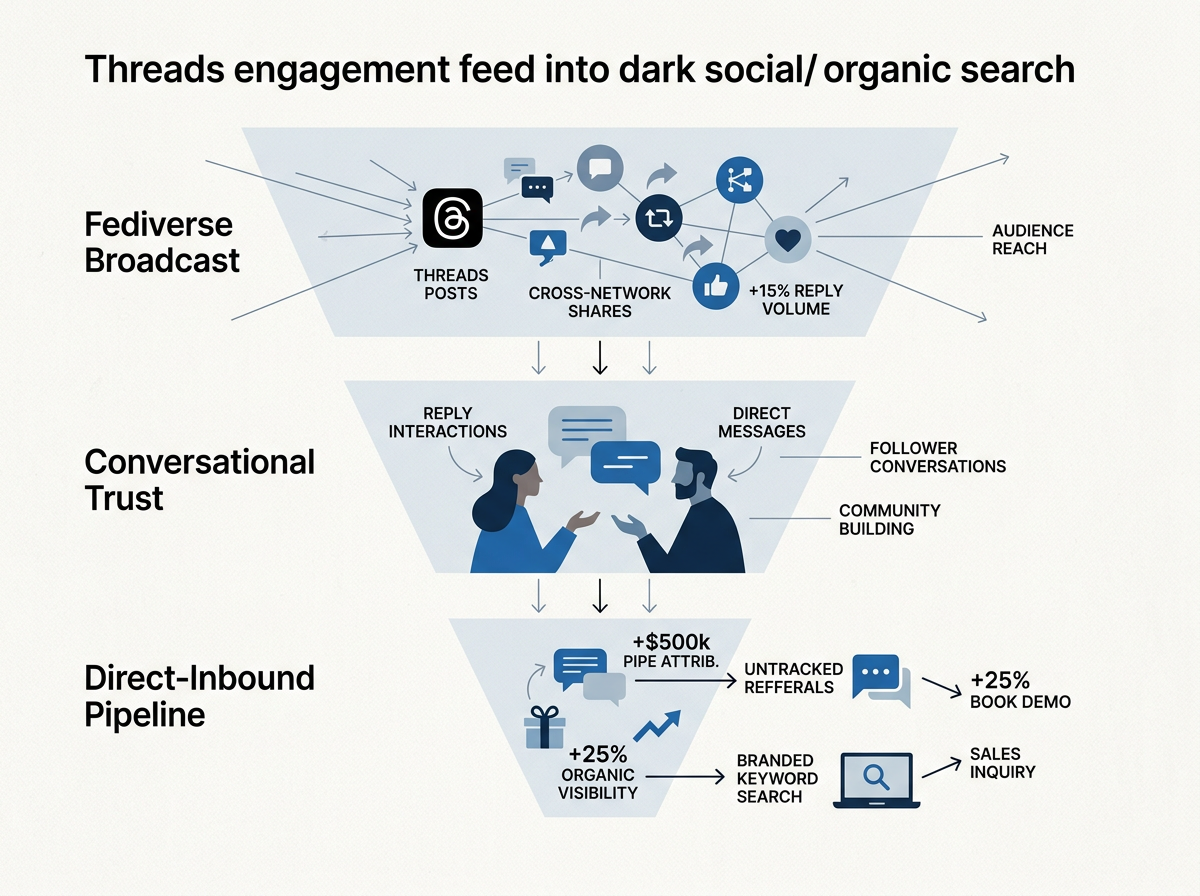
Measuring the return on investment of an organic Threads strategy requires a departure from traditional, click-heavy web analytics. Because Threads prioritizes native, in-feed consumption, a significant portion of your conversions will happen via "dark social" channels—untracked direct traffic, word-of-mouth, and AI search citations.
To capture the true impact of your Threads playbook, implement a multi-layered attribution framework:
| Attribution Layer | Metric to Track | Tooling / Methodology |
|---|---|---|
| Direct Attribution | UTM-tagged profile links, custom landing page visits, promo codes. | Google Analytics 4, Hubspot, custom redirect tools. |
| Self-Reported Attribution | "Where did you hear about us?" open text field on demo/signup forms. | Form builders, CRM fields (Hubspot/Salesforce). |
| Conversational Share of Voice | Unbranded brand mentions, sentiment analysis, competitor comparison frequency. | Brandwatch, Talkwalker, social listening setups. |
| AI Search Citations | Brand appearances in Gemini and Perplexity search answers. | Manual agent queries, specialized AI SEO tracking tools. |
When analyzing your CRM data, look for a lift in unbranded organic search queries and direct traffic that correlates with your high-performing Threads campaigns. Often, a buyer will read a text-only thread on their mobile device, open their desktop browser hours later, and search for your brand directly. If you rely solely on last-click attribution, you will completely miss the value your Threads strategy is creating.
Furthermore, monitor the quality of the conversations in your reply sections. High-intent buyers will frequently ask specific product questions directly under your educational threads. Treat these comments as warm inbound leads and route them directly to your social sales team for personalized, low-pressure follow-up.
Learn how to set up an advanced B2B social measurement framework
What to watch next in the Threads ecosystem
As Meta continues to expand Threads' capabilities, expect deeper integrations with the broader Meta Ads Manager and more robust analytics tools for business profiles. However, the core of the platform will remain conversational and text-first.
Brands that invest in building a genuine, conversational presence today will not only capture low-cost organic reach in the short term but will also secure their spot as highly cited authorities in the AI-dominated search landscape of tomorrow. Stop treating Threads as an afterthought or a syndication graveyard for your LinkedIn content. Author native, high-utility, raw text, and let the open web do the distribution work for you.
FAQ