

Stanley didn't just sell a cup; they managed a cultural phenomenon. Between 2022 and late 2024, the brand saw a 275% increase in annual revenue, largely fueled by the Quencher’s dominance on TikTok. But as the hype cycle for the 40oz tumbler matures, the brand is making a decisive pivot. By appointing a new social Agency of Record (AOR), Stanley is signaling that the era of 'lightning in a bottle' virality is over, replaced by a rigorous, data-driven framework designed to sustain brand equity long after the next trend fades.
Why it matters: For marketing leads, the Stanley story is no longer about how to go viral—it’s about how to survive virality. When a product becomes a meme, the brand risks becoming a disposable artifact. Stanley’s new strategy focuses on diversifying content, professionalizing community management, and integrating commerce directly into the social flow to ensure the brand remains a staple, not a season.
Key Takeaways
- Diversification is Defensive: Moving beyond the 'Quencher' aesthetic to showcase heritage and utility products prevents brand fatigue.
- Infrastructure over Impulse: Transitioning from reactive posting to a centralized command center using tools like Sprout Social’s Smart Inbox allows for high-velocity engagement without burnout.
- Commerce Integration: Leveraging the shift toward social commerce—highlighted by recent acquisitions like AMZ Advisers’ purchase of Reach Social Commerce in July 2026—to capture intent at the point of discovery.
The Setup: The Fragility of Accidental Virality
Before the Quencher became the unofficial uniform of the suburban commute, Stanley was a heritage brand primarily focused on the outdoor enthusiast. Their social presence was functional, rugged, and largely static. Then came the 'water bottle wars.' The brand found itself at the center of a TikTok-led explosion that they didn't necessarily engineer, but certainly capitalized on.
However, by early 2025, the cracks in a purely reactive strategy were showing. The brand's feed was a sea of pastel tumblers. While engagement remained high, the sentiment was beginning to skew toward 'overexposure.' Internal data suggested that while new customer acquisition was peaking, the lifetime value (LTV) of these viral-driven buyers was lower than the brand’s traditional outdoor core. They were chasing a trend, not a brand. The social team was small, often overwhelmed by the sheer volume of tags, and lacked the sophisticated listening tools needed to identify the next subculture before it hit the mainstream.
The Strategy: Rewiring for the Long Game
To move from a viral moment to a permanent fixture, Stanley implemented a three-pillar strategy that any brand facing a sudden surge in popularity can replicate.
1. The 'Heritage-Modern' Content Split
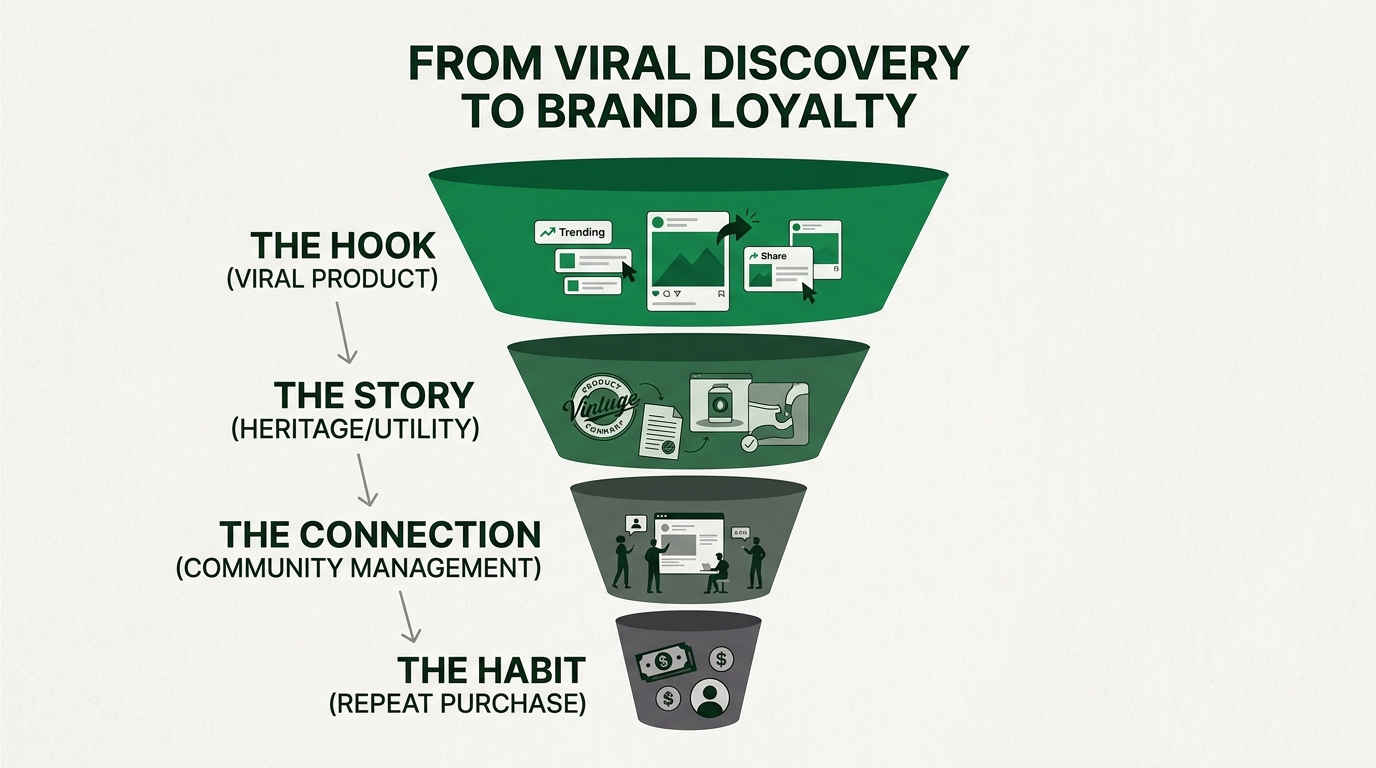
Stanley began aggressively reintroducing their 'Classic' line—the green hammertone vacuum bottles—into their social mix. They used high-production-value storytelling to link the trendiness of the Quencher to the durability of their 1913 roots. This wasn't just nostalgia; it was a strategic move to insulate the brand if the tumbler craze ever fully collapsed. By positioning the Quencher as an entry point to a wider ecosystem, they moved the goalpost from 'buy a cup' to 'join a legacy.'
2. Centralized Community Command
With the move to a new AOR, the brand overhauled its community management. They moved away from simple 'hearting' of comments to a tiered response system. Using Sprout Social’s topic-clustering views, the team could identify emerging complaints or suggestions in real-time. For instance, when users started posting about 'cup accessories' (charms, snack bowls), Stanley didn't just watch; they used those insights to inform their own R&D and social content, effectively co-opting the secondary market's energy.
3. Frictionless Social Commerce
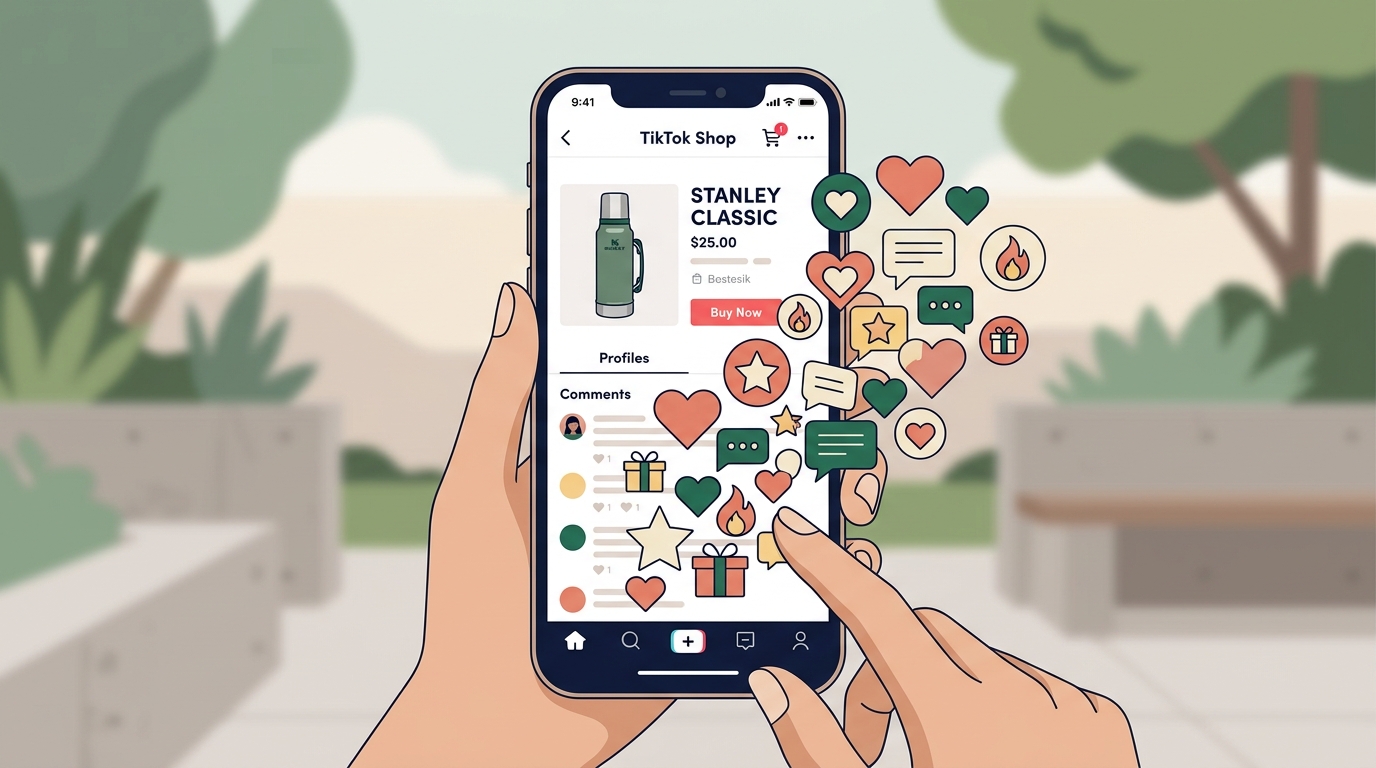
Recognizing that the path from TikTok discovery to Amazon purchase was losing data in the 'black box' of attribution, Stanley leaned into TikTok Shop. Following the trend of agencies like AMZ Advisers expanding into TikTok Shop management in mid-2026, Stanley integrated their inventory directly. This allowed them to measure the exact ROI of a specific creator's post, rather than relying on vague 'brand lift' metrics.
The Execution: Tools, Talent, and Timelines
The transition wasn't an overnight switch. It began with a six-month 'stabilization phase' where the brand audited its creator partnerships. They moved away from 'mega-influencers' with broad reach but low affinity, toward 'niche-authority' creators in the gardening, DIY, and professional trade spaces.
Team Structure: The brand shifted from a generalist social team to a specialized 'Social Pod' model. Each pod consists of a Content Creator (shooting on mobile), a Data Analyst (tracking real-time sentiment), and a Community Manager. This structure, supported by an AOR that provides high-level strategic oversight, allows Stanley to act like a nimble creator while maintaining the brand safety of a century-old corporation.
Tooling: The brand leaned heavily into advanced social listening. By using Sprout Social’s automated tagging and sentiment analysis, they could filter through 50,000+ daily mentions to find the 500 that actually required a brand response. This efficiency is critical in 2026, where social media strategist salaries have climbed significantly per Coursera’s latest guide, making 'human-only' scaling prohibitively expensive.
The Results: Beyond the Hype
By Q2 2026, the results of this strategic shift became clear. While the total volume of 'Quencher' mentions stabilized, the brand's overall social health metrics improved:
- LTV Increase: Customers acquired through the new 'Heritage' content tracks showed a 15% higher repeat purchase rate compared to those who bought during the peak 2023 viral waves.
- Engagement Quality: The ratio of 'meaningful brand interactions' (shares, saves, and long-form comments) to 'vanity metrics' (likes) increased by 22%.
- Attributable Revenue: TikTok Shop sales now account for 18% of their total direct-to-consumer (DTC) digital revenue, providing a clear line of sight from social spend to bank account.

Lessons for the Post-Viral Era
What can your brand learn from the Stanley pivot? The most important takeaway is that virality is a debt you eventually have to pay back. If you don't build the infrastructure to support the crowd, they will leave as quickly as they arrived.
Build for Accessibility and Inclusion
As AI-generated content becomes the norm, accessibility often falls by the wayside. Per AudioEye’s July 2026 report, brands that fail to prioritize accessible social content (alt text, closed captions, high-contrast visuals) are not only alienating a massive audience segment but are also facing increased regulatory scrutiny. Stanley’s new AOR mandate includes strict accessibility checks for every piece of short-form video.
Watch the Regulatory Horizon
Social strategy is no longer just about creative; it’s about compliance. With platforms like Meta facing increased pressure from global governments—such as India’s recent summons of Meta executives over algorithm concerns in July 2026—brands must ensure their community management practices are robust enough to handle public order issues or misinformation spikes. Stanley’s move to a centralized command center is as much about risk management as it is about marketing.
Own the Data, Not Just the Trend
If you are relying on a platform's 'Explore' page to tell you what's working, you're already too late. Use tools like Sprout Social to build a proprietary database of what your specific community cares about. [INTERNAL: The rise of first-party data in social -> first-party-data-strategies] Stanley’s success in 2026 comes from knowing their audience better than the TikTok algorithm does.
The Future of Brand Longevity
Stanley’s journey from a dusty shelf in a hardware store to a global social powerhouse—and then to a mature, multi-product brand—is a blueprint for the modern marketer. The Quencher was the hook, but the strategy is the line and sinker. By diversifying their content, professionalizing their engagement, and embracing the complexities of social commerce, they’ve ensured that Stanley won't just be a footnote in the history of 2020s trends.
For you, the challenge is the same: Don't just wait for your 'Stanley moment.' Build the house that can hold it when it arrives.
Summary of Transferable Principles
- Product Decoupling: Never let one SKU define your entire social identity. Use the hero product to fund the storytelling for the rest of the catalog.
- Agency Alignment: When choosing an AOR, prioritize their ability to handle 'community-led growth' over their ability to make 'viral videos.' The former is a business model; the latter is a gamble.
- Platform Agnostic Content: While TikTok is the current engine, ensure your content can live and breathe on Instagram, YouTube Shorts, and emerging social commerce platforms without losing its soul.
- Data-Driven Empathy: Use social listening not just to track mentions, but to understand the emotional driver behind the purchase. Are they buying a cup, or are they buying a sense of belonging? Stanley figured out it was the latter.
FAQ