
If you’re still obsessing over your position in Google’s organic blue links while ignoring how Perplexity, ChatGPT, and TikTok’s Search Ads Toggle are summarizing your brand, you’re optimizing for a ghost town. The shift from Search Engine Optimization (SEO) to Answer Engine Optimization (AEO) — or Generative Engine Optimization (GEO) — is no longer a theoretical pivot for 2027. It is the immediate reality for brands trying to capture high-intent traffic in a post-cookie, AI-first environment.
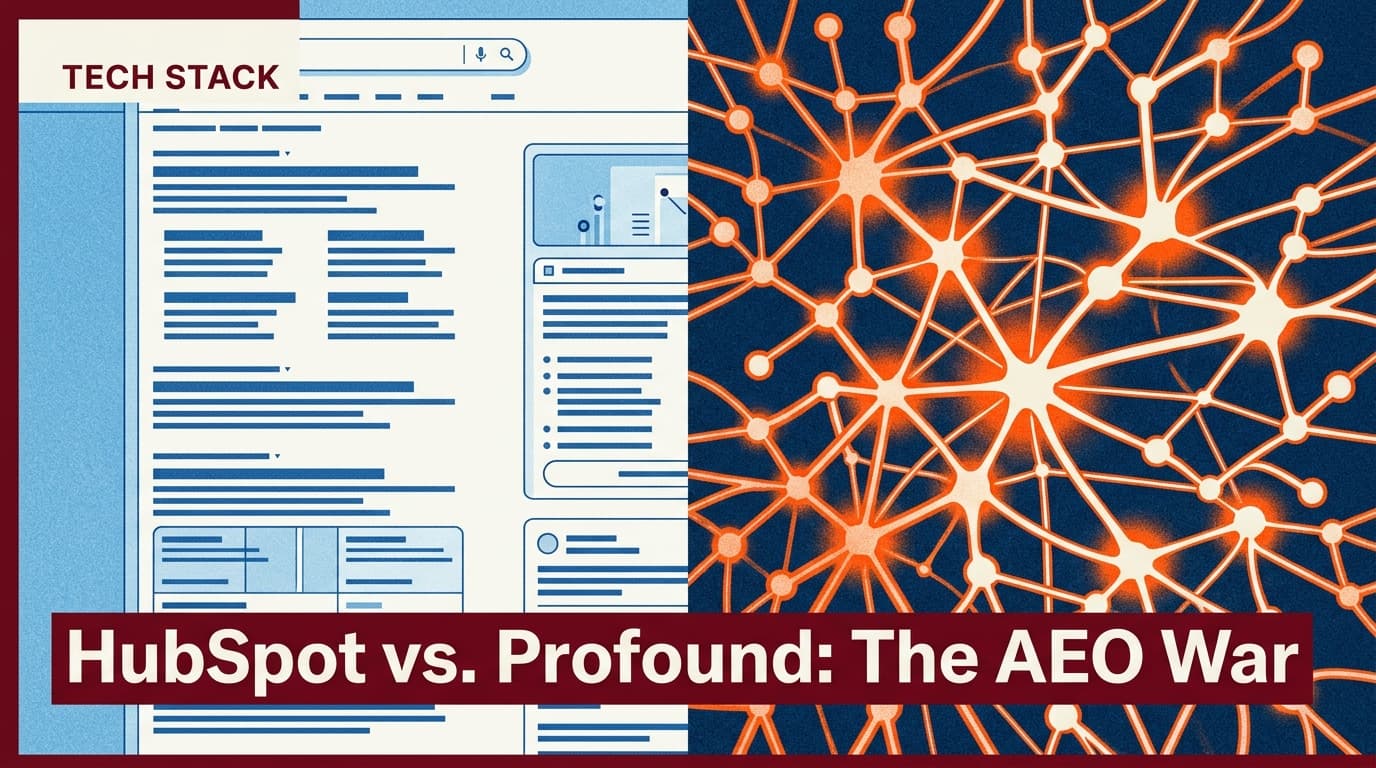
Marketers are currently split between two dominant philosophies for measuring this new visibility. On one side, you have HubSpot, the incumbent powerhouse that has integrated AEO tracking directly into its Content Hub to serve the mid-market. On the other, you have Profound (formerly known to some as the stealth-mode leader in AI attribution), which treats answer engines like a high-stakes data science problem.
Choosing between them isn't just about a budget line item; it’s about how you define 'visibility' when a chatbot synthesizes your white paper into a three-sentence bullet point without a clickable link.
TL;DR
- HubSpot AEO is best for existing HubSpot users who need a 'good enough' view of how their content performs in AI summaries without leaving their CRM.
- Profound is the choice for enterprise teams and agencies requiring granular attribution, 'share of model' metrics, and specific sentiment analysis across LLMs.
- The Pivot: While HubSpot focuses on content creation, Profound focuses on the technical 'probabilistic' footprint your brand leaves in training sets.
The Core Specification Battle
Before we get into the nuances of 'mentions' versus 'referrals,' let's look at the hard specs. HubSpot’s AEO tools are largely an extension of their SEO suite, whereas Profound was built from the ground up to track how Large Language Models (LLMs) perceive brand authority.
| Feature | HubSpot AEO (Content Hub) | Profound |
|---|---|---|
| Primary Metric | AI Search Intent & Content Health | Share of Model (SoM) & Sentiment |
| Platform Coverage | Google SGE, Perplexity, Bing | OpenAI, Anthropic, Meta Llama, Perplexity, TikTok |
| Attribution Logic | Click-based & Keyword tracking | Probabilistic & Semantic association |
| Pricing | Included in Professional/Enterprise | Custom Enterprise / Tiered SaaS |
| Best For | Inbound Marketers | Data-heavy Strategists & Fortune 500 |
Tracking Methodologies: Mentions vs. Referrals
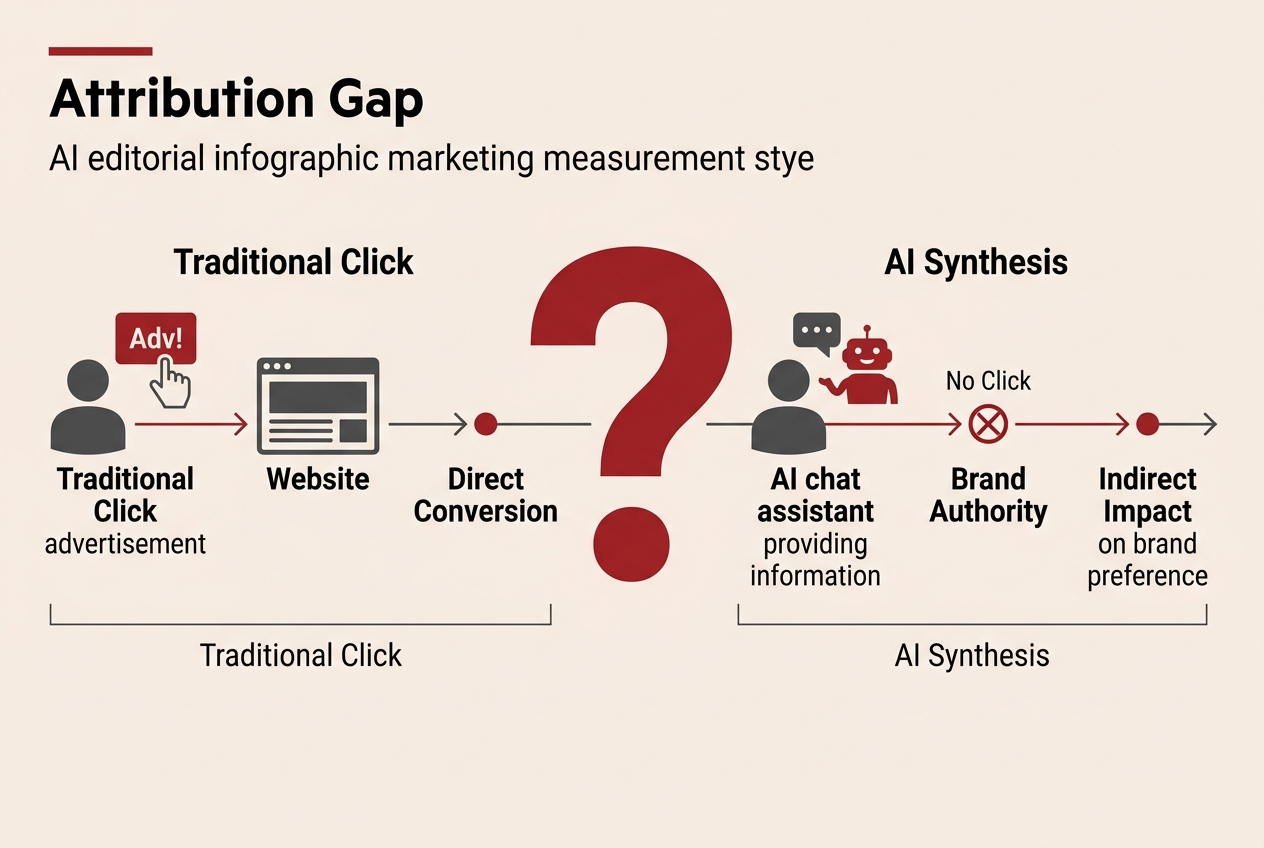
The fundamental tension in AEO is that AI engines don't always want to send traffic to your site. They want to satisfy the user's query on-platform. This creates a measurement gap that traditional tools like Semrush or Ahrefs are still struggling to bridge.
HubSpot’s approach is characteristically user-friendly. It looks at your existing content library and uses its internal AI to predict which pieces are most likely to be cited by Google’s Search Generative Experience (SGE). It treats AEO as an extension of the 'Inbound' methodology. If you write high-quality, structured content, HubSpot assumes the engines will find you. Their reporting focuses on 'AI Visibility'—essentially a score of how often your URL appears in the citations of an AI response.
Profound takes a more aggressive, technical stance. They recognize that in the age of ChatGPT, a 'mention' without a link is still a brand win, but one that traditional analytics won't catch. Profound tracks 'Semantic Share.' They don't just care if your URL is in a footnote; they care if, when a user asks for the 'best CRM for small business,' the model mentions HubSpot in the prose of the answer. This is the 'Share of Model' (SoM) metric. By scraping and querying models at scale, Profound provides a benchmark of how deeply your brand is embedded in the model’s latent space.
For a brand manager, the difference is critical. HubSpot tells you if your SEO strategy is working for AI. Profound tells you if your entire brand presence is influencing the AI's logic.
Pricing and the 'Platform Tax'
HubSpot’s pricing for AEO is bundled. You aren't buying an 'AEO tool'; you’re buying Content Hub Professional or Enterprise. For a team already spending $800–$3,600 per month on the HubSpot ecosystem, the AEO features feel 'free.' It’s a compelling value proposition for the social media manager who is already stretched thin. You get AI content remixing, brand voice tools, and AEO tracking in one tab.
Profound is a standalone investment. While they offer tiered access, this is an enterprise-grade tool. You are paying for the massive compute power required to constantly probe LLMs for brand mentions. If you are a supplement brand aiming for $1M in monthly revenue on TikTok Shop—like those recently highlighted by TokShop Agency [S2]—Profound’s ability to track how TikTok’s internal search algorithm synthesizes creator reviews into 'Buy' recommendations is worth the premium.
However, for a mid-market B2B firm, Profound might represent 'over-tooling.' If your primary goal is just to make sure your blog posts show up in Perplexity, HubSpot’s integrated suite is more than sufficient.
Bridging the Gap to Social Search
Social search is the new frontier for AEO. With TikTok’s 2.9 billion-user Pangle network [S3] and Meta’s push for AI-driven holiday discovery [S5], search is moving away from keywords and toward 'entities.'
HubSpot is currently lagging in the social search space. Their AEO tools are heavily weighted toward web-based answer engines (Google, Bing, Perplexity). They can tell you if your LinkedIn post was indexed, but they aren't deep-diving into the TikTok search ecosystem yet.
Profound, conversely, has leaned into the 'Social AEO' trend. They treat TikTok’s search bar as an answer engine. By analyzing the transcripts of top-performing videos and the comments sections, Profound can tell a brand how the 'collective intelligence' of a social platform views their product. This is vital for industries like fashion, beauty, and supplements where the 'search' happens via a creator's recommendation rather than a Google query.
Consider the recent move by DoubleVerify to target TikTok’s Pangle network [S3]. As brand safety and measurement become more complex, having a tool that understands what is being said (Profound) versus just where it is being shown (HubSpot) becomes a competitive advantage.

Workflow Integration: Where the Rubber Meets the Road
For a social media manager, workflow is everything.
The HubSpot Workflow:
- You write a blog post in HubSpot.
- The 'AI Optimization' sidebar suggests schema changes to make the content more 'scannable' for LLMs.
- Once published, you monitor the 'AI Search' report to see if Google SGE is pulling your snippets.
- You use the 'Social' tab to cross-post, but the data remains siloed from the AEO metrics.
The Profound Workflow:
- You set up 'Brand Monitors' across ChatGPT, Claude, and TikTok Search.
- Profound alerts you that a recent competitor campaign has shifted the 'Share of Model' for a key category (e.g., 'sustainable sneakers').
- You identify the specific 'semantic gaps'—phrases the AI associates with your competitor but not you.
- You brief your content team or creators to use those specific semantic markers to 're-train' the engines’ perception of your brand.
Profound is a proactive strategy tool; HubSpot is a reactive optimization tool.
Deal-Breakers and Limitations
HubSpot’s biggest limitation is its 'walled garden' nature. If you don't host your content on HubSpot, the AEO tools lose much of their utility. You can track external URLs, but you lose the seamless 'fix-it' suggestions that make the tool valuable. Furthermore, HubSpot’s data is often delayed. Because they rely on API integrations and standard crawling, they may not catch a shift in ChatGPT’s training data for weeks.
Profound’s deal-breaker is the learning curve. This isn't a tool you check once a week for a pretty PDF report. It requires someone—likely a senior strategist or a data analyst—to interpret the semantic clusters. If your team doesn't understand the difference between 'vector embeddings' and 'keywords,' Profound will feel like an expensive black box.
Additionally, as Google Ads removes manual controls like language targeting [S1], the reliance on 'automated matching' makes tools like Profound even more necessary for auditing what the AI is actually doing behind the scenes. If you can't control the targeting, you must control the perception.
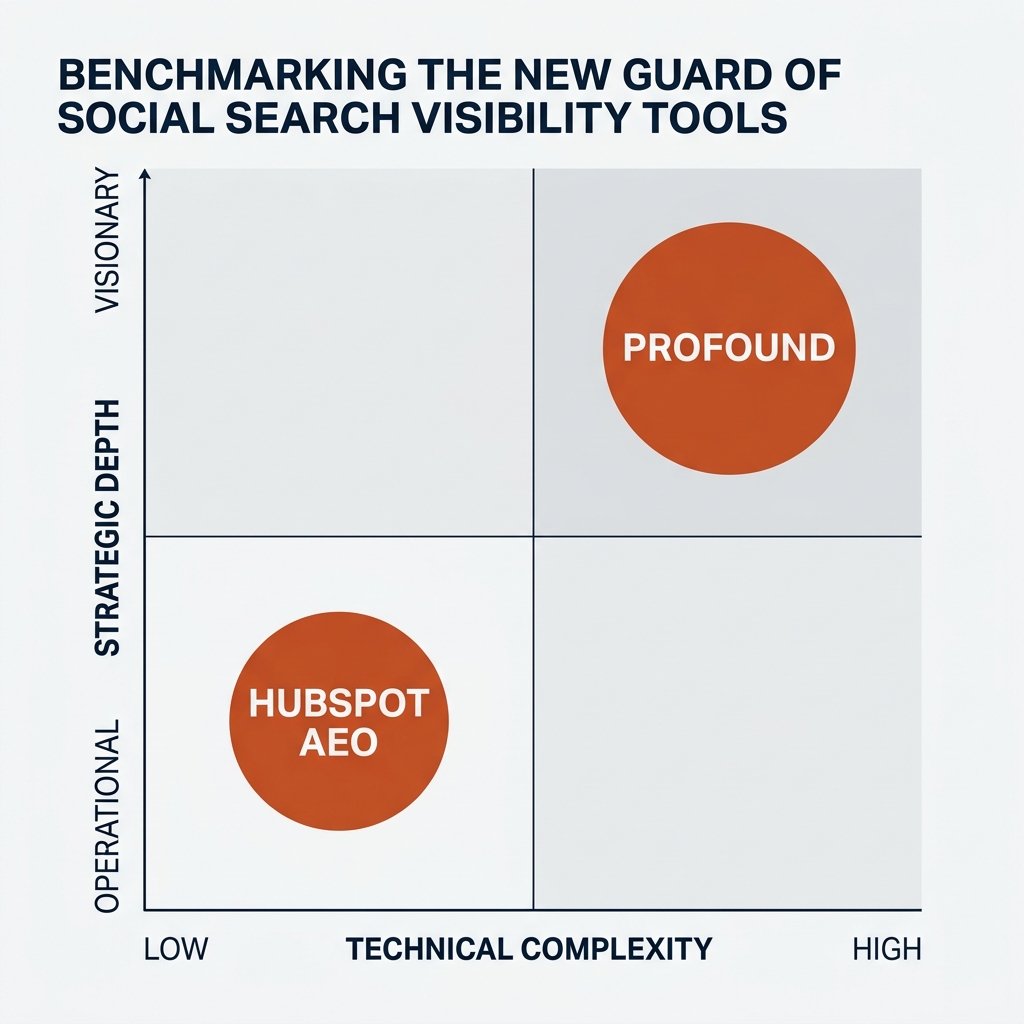
The Verdict Matrix
So, which one wins the budget for 2026?
Choose HubSpot AEO if:
- You are already a HubSpot Content Hub user.
- Your primary goal is maintaining organic traffic from Google SGE.
- You have a small team that needs automated suggestions rather than raw data.
- You value a unified interface over granular attribution.
Choose Profound if:
- You are an enterprise brand with a significant 'dark social' or 'AI search' presence.
- You need to justify spend on creator campaigns that don't drive direct clicks but do drive brand authority.
- You are competing in a high-commodity category where 'Share of Model' is the new 'Share of Voice.'
- You need to track sentiment across non-web platforms like TikTok and ChatGPT.
Choose Neither if:
- You are a local business whose traffic is 90% Google Maps/Local Pack. Neither tool is currently optimized for the nuances of hyper-local AEO.
- You are in a highly regulated industry (like pharma) where AI engines often refuse to give definitive 'best' answers due to safety filters.
What to Watch Next: The Nielsen-DoubleVerify Effect
As Nielsen faces potential takeover and DoubleVerify expands its reach [S3], the entire world of digital measurement is in flux. We expect HubSpot to eventually acquire a smaller AEO specialist to beef up its social search capabilities. Conversely, Profound is likely to move closer to the ad-buying side, perhaps integrating with platforms like the TikTok Search Ads Toggle to allow marketers to 'buy' their way into the semantic gaps they discover.
For now, the advice is simple: Audit your current traffic. If 'Direct' and 'Referral' traffic is dropping while your brand mentions are rising, you have an AEO problem. HubSpot will help you fix the content; Profound will help you win the machine's mind.
How TikTok's Search Ads Toggle is changing paid social strategy The rise of Generative Engine Optimization (GEO) for B2B
FAQ