
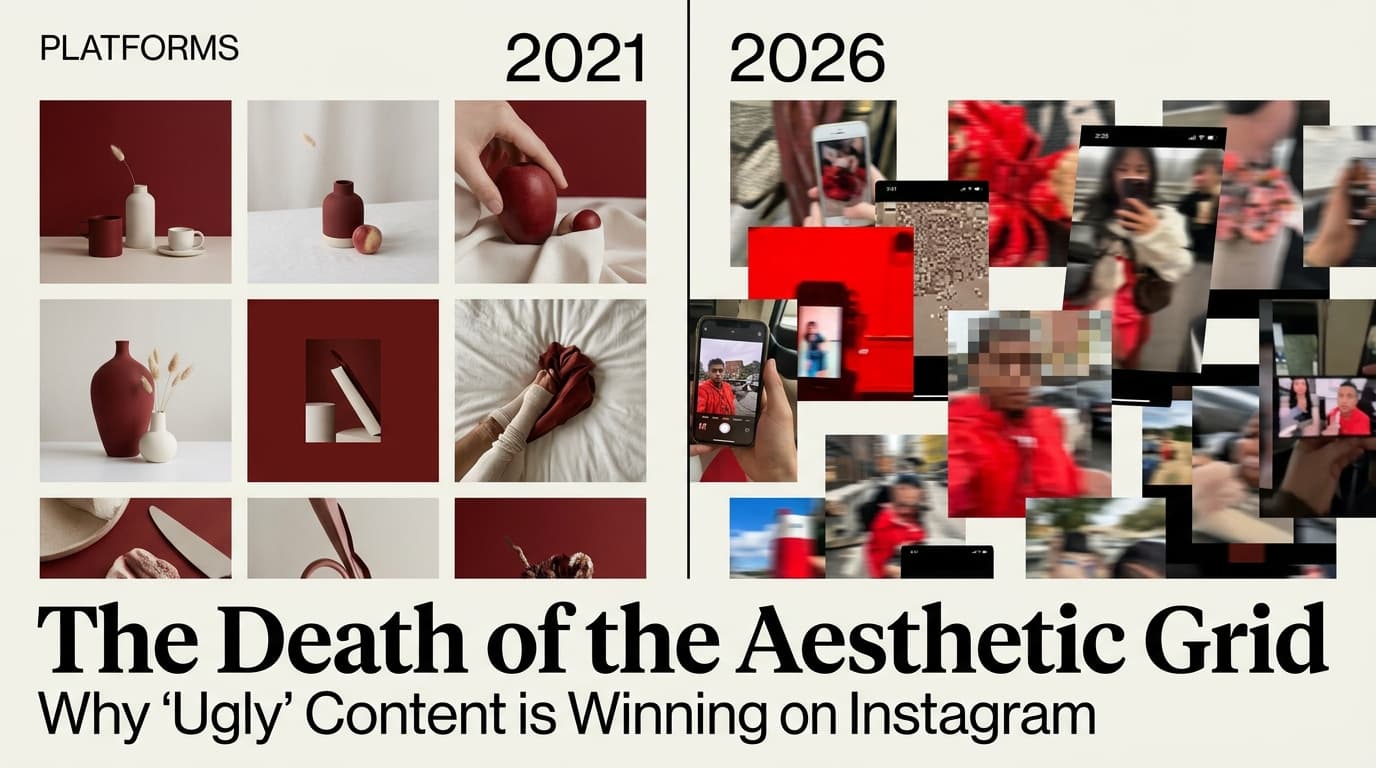
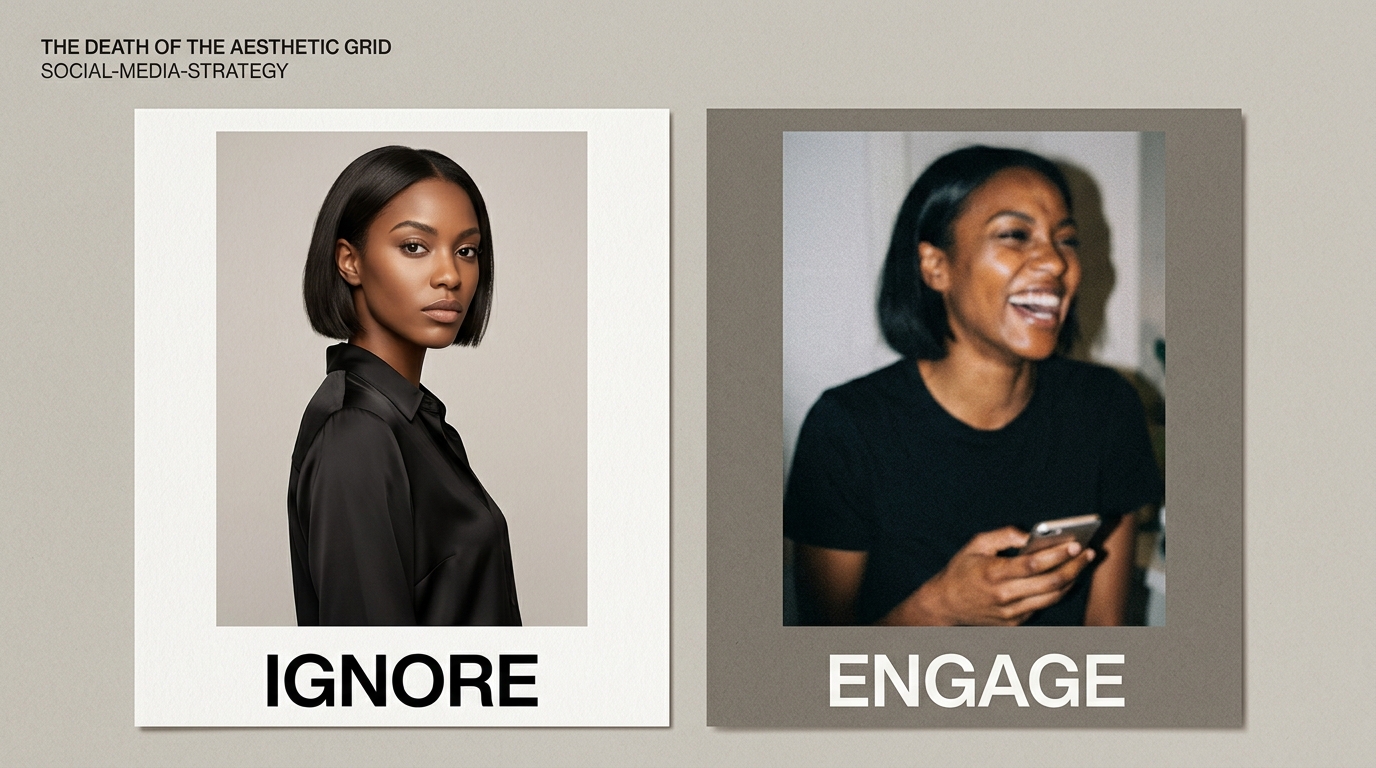
The era of the 'perfect' Instagram grid is officially dead, buried under a mountain of blurry photo dumps and chaotic carousels. If you're still spending six hours color-grading a single static post to match a specific hex-code theme, you aren't just wasting time; you're actively signaling to the 2026 Instagram algorithm that your content is irrelevant. Today, 'ugly' is the new premium, and raw, lo-fi authenticity is the only currency that consistently buys reach in a saturated feed.
Key takeaways
- The 'Polish Penalty': High-production, overly curated content now correlates with lower dwell time as users reflexively skip posts that look like traditional advertisements.
- Carousel Dominance: Multi-slide 'photo dumps' that mimic TikTok’s Photo Mode are seeing 3x higher save rates than single-image posts.
- Algorithm Re-alignment: Meta’s ranking signals now heavily weigh 'shares to DM' and 'repeat views,' both of which favor relatable, unpolished content over static beauty.
- The End of the Grid: The profile grid is no longer a portfolio; it's a graveyard. Users consume content via the Feed and Reels tabs, rarely visiting a profile page unless they are already converted fans.
The shift from curation to connection
For nearly a decade, the 'Instagram Aesthetic' was the gold standard of digital marketing. Brands like Glossier and Airbnb built empires on the back of airy, minimalist, and perfectly symmetrical visual identities. But as we move through 2026, those same visual cues now trigger 'ad blindness.' When a user sees a perfectly lit, professionally staged photo, their brain categorizes it as a commercial interruption rather than a social connection.
We see this shift reflected in the recent marketing blitz for Spider-Man: Brand New Day. Per Adweek’s August 2026 reporting, the film’s record-breaking box office wasn't driven by polished TV spots, but by a 'superpowered social marketing' strategy that leaned heavily into unpolished, behind-the-scenes creator content [INTERNAL: how movie studios are pivoting to social-first trailers -> entertainment-marketing-trends]. The campaign felt like it was made by fans, for fans—not by a committee of studio executives.
This isn't just a vibe shift; it's a mathematical reality. Internal benchmarks from leading agencies suggest that posts featuring 'lo-fi' elements—grainy textures, 'point-and-shoot' flash photography, and unedited video snippets—see a 40% higher engagement rate among Gen Z and Alpha cohorts compared to high-gloss assets. The algorithm has noticed. It prioritizes content that keeps users on the platform longer, and it turns out, we spend more time squinting at a messy photo dump trying to find the 'hidden gems' than we do glancing at a billboard-style image.
Why the 2026 algorithm hates your professional photographer
If you look at the technical shifts in Meta’s ranking systems, the move toward lo-fi makes sense. The algorithm is no longer just looking at likes. It is looking for 'meaningful social interaction.' In a world where AI-generated imagery can create a 'perfect' photo in seconds, perfection has become cheap. What is expensive—and therefore valuable—is the human element.
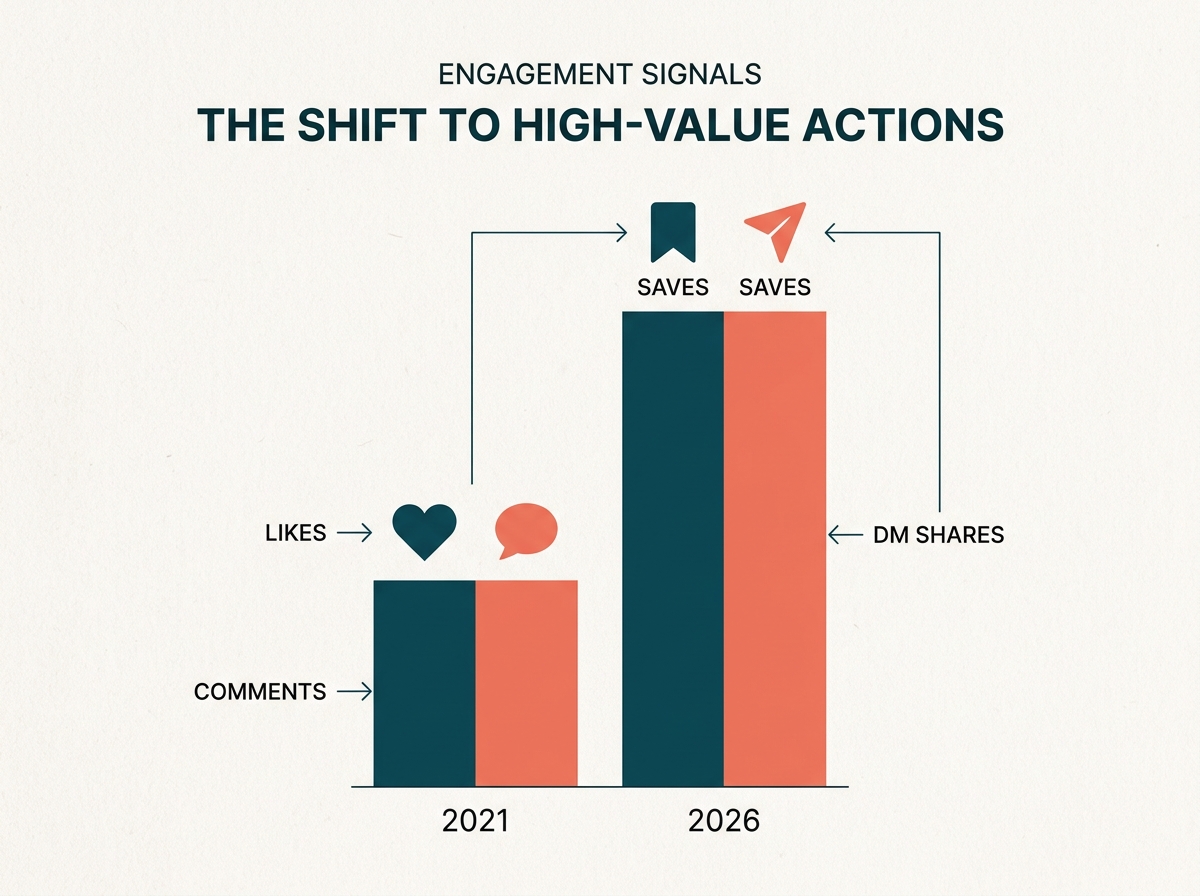
Since the major algorithm update in early 2025, Instagram has shifted its weighting toward 'save-to-share' ratios. A high-production photo of a sunset might get a like, but a messy carousel of '10 things I actually ate this week' gets a save. Why? Because it’s useful, relatable, or funny. It mimics the TikTok 'Photo Mode' experience, which has fundamentally retrained user expectations. We don't want to be sold a dream anymore; we want to be invited into the reality.
Even industry giants are feeling the pressure to reorganize. Look at S4 Capital. As reported by Adweek in August 2026, Martin Sorrell is still navigating a massive turnaround plan for the agency group. While their stock popped on H1 earnings, the underlying message is clear: the old ways of high-margin, slow-moving creative production are being gutted in favor of agile, tech-led content that can keep up with the speed of social Martin Sorrell and the future of agile agencies. If the biggest agencies in the world are pivoting away from 'prestige' toward 'performance,' your brand should too.
The rise of the 'Ugly' Carousel and Photo Dumps
The 'Ugly' Carousel is the most potent weapon in the 2026 social strategist's arsenal. These are 10-slide posts that start with a blurry or off-center image, followed by a mix of memes, screenshots of notes apps, and low-res video clips. This format works because it demands 'active' consumption. Users have to swipe. Each swipe is a fresh engagement signal to the algorithm that the content is interesting.
The psychology of the 'Dump'
There is a psychological safety in lo-fi content. When a brand posts a 'work in progress' shot or a 'behind the scenes' fail, it lowers the barrier to entry for the consumer. It feels accessible. This is the same reason why CBS Evening News saw growth in the 25-54 demo recently, as reported by Adweek—audiences are gravitating back to formats that feel stable and grounded, even as they consume them through new lenses. On Instagram, that 'grounded' feeling is achieved through the lack of a filter.
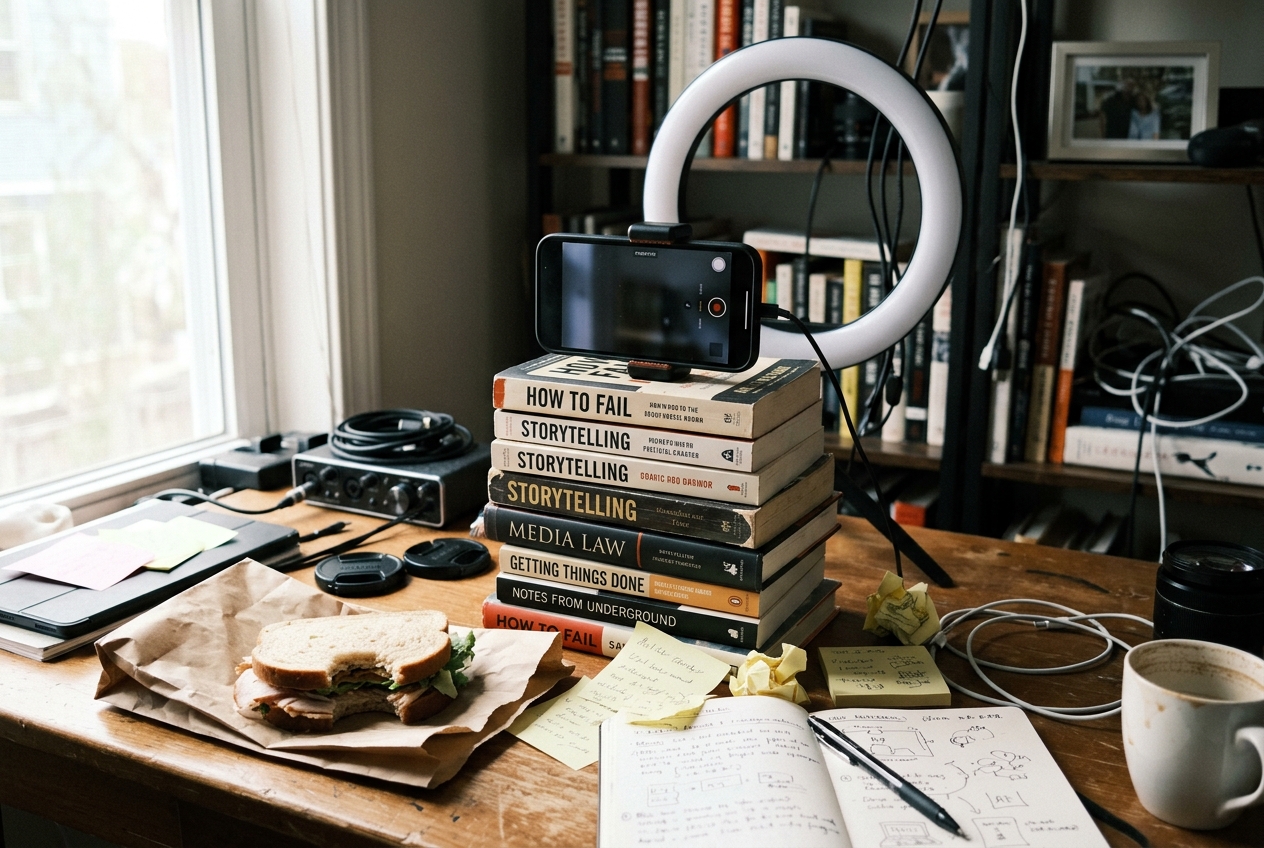
The 'Notes App' Revolution
Some of the highest-performing 'posts' of 2026 aren't even photos. They are screenshots of the Apple Notes app or a simple Twitter (X) post shared to the grid. This 'meta-content' bridges the gap between different platforms. It signals that the brand is part of the broader cultural conversation, not just shouting into a vacuum. It’s a tactic used by everyone from local coffee shops to the Spider-Man marketing team to create a sense of immediacy.
Counterargument: Is 'Aesthetic' really dead for luxury?
The strongest argument against the 'ugly' trend is that luxury brands—the Chanels and Rolexes of the world—cannot afford to look cheap. If a brand's value proposition is built on craft and exclusivity, shouldn't their social feed reflect that?
Yes and no. Even luxury is evolving. While the product must look impeccable, the context must feel real. A 2026 campaign for a luxury watch is more likely to succeed if it shows the watch on the wrist of someone actually sweating in a kitchen or hailing a cab in the rain, rather than on a velvet cushion under studio lights. The 'aesthetic' isn't dead; it has just moved from 'perfection' to 'authenticity.' If your luxury brand looks like it's trying too hard, it looks desperate. And nothing is less luxury than desperation.
Furthermore, as we see with AI-driven search and referral shifts, the 'oldest mistakes' in conversion are being repeated by those who prioritize form over function. Search Engine Journal recently noted that AI referrals are recreating errors in conversion optimization by focusing on the wrong signals. In social, the 'wrong signal' is a pretty grid that doesn't convert. A beautiful grid that nobody sees is a failed investment.
How to transition your brand to a lo-fi strategy
You don't need to fire your creative director, but you do need to change their KPIs. Stop measuring success by how 'on-brand' a grid looks and start measuring by 'shareability.'
- The 70/30 Rule: Dedicate 70% of your feed to lo-fi, 'lived-in' content (carousels, raw Reels, memes) and 30% to your high-production 'hero' assets. This maintains brand authority without sacrificing reach.
- Invest in 'Social Journalists': Instead of hiring traditional photographers, hire creators who understand the 'language' of the platform. They know how to use a phone camera to create depth and intimacy in a way a DSLR often can't.
- Embrace the Blur: Don't be afraid of the 'imperfect' shot. Often, the third or fourth photo in a burst—the one where the subject is laughing or looking away—is the one that will resonate most with your audience.
- Use 'Photo Mode' logic: Treat your carousels like a story. There should be a beginning, a middle, and a 'saveable' end (like a checklist or a relatable quote).
What to watch next: The post-grid era
As we look toward 2027, the concept of the 'grid' may disappear entirely. Instagram is already experimenting with 'floating' profile headers and feed-only views that de-emphasize the 3x3 layout. We are moving toward a world where every single post must stand on its own merits, without the 'crutch' of a beautiful surrounding grid to give it context.
This shift is being accelerated by the loss of veteran talent at major tech firms, like Jeff Dean moving roles at Google, which signals a broader reshuffling of how AI and search algorithms are built. As the engines change, the content must change. The brands that win will be the ones that stop trying to be 'perfect' and start trying to be 'present.'
My falsifiable prediction: By December 2026, over 80% of the Fortune 500 brands with active Instagram presences will have abandoned 'grid-spanning' imagery and color-coordinated themes in favor of independent, carousel-first content strategies. If you’re still planning your grid three weeks in advance, you’ve already lost.
FAQ