
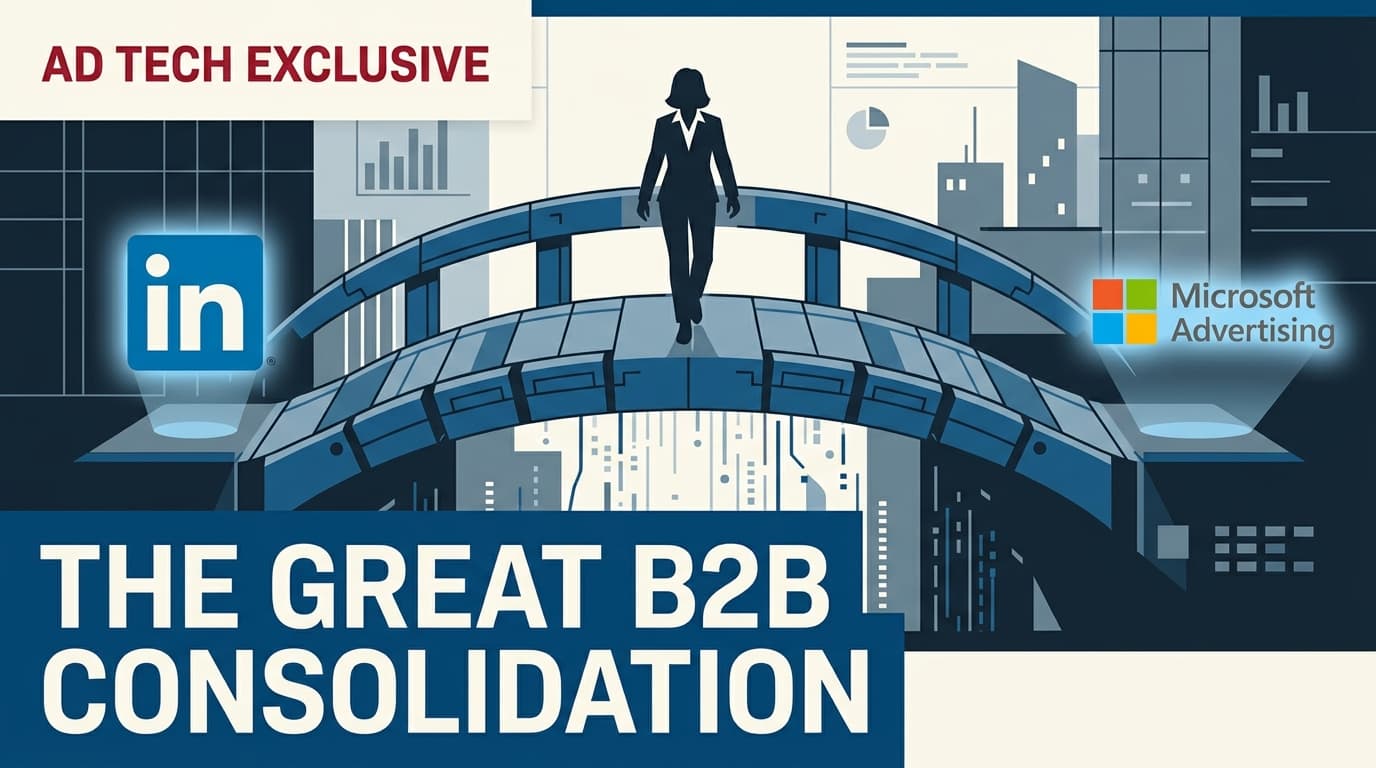
Microsoft has named Matt Derella, formerly the global head of sales and partnerships at LinkedIn, as the new leader of Microsoft Advertising. The transition, effective immediately for the Q3 planning cycle, consolidates the tech giant’s B2B sales DNA with its sprawling programmatic and search infrastructure. Derella replaces a leadership vacuum left by recent internal restructuring, bringing a creator-and-business-first mindset to Microsoft’s broader ad stack.
For social media marketers and B2B buyers, this isn't just a personnel change; it is a signal that the silo between LinkedIn’s professional graph and Microsoft’s DSP (Demand Side Platform) is finally coming down. If you have spent the last three years frustrated by the lack of interoperability between LinkedIn’s high-intent audience data and Microsoft’s broader inventory—including Bing, MSN, and Netflix—the friction is about to decrease. This move suggests Microsoft is ready to leverage its proprietary identity graph to challenge the dominance of Google and Meta in the enterprise space.
TL;DR
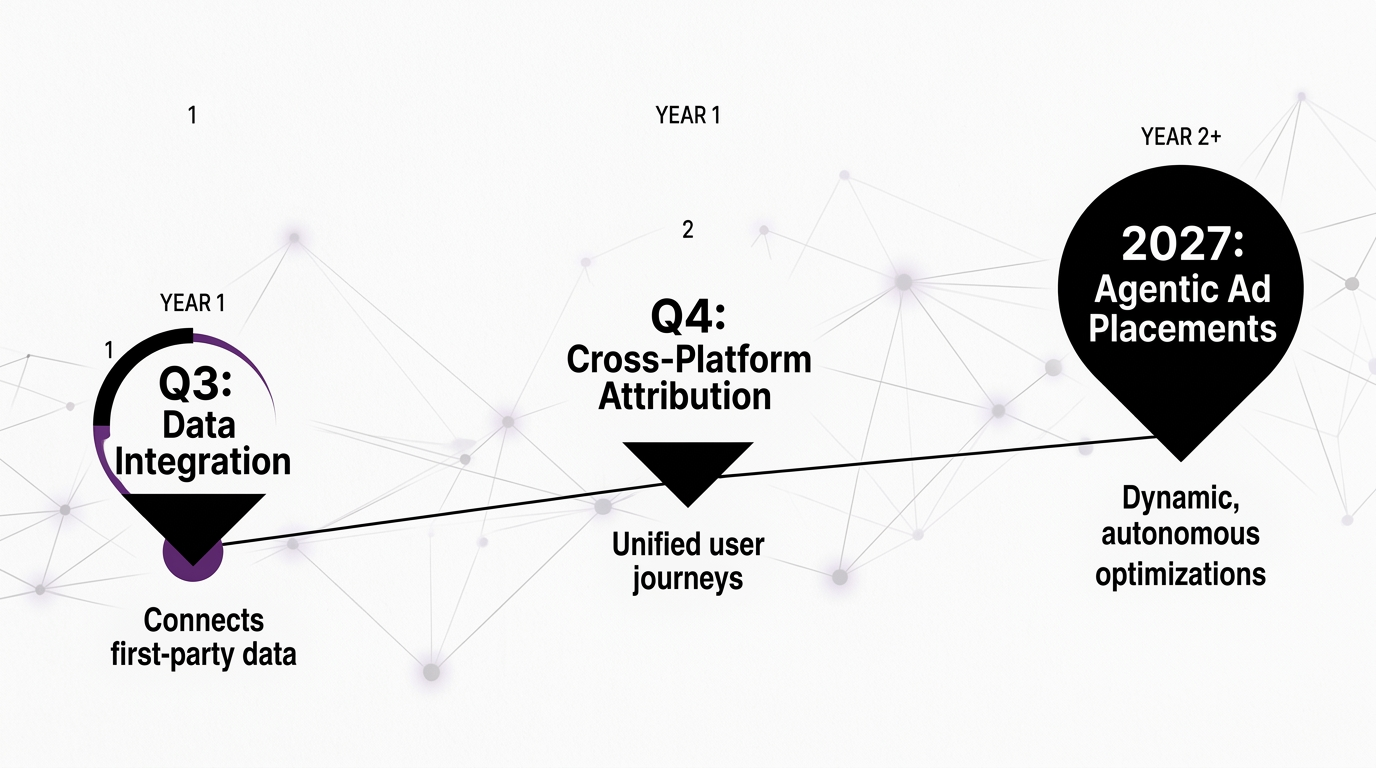
- Unified Data: Expect tighter integration between LinkedIn’s first-party professional data and the Microsoft Advertising platform.
- Inventory Expansion: B2B buyers will likely gain easier access to LinkedIn-verified audiences across Microsoft’s retail and connected TV (CTV) inventory.
- AI Acceleration: The shift coincides with Google’s massive AI Search overhaul, forcing Microsoft to lean harder into its Gemini-competing Copilot ecosystem.
- Q3 Strategy: Marketers should audit their LinkedIn Insight Tag setups now to prepare for expanded cross-platform attribution.
The crumbling wall between LinkedIn and Microsoft Advertising
For years, LinkedIn and Microsoft Advertising operated like distant cousins. You could target by job title on the LinkedIn feed, but doing so across the broader web via Microsoft’s programmatic tools felt like a different discipline entirely. Derella’s move changes the internal physics of the organization. As a veteran who scaled LinkedIn’s ad business during its most aggressive growth phase, he understands that B2B buyers don't want more platforms—they want more reach for their existing high-value audiences.
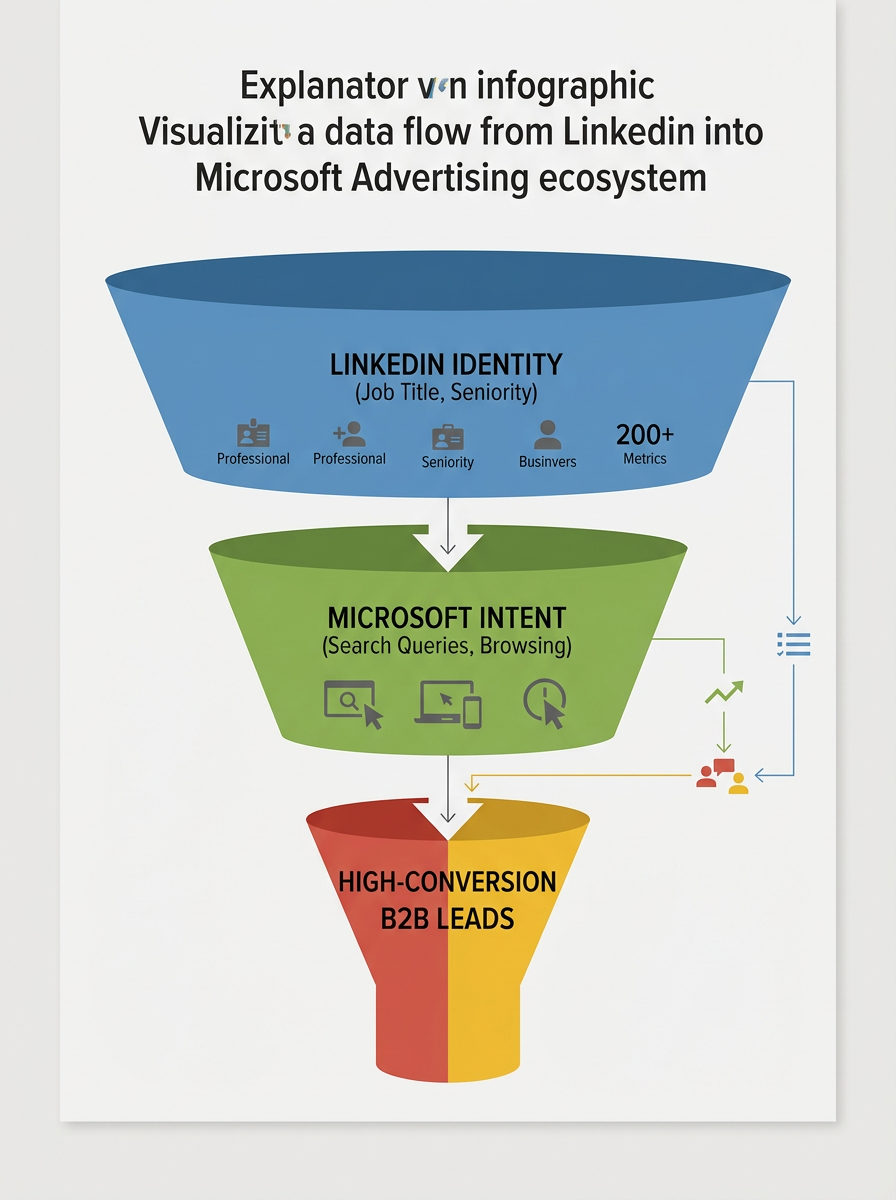
Industry analysts suggest this move is a direct response to the massive shifts occurring in the search and AI landscape. While Google is distracted by its rollout of Gemini 3.5 Flash and agentic coding features in search (per Search Engine Land’s May 2026 reporting), Microsoft is doubling down on the one thing Google lacks: a verified professional identity graph. Derella’s mandate is likely to make LinkedIn data the 'connective tissue' for every ad served through the Microsoft stack.
Consider the implications for B2B lead generation. If Derella successfully integrates LinkedIn’s professional attributes into Microsoft’s retail media and search products, a CMO searching for enterprise software on Bing won't just see a generic ad; they will see a tailored offer based on their actual LinkedIn profile data, served through a bidding system that understands their company’s current tech stack.
Navigating the AI Search war: Microsoft vs. Google’s Gemini 3.5
The timing of this leadership shift is critical. On May 19, 2026, Google announced that Gemini 3.5 Flash is now the default engine for its AI Search mode. This move toward 'agentic' search—where the search engine acts as an information agent—threatens to change how B2B buyers discover software and services. A recent study by Victorious and SPA, as reported by Search Engine Journal, found that 90% of brands currently have zero mentions in AI-generated search summaries.
Microsoft knows that to win the AI war, it cannot rely on search volume alone. It must rely on the quality of the user. By putting a LinkedIn executive in charge of the entire advertising portfolio, Microsoft is betting that 'who' is searching matters more than 'what' is being searched. While Google allows users to build apps directly within search results using agentic coding, Microsoft is positioning its ad stack to be the primary way B2B brands reach the decision-makers who are actually using these AI tools.
What this means for your Q3 programmatic budget
If you are managing a mid-to-large scale B2B budget, your Q3 strategy needs to account for a more aggressive Microsoft Advertising. We expect to see a rapid rollout of 'LinkedIn-powered' segments within the Microsoft Advertising UI. This isn't just about Bing; it’s about the Microsoft Audience Network (MSAN), which includes high-quality placements on sites like The Wall Street Journal and Outlook.
Historically, the CPMs on LinkedIn have been some of the highest in the industry, often exceeding $30 or $40 for competitive tech audiences. By moving Derella to the helm of the broader ad business, Microsoft is likely looking for ways to offer 'LinkedIn-lite' targeting on cheaper, programmatic inventory. This allows B2B marketers to maintain the precision of LinkedIn targeting while benefiting from the lower floor prices of the open web.
Strategy shift: Don't just look at LinkedIn Ads as a walled garden. Start testing the Microsoft Audience Network using your LinkedIn-matched audiences. The crossover is becoming seamless, and Derella’s influence will only accelerate this. If you haven't synced your LinkedIn Campaign Manager with your Microsoft Advertising account, that should be your first task for Monday morning.
The rise of 'Agentic' B2B marketing
Google’s recent announcement regarding 'information agents' that continuously scan the web to provide updated search results marks a shift in how content is consumed. For B2B marketers, this means your white papers and case studies are no longer just for human eyes—they are for the agents that inform the humans.
Microsoft’s response, under Derella, will likely involve a heavier emphasis on Copilot-integrated advertising. Imagine an ad that isn't a banner, but a suggested resource within a Copilot chat where a procurement officer is comparing two SaaS vendors. Because Microsoft owns the OS (Windows), the browser (Edge), the professional network (LinkedIn), and the productivity suite (Office 365), they have the unique ability to insert B2B messaging into the entire workstream.
Derella’s background in 'partnerships' at LinkedIn is the key here. He didn't just sell ads; he built ecosystems. We expect Microsoft to announce new integrations with CRM leaders like Salesforce and HubSpot that go deeper than simple conversion tracking. They are moving toward a 'closed-loop' B2B ecosystem where the ad you see on LinkedIn influences the search result you see on Bing, which ultimately populates a lead record in your CRM with full attribution.

Execution: How to pivot your strategy today
You cannot wait for the official platform merger to adjust your tactics. The 'Derella Era' at Microsoft Advertising will prioritize high-intent, verified professional data. Here is how to audit your current setup:
- Consolidate your tracking: Ensure your Microsoft UET tag and LinkedIn Insight Tag are firing on the same high-value pages. Cross-referencing this data in a third-party tool like Google Analytics 4 or Northbeam will show you where the overlap already exists.
- Test the 'Professional' filter on Bing: Microsoft has been quietly testing LinkedIn profile targeting within search campaigns. With Derella at the top, expect these features to move out of beta. Start building 'Observation' audiences for specific industries in your search campaigns now.
- Prepare for CTV: Microsoft’s partnership with Netflix is a major play for brand awareness. For B2B brands, the ability to show a commercial to a 'VP of IT' while they watch a documentary on Netflix is the holy grail. This inventory will likely be managed through the same unified stack Derella is now overseeing.
As we saw with the November 2025 algorithm updates across social platforms, the move toward 'interest-based' feeds is making traditional B2B targeting harder. Microsoft is the only player moving in the opposite direction—doubling down on hard data and professional identity. In a world of 'agentic search' and AI-generated content, the fact that a user is a 'Director of Engineering at a Fortune 500 company' is the only signal that remains un-faked.
What to watch in the next 90 days
Keep a close eye on the Microsoft Advertising product roadmap. If we see a sudden influx of LinkedIn-style 'Lead Gen Forms' appearing on non-LinkedIn properties, we will know Derella’s influence has taken hold. Additionally, watch for how Microsoft handles the 'AI mention' problem. With 90% of brands missing from AI search summaries, Microsoft has a massive opportunity to offer 'sponsored mentions' within Copilot—a product that would be significantly more valuable if backed by LinkedIn’s targeting precision.
We are moving away from a world of 'social media marketing' and 'search engine marketing' as separate silos. Under this new leadership, it’s all just 'B2B Growth.' The practitioners who thrive will be those who can navigate the entire Microsoft ecosystem as a single, unified funnel.
Conclusion: The data-first mandate
Matt Derella’s move to Microsoft Advertising is the final nail in the coffin for the 'LinkedIn as a standalone' era. It signals that Microsoft is ready to stop playing nice and start using its data advantage to claw back market share from Google. For the brand marketing lead or the agency strategist, this is a moment to re-evaluate where your 'source of truth' for audience data lives. If it isn't the professional graph, you might be optimized for a world that no longer exists.
FAQ