
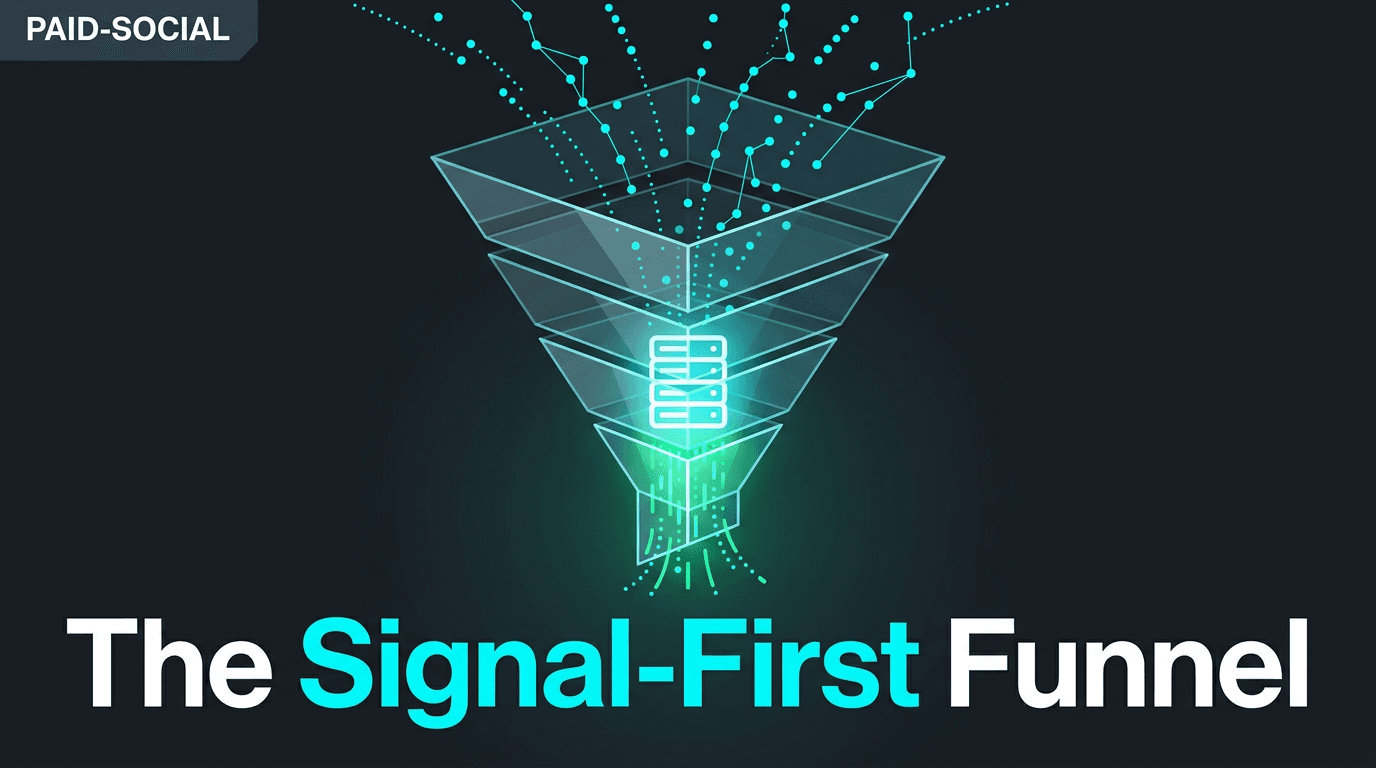
If you are relying on browser-based cookies to tell you which top-of-funnel (TOF) ads are working, you are looking at a map of a city that no longer exists. Between Apple’s App Tracking Transparency (ATT), the gradual sunsetting of third-party cookies, and Google’s latest core algorithm updates—which prioritize user intent signals over traditional click-paths—the 'last-click' model has become a liability. You aren't just losing data; you're losing the ability to justify the very top-of-funnel spend that feeds your long-term growth.
By the end of this guide, you will have a 'Signal-First' funnel architecture. This setup moves beyond the browser, utilizing server-side events and platform-native attribution tools to capture the 30% to 60% of touchpoints currently vanishing into the 'dark social' void. Before you start, ensure you have administrative access to your website’s backend (or a GTM Server-Side container) and active business accounts on Meta and TikTok.
TL;DR
- Shift to Server-Side: Move your primary tracking from the browser (Pixel) to the server (CAPI) to bypass ad blockers and browser restrictions.
- Normalize View-Through: Stop treating views as 'fluff' and start using platform-specific windows (like TikTok’s 1-day VTC) to measure TOF impact.
- Standardize UTMs: Implement a rigid, hierarchical UTM structure to ensure your internal analytics can reconcile with platform-reported signals.
- Validate with Lift: Use incrementality testing to prove that the 'untrackable' TOF traffic is actually driving bottom-line revenue.
Step 1: Implement Server-Side Tracking (CAPI) as Your Foundation
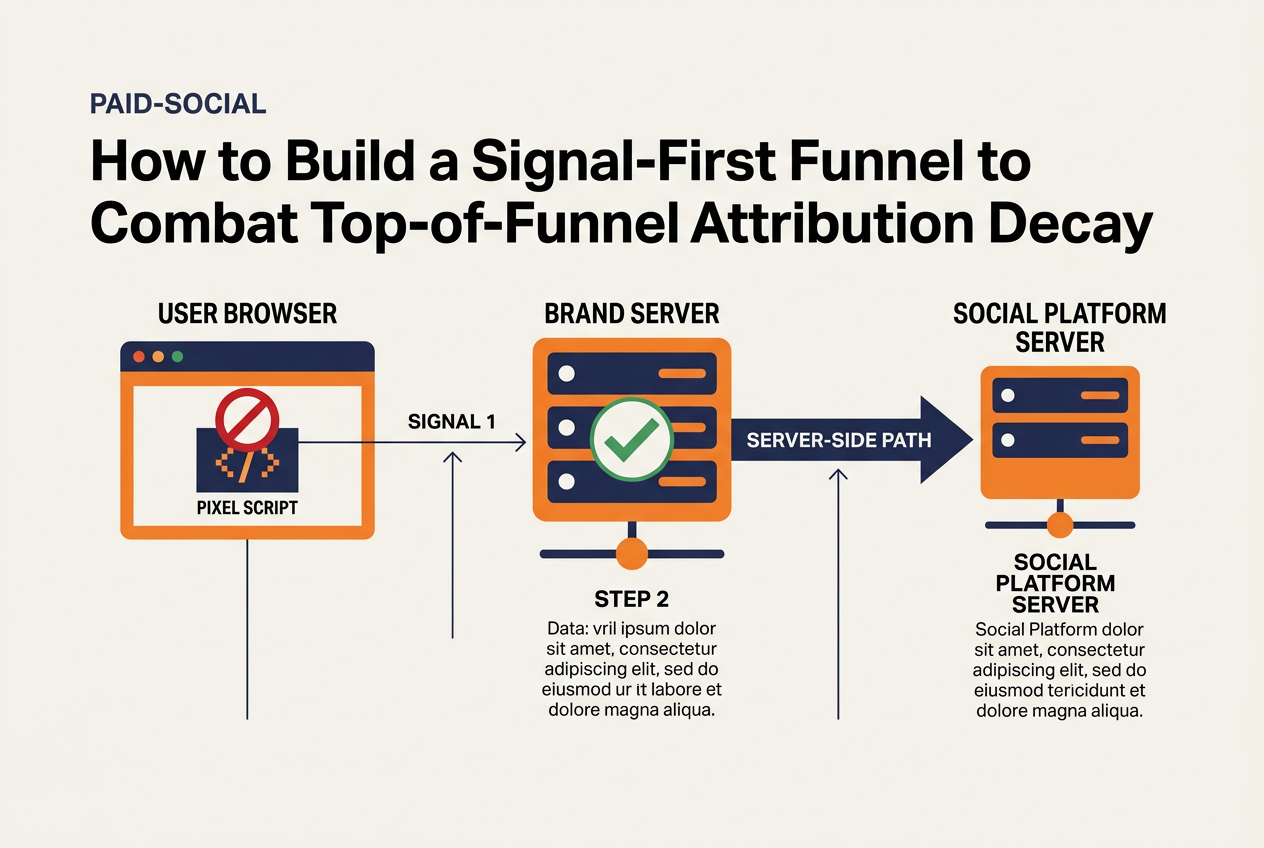
Browser-based pixels are failing because they rely on the client side—the user's device—to execute code. When a browser blocks a script or a user clears their cache, the link between the ad view and the eventual purchase is severed. This is the primary driver of signal decay. To fix this, you must implement a Server-to-Server (S2S) connection, commonly known as the Conversions API (CAPI).
What you are doing here is creating a direct line of communication between your server (where the purchase actually happens) and the social platform's server. When a customer buys a product, your server sends an encrypted signal to Meta or TikTok. Because this doesn't happen in the user's browser, it cannot be blocked by standard ad-blocking software or privacy settings in the same way a pixel can.
For most mid-market brands, the most efficient route is through Google Tag Manager (GTM) Server-Side. You’ll need to set up a tagging server—usually hosted on Google Cloud or Stape—which acts as a middleman. Instead of sending ten different signals to ten different ad platforms from the user’s phone, you send one signal to your server, which then distributes it to the platforms. This also improves site speed, which is a critical ranking factor following recent Google Core updates.
Common Pitfall: Many marketers implement CAPI but forget to deduplicate events. If you send the same purchase event via both the Pixel and CAPI without a matching event_id, the platform will count it twice, bloating your ROAS and ruining your data integrity. Always ensure your event_id is identical across both sources.
Step 2: Configure Platform-Specific Attribution Managers
Once your data pipeline is secure, you need to change how the platforms interpret those signals. Standard attribution windows (often 7-day click) are designed for bottom-of-funnel (BOF) retargeting. They are useless for TOF discovery. If a user sees an ad for a $200 jacket on TikTok, they rarely click and buy instantly. They might search for the brand on Google three days later or visit the site directly after seeing a second ad on Instagram.
In TikTok’s Attribution Manager, you should move away from the default settings and enable 'View-Through Attribution' (VTC) for your TOF campaigns. While some CFOs remain skeptical of VTC, the reality of modern discovery—especially with the rise of the 'link in bio' workaround being phased out Instagram link in bio changes—is that the view is the primary signal of intent.
Set your TikTok window to a 1-day view and a 7-day click. This allows the algorithm to optimize for people who actually watch your content, even if they don't click the 'Shop Now' button immediately. On Meta, use the '7-day click or 1-day view' setting but segment your reporting to see how many conversions are coming from each. If you see a high volume of 1-day views, your creative is doing its job of building awareness, even if the 'last click' credit goes elsewhere.
Common Pitfall: Over-reliance on VTC can lead to 'over-claiming' by platforms. To combat this, always compare your platform-reported VTC conversions against your total business revenue growth. If platform conversions are rising but total revenue is flat, you are likely just re-counting existing customers.
Step 3: Deploy a Hierarchical UTM and Naming Convention
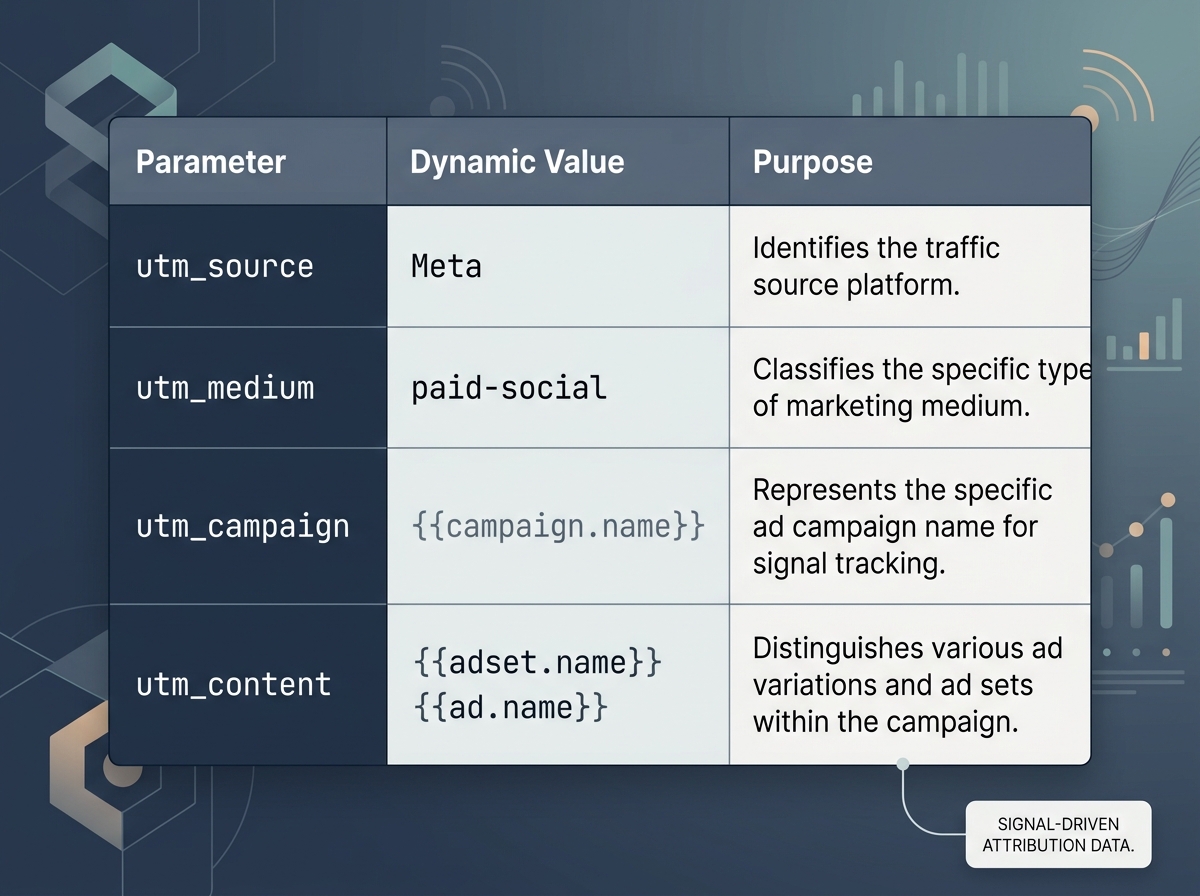
Signal-first funnels require a 'common language' between your social ads and your web analytics (like GA4 or Northbeam). When signal decay occurs, your internal analytics often categorize social traffic as 'Direct' or 'Unassigned.' A rigid UTM structure is your only defense against this.
Don't just use utm_source=facebook. Use a dynamic string that pulls the campaign ID, ad set ID, and creative ID. For example:
utm_source=tiktok&utm_medium=paid&utm_campaign={{campaign.name}}&utm_content={{ad.name}}&utm_term={{placement}}
This level of granularity allows you to perform 'Stitch Analysis.' When you see a spike in 'Direct' traffic, you can look at your platform data for the same timeframe. If your TikTok TOF campaign had a high 'Reach' and 'Engagement' rate during that spike, you can statistically attribute a portion of that direct traffic to the social signal. This is especially important when targeting older demographics Targeting older demographics on social who may be more likely to switch devices or move from a mobile app to a desktop browser to complete a purchase.
Step 4: Utilize Incrementality and Lift Testing
Because no attribution model is perfect, you must periodically 'break' your funnel to see what happens. This is called incrementality testing. It is the only way to truly verify the value of top-of-funnel spend in an era of high signal loss.
Run a 'Conversion Lift' study on Meta or TikTok. The platform will split your target audience into two groups: a test group that sees your ads and a control group that doesn't. At the end of the month, you compare the total conversions between the two groups. The difference is your 'Incremental Lift.'
This bypasses cookies and tracking pixels entirely. It looks at the fundamental question: 'Did the people who saw my ads buy more than the people who didn't?' If you find that your TOF ads have a 20% lift, you can confidently invest in them, even if your GA4 dashboard says they have a 0.2 ROAS. This is how high-growth brands like those managed by WPP WPP business bounceback analysis justify massive spends on premium events like the World Cup World Cup ad pricing, where direct click-tracking is virtually impossible.
Common Pitfall: Running lift tests too frequently. These tests require a significant amount of data and time to reach statistical significance. Aim for one major lift test per quarter, or when you are making a significant shift in your budget allocation.
Step 5: Verify Your Signal Strength and Data Integrity
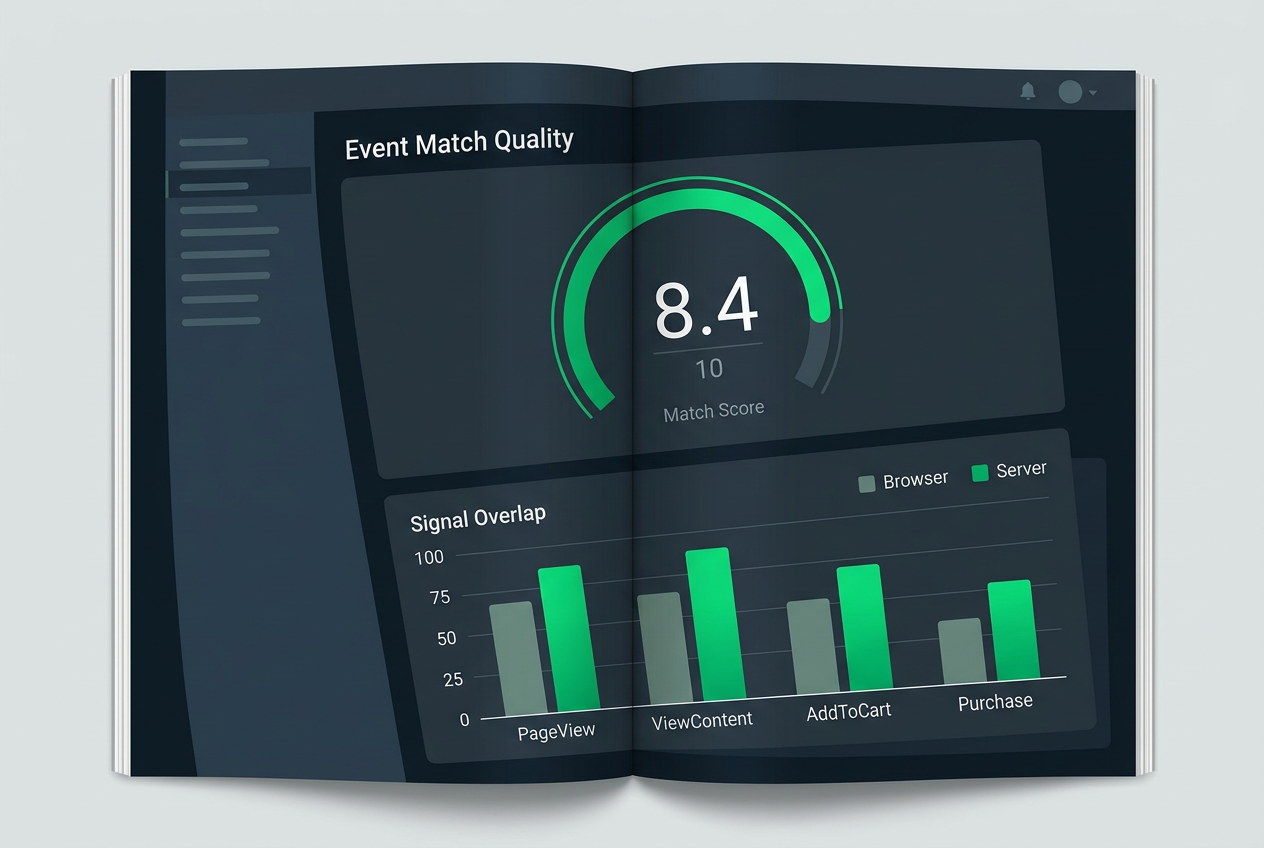
Before you scale your budget based on your new signal-first model, you must verify that the data is flowing correctly. This isn't a 'set it and forget it' process. You need to check your 'Event Match Quality' (EMQ) scores within your platform's Events Manager.
An EMQ score measures how well the data you send (like email, phone number, or IP address) matches a real user on the platform. If your EMQ is low (below 6.0), the platform can't link your server-side events to the users who saw your ads, and your attribution will remain broken. Aim for an EMQ of 8.0 or higher by sending as many 'Advanced Matching' parameters as possible—hashed emails, city, state, and zip codes are the most effective.
Check your 'Signal Overlap' report. You should see a healthy mix of Pixel and CAPI events. If CAPI is doing its job, it should be picking up 10-20% more events than the browser pixel alone. If the numbers are identical, your CAPI might be getting blocked or misconfigured at the server level.
What to do next: 3 Advanced Tactics
Once your signal-first funnel is live and verified, you can move into more sophisticated optimization strategies:
- Post-Purchase Surveys (PPS): Use a tool like KnoCommerce or Fairing to ask every customer, 'How did you first hear about us?' Compare these results to your digital attribution. Often, customers will say 'TikTok' even when the data says 'Google Search.' This is your 'Zero-Party Data' and it’s the ultimate truth-set for TOF discovery.
- Marketing Mix Modeling (MMM): For brands spending over $100k/month, move toward MMM. This uses statistical modeling to correlate spend across all channels (including offline) with total revenue. It is completely privacy-safe and doesn't rely on individual user tracking.
- Creative-Level Attribution: Instead of just looking at which campaign worked, look at which hook worked. Use your granular UTMs to see if 'Educational' hooks drive higher long-term LTV than 'Discount' hooks. This allows you to optimize your creative strategy based on business outcomes rather than just platform engagement.
By moving to a signal-first architecture, you stop fighting against privacy changes and start working with the grain of the modern internet. You’ll find that your top-of-funnel isn't 'broken'—it was just invisible.
FAQ