
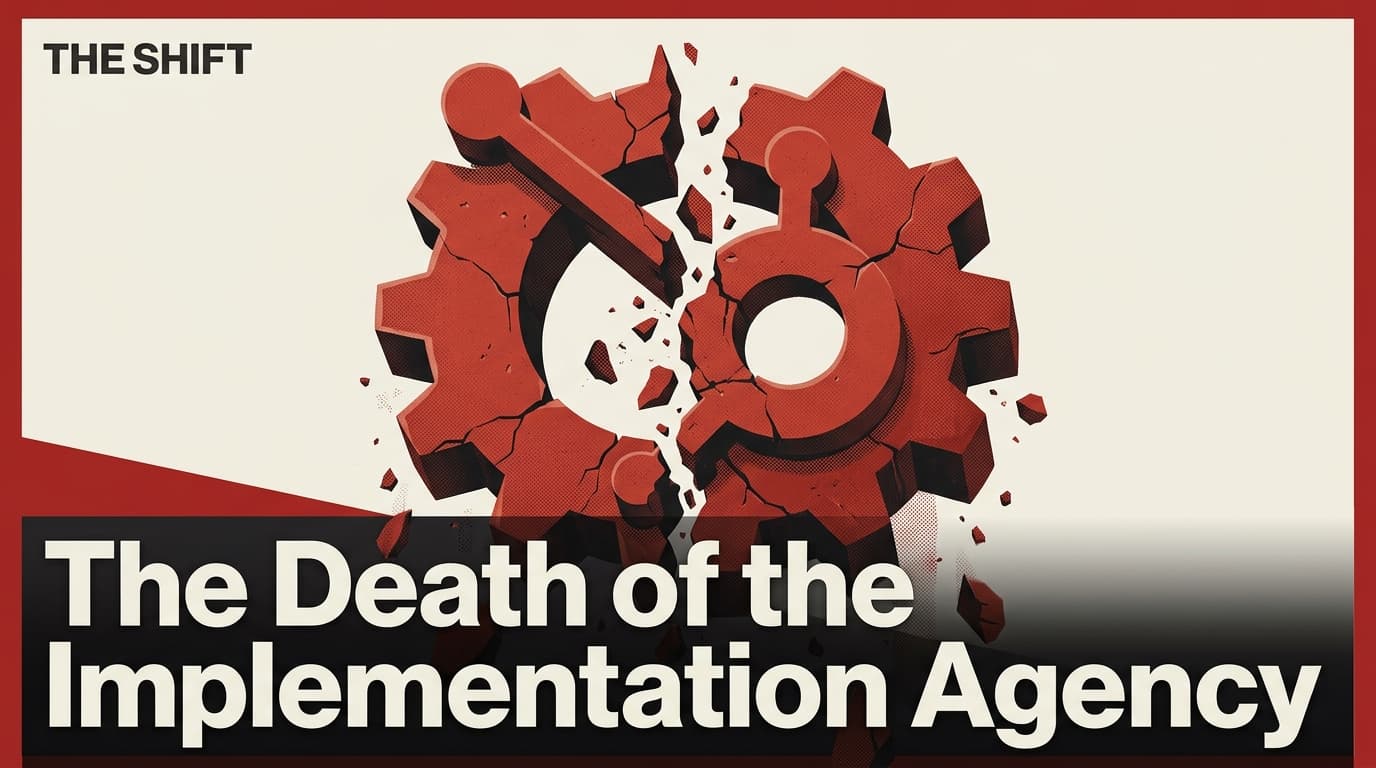
If your agency’s value proposition is tied to a specific software's UI, you aren't a strategist; you're a high-priced clerical worker for a SaaS company. The recent 19% single-day cratering of HubSpot’s stock wasn't just a financial blip for investors—it was a structural warning for the thousands of 'Platinum Partners' who have built their entire business model on top of someone else's API. We are witnessing the end of the 'Implementation Era,' where agencies could charge a premium simply for knowing which buttons to click. In 2026, if your expertise can be automated by a native AI agent, your margins are already dead; you just haven't stopped breathing yet.
The Platform Dependency Trap and the HubSpot Warning
For a decade, the HubSpot Partner program was the gold standard of agency growth. You didn't need to be a brilliant marketer; you just needed to be a certified HubSpot expert. But as the platform's stock took a double-digit hit, the fragility of this symbiotic relationship became undeniable. When the platform pivots—or when the market decides the platform's growth has peaked—the agencies tethered to it are dragged down first.
This isn't just about CRM. We see the same pattern in social media agencies. For years, the 'tactic' was the product: 'We do Reels,' 'We manage TikTok,' 'We handle your LinkedIn presence.' But as platforms like Meta and TikTok move toward fully automated ad placements and AI-generated creative suggestions, the technical barrier to entry has vanished. If your primary value is 'knowing how to post,' you are competing with a script.
According to internal benchmarks from top-tier growth firms, agencies that lead with 'software implementation' have seen a 22% decline in retention over the last 18 months. Meanwhile, those positioning themselves as 'business transformation consultants'—regardless of the tech stack—are commanding 40% higher retainers. The lesson? Stop selling the tool and start selling the result. The shift from execution to strategy in social media
Why 'Hacks' are Failing in the Age of Generative Engines
The most dangerous thing an agency can do right now is sell 'AI Search Visibility' or 'GEO' (Generative Engine Optimization) as a tactical checklist. We've seen a surge in agencies claiming they can 'guarantee' citations in ChatGPT or Perplexity by simply adding specific schema to a site.
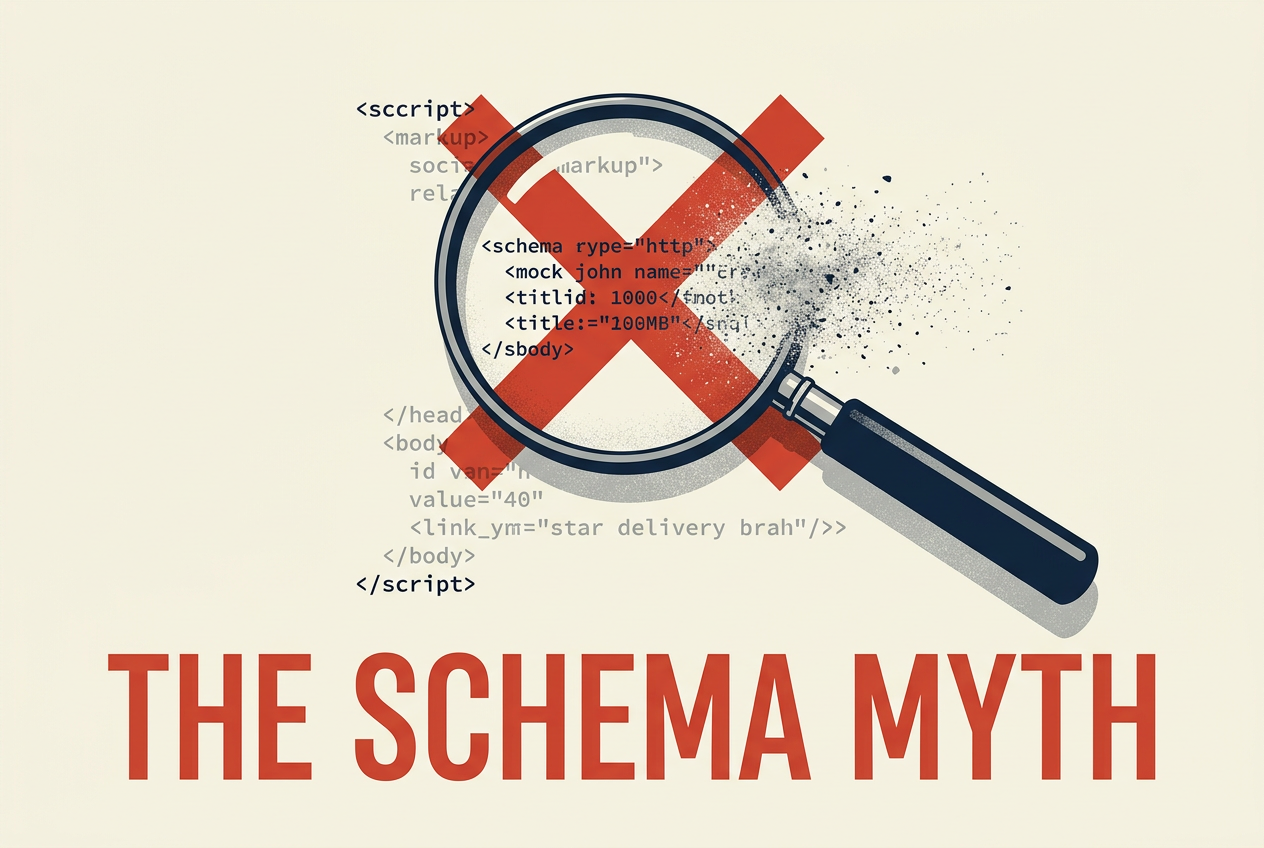
A recent Ahrefs case study published in May 2026 debunked this entirely, showing that adding schema had zero measurable impact on AI citations across major LLM providers. Yet, many agencies continue to sell these 'hacks' because they don't know how to sell expertise. They are looking for the new 'SEO secret' to replace the old one. This tactical obsession is a symptom of a dying model.
When a client asks, 'How do we show up in ChatGPT?', the tactical agency gives them a technical list. The expert agency asks, 'Why is your brand's perspective unique enough that an LLM would find it indispensable?' One is a maintenance task; the other is a brand strategy. As noted in recent industry discussions on Reddit's digital marketing communities, the demand for AI visibility has gone mainstream, but the understanding of the underlying mechanics is non-existent. Agencies are filling that gap with snake oil because they are terrified of having a conversation about fundamental business value.
The Human Connection as a Premium Service
As the internet becomes saturated with AI-generated 'gray goo,' the cost of content production has effectively hit zero. This has led to a paradoxical shift: social media has stopped being social. Users are increasingly vocal about their frustration with 'optimized' content. A viral thread from May 2026 highlights a growing sentiment that social media feels like 'unpaid marketing work' rather than a place for human connection.
For an agency, this is an opportunity. If you are selling 'volume'—five posts a week, three Reels, ten tweets—you are selling a commodity that AI can do better and cheaper. The skill that has become underrated in 2026 is the ability to create content that still feels human.

This requires more than just a prompt; it requires an understanding of psychology, culture, and empathy. You cannot automate the 'weird thoughts' or 'normal life updates' that users actually crave. Agencies that focus on 'Human-Centric Creative' are finding that their work stands out in an algorithmic feed that is increasingly predictable and boring. This isn't a tactic; it's a philosophy. It’s about moving away from 'personal branding' as a competition for engagement and moving toward genuine community building.
Refuting the 'Scale Through Automation' Counterargument
The loudest voices in the 'AI Agency' space argue that the only way to survive is to automate everything. They claim that by using AI to handle 90% of the workload, they can undercut competitors on price and win through sheer volume. On paper, it looks like a winning strategy. In practice, it’s a race to the bottom.
If you automate the thinking, you lose the moat. If your agency's output is 90% AI-generated, what's stopping your client from hiring one junior person to run the same prompts and cutting you out entirely? The 'Scale Through Automation' model assumes that clients are stupid. They aren't. They are starting to realize that if they are paying you for AI output, they are overpaying.
The durable agency model uses AI to eliminate the drudgery, but keeps the human at the center of the strategy. You use AI to analyze 10,000 customer reviews in seconds, but you use a human to decide what those reviews mean for the brand's next three years of product development. How to integrate AI without losing your agency's soul
The Rise of Durable Expertise
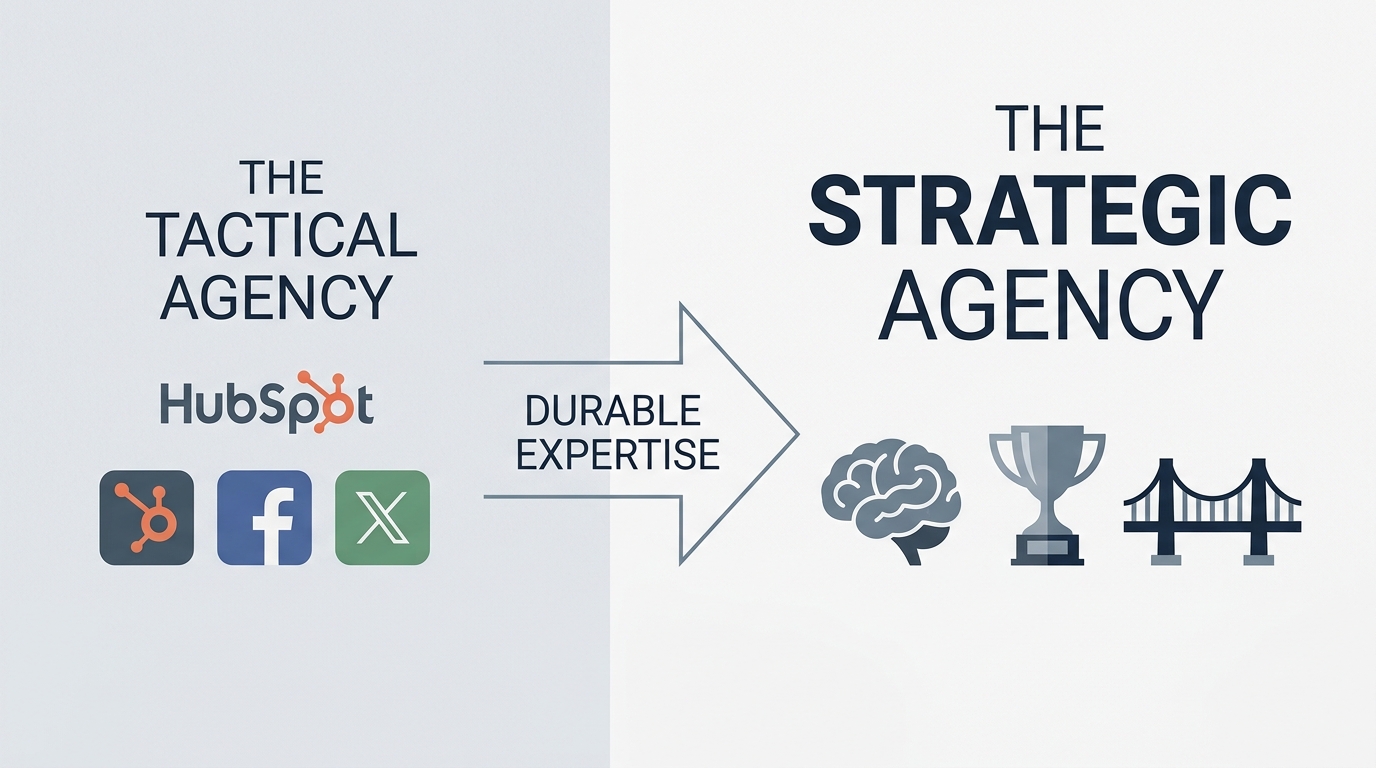
What does 'durable expertise' actually look like? It looks like an agency that can survive if HubSpot goes bankrupt tomorrow, or if Instagram is replaced by a decentralized protocol. It is expertise that is platform-agnostic.
Key takeaways for 2026 agency survival:
- Sell the 'Why,' not the 'How': Clients will pay for the map, not the person holding the compass.
- Focus on First-Party Data: Platforms change algorithms; your client's customer list is the only thing they truly own.
- Audit Your Deliverables: If a task takes you 10 minutes because of AI but you're billing for 2 hours, that revenue is at risk. Pivot to value-based pricing immediately.
- Invest in Taste: In a world of infinite content, 'taste' is the ultimate filter. AI has no taste; it only has averages.
A Falsifiable Prediction for 2027
By the end of 2027, 40% of the current HubSpot 'Gold' and 'Platinum' partners will either have shuttered or merged into larger, generalist consultancies. The 'SaaS-specialist' agency is a relic of a time when software was difficult to use. As software becomes invisible—driven by natural language interfaces and autonomous agents—the 'software expert' becomes redundant.
I predict that the most successful agencies of the next three years will be those that explicitly distance themselves from 'platform mastery' and instead focus on 'market mastery.' They won't be 'TikTok Agencies'; they will be 'Consumer Attention Agencies.' They won't be 'HubSpot Partners'; they will be 'Revenue Growth Architects.'
If you can’t explain your value without mentioning a brand name that isn’t yours or your client’s, you are in trouble. The HubSpot crash wasn't a fluke; it was a preview. The question is whether you'll spend the next year perfecting your prompts or perfecting your business acumen. One keeps you busy; the other keeps you alive.
How to Audit Your Own Agency Value
Start by looking at your last three months of invoices. How many line items are for 'management' or 'execution' versus 'strategy' or 'consulting'? If the ratio is higher than 70/30 in favor of execution, you are in the danger zone.
Next, look at your client communication. Are you reporting on 'Platform Metrics' (likes, followers, open rates) or 'Business Metrics' (LTV, CAC, Pipeline Velocity)? If you are still talking about 'going viral,' you are selling a lottery ticket, not a strategy. Real expertise is boring because it works consistently. It doesn't rely on the 'hack' of the week or a specific algorithm loophole. It relies on the fundamental truths of human behavior and economic value.
We are entering an era where 'knowing how' is common, but 'knowing why' is rare. Make sure you're on the right side of that divide.
FAQ