
By the end of this guide, you will have moved your content planning workflow from reactive keyword chasing to predictive prompt mapping. You'll be able to identify the specific questions users are asking ChatGPT, Claude, and Perplexity before those queries ever register in a traditional search volume tool like Semrush or Ahrefs. To follow this process, you will need an active Microsoft Clarity project installed on your site, at least 30 days of traffic data, and access to the 'Smart Events' dashboard.
Traditional SEO is failing because it measures the past. When a user types a query into Google, they are looking for a destination. When they type a prompt into an LLM, they are looking for a solution. This shift—from keywords to intent-heavy prompts—is creating a blind spot for social managers and content strategists. If you wait for a topic to show 'high volume' in a 2025 keyword report, you've already missed the viral window for 2026. We are entering the era of Generative Engine Optimization (GEO), where the goal isn't just to rank, but to be the primary source for the AI's synthesis.
TL;DR
- Prompt Demand vs. Search Volume: Keywords tell you what people want to find; prompts tell you what they want to do. Mapping the latter is the only way to stay ahead in 2026.
- Clarity’s AI Edge: Use Microsoft Clarity’s new 'Copilot Query Insights' to see how users are interacting with your content via AI overlays.
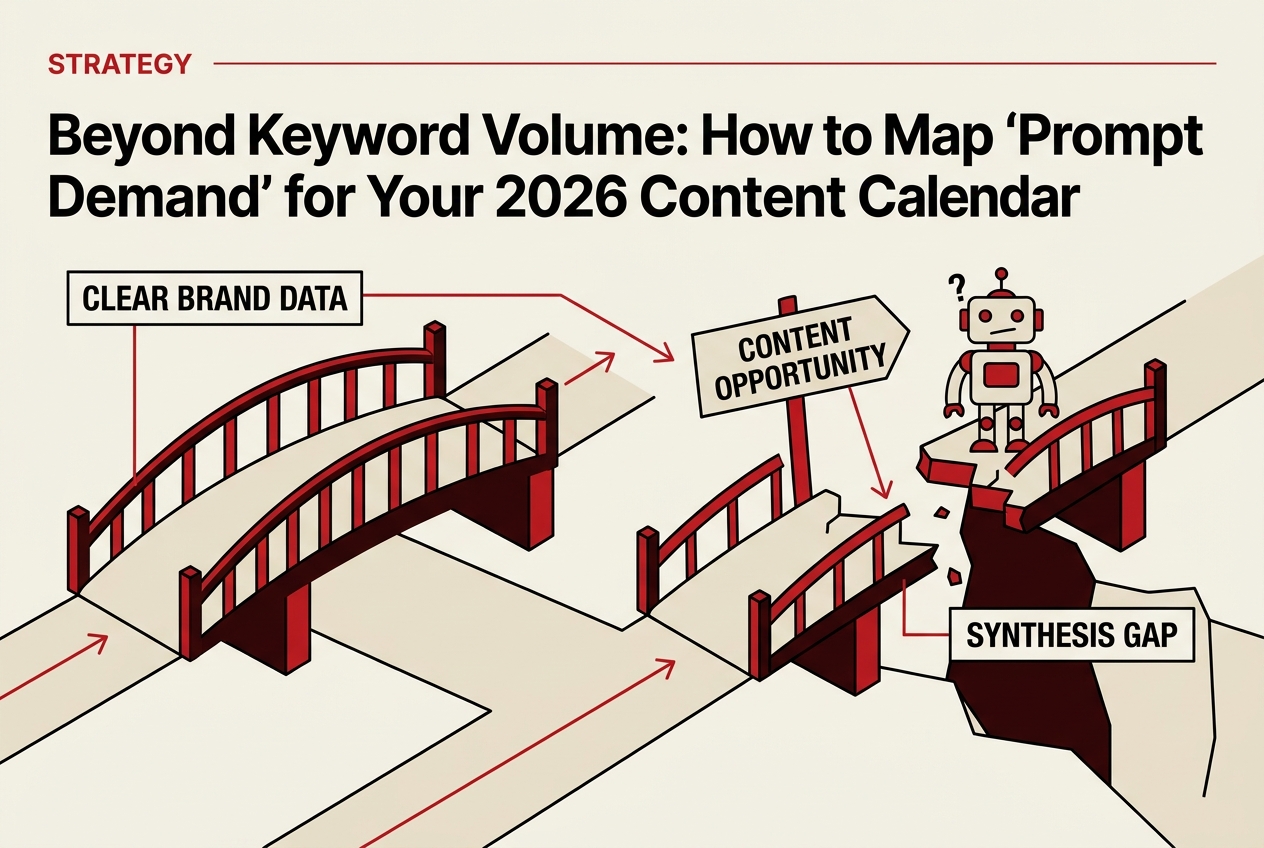
- The Synthesis Signal: Identify 'Synthesis Gaps' where LLMs are forced to hallucinate or provide vague answers because your brand hasn't provided structured data.
- Social-First Integration: Map these insights directly to TikTok and Instagram Reels to capture the 'Authentic Human' preference recently signaled by platforms like Snapchat.
Step 1: Configuring Microsoft Clarity for Copilot Query Capture
You can't analyze what you don't track. Most social media managers use Microsoft Clarity for heatmaps, but the real gold for 2026 lies in the 'AI Query Insights' module. This tool tracks the specific questions users ask when using browser-based AI assistants (like Edge Copilot) while viewing your pages. It also captures the 'Ask a Question' interactions if you’ve implemented an AI chat widget on your site.
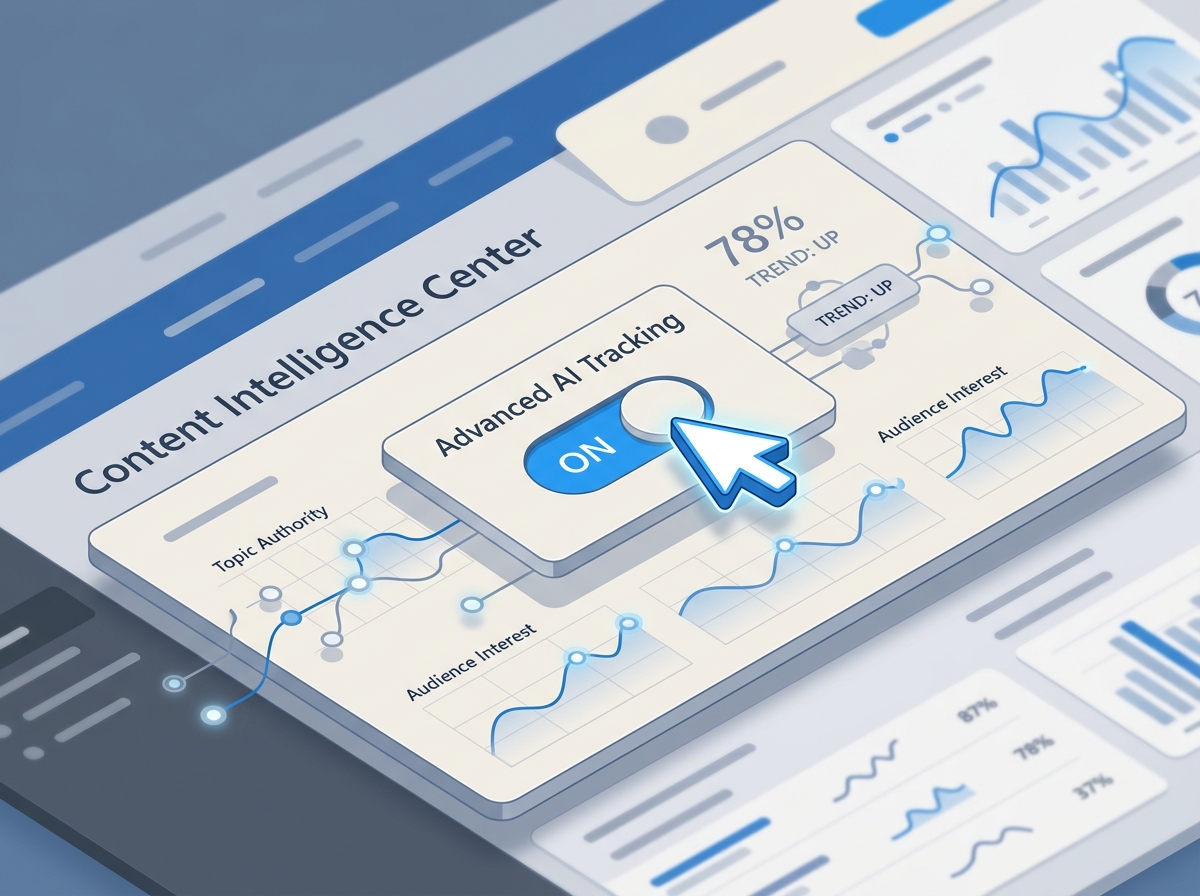
First, navigate to your Clarity Settings and ensure 'Advanced AI Tracking' is toggled on. This allows the platform to categorize session recordings not just by clicks, but by the 'intent' of the user's highlighted text. When a user highlights a paragraph on your blog and asks an AI to 'summarize this' or 'explain this like I'm five,' Clarity logs that as a prompt event.
Why it matters: This is the closest you can get to 'reading the mind' of your audience. If 40% of users on your 'How to Start a Fitness Routine' page are asking an AI to 'make a 3-day version of this for a busy mom,' you have an immediate content gap. You don't need to wait for a keyword tool to tell you '3-day workout for moms' is trending; your own audience is literally demanding it through their prompts.
Common Pitfall: Many managers forget to filter out internal IP addresses. If your team is constantly testing the AI features on your site, your prompt demand data will be skewed toward internal curiosities rather than market demand. Always set up an IP exclusion filter before analyzing AI query trends.
Step 2: Identifying the 'Synthesis Gap' in Your Existing Content
Once your data is flowing, you need to look for the 'Synthesis Gap.' This is a metric unique to Generative Engine Optimization. A synthesis gap occurs when a user asks an AI a question about your product or niche, and the AI provides a generic or 'low-confidence' answer because your site lacks structured, high-authority data on that specific sub-topic.
In Microsoft Clarity, look at the 'Copilot Insights' tab and sort by 'Unresolved Queries.' These are instances where the user asked a question, and the AI's response didn't lead to a high-satisfaction signal (like a click-through or a saved response). This indicates that the AI is struggling to synthesize your content into a coherent answer.
For example, if you are a brand like Jazzercise—which is currently riding a wave of nostalgia to stay relevant Jazzercise's nostalgia strategy—you might find users asking, 'Is Jazzercise safe for people with 90s-era knee injuries?' If your content only talks about 'fun and fitness,' the AI can't give a specific answer. That is your 2026 content priority.
Why it matters: In 2026, AI engines will prioritize 'source-heavy' content. If you are the only brand providing a structured answer to a niche prompt, you become the 'Featured Snippet' of the AI era. This isn't just about SEO; it’s about brand authority in a world where LLMs are the primary interface.
Common Pitfall: Don't just look at the most frequent prompts. Look at the prompts with the highest 'Sentiment Friction.' If users are asking 'Why is [Product] so expensive?' and the AI is giving a vague answer, that friction is a conversion killer. Address the hard prompts first.
Step 3: Mapping Prompts to Social-First 'Authentic' Content
Now that you have a list of high-demand prompts, you must translate them into social content. However, the strategy for 2026 has shifted. As we saw with Snapchat’s recent crackdown on wholly AI-generated videos Snapchat's AI video policy, platforms are pivoting back to 'authentic human-authored experiences.'
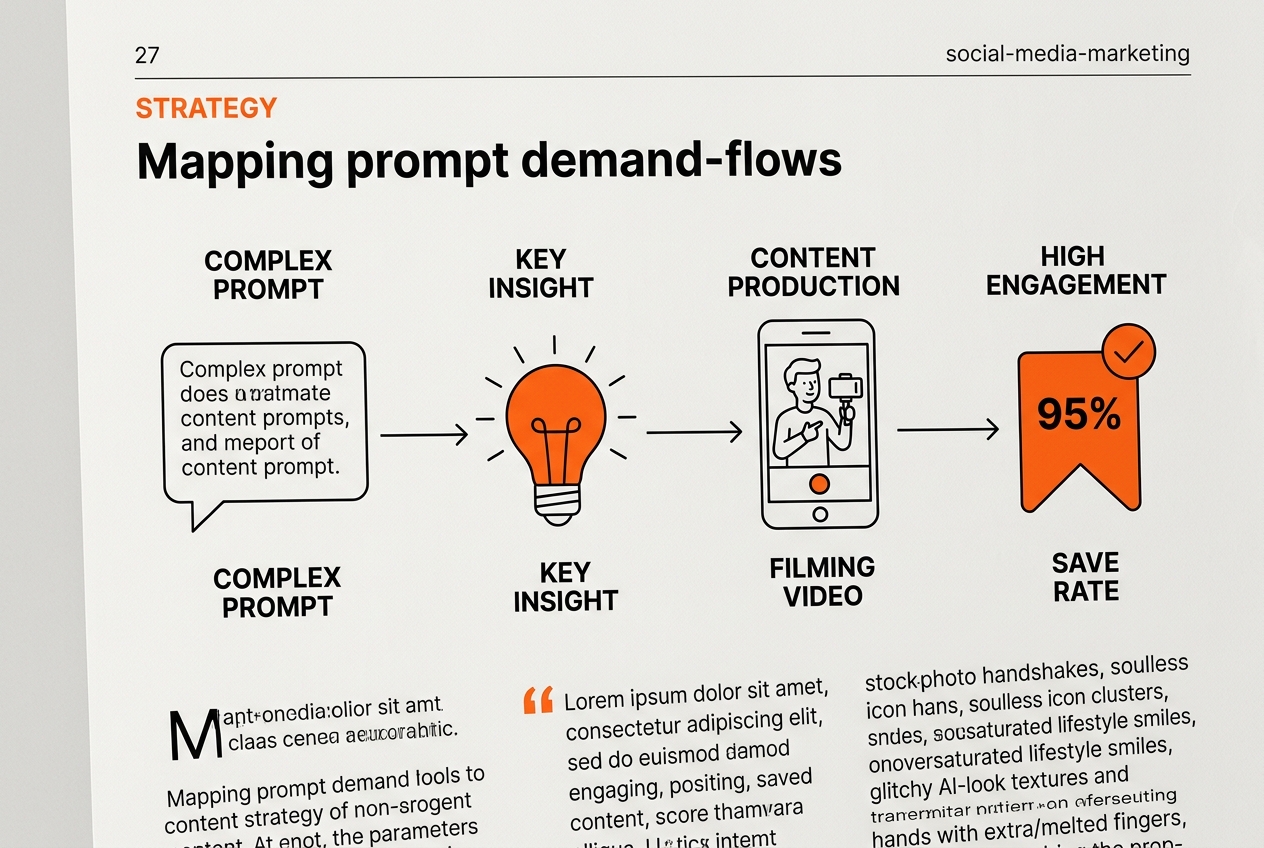
You shouldn't use AI to generate the content; you use the AI insights to inform what a human should film. If your Clarity data shows a high volume of prompts around 'How to customize [Product] for small apartments,' that is your next TikTok series. You are using the precision of AI data to fuel the authenticity of human video.
Take a cue from successful TikTok brand awareness campaigns TikTok brand awareness study. The most successful ones don't just follow trends; they answer specific user anxieties or curiosities that haven't been addressed elsewhere. Your 'Prompt Demand' map is essentially a cheat sheet for what will go viral on the FYP because you are answering questions people are already asking their private AI assistants.
Why it matters: Social algorithms, especially Instagram’s Instagram algorithm mechanics, are increasingly weighting 'Save' and 'Share' counts over simple likes. Content that answers a specific, complex prompt is much more likely to be saved as a reference than a generic 'lifestyle' post.
Common Pitfall: Avoid 'over-polishing' this content. The 'Prompt Demand' is often raw and specific. If the prompt is 'How do I fix a leaky [Product] valve?', a 15-second raw video from a technician will outperform a 2-minute high-production commercial every time.
Step 4: Building the 2026 Content Calendar Around 'Clustered Intent'
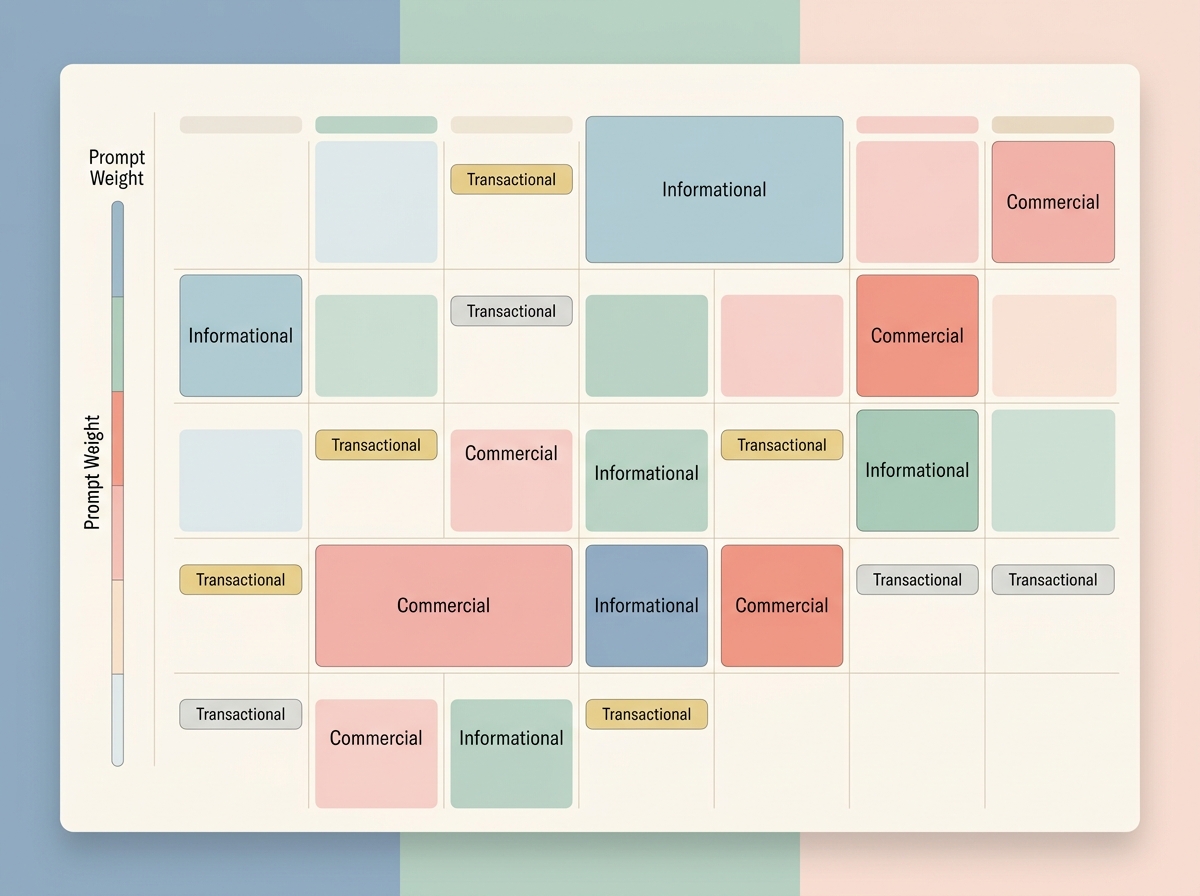
Instead of a calendar organized by 'Product Launches' or 'Holidays,' your 2026 calendar should be organized by 'Intent Clusters.' Using the data from Microsoft Clarity, group your prompt demand into three buckets:
- Informational Intent: 'How does this work?' / 'What is the difference between X and Y?'
- Commercial Intent: 'Is [Brand] worth the price?' / 'Compare [Brand] to [Competitor].'
- Transactional Intent: 'Where can I buy this in London?' / 'Does [Brand] have a student discount?'
Assign each cluster a 'Prompt Weight' based on the frequency in Clarity. Your content calendar should allocate resources proportionally. If 60% of your prompt demand is Informational, but 80% of your current content is Transactional, you have a massive misalignment that will lead to a drop in GEO rankings.
Why it matters: Search engines and LLMs alike are moving toward 'Topic Authority.' If you only answer transactional prompts, the AI won't trust you as a source for broader industry questions. You need a balanced diet of content to maintain your 'Source Rank' in 2026.
Common Pitfall: Don't ignore the 'Long-Tail Prompt.' In the keyword era, low-volume keywords were often ignored. In the prompt era, a single highly specific prompt (e.g., 'How to use [Product] while training for a marathon in high humidity') can indicate a high-value niche that your competitors are completely ignoring.
Step 5: Verification and Iteration
How do you know your prompt research is working? You won't see it in Google Search Console immediately. Instead, watch your 'Direct' and 'Social' traffic sources in Microsoft Clarity. When you answer a high-demand prompt on social media, you should see a corresponding 'Search-to-Session' lift where users come to your site to verify what they saw in your video.
Furthermore, check the 'AI Referral' source in your analytics. Platforms like Perplexity and ChatGPT (via SearchGPT) provide referral headers. If your 'Prompt Demand' strategy is working, you will see a steady increase in traffic coming from these generative engines. This is the ultimate proof of GEO success.
Verification Checklist:
- Clarity 'Unresolved Queries' count is decreasing month-over-month.
- 'AI Referral' traffic shows a >15% quarterly growth rate.
- Social media 'Save' rates on prompt-derived content are 2x higher than baseline.
- Your brand is cited as a primary source in a ChatGPT/Copilot search for your core category.
Three Related Tactics to Try Next
- Structured Data Overhaul: Use Schema.org 'Speakable' and 'FAQ' markups specifically on pages that address high-demand prompts to make it easier for LLMs to scrape your answers.
- The 'Anti-Hallucination' Series: Create a series of short-form videos titled 'What ChatGPT Gets Wrong About [Your Niche]' to capture the 'Correction' traffic.
- Social Login Security Audit: As you drive more traffic from AI engines, ensure your site is secure. Recent vulnerabilities in social login plugins WooCommerce security alert remind us that high traffic volume requires high-grade security to protect your new audience.
By mapping prompt demand today, you aren't just optimizing for a search engine; you're optimizing for the way humans will interact with information for the next decade. Stop counting keywords and start answering questions.
FAQ