
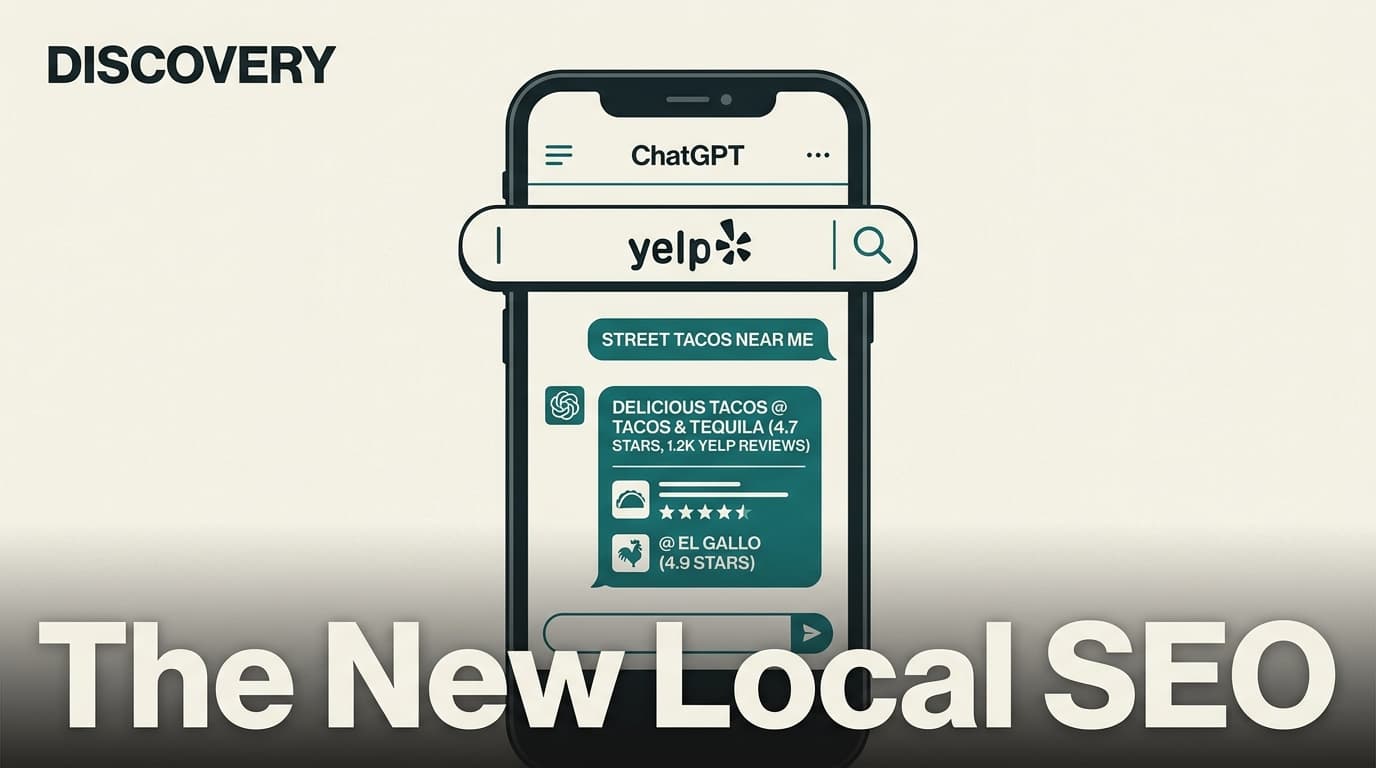
OpenAI has integrated Yelp’s real-time local data directly into the ChatGPT ecosystem, effectively turning the generative AI tool into a primary local discovery engine. This partnership allows ChatGPT to surface business hours, reviews, and service details for millions of local establishments. For brands, the era of static local SEO is ending as AI-driven intent matching takes center stage.
Why it matters: For social media managers and community leads, this shift moves local visibility out of the hands of technical SEOs and into the social desk. Because Large Language Models (LLMs) prioritize high-volume, recent, and sentiment-rich data, your ChatGPT ranking is now directly tied to your daily reputation management and review velocity. If you aren't engaging with your community on Yelp and social platforms, you're becoming invisible to the next generation of searchers.
TL;DR
- Discovery is conversational: ChatGPT now uses Yelp's API to recommend local businesses based on nuanced user prompts rather than simple keywords.
- Social teams are the new SEOs: Visibility depends on the quantity and quality of recent reviews, a metric controlled by community engagement.
- Intent matching is king: As Google’s AI Max expands monetizable searches, OpenAI is positioning itself as the utility-first alternative for high-intent local queries.
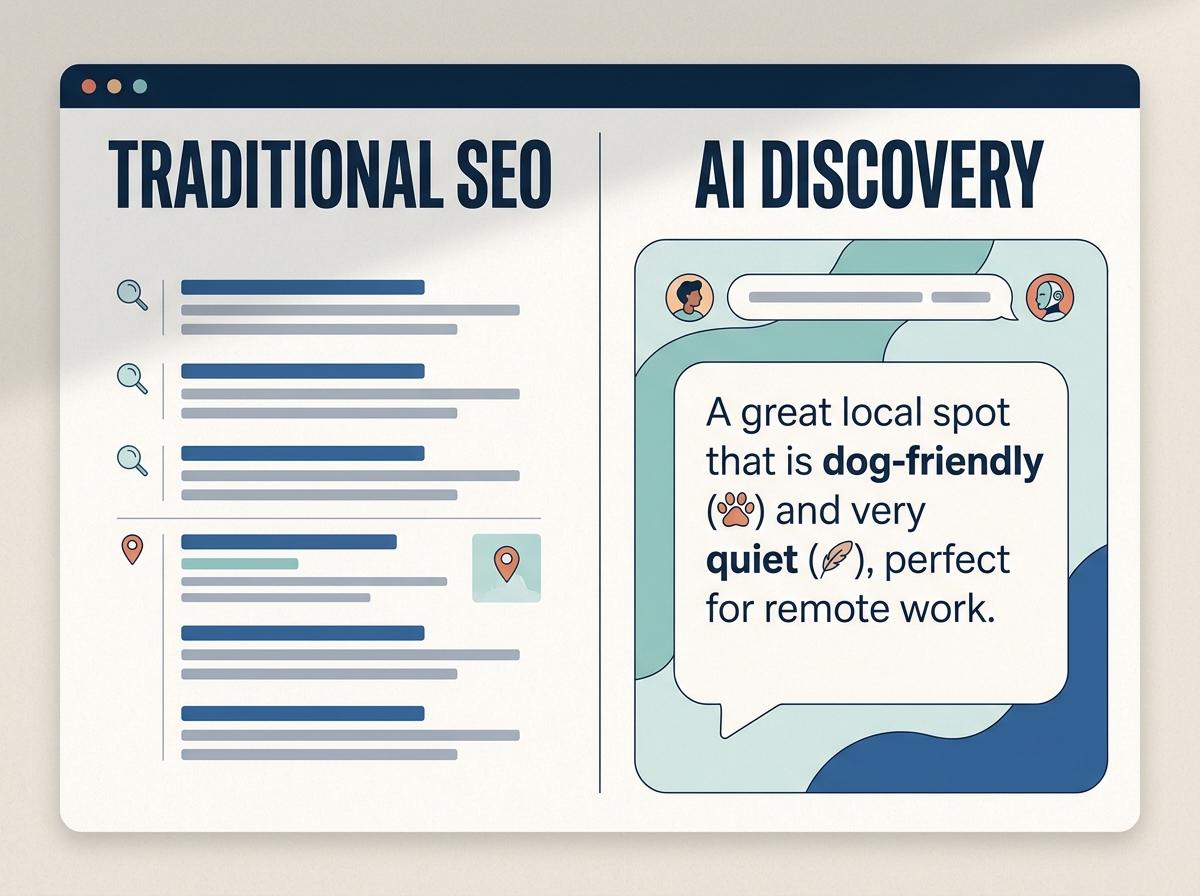
The Death of the 'Ten Blue Links' for Local Search
For a decade, local SEO was a game of citation consistency and keyword-rich descriptions on Google Business Profiles. That model is fracturing. When a user asks ChatGPT, "Where is a quiet coffee shop near me that has good Wi-Fi and allows dogs?" the AI doesn't just look for the keyword "coffee shop." It parses thousands of Yelp reviews to find mentions of "quiet atmosphere," "fast internet," and "dog friendly."
This is a fundamental shift from matching strings to matching intent. In July 2026, Google reported that its AI Max product is already unlocking billions of new monetizable searches by interpreting these complex, multi-layered queries How AI Max reshapes search intent. OpenAI’s move to ingest Yelp data is a direct counter-offensive. By leveraging Yelp’s structured data—which includes not just ratings but also specific attributes like price range, parking, and outdoor seating—ChatGPT can provide a definitive recommendation rather than a list of options.
For the social media practitioner, this means the content of your reviews is now more important than the technical metadata of your website. If your Yelp page hasn't seen a new review in three months, ChatGPT's training weights may deprioritize you in favor of a competitor with a lower overall rating but higher recent engagement. This is the new "freshness" signal in local discovery.
Why Social Media Managers Must Own the Yelp Profile
Historically, Yelp was often treated as a secondary platform, handled by customer service or ignored until a crisis occurred. That siloed approach is no longer viable. Since ChatGPT uses Yelp as its primary local knowledge base, your Yelp presence is effectively your AI brand identity.
Consider the guidance recently shared by Social Media Today regarding brand presence on TikTok: the focus has shifted toward authenticity and community-led content [S2]. The same logic now applies to local search. You cannot "hack" an LLM with keywords; you have to earn its recommendation through the collective voice of your customers.
Community managers must pivot toward active review solicitation and response. A prompt response to a negative review on Yelp isn't just a customer service win—it’s a signal to the AI that the business is operational and attentive. High-growth agencies are already noticing this shift. Havas, for instance, recently reported a 2.5% organic revenue growth in Q2 2026 after leaning into an "AI-first" identity [S5]. This identity involves moving beyond traditional media buying and into the plumbing of how AI models perceive brand value.
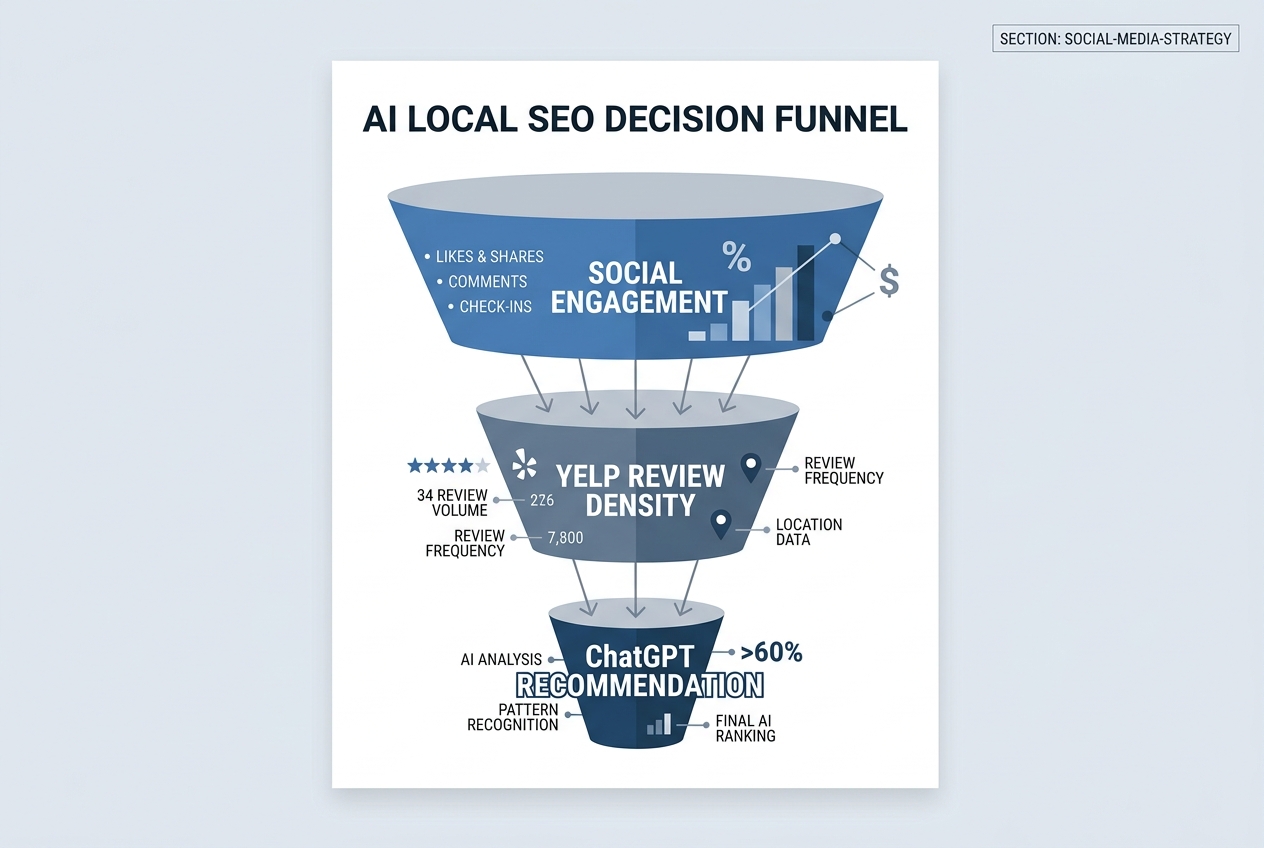
The Metrics That Matter: Volume, Velocity, and Sentiment
If you're reporting to a CMO like Brandon Cooke, who recently joined BarkleyOKRP to drive "thoughtful growth" [S3], you need to move beyond vanity metrics. In the context of the OpenAI-Yelp deal, your KPIs for local discovery should focus on three pillars:
- Review Volume: The total number of data points the LLM has to analyze. A business with 1,000 reviews provides more "confidence" to an AI model than one with 10.
- Review Velocity: How many reviews you've received in the last 30 days. AI models prioritize current information to ensure they don't recommend a business that has recently closed or declined in quality.
- Attribute Density: How often specific features of your business are mentioned in natural language. If you want to rank for "best brunch for large groups," you need to encourage customers to mention those specific words in their Yelp reviews.
This requires a coordinated social strategy. You might use Instagram Stories to poll followers on their favorite menu items, then follow up with a CTA to share that opinion on Yelp. You are essentially engineering the training data that ChatGPT will use to recommend you next week.
From Keyword Stuffing to Narrative Management
Traditional SEO focused on the "what"—e.g., "Pizza New York." AI local search focuses on the "why" and the "how." This is narrative management. When OpenAI surfaces a business, it often provides a summary: "Users love this spot for its fast service and authentic crust, though some mention it gets loud on Friday nights."
As a marketer, you have to influence that narrative. You do this by highlighting specific brand pillars across your social channels and encouraging your community to echo them. If your TikTok strategy emphasizes your "secret menu," and that secret menu starts appearing in Yelp reviews, ChatGPT will eventually associate your business with that specific niche query.
This evolution mirrors the shift we've seen in other media. For example, as YouTube on TV becomes a primary channel for marketers [S4], the focus has moved from short-form clicks to long-form brand building. Local search is following a similar path. It’s no longer about the quick click from a search result; it’s about being the definitive answer provided by an AI assistant.
Future-Proofing Your Local Strategy
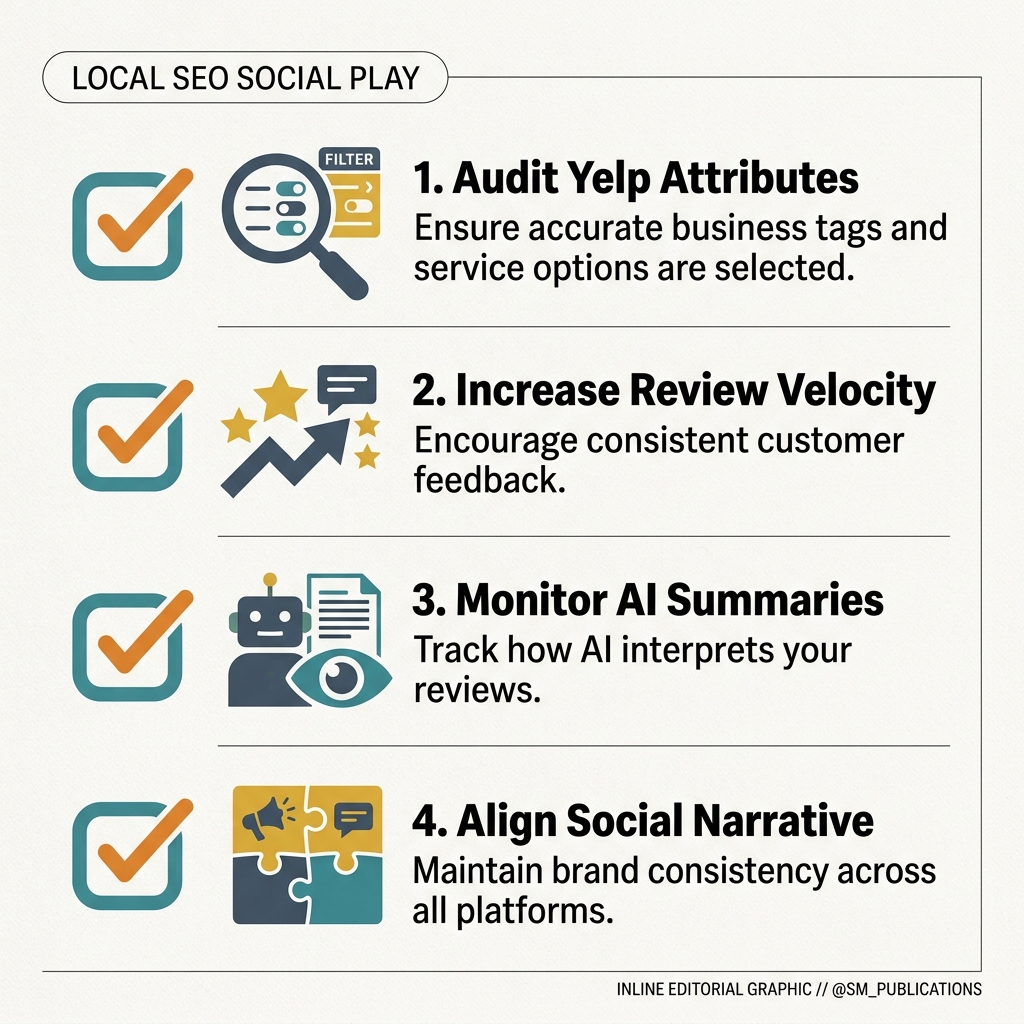
To prepare for a world where ChatGPT and other LLMs handle the majority of local discovery, social teams should take the following steps immediately:
- Audit your Yelp Presence: Ensure every attribute—from Wi-Fi availability to wheelchair accessibility—is toggled on. These are hard data points that AI models use for filtering.
- Implement a Review Loop: Create a frictionless way for your most loyal social media followers to leave reviews. Use QR codes in-store or email automation post-purchase.
- Monitor 'AI Summaries': Regularly test ChatGPT with prompts related to your business. If the summary is inaccurate or misses a key selling point, identify the Yelp reviews that might be misleading the model and address them.
- Align Social Content with Review Themes: If your customers are constantly praising your "friendly staff" on Yelp, lean into that in your social creative. Reinforcing the same message across platforms creates a stronger data signal for the AI.
We are moving toward a "Zero-Click" local search environment. In this world, the user never visits your website; they simply ask their phone for a recommendation and then tap the "Directions" button. Your only chance to influence that decision is to ensure the data the AI is reading—the social proof on Yelp—is impeccable. The OpenAI-Yelp deal isn't just a technical update; it's a mandate for social media teams to take the wheel of local discovery.
What to Watch Next
As this integration matures, expect OpenAI to introduce "Verified Business" features within ChatGPT, potentially allowing brands to pay for featured placement or to provide real-time inventory data. We are also watching for similar moves from Apple, which has long relied on Yelp for its Maps data and is now integrating its own "Apple Intelligence" across the iPhone ecosystem. The battle for the "local layer" of the internet is just beginning, and for the first time, it will be won or lost based on the quality of your community management.
FAQ