
Social media managers are increasingly finding themselves in the driver's seat of search budgets. As Meta and TikTok push deeper into intent-based signals, the wall between 'discovery' and 'search' has effectively crumbled. The latest catalyst for this convergence is the global rollout of Microsoft Advertising's AI Max. Launched in August 2026, AI Max is Microsoft's direct answer to Google's Performance Max (PMax), promising a unified, AI-driven approach to Search, Audience, and Retail Media placements.
For a social buyer, the question isn't just about which platform has more volume—it's about which 'black box' offers the controls necessary to maintain brand integrity and hit ROAS targets without burning through creative resources. Google has had a multi-year head start, but Microsoft is banking on its deep integration with the Bing-OpenAI ecosystem to lure away disgruntled PMax users who are tired of the lack of transparency.
Why it matters: As automated bidding becomes the industry standard, your value as a marketer shifts from manual optimization to strategic oversight. Choosing the wrong automated engine can lead to wasted spend on low-intent placements or brand safety risks that take weeks to identify in opaque reporting dashboards.
Key takeaways:
- Microsoft AI Max offers superior integration with professional data (LinkedIn) and a potentially lower CPC environment, though it lacks the sheer scale of Google's YouTube and Gmail reach.
- Google PMax remains the powerhouse for high-volume retail, but its 'all-or-nothing' approach to reporting continues to frustrate performance buyers.
- Creative Automation is the new battlefield; Microsoft's landing page optimization tools are currently more aggressive than Google's, often rewriting copy to match real-time search intent.
The Spec Sheet: Microsoft AI Max vs. Google PMax
Before we dive into the strategic nuances, let's look at how these two products stack up on paper. While both aim for the same goal—maximizing conversions across all available inventory—their underlying infrastructure differs significantly.
| Feature | Microsoft AI Max | Google Performance Max |
|---|---|---|
| Core Inventory | Bing Search, MSN, Outlook, LinkedIn (limited), Retail Media | Google Search, YouTube, Gmail, Maps, Display, Discover |
| Creative Input | Assets, Landing Page URL, LinkedIn Profile Data | Text, Images, Video, Product Feeds |
| Targeting Basis | AI-driven intent + LinkedIn professional signals | Audience Signals + Google Graph data |
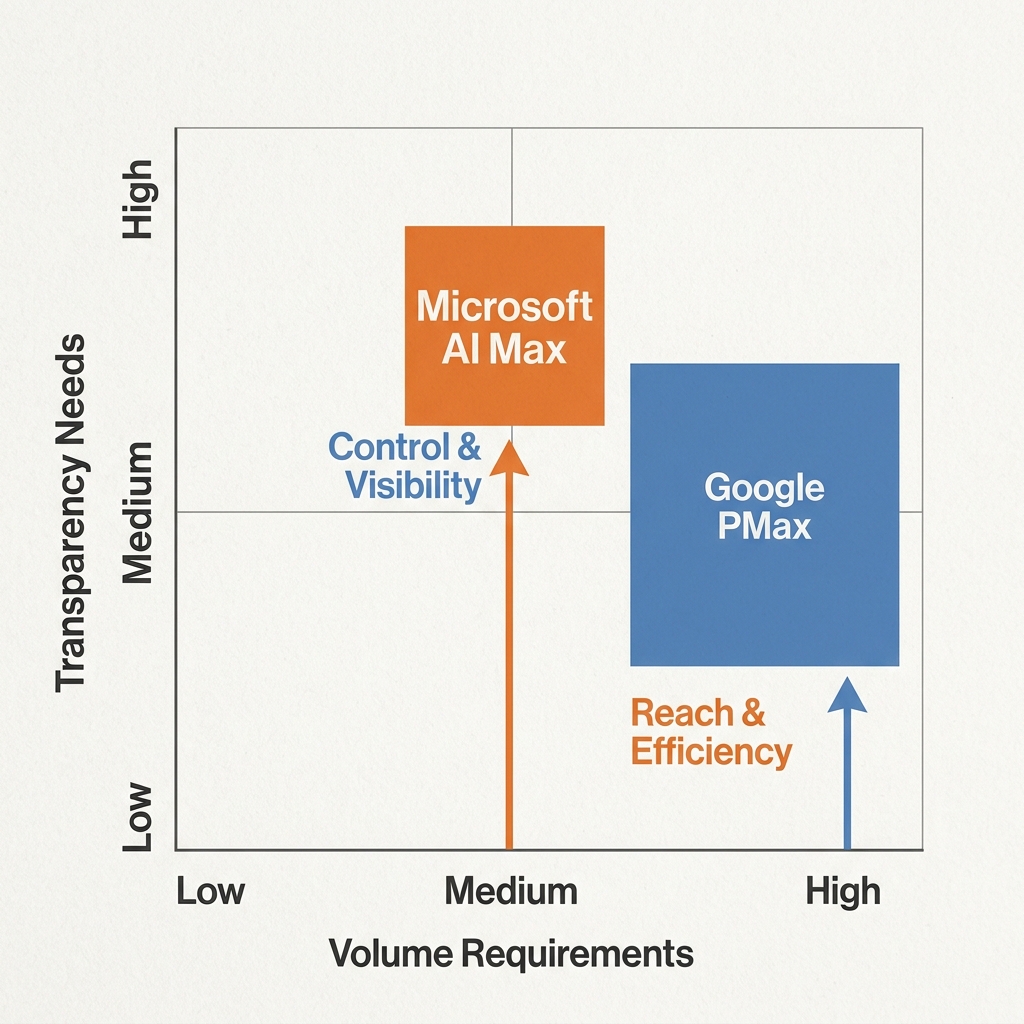
| Transparency | High (Placement reports available early) | Moderate (Improving, but historically opaque) |
| Primary Strength | B2B targeting and lower competition | Unrivaled scale and video integration |
| Global Availability | Full rollout as of August 2026 | Industry standard since 2021 |
Creative Automation: The End of the Static Ad
For social teams, creative is the lever. In Meta Ads Manager, you're used to testing hooks and visual styles. In the world of AI Max and PMax, the machines are doing the testing for you—sometimes with your permission, and sometimes without.
Google PMax has long used 'Asset Groups' to mix and match headlines, descriptions, and images. However, the recent August 2026 updates to Microsoft AI Max have raised the stakes. Microsoft now uses what they call 'Dynamic Landing Page Optimization.' It doesn't just change the ad copy; it can theoretically adjust the messaging on the destination page to match the user's search query, provided you've granted the platform access to your site's metadata.
How Meta's AI creative tools compare to search automation
This is a double-edged sword. While it can skyrocket conversion rates by reducing friction, it terrifies brand managers. If you are managing a brand with strict legal compliance—such as the cannabinoid brands mentioned in recent MediaPost reports regarding marketing misuse—giving an AI the keys to your landing page copy is a non-starter. Google PMax offers more 'brand exclusions' and 'negative keyword' controls at the account level, which currently makes it a safer bet for highly regulated industries.
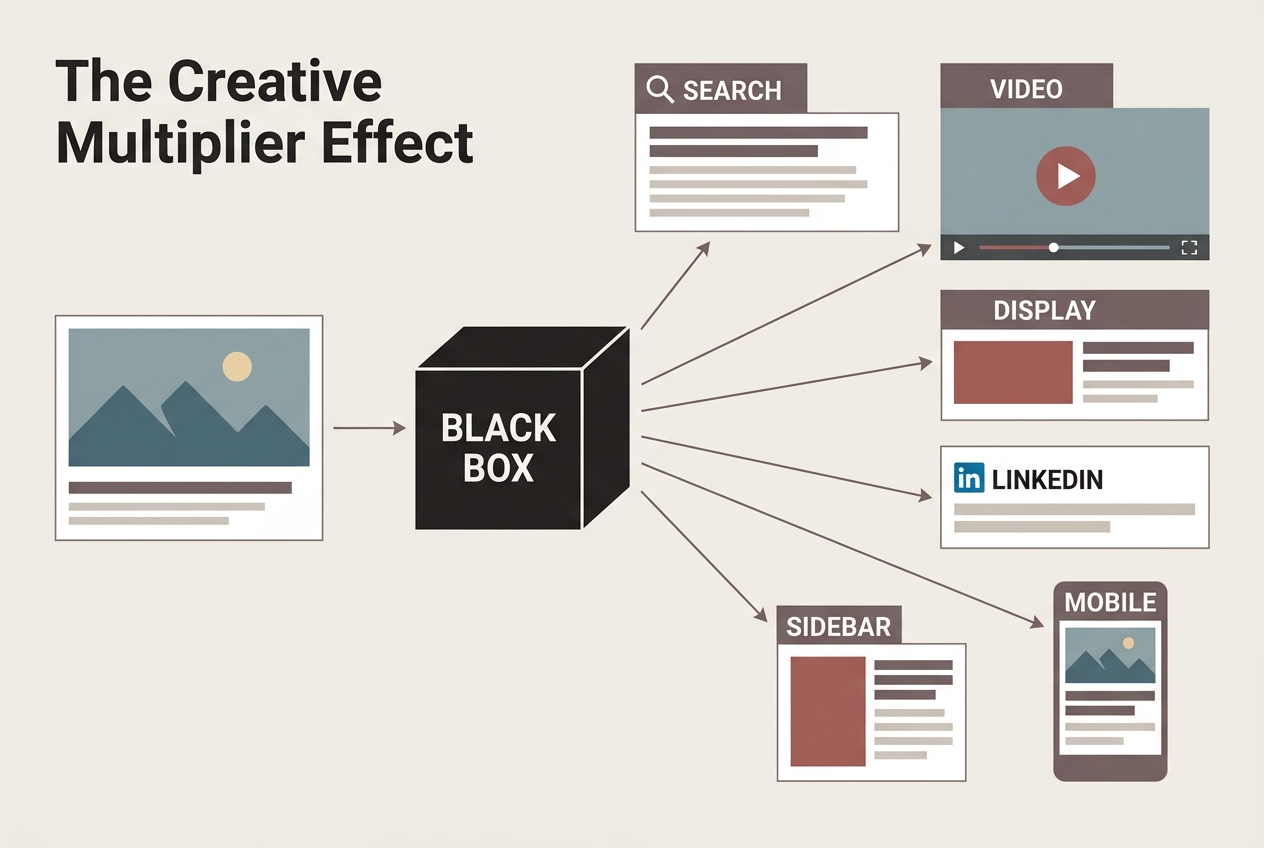
The 'Black Box' Problem: Reporting and Transparency
Social buyers are accustomed to granular data. We want to know which creator's video drove the lift and which comment thread converted. Performance Max has been notoriously stingy with this data. For years, marketers complained that PMax was a 'trust me' product, hiding where ads actually ran to mask a reliance on cheap, low-quality Display inventory.
Microsoft AI Max is attempting to win by being the 'honest' alternative. From day one of the global rollout, Microsoft has provided more detailed placement reports. You can see, for instance, how much of your budget went to Bing Search versus the Microsoft Audience Network (MSAN). This is crucial for social teams who might be using AI Max to supplement their LinkedIn efforts. If you see your budget bleeding into low-quality MSN slideshows, you can pull the plug—a luxury that PMax users didn't have for a long time.
However, Google isn't sitting still. Since the deprecation of third-party cookies and the sunsetting of tools like CrowdTangle in the Meta ecosystem, Google has leaned into 'Search Themes' within PMax. This allows you to provide the AI with specific directions on which search categories matter most, effectively re-inserting a human element into the black box.
Targeting Nuances: LinkedIn Signals vs. The Google Graph
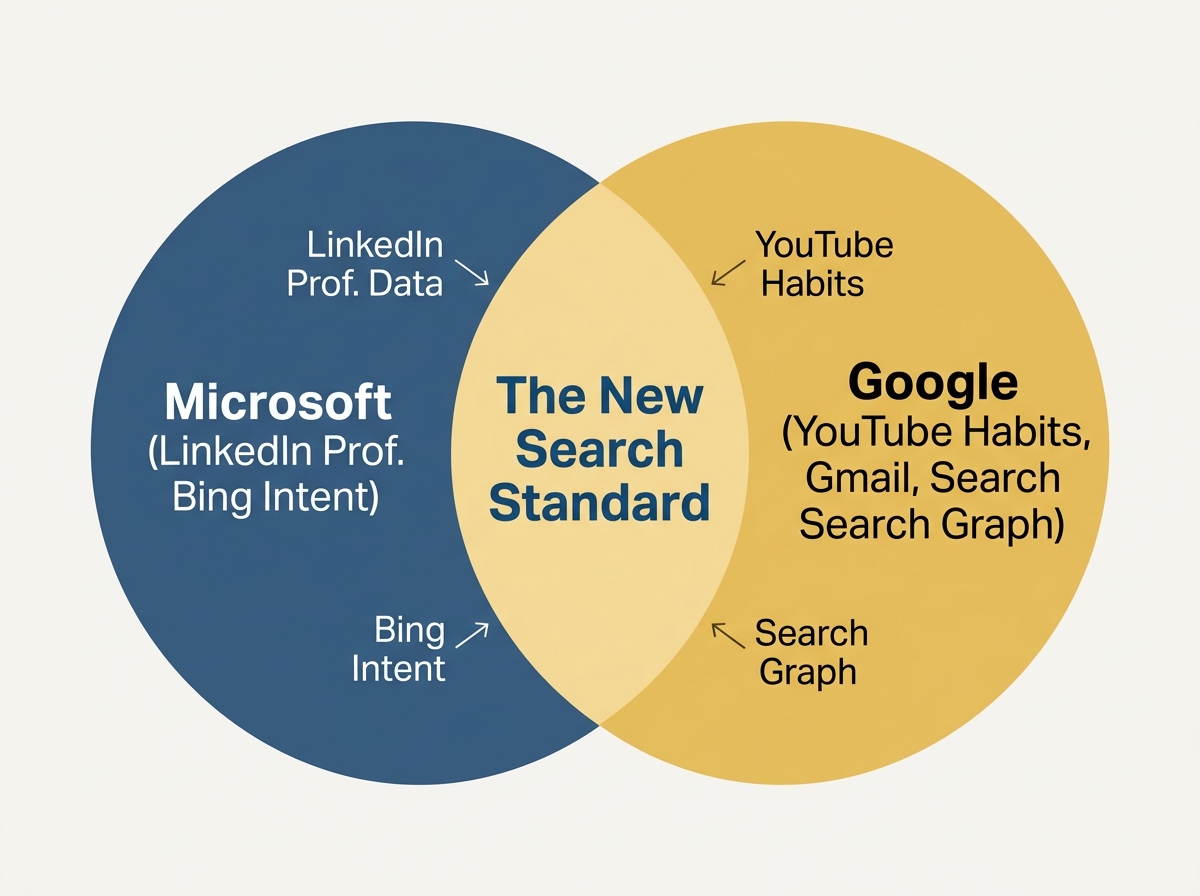
If you're a B2B marketer or a high-end service provider, Microsoft AI Max has a unique weapon: LinkedIn data. Because Microsoft owns LinkedIn, AI Max can leverage professional profile data—job titles, company size, industry—to inform its search bidding.
Imagine you're running a campaign for a SaaS product. Google PMax will find users who are 'interested in software.' Microsoft AI Max will find 'CTOs at mid-sized firms who are currently searching for cloud solutions.' For social teams who already spend heavily on LinkedIn, AI Max acts as a powerful extension of that strategy, capturing the intent that LinkedIn's feed-based environment often misses.
Conversely, Google's advantage is its omnipresence. A study published in August 2026 by Search Engine Land noted that Gemini-powered search citations are increasingly dominated by business websites, but the results are highly volatile. Google PMax thrives on this volatility, using its massive data set to predict intent before the user even finishes typing their query. If your goal is mass-market retail or B2C lead generation, the Google Graph is simply too large to ignore.
Workflow Integration: Who Manages the Spend?
One of the biggest friction points we see in agencies is the 'ownership' of these automated products. Does PMax belong to the search team or the social team? Because PMax requires video assets (YouTube) and high-quality imagery (Discovery), it often falls into the lap of social media managers who own the creative pipeline.
Microsoft AI Max is designed to be even more cross-functional. Its interface is arguably simpler than the aging Google Ads UI, mimicking the 'campaign objective' flow found in Meta Ads Manager. For a social buyer who finds the Google Ads 'Expert Mode' intimidating, Microsoft's streamlined setup is a breath of fresh air.
[INTERNAL: The rise of the 'Full-Stack' social buyer -> full-stack-marketer-trends]
However, the integration with existing tech stacks is where Google wins. Most social teams are already using tools like Sprout Social or Hootsuite for organic, and potentially Sprinklr for paid. Google's API is the industry standard; every major third-party reporting tool handles PMax data natively. Microsoft AI Max is still catching up. If your reporting workflow relies on automated dashboards, you might find Microsoft's data exports a bit clunkier in these early months of the global rollout.
The ROAS Verdict: Which Should You Fund?
We've spent the last few weeks analyzing early beta data and cross-referencing it with the August 2026 rollout specs. The reality is that these shouldn't necessarily be an 'either/or' choice, but rather a 'sequence' choice.
Pick Google PMax if:
- You have a massive library of video content and want to dominate YouTube.
- You are a high-volume e-commerce brand with a deep Google Merchant Center feed.
- You need the most sophisticated automated bidding algorithms in the world and are willing to sacrifice some transparency to get them.
Pick Microsoft AI Max if:
- You are in B2B and want to leverage LinkedIn professional data without the high LinkedIn CPCs.
- You are tired of the PMax 'black box' and want more granular placement reporting.
- You are looking for 'blue ocean' opportunities where your competitors haven't yet bid up the cost of entry.
Final Strategic Advice for Social Teams
Don't let the 'Search' label fool you. Both Microsoft AI Max and Google PMax are creative-first platforms. The algorithm can only do so much with mediocre assets. If you're moving budget into these products, your first priority should be an 'Asset Audit.'
Ensure your images aren't just repurposed Instagram posts with text overlays that will get cropped in a search result. Ensure your videos have a clear call-to-action within the first three seconds, as they'll often be served as skippable pre-roll on YouTube or MSN.
Creative auditing for automated placements
Most importantly, watch your 'Brand' spend. Both platforms have a tendency to bid on your own brand name to inflate their ROAS numbers. It's the oldest trick in the automated bidding book. Set up brand exclusions immediately. If you don't, you're just paying Microsoft or Google for traffic you would have gotten for free through organic search.
As we move into the final quarter of 2026, the battle for the 'automated desktop' will only intensify. Microsoft has finally built a credible alternative to the Google hegemony. For the social buyer, this competition is a gift—it forces transparency, lowers costs, and ultimately gives us more places to put our best creative to work.
What to Watch Next
The next six months will be telling. Watch for Microsoft to integrate more 'Copilot' features directly into the ad creation process, potentially allowing you to generate ad variants using DALL-E 3 directly inside the Microsoft Advertising dashboard. Meanwhile, keep an eye on Google's response to the Gemini citation studies; if Google starts prioritizing its own AI-generated answers over paid links, the value of PMax search inventory could shift overnight. Stay agile, keep your brand exclusions tight, and never stop testing the 'black box.'
FAQ