
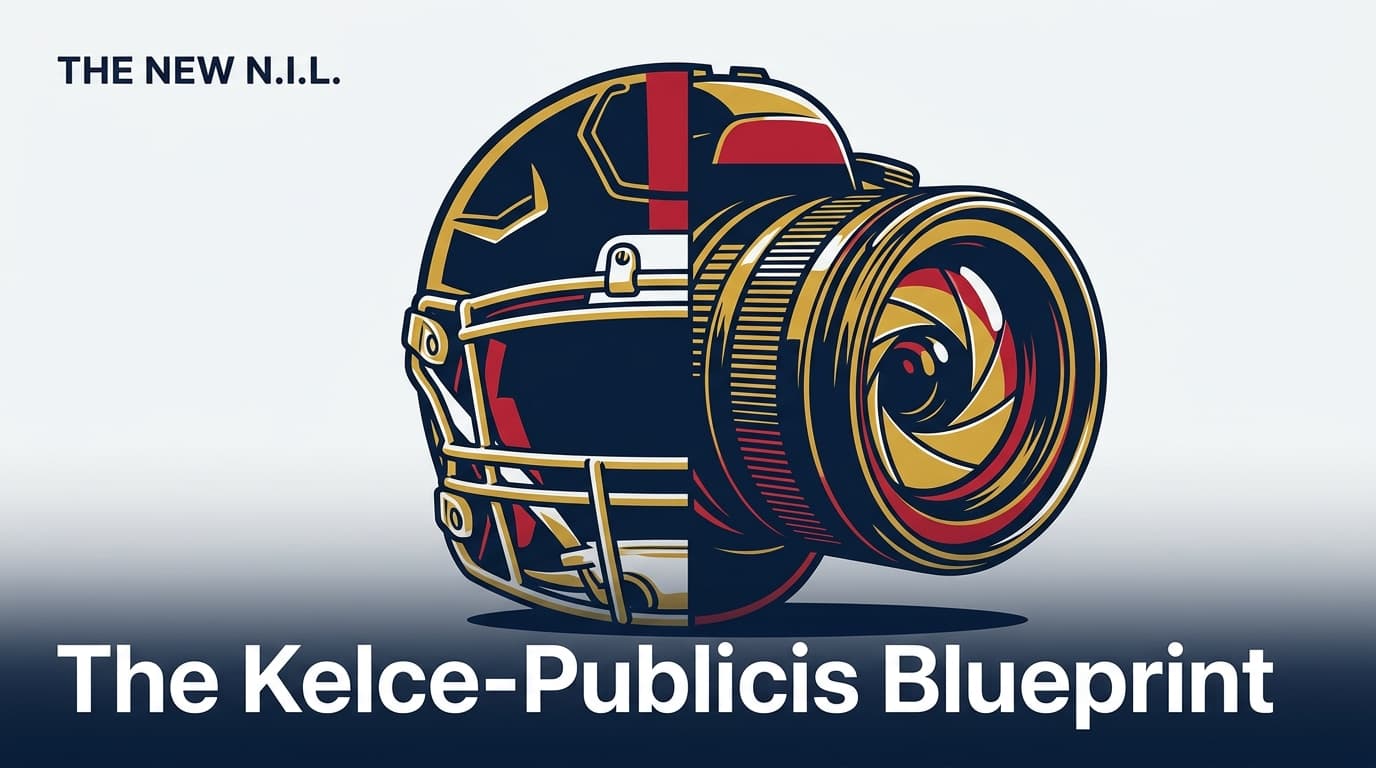
Travis Kelce’s recent partnership with Publicis Sports and 3 Arts Sports isn't a vanity project or a simple talent-rep extension; it is a calculated industrialization of the Name, Image, and Likeness (NIL) market. By bridging the gap between elite athlete branding and agency-side procurement, this deal effectively ends the 'Wild West' era of NIL. It signals a shift where athlete influencer marketing moves from high-risk celebrity gambles to a predictable, data-backed social media strategy accessible to mid-market brands.
Key takeaways
- Institutionalization of NIL: The deal moves NIL from fragmented agent-led negotiations to a systematic agency-integrated pipeline.
- The 'Kelce Effect' for Mid-Market: Brands with mid-tier budgets can now access 'authentic' athlete creators through a vetted ecosystem rather than chasing expensive Super Bowl spots.
- Creator-First Athlete Content: The focus is shifting from static endorsements to dynamic, social-first content that prioritizes audience engagement over traditional reach.
- AI-Enhanced Matchmaking: The partnership leverages predictive analytics to ensure athlete-brand alignment, reducing the risk of 'cringe' or misaligned sponsorships.
Why the Publicis-3 Arts Alliance Kills the Traditional NIL Agent Model
For the last three years, NIL has been a mess of disparate collectives, over-eager parents, and agents who didn't understand social-first content. The Travis Kelce Publicis deal changes the math by placing the athlete at the center of a professionalized supply chain. When a holding company like Publicis—which manages billions in media spend—aligns with a talent powerhouse like 3 Arts, they aren't just looking for one-off posts. They are building a factory for athlete-led content.
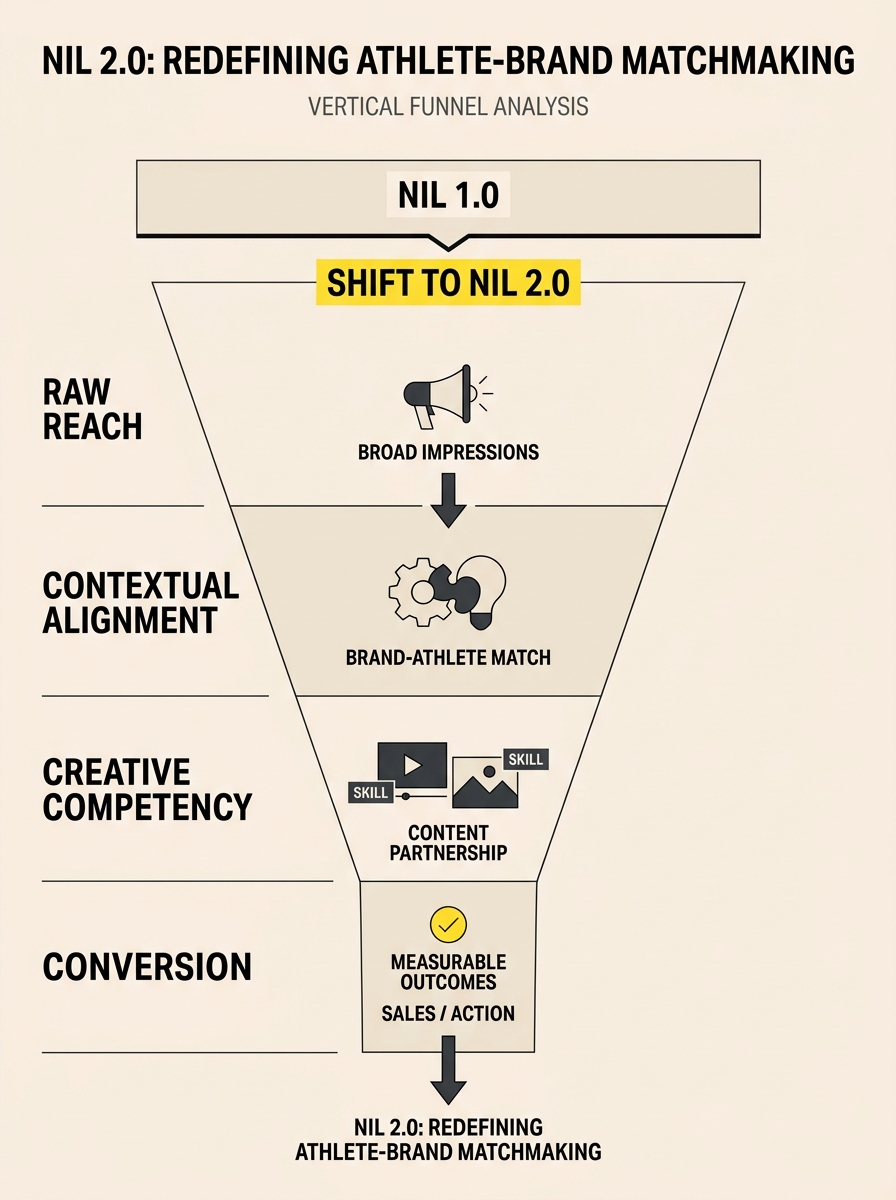
This matters because traditional sports marketing has always suffered from a 'celebrity tax.' You paid for the name, not the performance. In the new NIL 2.0 landscape, the focus is on the 'sports-creator.' These are athletes who understand the mechanics of TikTok and Instagram Reels as well as they understand their playbook. According to recent industry benchmarks, athlete-led content on social media sees a 2.4x higher engagement rate compared to standard brand-produced creative. Publicis knows this. By formalizing a matchmaking service, they are offering their clients a shortcut to that engagement without the friction of traditional talent scouting.
We've seen similar attempts at scale before, but never with this level of agency-side integration. While platforms like Opendorse or INFLCR provided the marketplace, Publicis provides the strategy. This isn't just a directory; it's a curated menu of athletes who have been pre-vetted for brand safety and creative competency. For a social media manager at a mid-market consumer packaged goods (CPG) brand, this removes the single biggest barrier to entry: the fear of the unknown.
The Rise of the 'Authentic' Mid-Tier Athlete Creator
We need to stop talking about NIL as if it’s only about $1 million deals for starting quarterbacks. The real value in the Kelce-Publicis framework lies in the 'middle class' of college and professional sports. These are athletes with 50,000 to 200,000 followers who have deep, localized influence. They are the 'authentic' voices that brands crave but often struggle to find at scale.
How to measure influencer authenticity in 2026
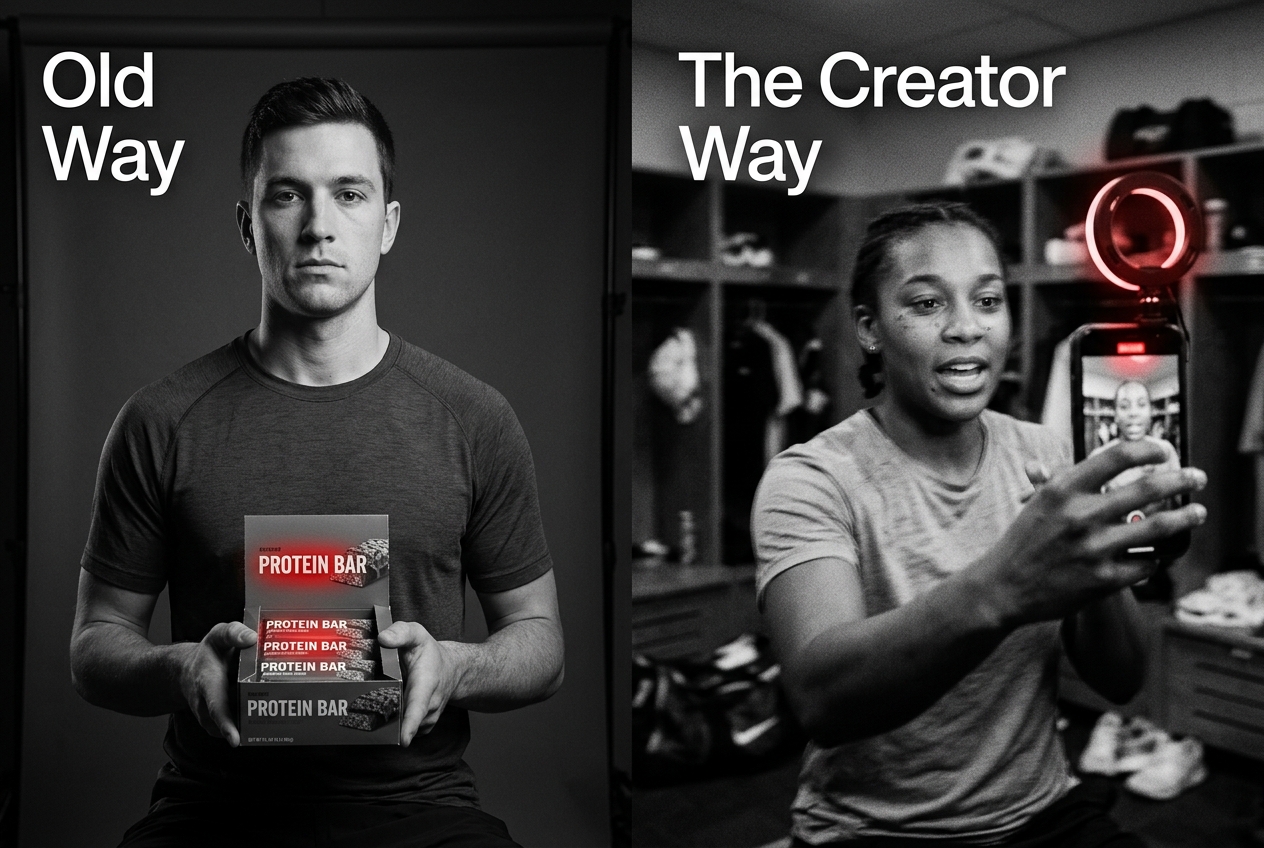
Consider the shift in content requirements. A decade ago, an athlete deal meant a billboard and a 30-second TV spot. Today, it means a 15-day 'day in the life' series on TikTok, three Instagram Collab posts, and a series of reactive X threads during game days. This requires a different kind of athlete—one who is comfortable behind a ring light. The Kelce-Publicis deal specifically targets this creative gap. By providing athletes with the resources of 3 Arts—a firm known for developing comedic and creative talent—they are essentially turning athletes into professional social media producers.
This is where mid-market brands win. You don't need Travis Kelce’s $20 million price tag to get the 'Kelce effect.' You need the framework he’s helping build. By using the same creative standards and matchmaking data that Publicis uses for its top-tier clients, mid-market brands can deploy 'mini-Kelces' across niche sports and regional markets. The data from Memeburn’s 2026 social trends report [S3] suggests that niche community engagement is now 30% more effective at driving conversion than broad-reach celebrity campaigns. The Kelce-Publicis deal is the infrastructure that makes that niche reach possible.
The Counterargument: Is Institutionalization Killing the 'Realness'?
Critics argue that by involving a massive agency like Publicis, the very 'authenticity' that makes NIL valuable will be polished away. There is a valid fear that we are moving toward a world of 'corporate athletes' whose every post is sanitized by a committee of agency suits. If every athlete-creator is following a Publicis-approved playbook, won't they all start to look the same?
It’s a fair point. We’ve all seen the 'ad-heavy' Instagram feed of a professional golfer that feels more like a brochure than a human being. However, this perspective ignores the reality of the current creator economy. The most successful creators—think MrBeast or Emma Chamberlain—are highly professionalized. They use data, they have teams, and they follow rigorous content structures.
Professionalization doesn't kill authenticity; it kills amateurism. The Kelce-Publicis deal isn't about making athletes less real; it's about making them more reliable. For a brand lead, 'authenticity' is useless if the athlete misses a posting window or fails to disclose a sponsored post correctly. The agency involvement provides the guardrails that allow authenticity to scale. As Hootsuite’s 2026 AI tools report [S1] highlights, the use of AI in social listening allows brands to identify the exact moments when an athlete’s voice resonates most with an audience. Publicis isn't muting the athlete; they are amplifying the parts that work.
Moving Beyond Search Volume: The Contextual NIL Strategy
One of the biggest mistakes in NIL 1.0 was relying on raw follower counts—the social media equivalent of search volume. As Search Engine Journal recently noted [S4], raw volume is often a screen that hides the best content opportunities. The same applies to athlete influencer marketing. A linebacker at a mid-tier state school might have a tenth of the followers of a benchwarmer at Alabama, but if that linebacker is the 'king of campus' on TikTok, his contextual value is infinitely higher.
This is where the 'matchmaking' element of the Kelce deal becomes a competitive advantage. Publicis is moving toward a contextual relevance model. Instead of asking 'Who is the biggest athlete we can afford?', they are asking 'Which athlete is the center of the conversation our target customer is already having?' This requires a level of social listening and data analysis that most talent agencies simply don't possess.
For example, if a brand is looking to target 'weekend warriors' who are into home fitness, they shouldn't just look for a famous athlete. They should look for the athlete whose workout-prep videos are being saved and shared within that specific subculture. The Kelce-Publicis partnership is designed to surface these contextual matches, moving NIL marketing strategy away from a popularity contest and toward a precision tool.
How to Apply the Kelce Framework to Your 2027 Budget
If you are a brand marketing lead or an agency strategist, you shouldn't wait for a formal invitation to the Publicis ecosystem to start adapting. The Kelce deal provides a blueprint for how you should be vetting your own athlete partnerships.
First, stop looking at athletes as 'spokespeople' and start treating them as 'creative partners.' If an athlete doesn't have a clear POV on social media before you sign them, they won't magically develop one after you hand them a contract. Look for the 'creators who happen to play sports,' not the 'athletes who are forced to do social.'
Second, demand better data. The '9 AI Search Myths' report [S5] reminds us that what we think influences ranking (or in this case, social reach) is often disconnected from reality. Don't settle for 'reach' and 'impressions.' Ask for 'save rates,' 'completion rates' on video content, and 'sentiment shifts' within the comments section. This is the data that Publicis will be using to prove the ROI of the Kelce-led deals, and it’s the data you need to justify your own NIL spend.
[INTERNAL: The new ROI metrics for social-first video -> video-marketing-roi]
Finally, think vertically. The Kelce-Publicis deal isn't just about football. It’s about the democratization of sports influence across every discipline, from pickleball to esports. The infrastructure they are building will eventually trickle down to every level of the game. By adopting a 'creator-first' NIL marketing strategy now, you are positioning your brand to take advantage of the market correction that is currently underway.
The Prediction: The Death of the 'Celebrity Endorsement'
Here is my falsifiable prediction for the next 24 months: By the end of 2027, the traditional 'celebrity endorsement'—where an athlete simply appears in an ad without creative input—will account for less than 15% of total NIL spend. The remaining 85% will be 'creator-led' partnerships where the athlete is the primary producer of the content.
We will see a mass exodus of brands from high-priced, low-engagement celebrity deals in favor of the systematic, mid-market approach pioneered by the Kelce-Publicis alliance. The brands that win won't be the ones with the biggest checks, but the ones who successfully integrated their products into the digital lives of athletes who actually know how to talk to a camera.
Travis Kelce isn't just playing matchmaker; he’s officiating the wedding between sports and the creator economy. It’s time for brands to decide if they want to be on the guest list or if they’re content to stay in the past.
FAQ