
Can you actually tell if a post was written by an AI? For the last eighteen months, social media managers have lived in a state of low-grade anxiety, fearing that a 'Made with AI' label might spontaneously appear on their carefully crafted LinkedIn thought-leadership or that a platform's hidden detector might shadowban their brand for using Claude to brainstorm hooks.
Anthropic recently pulled back the curtain on how it watermarks Claude’s output. While the technical reveal was framed as a step toward transparency, it served as a definitive autopsy for the dream of reliable AI detection. The watermark isn't a digital seal of authenticity; it is a fragile statistical pattern that breaks the moment you touch it.
Why it matters: If a sophisticated system like Anthropic’s can be defeated by a simple prompt change or a light edit, your brand's defense against 'AI-slop' accusations cannot be a software tool. It must be a workflow. Relying on detection tools to vet agency work or internal drafts is no longer a viable strategy—it's a liability.
Key takeaways
- Watermarking is statistical, not visual: Anthropic uses 'token biasing' to create a pattern that software can recognize but humans can't see.
- The 'Bypass' is trivial: Simple rephrasing, translating, or even asking Claude to 'write in a different style' effectively wipes the watermark.
- Detection is a dead end: As of August 2026, third-party AI detectors remain high-noise, high-error tools that provide a false sense of security.
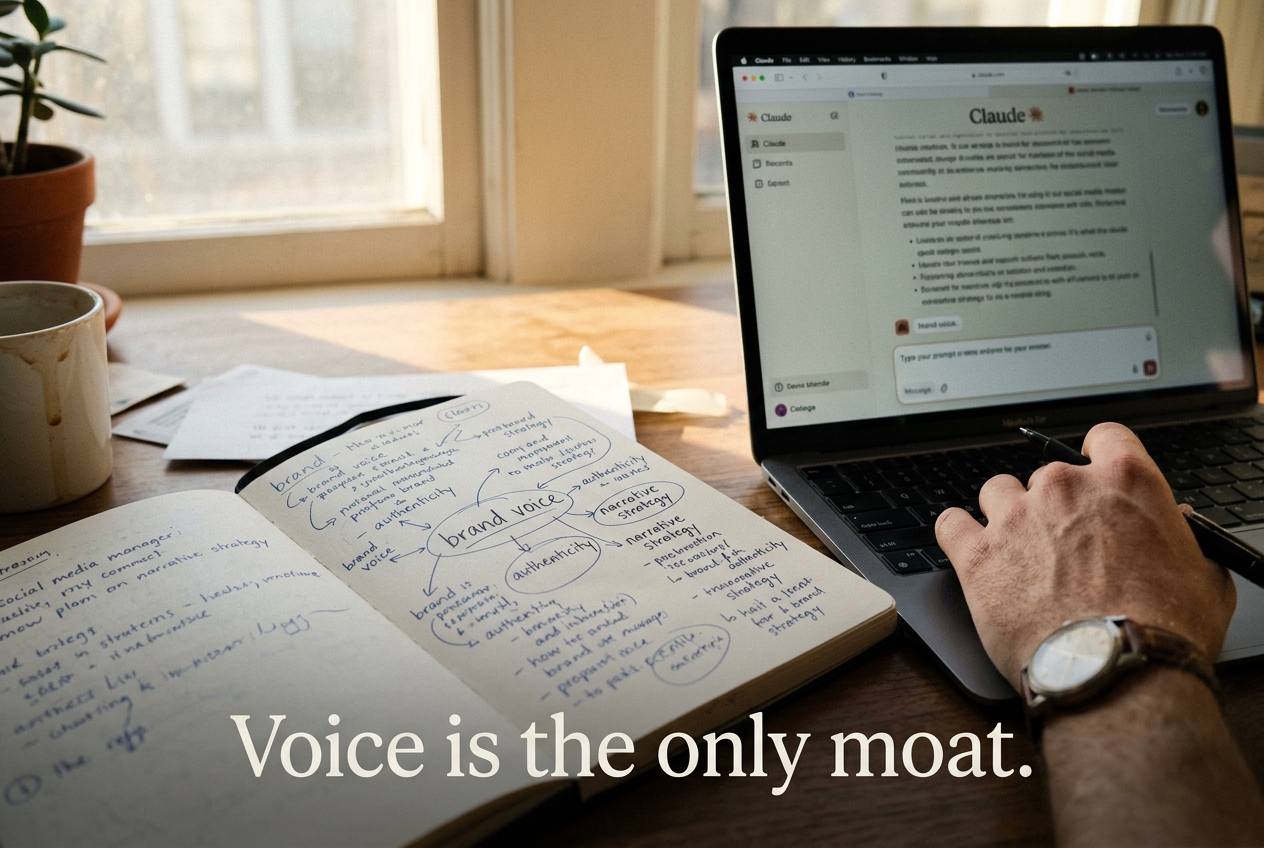
- Voice is the only moat: Editorial verification and a distinct brand voice are the only ways to ensure content resonates as human-led.
The Anatomy of a Ghost: How Claude’s Watermark Works
To understand why detection is failing, you have to understand the 'token.' LLMs don't see words; they see numerical representations of text fragments. When Claude generates a response, it predicts the next token in a sequence based on probability.
Anthropic’s watermarking, as detailed in recent technical disclosures reported by Search Engine Journal in August 2026, involves a process called 'bias injection.' The model doesn't just pick the most likely next word; it slightly nudges the probability in favor of a specific subset of tokens. Think of it like a deck of cards where all the red cards have a microscopic, invisible indentation. If you deal enough hands, a computer can look at the distribution of cards and tell you, with high statistical confidence, that this specific deck came from Anthropic’s 'factory.'
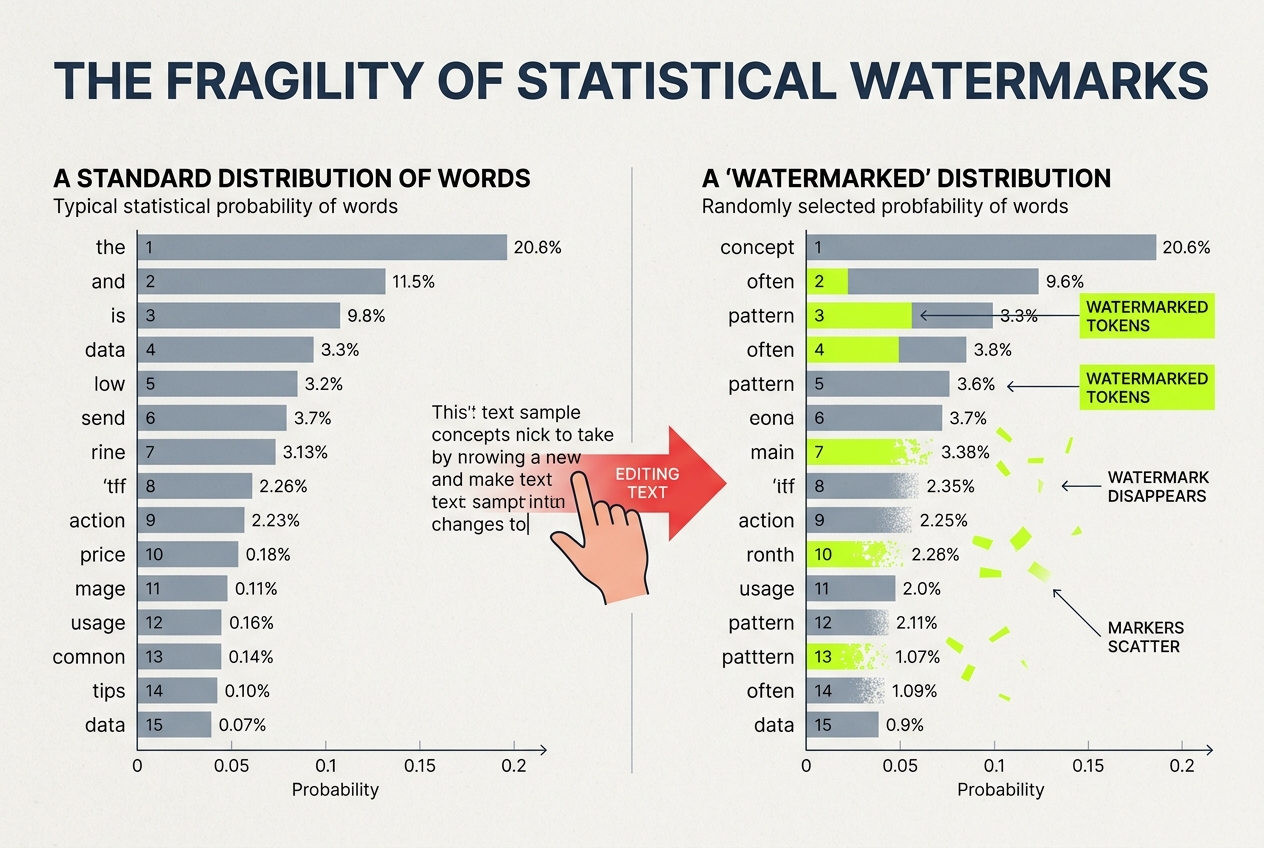
However, this isn't a metadata tag. It’s not like the EXIF data on a photo that tells you the shutter speed and GPS coordinates. It is a subtle skewing of word choice. If you ask Claude to write a caption about a new product launch, the watermark is baked into the very rhythm of the sentences. But because it relies on the sequence of tokens, the moment that sequence is interrupted, the watermark begins to dissolve.
The Triviality of Defeat: Why Detection Fails
Anthropic didn't just explain how the watermark works; they acknowledged how it breaks. This is the part that should keep social strategists up at night. Per the platform's own findings, the watermark is 'fragile' under common editing conditions.
If you take a paragraph from Claude and change three adjectives, you’ve likely broken the statistical chain required for a detector to flag it. If you ask the AI to 'rewrite this in the style of a cynical 1950s noir detective,' the token distribution changes so radically that the watermark often disappears entirely.
[INTERNAL: The rise of AI-driven social workflows -> ai-social-media-content-creation-tools]
Even more concerning for global brands: translation kills the watermark. If your head of social in London generates a post in English and your regional manager in Tokyo translates it into Japanese using a different tool, the Anthropic signature is gone. We are effectively playing a game of digital cat-and-mouse where the mouse has a jetpack.
For social media managers, this creates a dangerous vacuum. If the platforms (Meta, TikTok, X) can't reliably detect the watermark, they are left with two choices: label everything that looks like AI (leading to false positives) or give up on labeling text altogether.
The Detection Trap: Why Your Brand Should Stop Using AI Checkers
You’ve seen them: GPTZero, Copyleaks, and the dozens of Chrome extensions promising to 'spot the bot.' In a world where Anthropic admits their own internal watermarking is easily bypassed, these third-party tools are essentially digital dowsing rods.
They rely on 'perplexity' and 'burstiness'—measures of how predictable and varied text is. The problem? Good professional writing is often highly structured and clear, which these tools frequently misidentify as AI-generated. Conversely, a 'prompt-engineered' AI output designed to be chaotic will sail right through.
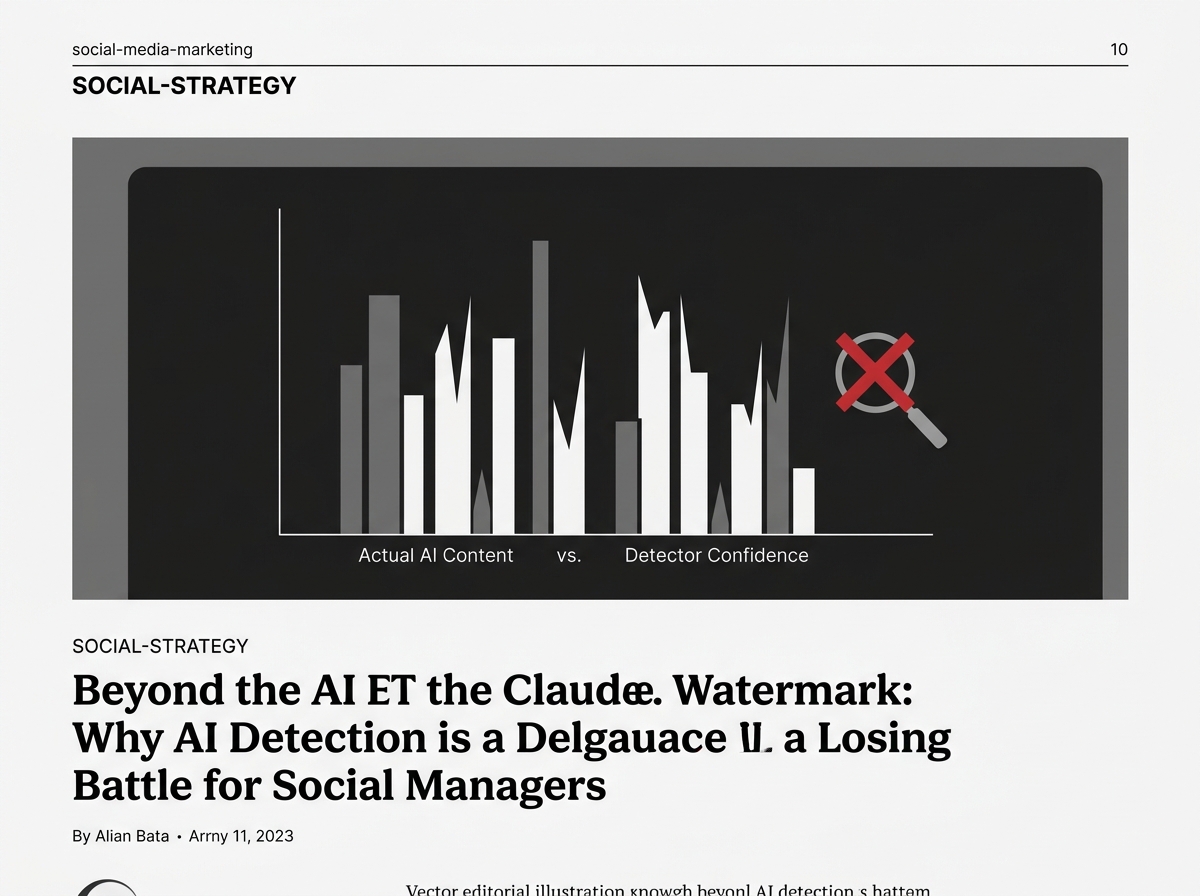
When you run an agency's copy through an AI detector and it comes back '34% likely to be AI,' what do you actually do with that information? You can't prove it, and the agency can't disprove it. It creates a culture of distrust based on a metric that Anthropic’s own technical data suggests is fundamentally flawed.
Instead of chasing a percentage, social teams need to look at the 'hallmarks of slop.' AI tends to over-use certain transition words (the 'furthermores' and 'moreovers' of the world) and leans heavily on balanced, three-part lists. These are editorial failures, not technical ones.
Shifting from Detection to Editorial Verification
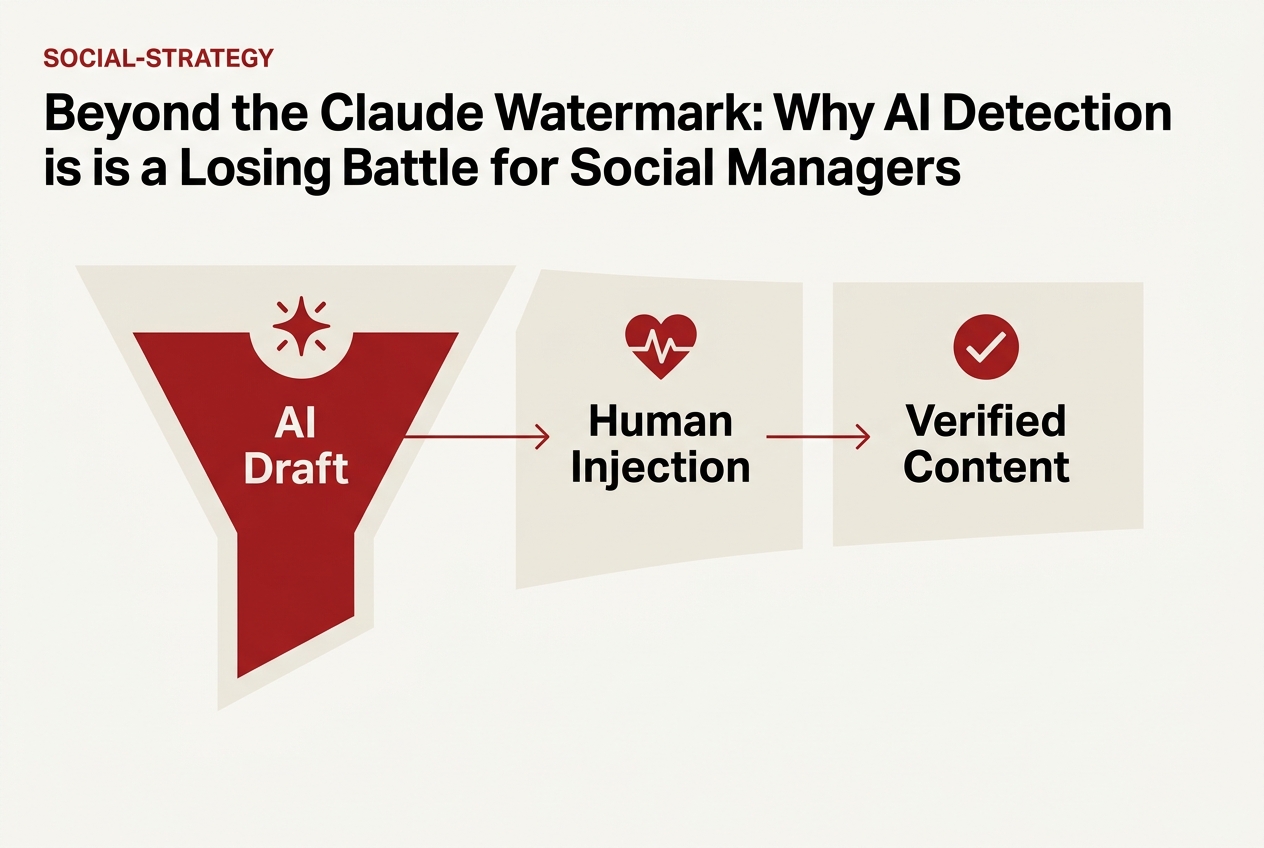
If we accept that the Anthropic watermark is a ghost, the focus must shift to what we call 'Editorial Verification.' This is the process of ensuring that every piece of content—regardless of how it was drafted—passes a human-centric quality bar.
How the UK government is hiring for TikTok
This isn't just about avoiding 'AI-ness.' It’s about maintaining brand equity. As noted in recent Trend Hunter reports on social media marketing tools, the brands winning in 2026 are those that lean into 'hyper-human' elements: specific anecdotes, controversial takes, and unique data points that an LLM couldn't possibly know.
Step 1: Establish a 'Human-Only' Fact Layer
AI can write a great hook, but it can't tell you what happened in your 10:00 AM product sync. Require your social managers to anchor every AI-assisted post with a 'Primary Source' element—a quote from a real employee, a specific internal metric, or a photo from the office.
Step 2: The 'Voice Stress Test'
Most AI output sounds like a polite, mid-level consultant. If your brand voice is 'irreverent,' 'scientific,' or 'minimalist,' the AI will struggle to hit the mark without heavy editing. If a post sounds like it could belong to any of your competitors, it’s not ready to publish, AI-generated or not.
Step 3: Transparency Over Detection
Instead of trying to hide AI usage, be transparent about the workflow. 'Drafted by Claude, polished by our Social Lead' is a more honest and brand-safe approach than trying to scrub watermarks that might be invisible anyway.
The Future of Authenticity in a Post-Watermark World
We are moving toward a 'Zero Trust' environment for digital text. By the time the November 2025 algorithm updates rolled out across major platforms, we already saw a shift in how engagement was weighted. Platforms are increasingly prioritizing 'Originality Signals'—signals that content is sparking unique conversations rather than just filling a feed.
Anthropic’s watermark reveal is a gift to social managers, though it might not feel like it. It proves that the 'AI vs. Human' war won't be won by software. It will be won by editors who know their audience better than a probability engine ever could.
Stop worrying about whether Claude left a fingerprint on your copy. Start worrying about whether your copy has a soul. If the watermark is a ghost, your brand voice is the only thing that’s real.
How to Apply This to Your Social Strategy Tomorrow
Don't wait for a platform-wide ban or a mandatory labeling update to fix your workflow. The 'watermark era' is already over before it truly began.
- Audit your agency contracts. Remove clauses that mandate '0% AI detection'—they are unenforceable and scientifically illiterate. Replace them with clauses regarding 'Editorial Originality' and 'Fact Verification.'
- Develop a 'Banned Phrases' list. Target the specific linguistic patterns Claude and ChatGPT default to. If you see 'In the ever-evolving landscape,' kill it. That is a better 'detector' than any software.
- Invest in 'Lived Experience' content. The Guardian’s recent analysis of social media career moves highlights that the most successful social teams are those that function like newsrooms. They react to the world in real-time. AI, by definition, is always looking backward at its training data.
Your job isn't to be a detective. Your job is to be a curator of your brand's truth. In a world of invisible watermarks and easily bypassed detectors, the only thing that can't be faked is a genuine connection with your community.
FAQ