
The era of the ten blue links is effectively over. If you're a marketing lead at a mid-market brand or a strategist at a performance agency, you've likely spent the last six months watching your organic traffic from Google Search Generative Experience (SGE) and Perplexity fluctuate wildly. The industry has settled on a name for the solution: Answer Engine Optimization (AEO). But as the discipline matures, a software war has broken out between the incumbents and the upstarts.
You're likely facing a specific dilemma. Do you stick with Semrush, the Swiss Army knife of SEO that is rapidly bolting on AI features, or do you move your budget to Profound, a tool built from the ground up for the prompt-response economy? This isn't just about keyword tracking; it's about understanding how LLMs synthesize your brand's data.
Why it matters: As Meta reports massive Q2 revenue growth (up 28% YoY per Adweek's July 2026 report) driven by AI-enhanced ad targeting, the pressure to maintain "free" organic visibility in AI chats is at an all-time high. If you aren't visible in the answer, you don't exist in the consideration set.
Key takeaways:
- Profound excels at deep prompt engineering analysis, showing you exactly how different query variations trigger different brand mentions.
- Semrush offers superior breadth, integrating AEO metrics into a broader ecosystem of backlink audits, site health, and competitive intelligence.
- The Verdict: Choose Profound for high-stakes brand narrative control in AI; choose Semrush for a unified workflow that balances traditional SEO with emerging AI search.
The AEO Specification Matrix
Before we dive into the qualitative nuances, let's look at the raw capabilities. The following table compares the July 2026 feature sets of both platforms.
| Feature | Profound | Semrush (AEO Toolkit) |
|---|---|---|
| Core Philosophy | Prompt-first / LLM Psychology | Search-first / Engine Coverage |
| Engine Coverage | Perplexity, SearchGPT, Claude, Gemini | Google SGE, Perplexity, Bing Chat |
| Primary Metric | Brand Share of Voice (SoV) in Answers | AI Visibility Index |
| Prompt Research | Multi-variant prompt testing | Keyword-to-Prompt mapping |
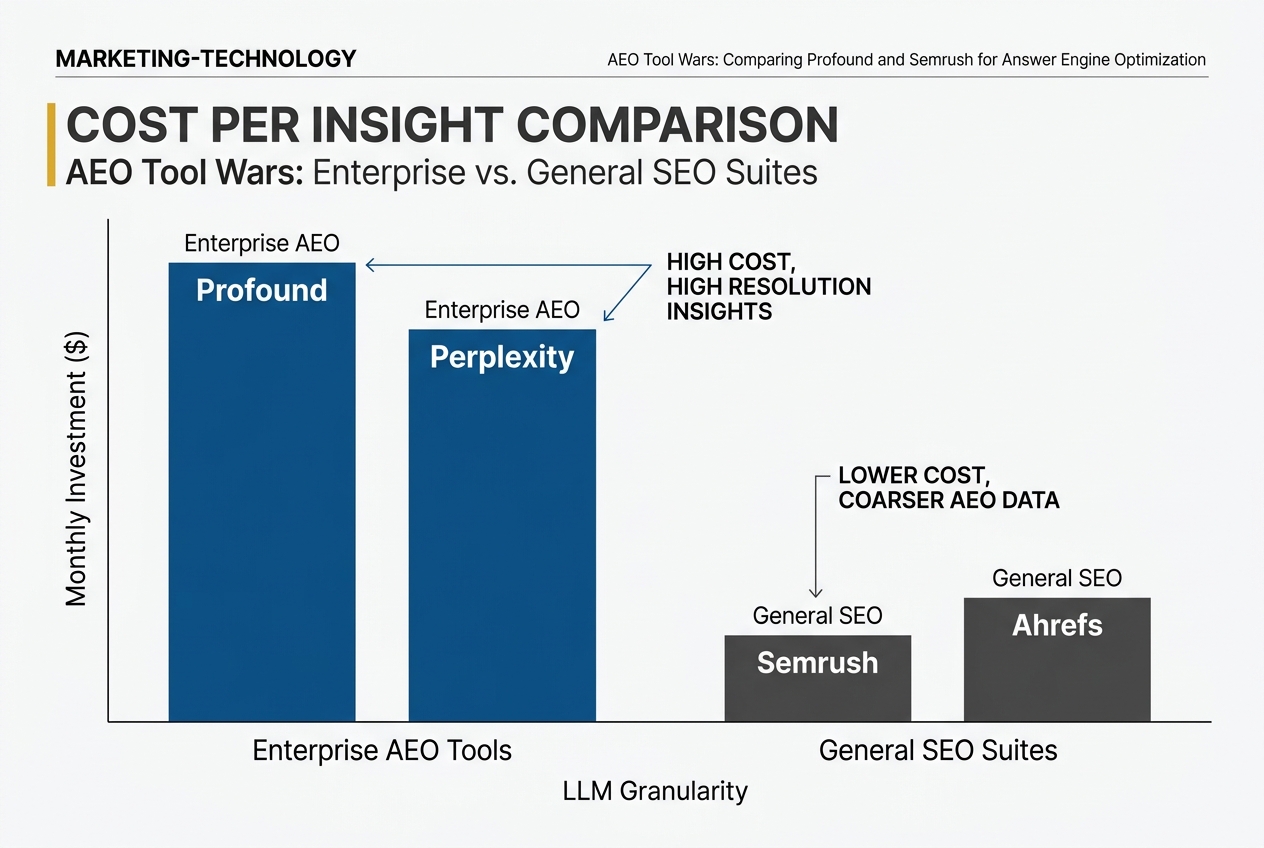
| Pricing (Entry) | $1,200/mo (Enterprise focus) | $139/mo (Add-on based) |
| Data Freshness | Near real-time API polling | Weekly/Daily crawl cycles |
The Prompt-Centric Approach: Why Profound is Winning the Narrative Game
Profound doesn't treat AI engines like search engines. It treats them like black boxes that need to be probed. While traditional SEO tools focus on "keywords," Profound focuses on "prompts." In the AI era, a user doesn't just type "best CRM"; they type "Which CRM is best for a 50-person remote agency that uses Slack and needs deep HubSpot integrations?"
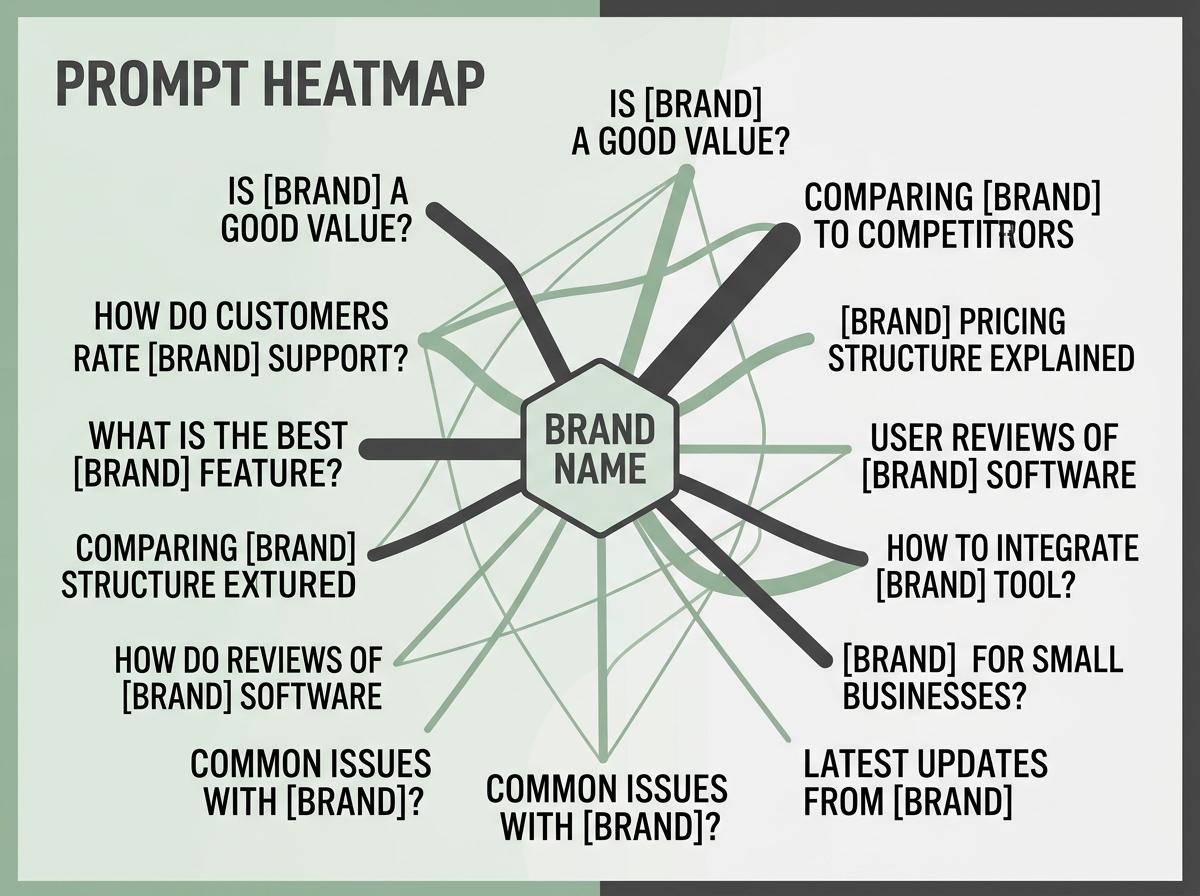
Profound’s strength lies in its ability to run thousands of these long-tail permutations to see where your brand appears—and more importantly, where it doesn't. According to a July 2026 HubSpot analysis, Profound’s "Brand Sentiment Score" is currently the most granular metric for understanding how LLMs perceive brand authority. It doesn't just tell you that you were mentioned; it tells you if the LLM recommended you or merely listed you as an alternative.
For a marketing lead, this is the difference between vanity metrics and actual conversion potential. If SearchGPT lists your product but adds a caveat about your high price point, you have a narrative problem, not a ranking problem. Profound identifies these linguistic nuances, allowing your PR and content teams to adjust their source material to flip the LLM's "opinion."
How AI search is changing brand sentiment analysis
The Ecosystem Play: Semrush’s Breadth and Workflow Integration
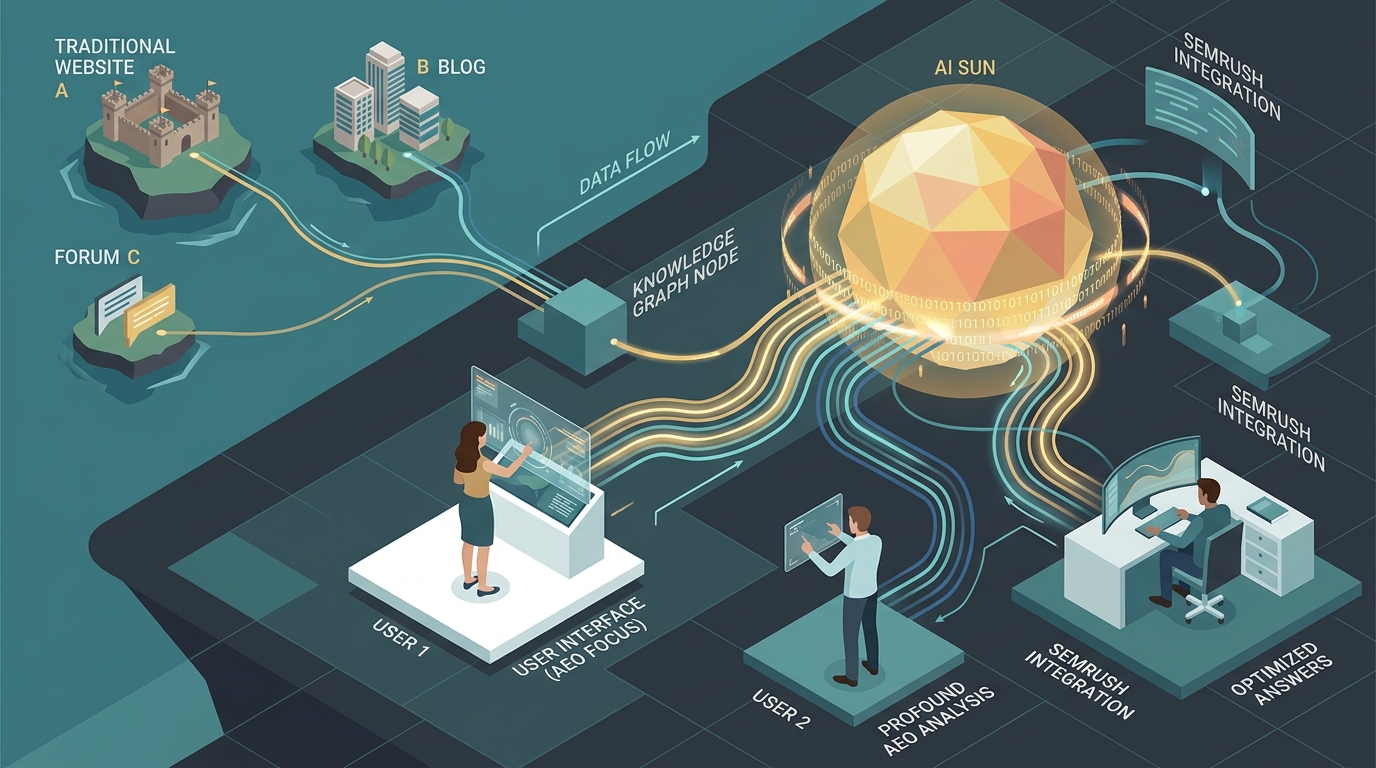
Semrush is playing a different game. They aren't trying to reinvent the wheel; they are trying to make the wheel smarter. For the social media manager or the SEO specialist already using Semrush for keyword research, the AEO Toolkit feels like a natural extension.
You don't have to jump between tabs to see how your traditional rankings correlate with your AI visibility. Semrush provides an "AI Visibility Index" that sits right next to your Domain Authority. This is crucial for teams that haven't fully migrated their budgets to AI-first strategies. You can see, for instance, that while your rank for "best enterprise security" dropped on Google, your visibility in Perplexity rose by 15% after you updated your whitepapers.
Semrush also wins on engine coverage for the "everyman" marketer. While Profound focuses heavily on the high-end LLMs like Claude and GPT-4, Semrush covers the broader web, including the smaller, specialized engines that are starting to pop up in niche industries. As we saw with streaming platforms like Netflix and LG moving into low-friction gaming to boost engagement (per Adweek, July 2026), the digital landscape is fragmenting. Semrush’s ability to track these fragments is a significant advantage for broad-market brands.
Pricing and The Hidden Costs of AEO
Let's talk about the elephant in the room: the cost. Profound is not a tool for the local bakery or even a small SaaS startup. With entry-level pricing often starting in the four-figure range per month, it is positioned as an enterprise solution. You are paying for the compute power required to run massive prompt simulations and the proprietary data science that decodes LLM weights.
Semrush, conversely, follows the classic SaaS tiering model. If you are already on a Guru or Business plan, the AEO features are often bundled or available as a relatively low-cost add-on. For an agency strategist managing 20 accounts, Semrush is the only fiscally responsible choice.
However, you must consider the "cost of inaction." If you are a Fortune 500 brand and an LLM is hallucinating negative facts about your CEO, the $1,200 a month for Profound is a rounding error compared to the brand damage. Semrush might tell you that you're losing visibility, but Profound tells you why the machine is saying what it's saying.
Real-World Workflow: From Data to Deployment
How do these tools actually change your Tuesday morning?
In Profound: Your workflow starts with a "Prompt Cluster." You input your core value propositions, and the tool generates 500 variations of how a human might ask about those values. You then look at a heat map of "Brand Dominance." If you see a cluster of prompts where a competitor is being cited as the "value leader," you know you need to update your pricing pages and get more mentions in third-party review sites that the LLM uses as training data.
In Semrush: Your workflow is integrated into your existing content calendar. You use the "Topic Research" tool to find gaps, then the "SEO Writing Assistant" to ensure your content is structured in the "Claim-Evidence-Source" format that AI engines prefer. You aren't just writing for humans; you're writing for the scrapers that feed the models. Semrush’s strength is in this execution layer—turning the "what" into the "how."
Why structured data is the backbone of AEO
The Verdict Matrix: Which Tool Should You Buy?
Choosing between these two depends entirely on your role and your brand's risk profile. There is no one-size-fits-all in the AI era.
Buy Profound if:
- You are an Enterprise Brand Manager or PR Lead.
- Your primary concern is brand sentiment and narrative control within AI responses.
- You have the budget for a specialized, high-cost tool that does one thing exceptionally well.
- You need to defend your brand against AI hallucinations or competitor conquesting in chat interfaces.
Buy Semrush if:
- You are an Agency Strategist or an In-house SEO for a mid-market company.
- You need a unified dashboard for all search-related activities (traditional, local, and AI).
- You prioritize workflow efficiency and content execution over deep linguistic analysis.
- You are working with a standard marketing budget and need high ROI per dollar spent.
Buy Neither if:
- You are a local business where 90% of your traffic comes from Google Maps and Yelp. AEO is currently a game for national and global brands. Local AEO is still in its infancy, and traditional Local SEO tools are still more effective for your bottom line.
The Future of AEO: Beyond the Dashboard
As we look toward the end of 2026, the battle between Profound and Semrush will likely move from "visibility" to "attribution." The holy grail of AEO is knowing not just that you were mentioned in a Perplexity answer, but that the mention led to a click—and that click led to a sale.
Currently, attribution in AEO is a mess. Perplexity and SearchGPT are stingy with referral data. Semrush is attempting to solve this via "Estimated AI Traffic" models, while Profound is looking at "Direct-to-Brand" search lift as a proxy. Whichever tool solves the attribution puzzle first will likely win the market.
For now, the choice is clear: Do you need a microscope (Profound) or a multi-tool (Semrush)? Your answer to that question will define your organic strategy for the next two years.
Strategic Implementation: Your 30-Day AEO Roadmap
Regardless of which tool you choose, the methodology remains the same. You cannot "hack" an LLM the way you could hack Google in 2012. You have to feed it better information.
- Audit your current mentions: Use your chosen tool to see which third-party sites are being cited when your brand is mentioned. These are your new "high-authority" targets.
- Restructure your FAQ pages: Stop using conversational fluff. Use clear, declarative statements. "Our software costs $50 per month" is better than "We offer competitive pricing starting at an affordable rate."
- Monitor for Hallucinations: Set alerts for your brand name + common pain points. If an AI engine starts associating your brand with a bug you fixed three years ago, you need to flood the zone with new, dated technical documentation.
The role of Reddit in AI training data
As social platforms like Snapchat continue to evolve their own internal AI assistants (as discussed in Social Media Today’s July 2026 strategy guide), the surface area for AEO will only grow. The tools we use to measure this space are just the first step in a much larger shift toward a truly conversational internet.
FAQ