
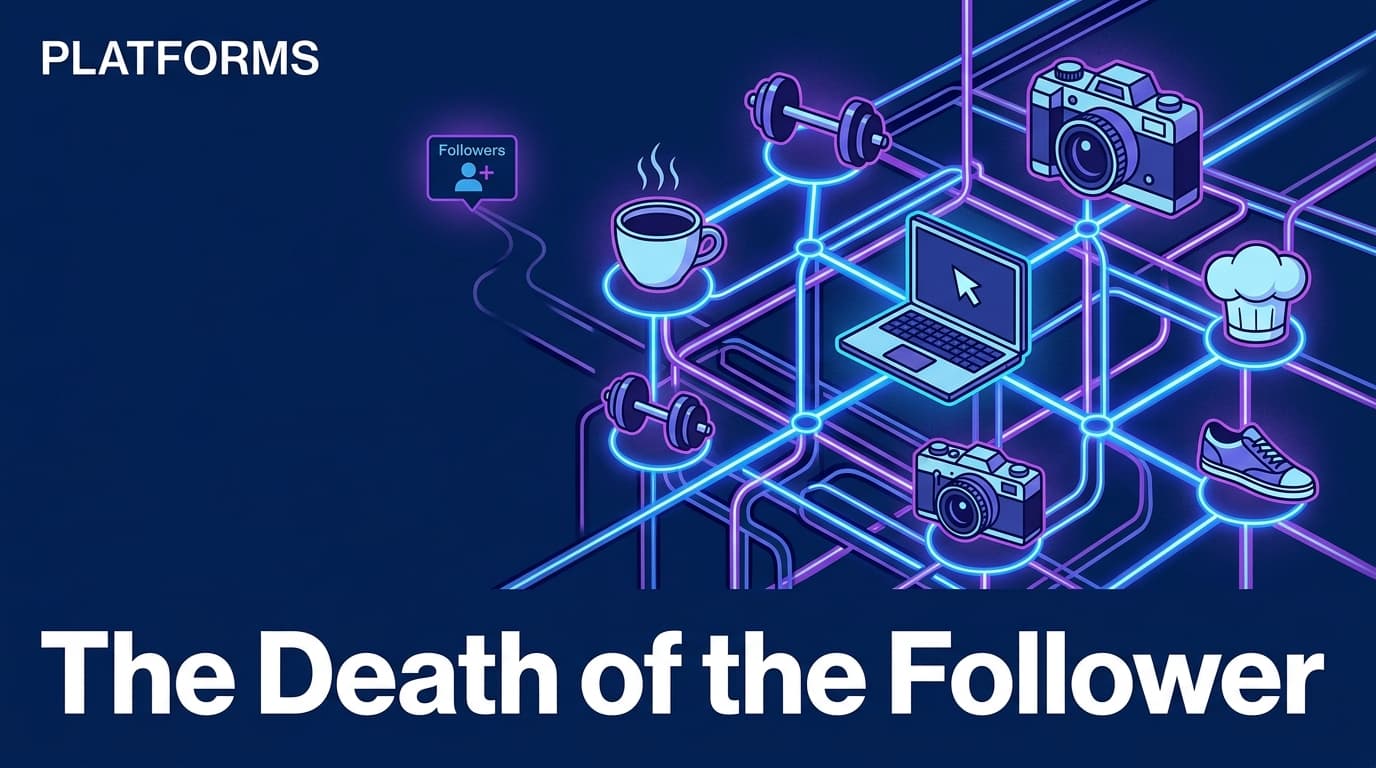
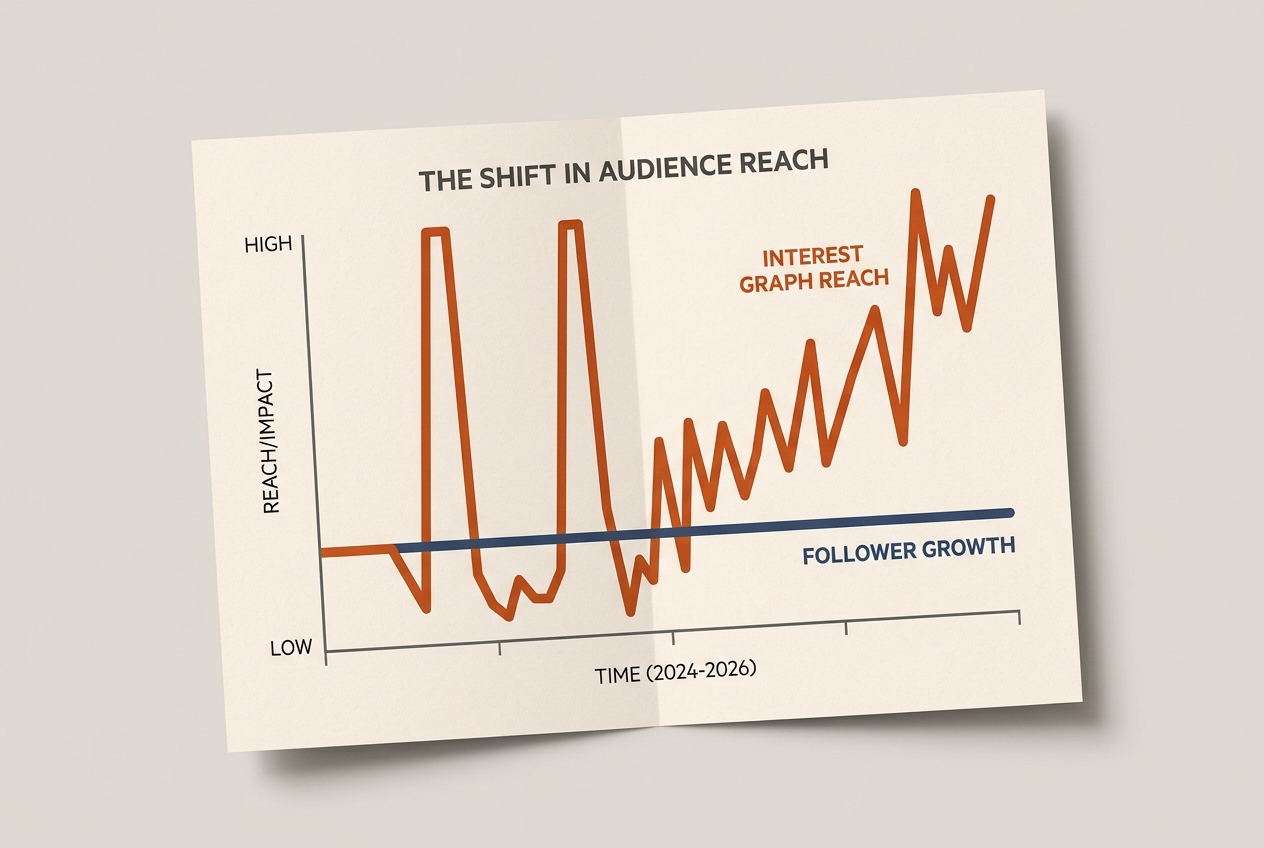
By 2026, the follower count will be a fossil—a remnant of a 'social graph' era that has been systematically dismantled by recommendation engines. If your marketing KPIs still prioritize audience growth over signal-based distribution, you are optimizing for a ghost. The fundamental shift from who you know to what you watch is complete, and brands that fail to pivot to interest-based distribution will find themselves shouting into an empty room, regardless of their follower tally.
The Great Decoupling: Why Followers No Longer Guarantee Reach
For a decade, the social media contract was simple: you build an audience, and you earn the right to reach them. That contract has been torn up. We are now living in the age of the Interest Graph, where platforms like TikTok, YouTube Shorts, and even the 'new' Instagram prioritize content based on immediate consumption signals rather than historical relationships.
Recent data from the MDRN Logic trend report suggests that for top-tier brand accounts, less than 5% of total reach now comes from the 'Following' tab. The rest is dictated by the 'For You' or 'Discovery' feed. This isn't just a tweak to the UI; it’s a structural re-engineering of how information moves. When you post today, you aren't sending a message to your fans; you are submitting a bid to an auction house where the currency is 'watch time' and 'completion rate'.
Consider the recent instability in AI visibility rankings. Per research published in July 2026 by Search Engine Journal, visibility numbers in modern recommendation systems are often statistical noise until a critical mass of engagement is reached. This means your 'followers' don't provide a safety net; they are merely a tiny seed group that the algorithm uses to test if your content is worth showing to the real audience: the millions of strangers who share an interest in your niche.
Building Algorithmic Bait Over Static Audiences
If the follower is dead, the 'Interest Profile' is the new king. Marketers must stop thinking about their 'target audience' as a demographic segment and start viewing them as a collection of consumption patterns.
Influencer Marketing Hub recently highlighted how SaaS companies are moving away from corporate updates to 'edutainment' that mimics the style of independent creators. They aren't doing this because it's trendy; they're doing it because the algorithm recognizes the format as high-retention bait.
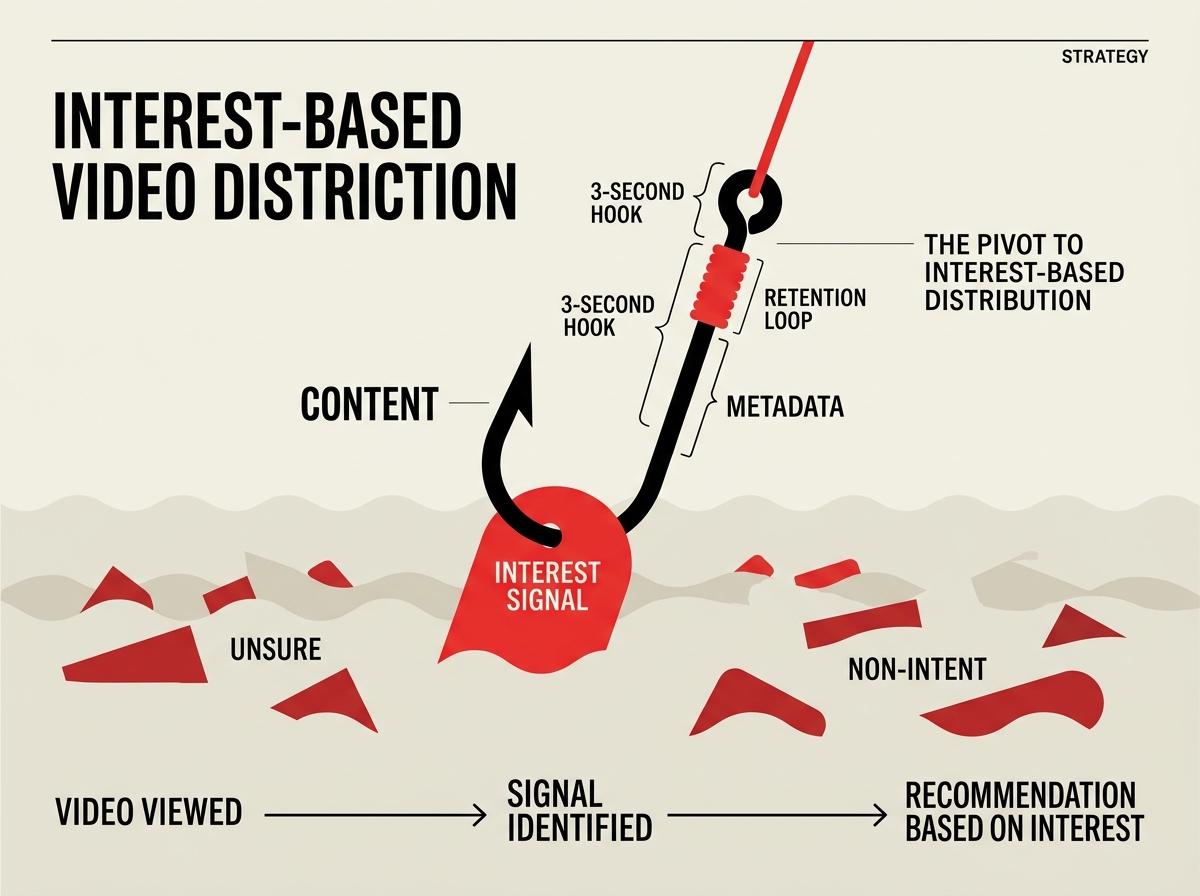
To survive in 2026, you need to build 'algorithmic bait'. This is content designed to trigger specific platform signals:
- The Three-Second Hook: Not for the user, but for the classifier that determines the content's category.
- High-Velocity Re-watches: Creating loops or information-dense visuals that force a second viewing.
- Niche Signal Clusters: Using specific keywords and visual cues that tell the AI exactly which interest graph to slot you into.
Look at how airlines and cruise lines have shifted their strategy. According to Influencer Marketing Hub, the most successful travel campaigns in 2026 aren't showing generic beach shots. They are targeting 'ASMR travel', 'budget luxury hacks', or 'solo female travel' clusters. They are building content for the graph, not the gallery.
The Counterargument: Does Brand Loyalty Still Require a Home Base?
Critics of the interest-graph-only approach argue that without a dedicated follower base, brand loyalty evaporates. They suggest that if we only chase the algorithm, we become slaves to the 'viral hit' cycle, losing the deep, multi-touch relationships that lead to high Customer Lifetime Value (CLV).
There is a grain of truth here. If you are only chasing the graph, you are a commodity. However, the counter-refutation is simple: you cannot build loyalty with people who never see your content. In the old social graph, your 'home base' was the feed. In 2026, your home base is your owned data—your email list, your SMS community, and your first-party data loops. Social media has transitioned from a CRM tool to a pure discovery engine.
Salesforce's July 2026 guidance for SMBs Salesforce emphasizes that social is now the top of the funnel, not the middle. You use the interest graph to find the stranger, and you use your own infrastructure to keep the customer. Expecting a platform's 'Follow' button to do the heavy lifting of retention is a strategy from 2014 that will not work in 2026.
The 'Statistical Noise' Trap in Modern Measurement
One of the biggest hurdles in this new era is measurement. Because distribution is now interest-based, your reach will fluctuate wildly. One video might get 2 million views because it hit a specific interest cluster, while the next gets 2,000 because it failed to trigger the same signals.
As noted by Search Engine Journal in their analysis of AI visibility [S1], these fluctuations are often just noise. Marketers who overreact to a 'bad' post by changing their entire strategy are falling for a statistical trap. The goal in 2026 isn't consistency of reach per post; it's consistency of signal across a volume of content.
We are seeing a resurgence in Marketing Mix Modeling (MMM) because granular attribution on social is becoming impossible. When the algorithm 'buries' content [S2], it’s often because the content lacked the necessary metadata or engagement velocity to move from the seed audience to the broader interest graph. It isn't personal; it's math.
Actionable Guidance for the 2026 Pivot
How do you actually execute this? First, audit your creative workflow. If you are spending 80% of your time on 'community management' for your existing followers and only 20% on 'algorithmic discovery', you have the ratio backward.
- Verticalize Your Content Pillars: Don't be a 'lifestyle brand'. Be a 'minimalist home office' brand or a 'high-performance skincare' brand. The AI needs clear signals to categorize you.
- Double Down on 'Searchable' Social: Platforms are increasingly using text-in-video and audio transcripts to index content. Your captions shouldn't be witty; they should be descriptive.
- Use Paid to Prime the Pump: Salesforce [S5] suggests that for startups, a small 'boost' to high-retention organic content can help the algorithm bypass the 'statistical noise' phase and find the right interest graph faster.
The 2027 Prediction: The Rise of the 'Ghost Brand'
By the end of 2027, we will see the first 'Ghost Brands'—companies doing $100M+ in revenue with fewer than 10,000 social media followers. These brands will succeed by mastering the art of the 'Disappearing Viral Loop'. They won't care about a profile page because their customers will meet them exclusively in the 'For You' feed, click through to a landing page, and enter a private ecosystem.
The era of the social celebrity brand is ending. The era of the interest-optimized utility is here. If you're still counting followers, you're counting the wrong things.
FAQ