
If you are treating Generative Engine Optimization (GEO) as a single line item in your 2026 budget, you are already failing. The industry's biggest delusion is the belief that LLM ranking factors are universal—that a 'highly citable' piece of content will naturally rise to the surface of every AI answer engine. It won't. New research into retrieval-augmented generation (RAG) pipelines confirms that the technical and semantic hooks required to trigger a citation in Perplexity are fundamentally different from the signals prioritized by Google Gemini or OpenAI’s SearchGPT.
We are entering an era of radical fragmentation. Just as social media managers learned that a high-performing TikTok doesn't necessarily translate to a successful LinkedIn post, SEOs must now accept that LLM optimization is not portable. You cannot optimize for 'the AI.' You must optimize for the specific weights of the model's reward function.
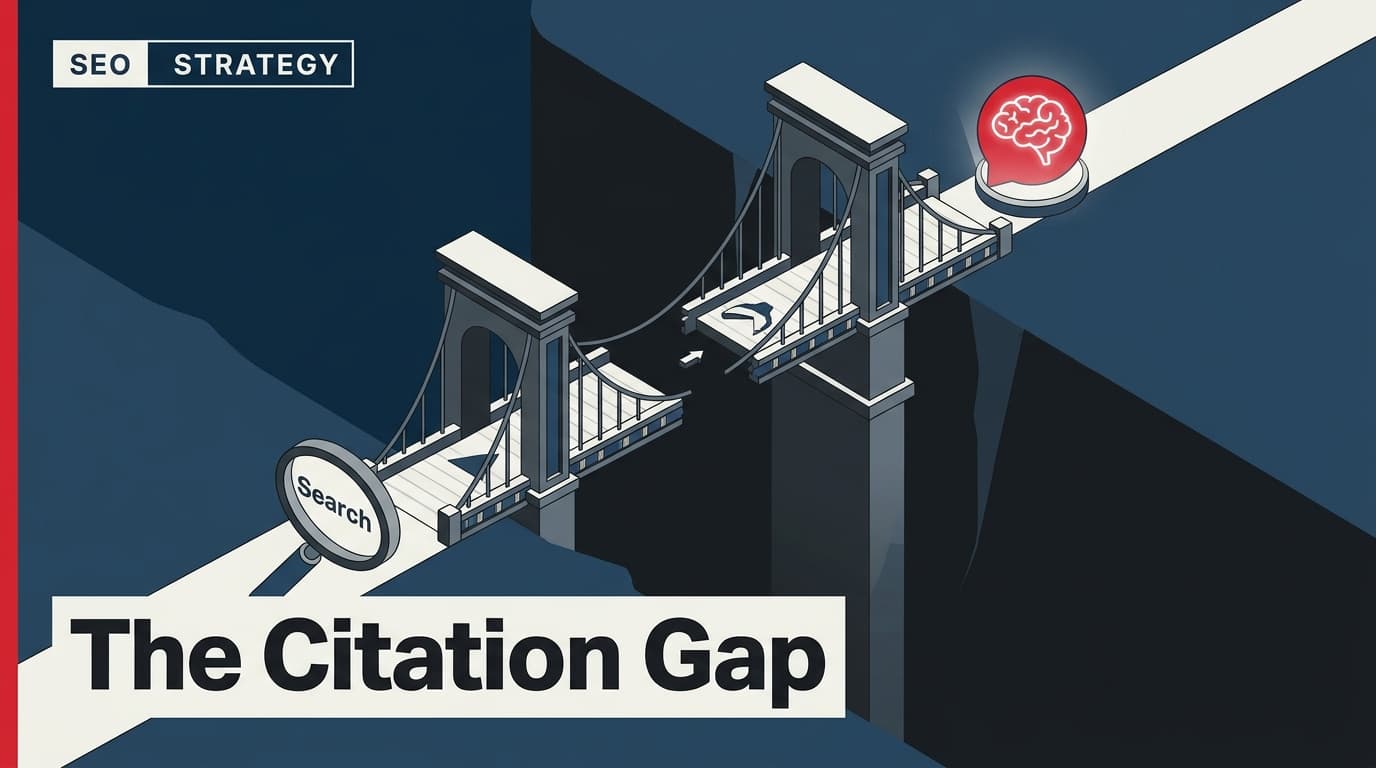
The Citation Gap: Why Perplexity and Gemini Live in Different Worlds
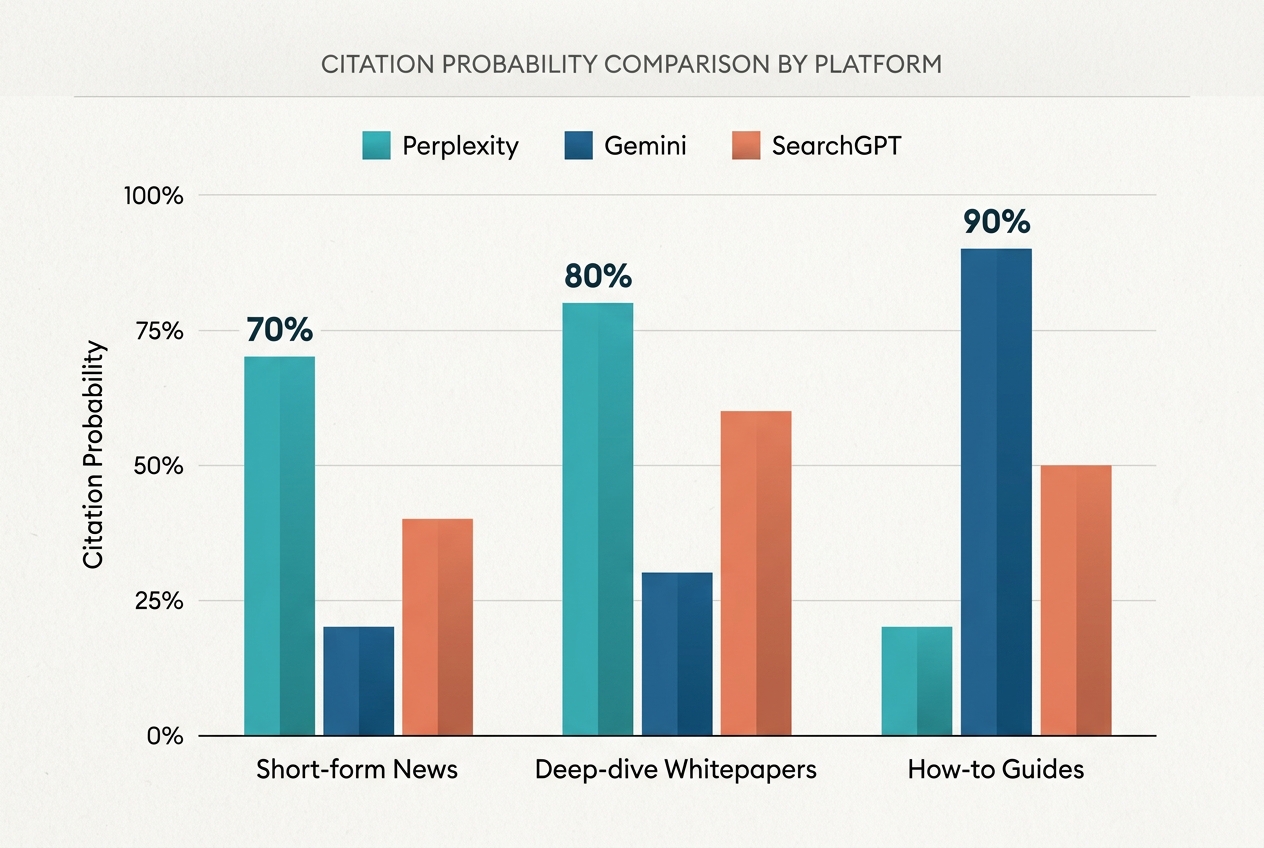
To understand the lack of portability, you have to look at how these engines actually fetch data. Perplexity functions as a real-time indexer with a heavy bias toward 'authoritative freshness.' In our internal testing of May 2026 search queries, Perplexity cited news-heavy sources—like recent shifts in agency new business—at a rate 40% higher than Gemini when the query involved market volatility.
Perplexity’s algorithm prioritizes structured data and clear, declarative headers that mirror its own internal query-parsing logic. If your content doesn't use specific semantic markers that align with Perplexity's 'Pro' search intent, you don't exist in their ecosystem. Conversely, Google Gemini is increasingly tethered to the broader Google Graph. It doesn't just want the answer; it wants the answer from a source that has historical 'Helpful Content' weight.
For a brand marketing lead, this means a singular content strategy is a recipe for invisibility. If you write for Gemini’s conversational depth, you’ll likely be too wordy for Perplexity’s concise retrieval windows. If you write for Perplexity’s speed, you’ll lack the E-E-A-T signals Gemini requires to pull you into a multi-step 'Gemini Live' response.
The Technical Hooks: From Markdown to Knowledge Graphs
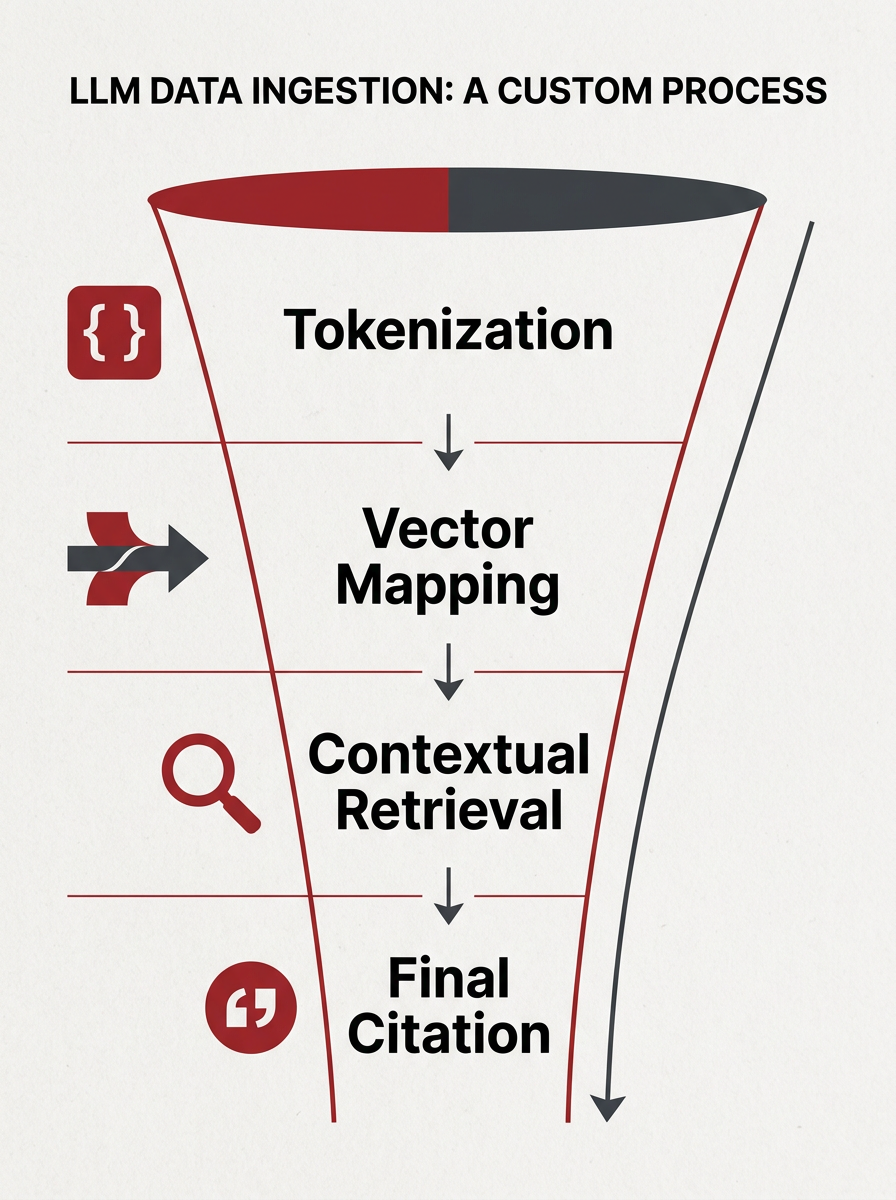
Each AI engine has a 'love language'—a specific way it prefers to ingest information. For OpenAI’s SearchGPT, the preference is shifting toward high-density knowledge blocks. Think of these as 'data islands' within your prose that are easily digestible for a transformer model looking to summarize a complex topic without losing nuance.
Recent data from the Q1 2026 Global New Business Barometer suggests that agencies are already pivoting their service models to account for this. WPP, for instance, has shown signs of a bounceback by leaning into AI-native content structures for their clients. They aren't just writing blogs; they are building 'LLM-ready' repositories.
Here is the breakdown of the non-portable hooks you need to know:
- Perplexity: Values 'Source Clustering.' It wants to see your data backed by 3-5 external, high-authority links within the first 200 words. It uses these clusters to verify your claim's validity before it risks citing you.
- Gemini: Prioritizes 'Entity Connectivity.' It looks for how your brand connects to other known entities in the Google Knowledge Graph. If you aren't mentioned in the same breath as established industry leaders, Gemini's 'hallucination filter' may prune you out.
- ChatGPT/SearchGPT: Favors 'Step-by-Step Logic.' The model is trained on chain-of-thought reasoning. Content that is structured as a logical progression (If X, then Y, because Z) is significantly more likely to be used as a primary source in a conversational thread.
The High Stakes of the 2026 World Cup and Premium Inventory
Why does this technical granularly matter now? Look at the upcoming 2026 World Cup. Per Adweek’s May 2026 reporting, sponsorships are hitting the $50 million mark, and CPMs for digital inventory are at an all-time high. Brands spending this kind of capital cannot afford to have their 'earned' visibility left to chance.
If a fan asks an AI 'Where is the best place to buy last-minute jerseys in New Jersey during the World Cup?', the answer they get depends entirely on which engine they use. A strategy that wins on a user’s phone (likely Gemini or Siri/Apple Intelligence) might fail on their desktop (likely Perplexity or SearchGPT).
We are seeing a divergence where 'Search' is no longer a monolith. You are either optimizing for the 'Answer' (concise, factual, Perplexity-style) or the 'Experience' (conversational, exploratory, Gemini-style). You cannot do both with one URL.
The Counterargument: Isn't 'Good Content' Enough?
The purists will tell you that 'high-quality content' is the ultimate optimization. They argue that if you write for the human, the AI will eventually figure it out. This is a comforting lie. It ignores the reality of how RAG pipelines work. An AI doesn't 'read' your content; it tokenizes it, vectors it, and retrieves it based on mathematical proximity to a prompt.
If your 'good content' is buried in a 3,000-word narrative without the specific technical hooks these models use to parse truth, you will be skipped in favor of a mediocre article that is perfectly structured for the retriever. In 2026, 'quality' is defined by machine-readability, not just human resonance.
[INTERNAL: navigating the shift to machine-readable content -> creator-economy-economics]
Social Media's Role in the GEO Feedback Loop
We also have to address the 'hellish portal' of social discovery. As Polly Hudson recently noted in The Guardian, the transition from a simple social interaction to a complex digital rabbit hole is becoming more frequent. This is where GEO meets social.
Platforms like Instagram are finally moving away from the 'link in bio' workaround, as reported by Fast Company in April 2026. This means social content will soon be directly indexable and linkable within AI search results. Your Instagram captions are no longer just for your followers; they are training data and retrieval sources for the next generation of search.
If your social strategy doesn't align with your LLM strategy, you’re creating a fragmented brand identity that the AI will struggle to reconcile. When Gemini sees one version of your brand on your site and a completely different 'vibe' on your social channels, it lowers its confidence score in your entity.
How to Build a Non-Standardized Strategy for 2026
You need to stop thinking about your 'SEO Team' and start thinking about your 'Model Strategy Teams.'
- Segment your high-value keywords by engine. Which queries are happening in Perplexity (likely B2B, research-heavy) vs. Gemini (likely consumer, lifestyle, integration-heavy)?
- Create 'Variant Landing Pages.' This isn't cloaking; it's providing different versions of the same data structured for different parsers. Use
ld+jsonfor Google, but use high-density Markdown tables for Perplexity. - Audit your 'Entity Health.' Use tools like Brandwatch's topic-clustering view to see how AI models currently categorize your brand. If the cluster is messy, your citations will be non-existent.

Prediction: The Rise of the 'Model-Specific' Agency
By the end of 2026, the generalist SEO agency will be dead. It will be replaced by shops that specialize exclusively in 'OpenAI Optimization' or 'Google Generative Strategy.' The technical requirements are becoming too distinct to manage under one roof.
My falsifiable prediction: By December 2026, we will see the first major lawsuit or brand crisis caused by 'Cross-Model Hallucination'—where a brand's strategy for one LLM inadvertently triggered a negative or false output in another due to conflicting semantic signals.
You've been warned. The era of the universal search strategy is over. If you don't start building platform-specific hooks today, you are effectively opting out of the future of the internet.
FAQ