
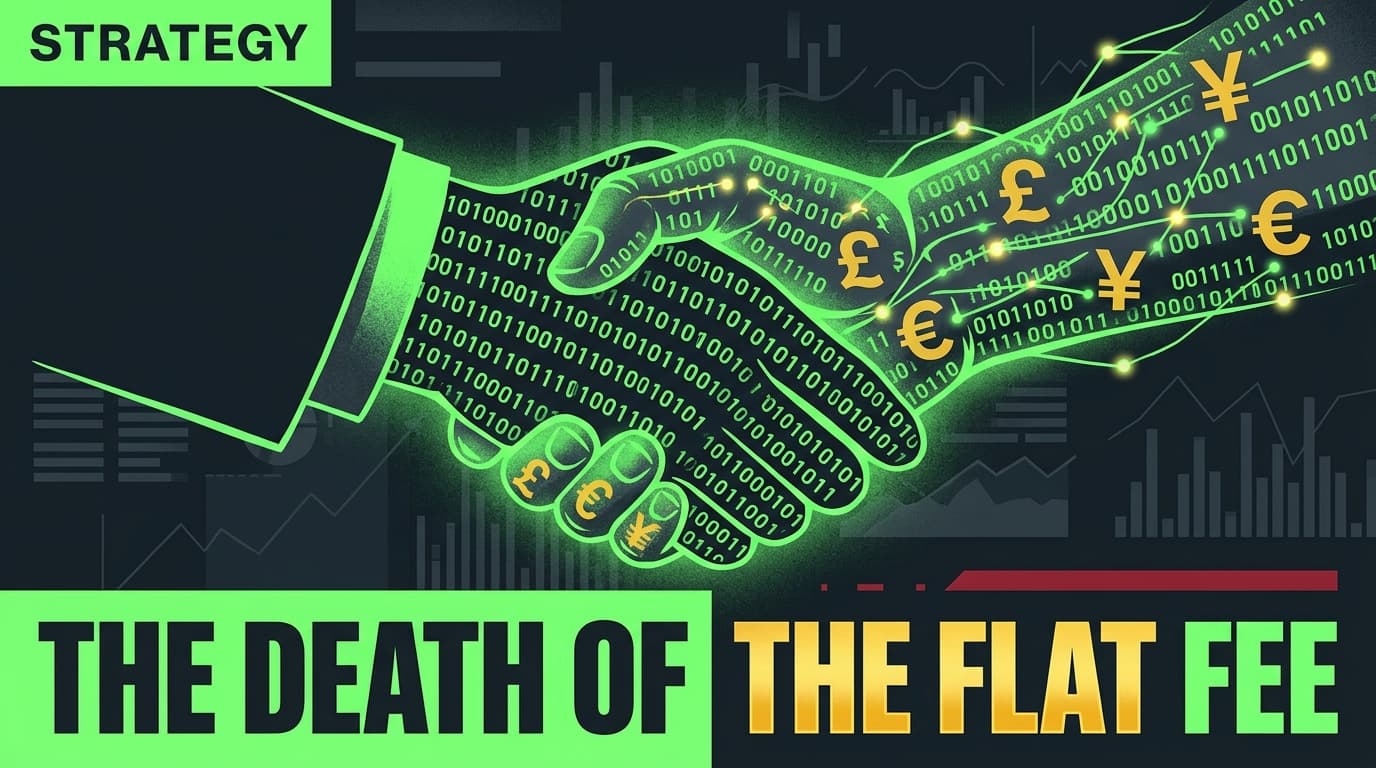
If you are still paying creators a flat fee based on a static follower count, you are effectively subsidizing their vanity metrics while starving your own bottom line. The era of the 'post-and-pray' flat fee is dead. In 2026, the industry’s most sophisticated buyers have moved toward a hybrid pricing architecture that prioritizes conversion kickers and long-term equity-lite arrangements. This shift isn't just a trend; it's a structural necessity born from the collapse of traditional attribution and the rise of AI-driven search.
Key takeaways
- Flat fees are legacy: Pure upfront payments now account for less than 22% of enterprise creator spend, down from 65% in 2023.
- Performance is the floor: Hybrid models—combining a reduced base retainer with a 'conversion kicker'—are the new agency standard.
- Equity-lite is the ceiling: High-impact creators are trading immediate cash for phantom equity or long-term revenue shares.
- AI attribution is the arbiter: Tools like Microsoft’s AI Max Microsoft AI Max rollout are forcing creators to prove their value in a multi-touch search and social ecosystem.
1. The Death of the 'Follower Count' Multiple
For years, the industry relied on a crude shorthand: $100 for every 10,000 followers. It was simple, it was scalable, and it was fundamentally broken. According to a recent report from Caribbean National Weekly, influencers are losing followers at record rates due to algorithm purges and shifting user interests. Paying for a static audience size in a world where reach is ephemeral is a fool's errand.
In 2026, the 'Follower Count' multiple has been replaced by 'Average Effective Reach' (AER). Marketers are now looking at the last 30 days of median views, weighted by comment sentiment and share-to-save ratios. If a creator has 2 million followers but their AER is only 50,000, their base fee is priced at the 50,000 level. We’ve seen agencies like Gushcloud—who recently facilitated TikTok LIVE integrations for major global talent—pivot their entire negotiation strategy to favor live engagement and real-time conversion over static grid posts.
This isn't just about saving money. It's about risk mitigation. When you pay a flat fee, the creator has no skin in the game. Once the content is live, their financial incentive vanishes. The hybrid models we see today ensure that the creator’s profit is directly tied to the brand’s success.
2. The Hybrid 'Base + Kicker' Model
This is the workhorse of 2026 creator marketing. It functions similarly to a sales commission structure. A brand pays a 'production fee' (the base) that covers the creator's time, equipment, and initial distribution. This base is typically 40-50% lower than the old flat-fee rates.
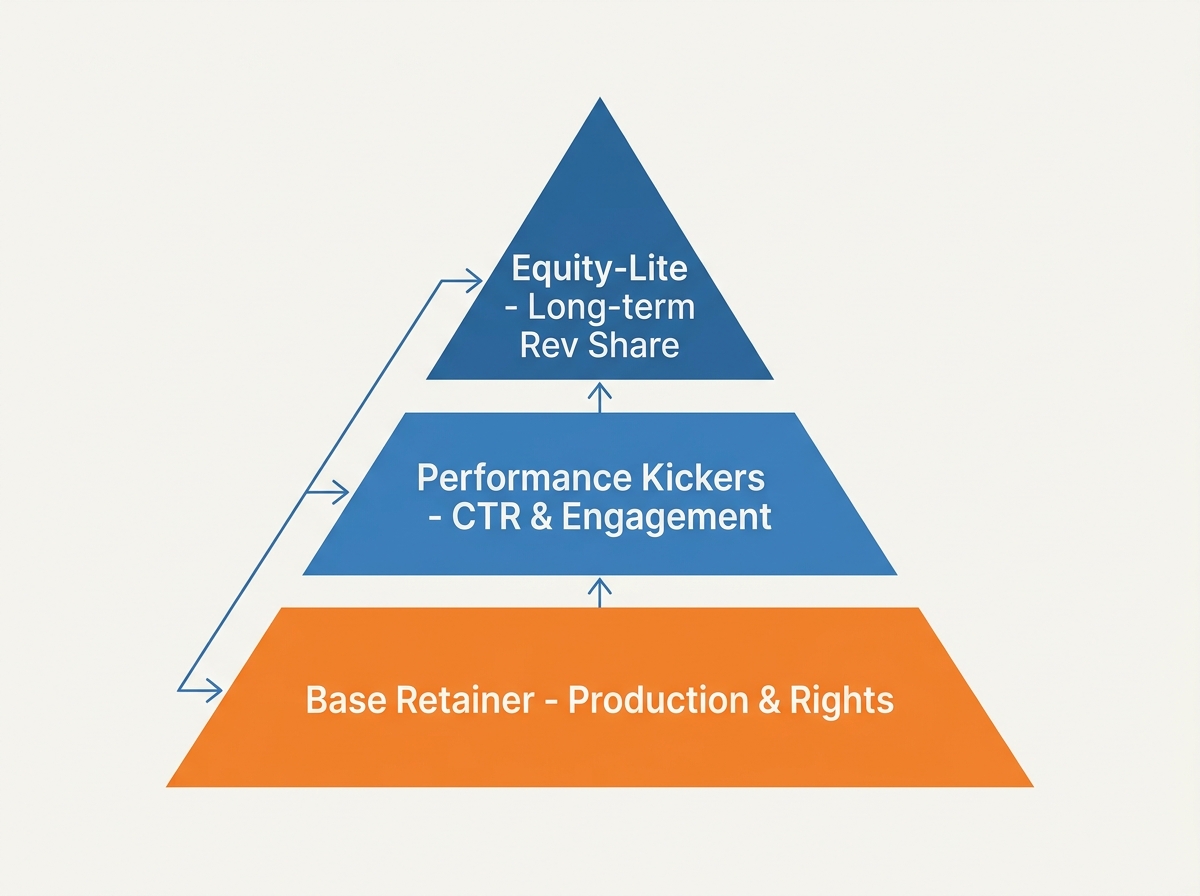
The real money for the creator—and the real value for the brand—lives in the 'kickers'. These are pre-negotiated bonuses triggered by specific KPIs:
- The Click Kicker: A flat bonus for exceeding a specific CTR threshold.
- The Conversion Kicker: A percentage of attributed sales or a bounty for every new customer acquisition.
- The Retention Kicker: A secondary payout if the content continues to drive traffic 60 or 90 days post-launch.
Why does this work? It aligns incentives. Creators become more than just 'talent'; they become performance marketers. They are more likely to engage with comments, share the content to their Stories multiple times, and optimize their own captions for search. With the global rollout of Microsoft Advertising’s AI Max for Search, creator content is increasingly appearing in AI-generated search results. A creator who understands how to trigger these AI citations Gemini AI search study is worth five times more than one who just looks good in a photo.
3. Equity-Lite and Long-Term 'Phantom' Ownership
Top-tier creators—the ones who can actually move the needle on a brand’s quarterly earnings—are no longer interested in one-off checks. They want a piece of the pie. However, giving away real equity in a C-corp or LLC is a legal nightmare for most marketing leads.
Enter 'Equity-Lite'. These are contractual arrangements that mimic the benefits of equity without the cap-table complexity.
Common structures include:
- Phantom Stock Units: Creators are granted units that track the brand's valuation or a specific product line's revenue growth.
- Perpetual Royalty Streams: A small percentage of every sale made through a specific SKU, often for the lifetime of the product, not just the campaign.
- Ad-Spend Participation: If a brand puts $1M in paid spend behind a creator's organic video because it's performing well, the creator receives a small percentage (usually 1-3%) of that ad spend as a 'licensing bonus'.
This model is particularly effective for brands in highly regulated spaces. A MediaPost study on cannabinoid brands recently highlighted how misuse of social marketing leads to account bans and wasted spend. By using equity-lite models, brands can ensure creators are deeply invested in following compliance guidelines, as their long-term payout depends on the brand's continued ability to operate and grow.
4. The Content-as-a-Service (CaaS) Retainer
In 2026, the most valuable thing a creator provides isn't their audience; it's their ability to produce high-performing creative for the brand’s own paid channels. We call this the CaaS model.
Under a CaaS agreement, the creator isn't even required to post the content to their own feed. Instead, they act as a remote production house, delivering 5-10 'raw' assets per month that the brand’s internal team then edits for TikTok Ads, Meta Reels, and YouTube Shorts. The pricing is based on a monthly retainer, giving the brand a predictable cost and the creator a predictable income.
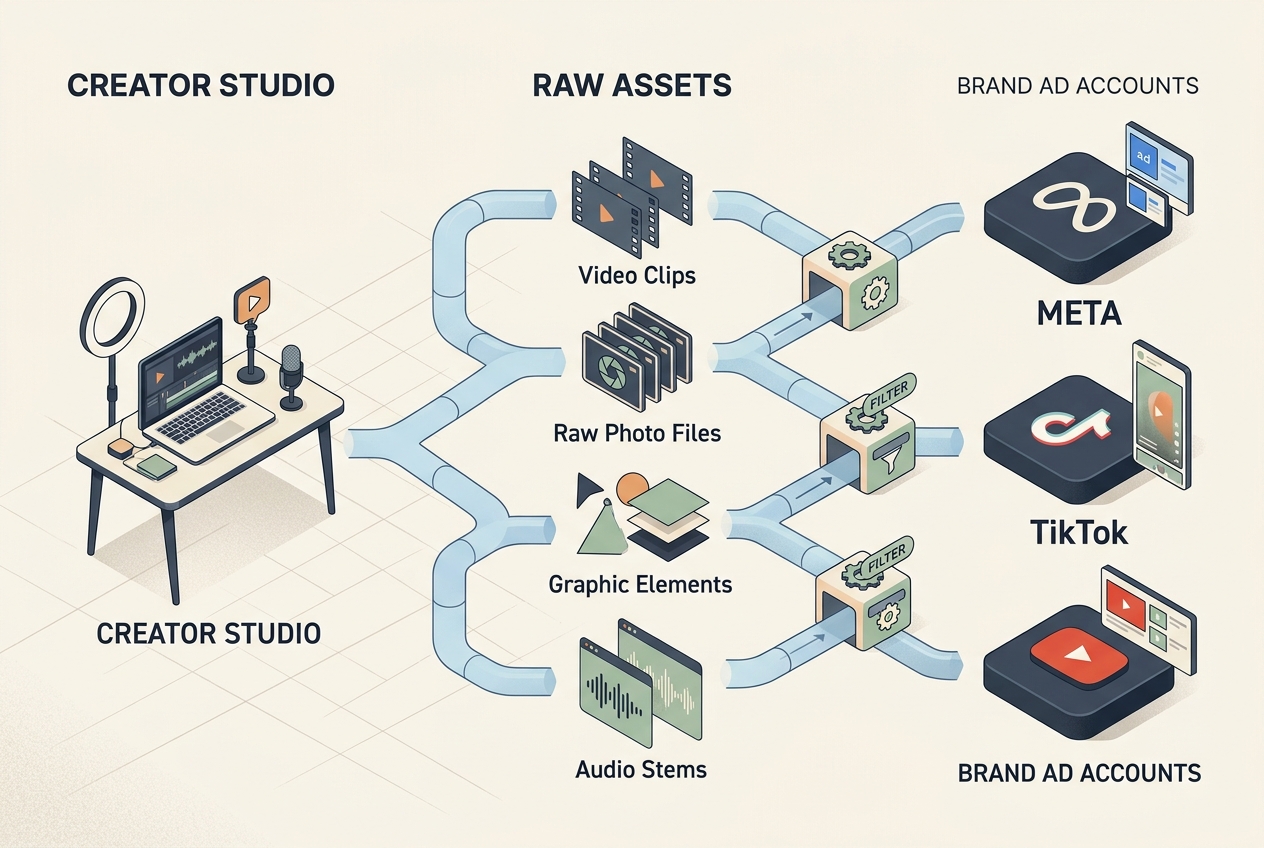
This model solves the biggest bottleneck in modern social marketing: the need for constant creative refresh. Since the creator isn't burning out their own audience with sponsored posts, they can produce content for the brand indefinitely. It’s a cleaner, more professionalized version of the old influencer relationship.
The Counterargument: Does Performance Pay Stifle Creativity?
Critics of performance-based pricing argue that it forces creators to become 'safe' and formulaic. If a creator knows they only get paid if people click, they might resort to clickbait or aggressive sales tactics that damage their long-term brand equity.
There is some truth to this. If you squeeze a creator too hard on conversion metrics, you lose the 'magic' that made them influential in the first place. However, the solution isn't to go back to flat fees; it's to build better contracts. A well-designed hybrid model includes a 'Brand Safety & Quality' floor—a base fee that is high enough to ensure the creator doesn't feel desperate, but low enough that the performance kickers still matter.
We are moving from a patronage model to a partnership model. In a patronage model, you pay for the art and hope for the best. In a partnership model, you both win or you both lose. The latter is the only way to survive the rising CPMs and fragmented attention of the 2026 landscape.
Prediction: The Rise of the 'Creator-Paced' Budget
By the end of 2027, I predict that 'guaranteed fees' will vanish from the enterprise level entirely. Instead, we will see the rise of 'Creator-Paced' budgets. Brands will allocate a pool of money to a creator, and the creator will effectively 'earn' that budget out of an escrow account based on real-time API data from the platforms. If the content hits 1M views, $X is released. If it drives 500 sales, $Y is released.
The technology to do this—via smart contracts and platform API integrations—is already here. All that’s missing is the industry-wide courage to admit that the old way of doing business is over. You don't need more influencers; you need better deals. Stop paying for handshakes and start paying for outcomes.
FAQ