
OpenAI is finally letting the big spenders in. After a period of strict prohibition, the platform has updated its policies to allow health and finance advertisers to appear within ChatGPT's conversational interface. But don't expect the transparency of a Google Ads dashboard or the granular targeting of Meta. OpenAI’s ad ecosystem is a black box governed by real-time safety classifiers that can kill your campaign before a human ever sees it.
You aren't just bidding on keywords anymore; you're bidding for relevance within a generative context. If your landing page doesn't align with ChatGPT's internal safety guidelines for 'High Stakes' topics, your ads will simply fail to trigger. This guide provides a systematic framework for auditing your current assets and structuring your campaigns to survive the OpenAI gauntlet. By the end of this process, you will have a compliant landing page architecture and a prompt-testing workflow that ensures your brand appears when users ask their most sensitive questions.
TL;DR
- Policy Shift: OpenAI now allows health and finance ads, provided they don't offer medical diagnoses or specific investment advice.
- The 'Health' Guardrail: Ads must be informative, not prescriptive. Direct-to-consumer pharma and general wellness are in; diagnostic claims are out.
- The 'Finance' Guardrail: Credit products and insurance are permitted, but 'get rich quick' schemes or high-leverage crypto products trigger immediate bans.
- Audit Priority: Focus on landing page 'crawlability' for OpenAI's OAI-SearchBot and the semantic density of your educational content.
Step 1: Map your content to the 'Non-Prescriptive' mandate
The most significant hurdle in OpenAI's new framework is the distinction between information and advice. Per recent updates reported by Search Engine Journal in August 2026, OpenAI allows health and finance ads but restricts them from appearing in 'sensitive' conversation threads where the AI might be perceived as endorsing a specific medical or financial outcome.
To pass the automated audit, your ad creative and the destination URL must be strictly informative. If your landing page uses imperative language like "You should buy this stock" or "Take this pill to cure X," the safety classifier will flag the placement as a violation of the 'Personalized Advice' policy.
What to do
Audit your top-performing search landing pages. Replace all prescriptive 'Consultative' language with 'Educational' frameworks. Instead of "The Best Credit Card for You," use "Comparing Top-Tier Rewards Structures for 2026." For healthcare, pivot from "Treat Your Symptoms" to "Understanding Management Options for [Condition]."
Why it matters
OpenAI’s classifiers use a 'High Stakes' threshold. If the model determines the user is in a vulnerable state (e.g., asking about a medical emergency), it will suppress all commercial placements to avoid liability. By positioning your content as a neutral resource, you increase the likelihood of your ad being served as a 'Source' or 'Reference' in the ChatGPT Search sidebar.
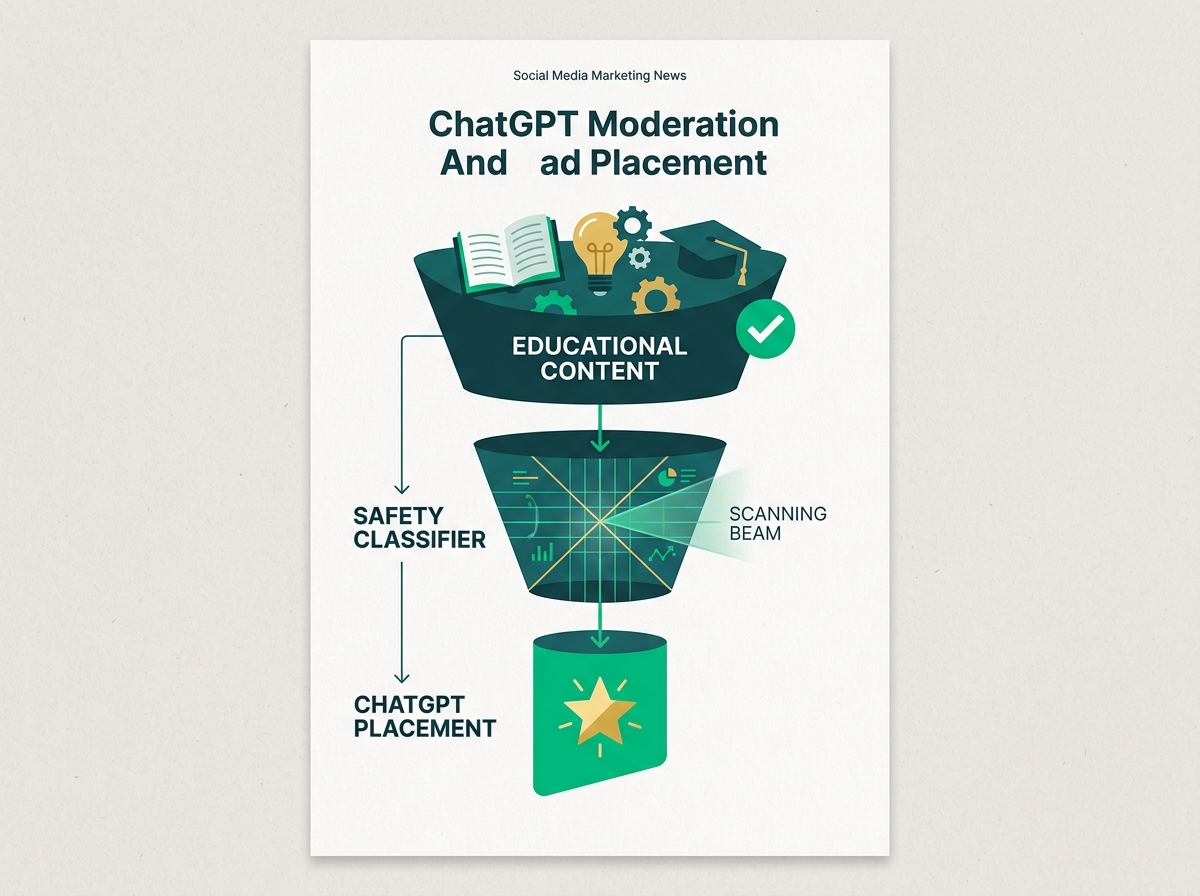
Common Pitfall: Many marketers try to use the same 'hard-sell' copy that works on Instagram. On ChatGPT, aggressive CTA language in the metadata can trigger a 'Safety Trigger' that prevents the OAI-SearchBot from even indexing the page for ad auctions.
Step 2: Configure your site for the OAI-SearchBot and User-Agent specific indexing
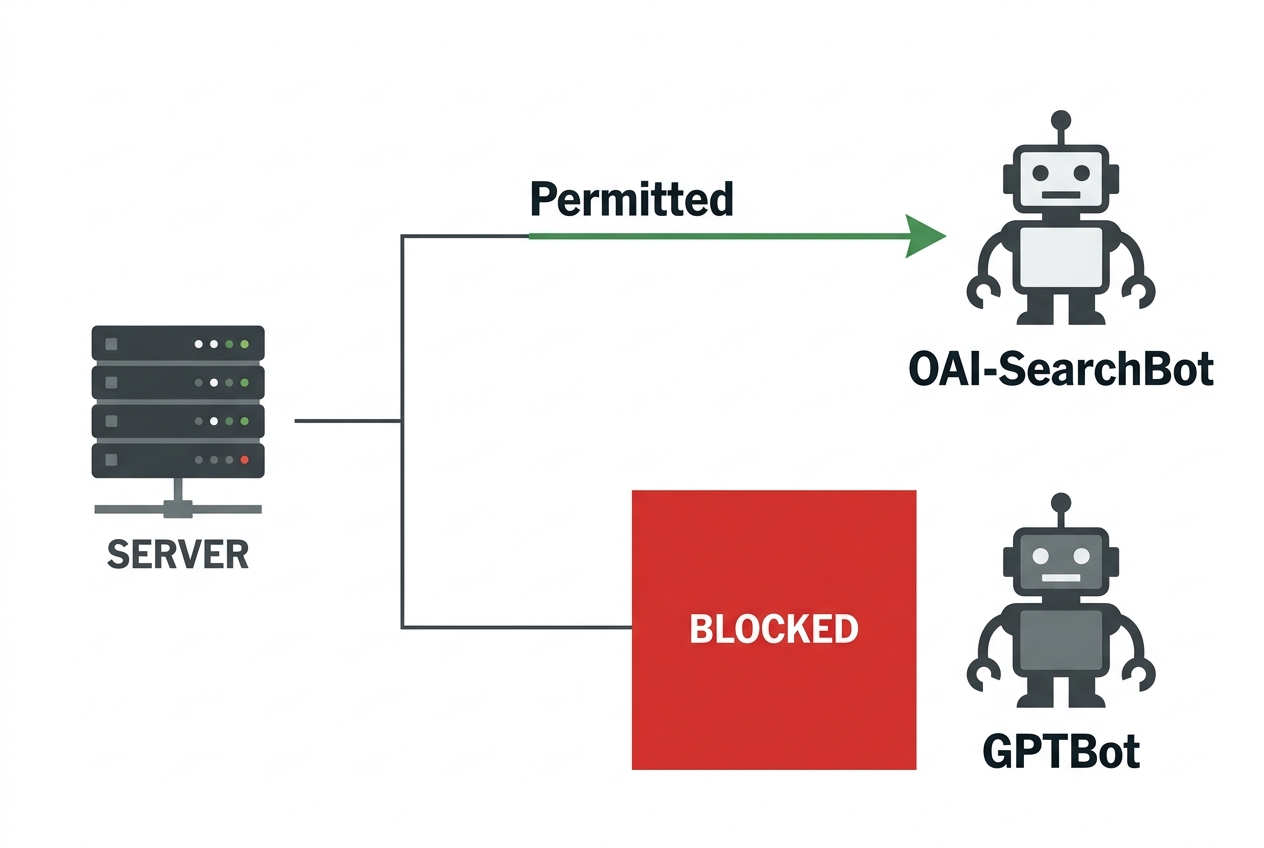
You cannot be audited if you cannot be seen. OpenAI uses a specific crawler, OAI-SearchBot, to understand the context of your site for its search and ad products. Unlike the general GPTBot used for training, OAI-SearchBot is designed for real-time retrieval.
If your technical SEO team has blocked AI crawlers to protect intellectual property, you have inadvertently opted out of the ad ecosystem. Furthermore, Cloudflare recently introduced wallets for AI agents, as reported by Search Engine Journal, allowing bots to pay for the content they access. This signals a future where premium ad placements might require a more sophisticated handshake between your server and the OpenAI crawler.
What to do
Update your robots.txt to specifically allow OAI-SearchBot. Then, use a tool like Prerender.io or a custom edge worker to ensure that when the user-agent OAI-SearchBot hits your health or finance pages, it receives a clean, text-heavy version of the page without heavy JavaScript obfuscation.
Why it matters
OpenAI's ad relevance is determined by semantic similarity. If the crawler only sees your cookie consent banner and a loading spinner, it will categorize your site as 'Low Quality' or 'Unverifiable,' which is a death sentence for finance marketing compliance where authority is everything.
Common Pitfall: Assuming that because Google can crawl your site, OpenAI can too. OpenAI’s crawler is less patient with slow Time-to-Interactive (TTI) metrics. If your page takes more than 2.5 seconds to serve the main content, the bot may time out and skip the audit.
Step 3: Implement 'Community Signal' markers for organic authority
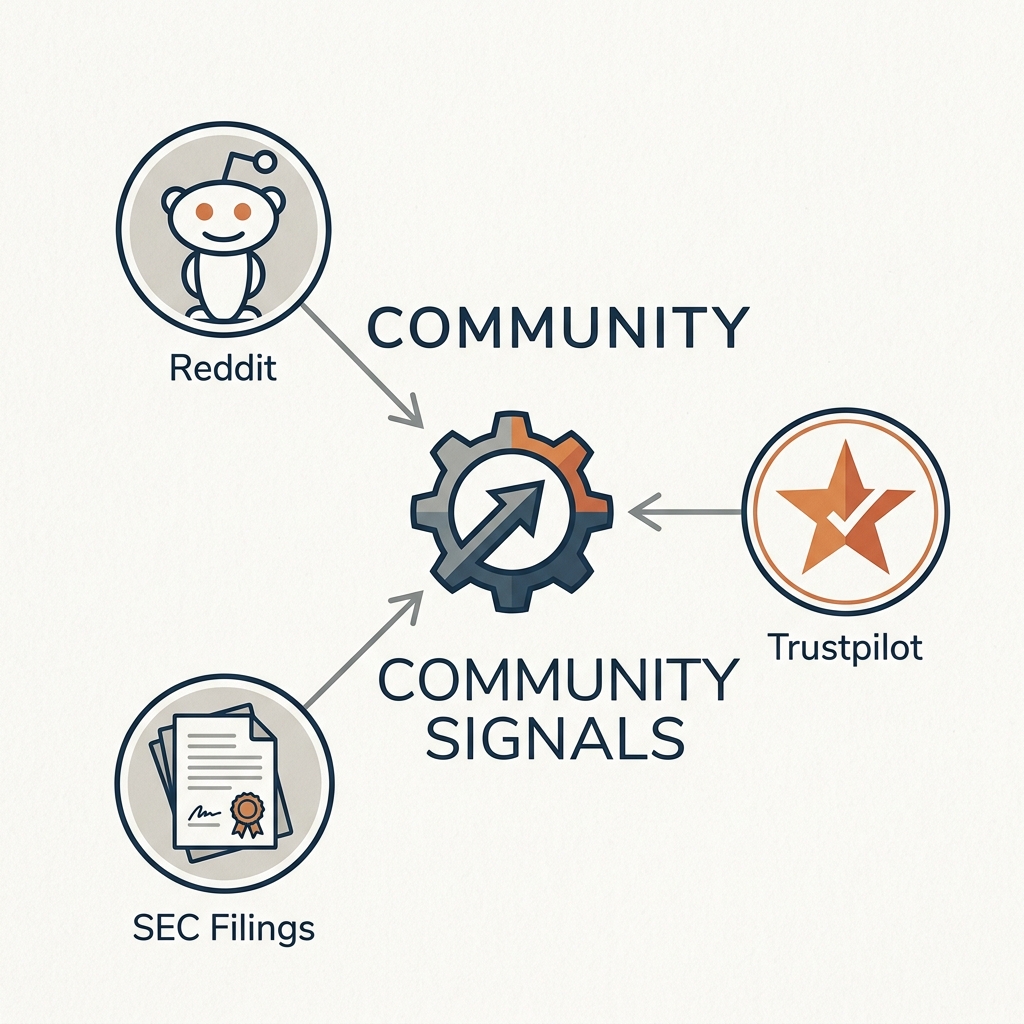
Recent research from August 2026 suggests that community signals—UGC, forum mentions, and third-party reviews—are now the largest third-party source for AI citations. For health and finance brands, this means OpenAI isn't just looking at your website; it's looking at what Reddit and specialized forums say about you.
If you are a financial services provider, OpenAI’s audit of your 'trustworthiness' includes how often you are cited in reliable community contexts. This is what we call 'Organic Authority Multiplication.'
What to do
Embed structured data (Schema.org) that points to third-party reviews and community discussions. Specifically, use the reviewedBy and credentialCategory tags for healthcare content. For finance, ensure your 'About Us' page links to verifiable NMLS or SEC filings.
Why it matters
OpenAI’s safety layer cross-references ad landing pages against a 'Knowledge Graph' of known entities. If your brand doesn't have a footprint in the 'Community Signals' space, you will be hit with a 'New/Unverified Entity' penalty, which drastically increases your CPMs as the system offsets the 'risk' of showing your ad.
Common Pitfall: Ignoring the 'Data Noise.' As MarTech noted in August 2026, marketers often overreact to small metric shifts. In the context of OpenAI, don't panic if your impressions drop for a day; the model may be re-evaluating your community authority scores. Stick to the long-term play of building verifiable trust signals.
Step 4: Stress-test your landing pages with 'Adversarial Prompting'
Before you commit budget, you must act as your own auditor. OpenAI's filters are designed to catch 'jailbreaks' or attempts to bypass safety rules. If a user asks a question in a way that tries to 'trick' the AI into giving medical advice, and your ad appears, OpenAI risks a PR nightmare. Therefore, they audit your page to see if it could be used to support a prohibited claim.
What to do
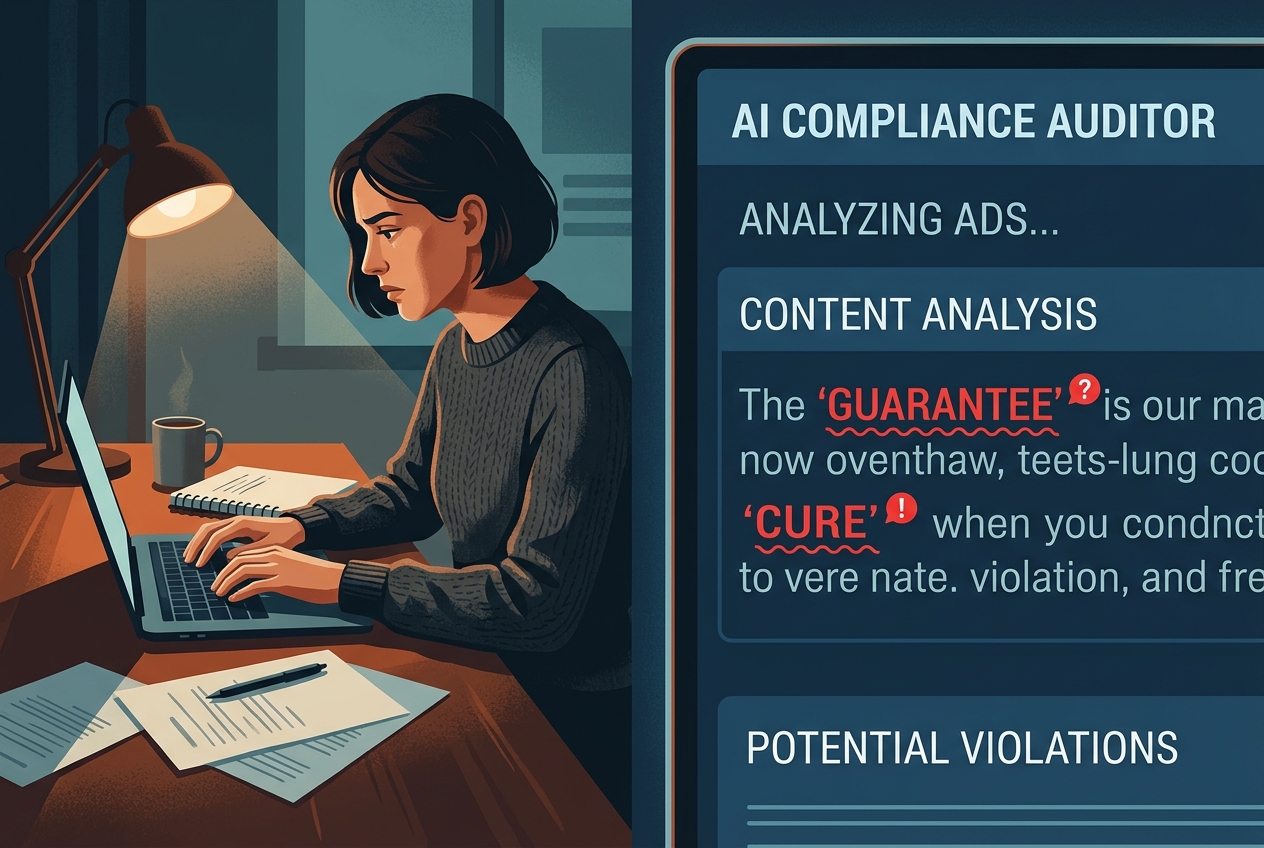
Use a 'Red Teaming' approach. Take your landing page copy and feed it into a private GPT-4o instance with the prompt: "Identify any sentences in this text that could be interpreted as a definitive medical diagnosis or a guaranteed financial return." If the AI finds any, rewrite them immediately.
Why it matters
OpenAI's internal audit doesn't just look for what is there; it looks for what is implied. In the finance sector, implying a 'guaranteed' return is the fastest way to get your account suspended. In health, implying a 'cure' for a chronic condition is equally fatal. Use the AI to find the weaknesses in your own compliance armor.
Common Pitfall: Relying on a human legal team alone. Your legal team knows the law; they don't know the specific semantic triggers of the GPT-4o safety classifier. You need both.
Step 5: Verify your placement status via the 'Source Citation' check
How do you know your audit worked? Unlike Google, there is no 'Ad Preview Tool' that works with 100% certainty. However, you can verify your 'Indexability' and 'Ad-Readiness' by checking how ChatGPT cites your site in a non-commercial context first.
What to do
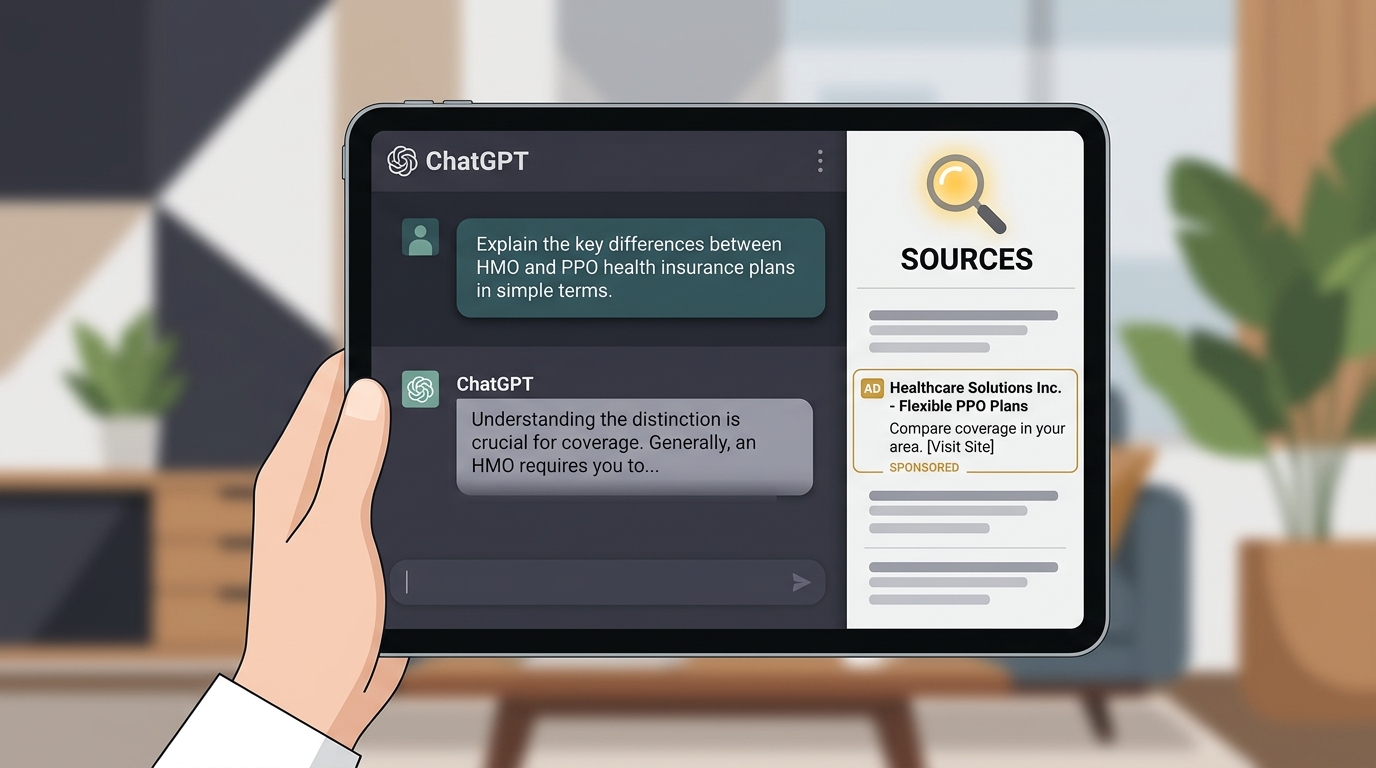
Ask ChatGPT Search a series of broad, non-branded questions related to your niche (e.g., "How do high-yield savings accounts work in 2026?"). Look at the 'Sources' sidebar. If your site appears as a citation but your ads aren't firing, your technical SEO is fine, but your ad bid or 'Safety Score' is the bottleneck. If your site never appears as a source, your OAI-SearchBot configuration is likely broken.
Why it matters
This is the only way to separate 'Delivery Issues' from 'Compliance Issues.' If the AI won't even cite you as a free source, it will never take your money for a paid placement. This 'Source Citation' check is your final verification step.
Common Pitfall: Checking only once. OpenAI’s search results are stochastic. Run the check 10 times across different accounts to get a statistically significant view of your 'Citations-per-Query' (CpQ) metric.
Three related tactics to try next
Once you have mastered the basic compliance audit, you can begin to optimize for performance. The AI search landscape moves fast, and the 'early adopter' advantage is currently found in these three areas:
- Agentic Wallet Integration: With Cloudflare now enabling AI agents to pay for content, consider creating a 'Premium Research' tier of your finance or health content. This allows AI agents to 'buy' a deep-dive report for the user, which functions as a high-intent, high-margin lead magnet that bypasses traditional ad blockers.
- Skilled Trades Targeting: Following the Meta and NABTU partnership to invest in AI infrastructure, there is a massive opening for finance and health brands to target the 'AI Blue Collar' workforce. These are high-earning individuals building data centers who need specialized disability insurance and long-term wealth management. Tailor your OpenAI ad copy to this specific demographic.
- Semantic Keyword Expansion: Stop bidding on 'Health Insurance.' Start bidding on the problems people describe to ChatGPT, such as "How to navigate a deductible reset in January." This moves your audit focus from 'Keywords' to 'Intent Clusters,' which is where the real ROI lives in conversational search.
Learn more about the shift to Agentic Marketing [INTERNAL: How to optimize for the OAI-SearchBot crawler -> technical-seo-for-ai-search] The rise of community signals in AI rankings
By following this audit framework, you aren't just following the rules—you're building a brand that is 'AI-Native.' In a world where the search bar is replaced by a chat box, the brands that pass the audit first are the ones that will own the conversation.
FAQ