
You are likely over-reporting your social media success by 20% to 40%. It is a hard pill to swallow, but if your primary metric is blended Return on Ad Spend (ROAS), you are almost certainly claiming credit for sales that would have happened without a single cent of ad spend. This is the brand trap. When you target warm audiences or allow your 'Advantage+' campaigns to cannibalize existing customers, you aren't growing the business; you're just paying Meta or TikTok a tax on your existing revenue.
By the end of this guide, you will have a rigorous, four-step framework for separating brand and non-brand social efforts. You will learn how to isolate true incremental lift and reallocate budget from 'safe' brand-heavy wins to the aggressive prospecting that actually scales a brand. Before you start, you need access to your platform ad managers (Meta, TikTok, or Google), a clean list of your existing customer emails for exclusion, and a baseline understanding of your current Marketing Efficiency Ratio (MER).
Step 1: Audit your current audience overlap and 'brand' contamination
Before you can fix the measurement, you have to find the leak. Most performance marketers look at a 4.0x ROAS and celebrate. But if that 4.0x is driven by 'warm' retargeting or 'Advantage+ Shopping' campaigns that are heavily weighted toward past purchasers, your non-brand ROAS—the actual engine of new growth—might be closer to a 1.2x. You are essentially hiding poor prospecting performance behind the high-intent behavior of your loyalists.
Start by breaking down your existing campaigns. In Meta Ads Manager, use the 'Breakdown' tool to look at 'Delivery' by 'Audience Segment.' If you haven't defined your brand segments in the account settings, do it now. You need to see exactly what percentage of your spend is hitting 'Existing Customers' versus 'New Prospects.' If more than 15% of your 'prospecting' budget is touching existing customers, your ROAS is a vanity metric.
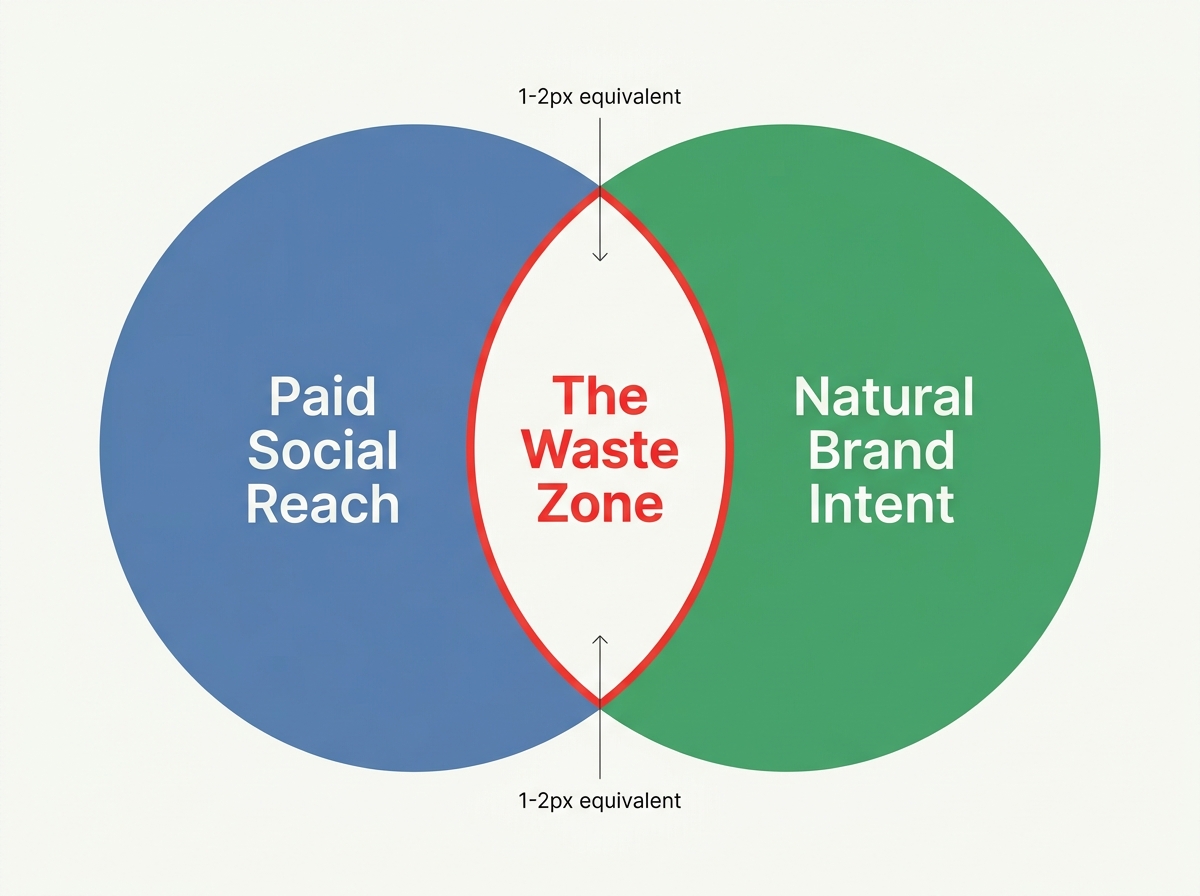
Why it matters: High ROAS on existing customers is often just 'expensive attribution.' These people already know you. They likely would have searched for you on Google or navigated directly to your site. By serving them a social ad, you're just inserting a paid touchpoint into a journey that was already nearing the finish line. This leads to an inflated sense of security while your actual market share remains stagnant.
TL;DR: Key Takeaways
- Identify the Trap: High ROAS often masks a lack of new customer acquisition (CAC) efficiency.
- Isolate Brand Spend: Separate campaigns into 'Brand/Retargeting' and 'Pure Prospecting' to see the true cost of growth.
- Exclude to Scale: Use rigorous exclusions to force the algorithm to find people who haven't heard of you yet.
- Measure MER: Shift focus from platform ROAS to total business Marketing Efficiency Ratio to see the real impact.
Common pitfall: Many managers rely on the platform's default '7-day click, 1-day view' attribution. This is a recipe for over-attribution. View-through conversions on retargeting ads are the biggest culprits of 'stolen' credit. If a customer was going to buy anyway and happened to scroll past your ad an hour before, the platform claims 100% of that sale.
Step 2: Implement aggressive brand exclusions at the campaign level
Now that you see the overlap, you must stop it. This requires more than just checking a box; it requires a structural shift in how you build campaigns. You must create a 'Clean Room' environment for your prospecting. This means excluding not just 'Past 30-day Purchasers,' but your entire customer database, your email list, and even high-intent website visitors if your goal is pure incremental reach.
Go to your Audience Manager and upload your full CRM list. Use this as a 'Negative Audience' across all prospecting sets. Furthermore, exclude 'Social Engagers' (people who have interacted with your IG/FB in the last 360 days) from your top-of-funnel (TOF) campaigns. This forces the algorithm to stop taking the path of least resistance. Algorithms are lazy; they will always bid on the person most likely to click, which is usually the person who already bought from you last week.
How to optimize Meta Advantage+ exclusions
Why it matters: When you remove the 'easy' conversions, your ROAS will drop. This is scary for many stakeholders, but it is the first time you will see the truth. A 1.5x ROAS on a pure cold audience is infinitely more valuable than a 5.0x ROAS on a retargeting list. The former represents a new customer who didn't exist in your ecosystem yesterday; the latter is just a recurring transaction.
Common pitfall: Forgetting to update your exclusion lists. Static CSV uploads go stale within days. Use a tool like Zapier or a direct Shopify-to-Meta integration to ensure your 'Purchaser' exclusion list is updated in real-time. If you don't, you'll end up spending money to show '10% off' ads to people who just paid full price, which is both a waste of budget and a customer service nightmare.
Step 3: Shift your primary KPI from ROAS to Incremental CAC and MER
If you follow Step 2, your platform ROAS will look 'worse.' To survive the inevitable meeting with your CFO, you must change the language of the conversation. You need to move away from platform-specific ROAS and toward Marketing Efficiency Ratio (Total Revenue / Total Ad Spend) and Incremental Cost Per Acquisition (iCAC).
Marketing Efficiency Ratio (MER) is your North Star. It doesn't care about attribution quirks or which platform 'claimed' the sale. It tells you if your total spend is actually moving the needle on total revenue. If you cut your 'Brand' social spend and your MER stays the same or improves, it proves that the brand spend was non-incremental. You were paying for sales you already had.
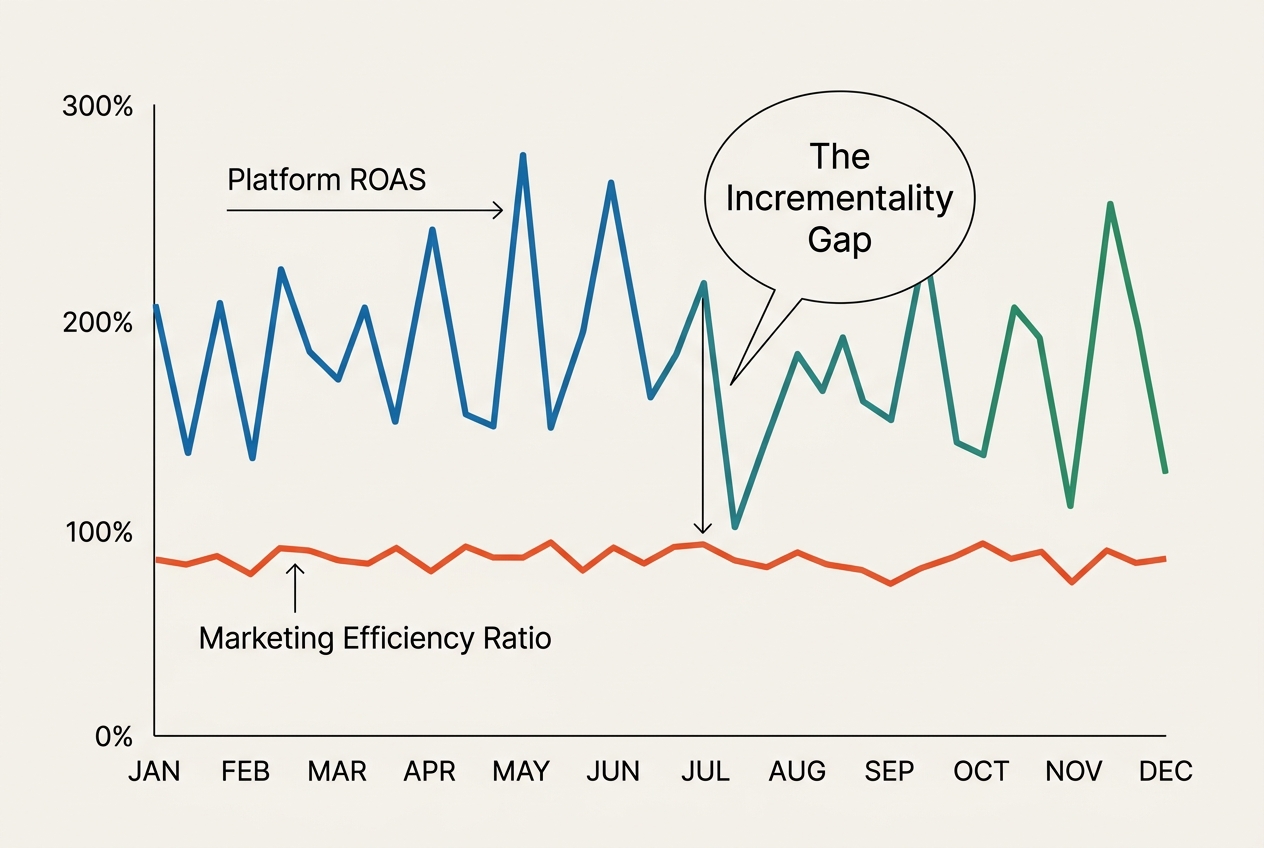
To calculate iCAC, you need to run a 'Holdout Test.' This is where you stop all ads for a specific geographic region or a specific product line for two weeks while keeping everything else constant. The difference in sales between the 'Ad' group and the 'Holdout' group is your true incremental lift. This is the only way to know if your social ads are actually changing behavior. Recent updates in Google Analytics (per [S2]) now provide better campaign diagnostics for missing identifiers, making it easier to track these cross-channel movements, but the logic remains: if the sales don't drop when the ads stop, the ads weren't working.
Why it matters: In an era of privacy changes and signal loss, platform attribution is increasingly a work of fiction. By focusing on MER, you align marketing with the actual bank account of the business. It also allows you to be more aggressive with experimental formats, like the emerging AI-agent ads from OpenAI [S3] or YouTube audio ads [S1], without worrying if they 'track' perfectly in a 7-day window.
Common pitfall: Looking at MER in a vacuum. Seasonal trends can mask poor performance. If your MER improves in November, is it because your ads are better or because it's Black Friday? Always compare your MER against a year-over-year (YoY) baseline to account for seasonality.
Step 4: Use 'Social Topical Maps' to capture organic search intent
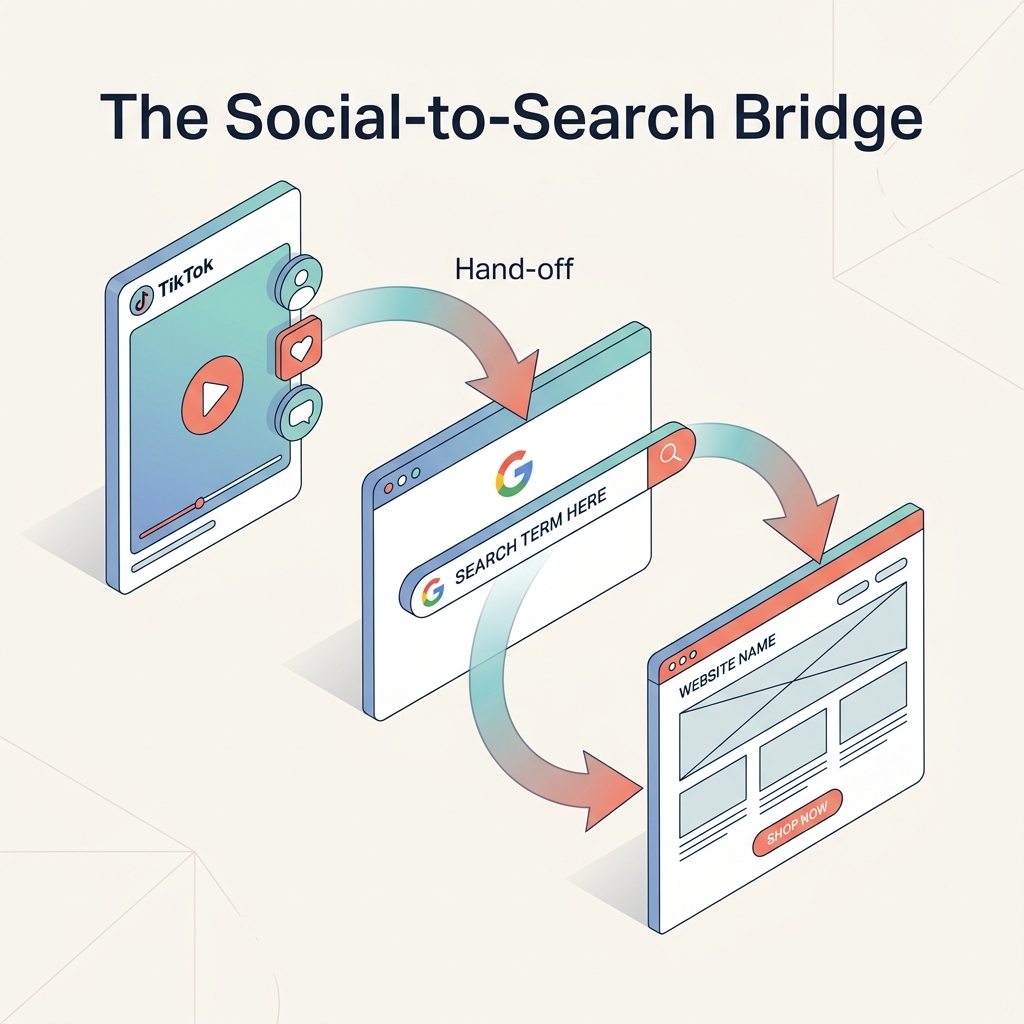
One of the biggest reasons brand social ROAS is inflated is that social ads often act as a reminder for people to search for you on Google. If you have a strong SEO presence, you might be paying for a social click when the user would have found you via search anyway. To combat this, you need to build a 'Social Topical Map.'
As noted in recent SEO research [S4], your social content—especially on YouTube and TikTok—often ranks in Google Search results. If your social ads are targeting keywords or topics where you already dominate the organic search results, you are competing with yourself. Analyze your 'Search Terms' report in Google Search Console and compare it to your social ad copy. If there is a 1:1 overlap, try excluding those specific 'Brand' keywords from your social targeting or using those ads only for audiences who haven't visited your site.
Why it matters: This is the ultimate level of efficiency. By understanding where your organic presence is strong, you can 'surrender' those easy wins to the organic team and spend your paid dollars on 'Conquesting'—taking market share from competitors or entering new categories where you have no organic footprint. This is how you turn a social media manager role (like the one currently open at Molchanovs Freediving [S5]) from a 'content poster' into a 'growth engineer.'
Common pitfall: Thinking SEO and Social are separate silos. If your social team is running a 'Summer Sale' campaign but the SEO team hasn't updated the meta-descriptions for the site, you're losing the 'hand-off' from social discovery to search fulfillment. Coordination is the key to incrementality.
Step 5: The Verification—Running the 'Ghost Ad' or Split-Cell Test
How do you know if this framework worked? You must verify the incrementality. The gold standard is a Split-Cell test. Divide your target audience into two identical groups. Group A sees your new 'Non-Brand' focused campaign. Group B sees nothing (or a 'Ghost Ad' for a charity).
After 30 days, compare the total conversion rate of the two groups. If Group A's conversion rate is 5% and Group B's is 4%, your 'Incremental Lift' is 1%. If Group A is 5% and Group B is 4.8%, your ads are barely doing anything, regardless of what the Meta dashboard says.
Verification Checklist:
- Check the 'New Customer' Ratio: Has your percentage of first-time buyers increased since implementing exclusions?
- Monitor the 'Brand Search' Volume: If you turn off brand social ads and your Google Brand Search volume stays steady, the social ads weren't driving that intent.
- Analyze the 'Path to Conversion': Use a tool like Northbeam or Triple Whale to see if 'Paid Social' is still the first touchpoint, or if it's moved to the middle/end. You want it at the start.
Three Related Tactics to Try Next
Once you have mastered the brand vs. non-brand split, you can further refine your efficiency with these advanced tactics:
- The 'Profit-Based' Bidding Shift: Instead of optimizing for Revenue (ROAS), upload your COGS (Cost of Goods Sold) to Meta and optimize for 'Gross Profit.' This naturally pushes the algorithm away from low-margin 'brand' sales and toward high-margin new customer acquisitions.
- Creative-Led Prospecting: Stop using 'salesy' creative for cold audiences. Since you've excluded your fans, your ads need to do the heavy lifting of education. Use long-form UGC or 'problem-solution' frameworks that don't assume the viewer knows who you are.
- Post-Purchase Attribution Surveys: Add a 'How did you hear about us?' survey to your thank-you page (e.g., Fairing or EnquireLabs). Compare the survey results to your platform data. If 50% of people say 'Social Media' but your dashboard says 10%, you have an attribution gap. If it's the other way around, you have an incrementality problem.
By following this framework, you move from being a 'platform manager' to a 'business driver.' You will likely spend less money to make the same amount of profit, or—more importantly—you will find the confidence to spend more money because you finally know exactly what each dollar is worth.
FAQ