
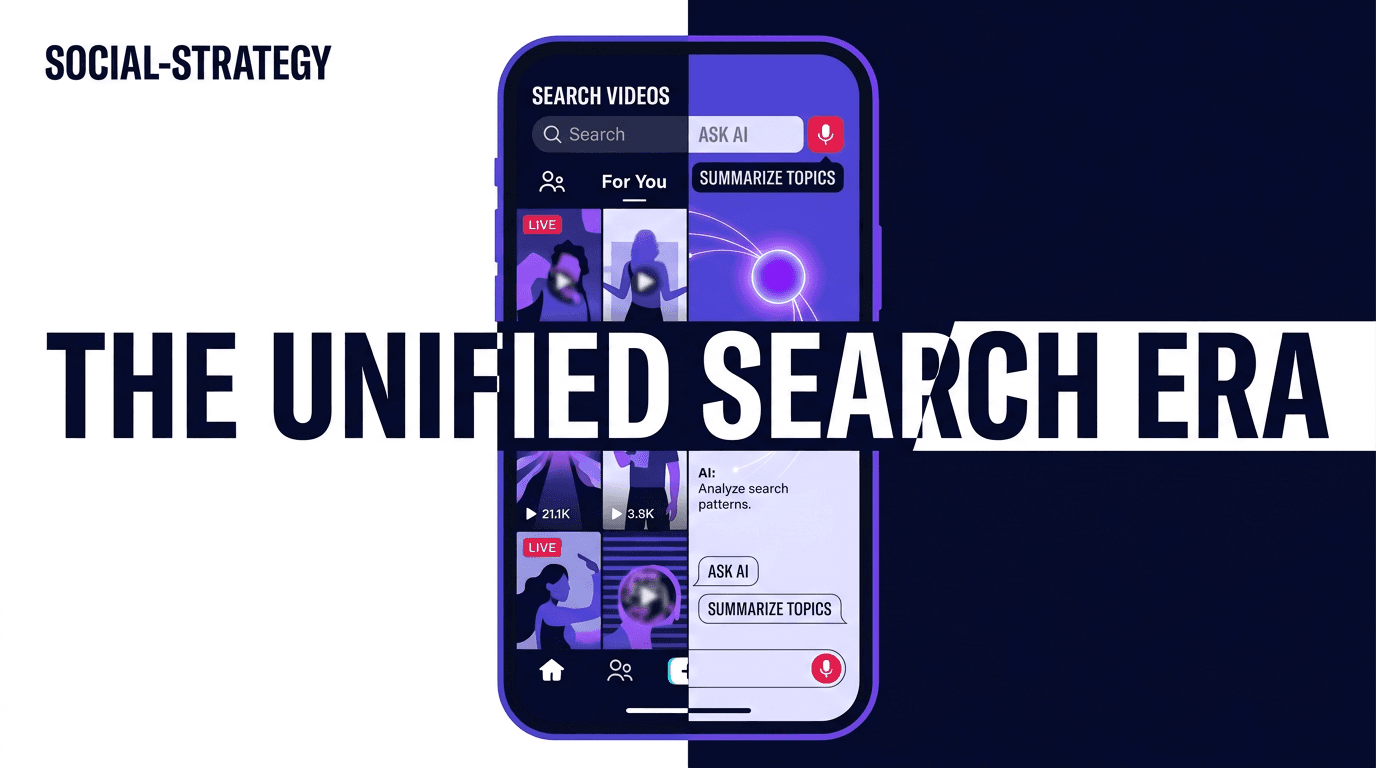
For years, we’ve treated social media management and search engine optimization as distant cousins. One was about the 'vibe' and the immediate dopamine hit; the other was about the long-tail intent and the technical crawl. But as we cross into mid-2026, those silos have collapsed. The release of advanced agentic layers on search engines and the aggressive pivot of TikTok and Instagram toward intent-based discovery means you are no longer optimizing for a bot or a person. You are optimizing for a meaning.
When a user asks ChatGPT to "find me a sustainable wellness brand for sensitive skin," or when they type that same query into TikTok’s search bar, the underlying retrieval mechanism is becoming eerily similar. Both rely on semantic clusters—groups of related concepts, keywords, and user sentiments—rather than simple keyword matching. If you are still running a 'social strategy' that doesn't talk to your 'SEO strategy,' you're paying double for half the results.
TL;DR
- The Convergence: Search engines are becoming 'agents' that do tasks, while social platforms are becoming 'libraries' that answer questions.
- The Playbook: Semantic content—content that focuses on intent, entity relationships, and conversational clarity—is the only way to rank in both LLM-driven agents and social discovery engines.
- The Shift: Stop optimizing for keywords; start optimizing for 'entities' and 'solutions' that agents can parse and social algorithms can categorize.
The Head-to-Head: Agentic Search vs. Social Search
To understand why a single playbook works, we first have to look at how these two titans compare in the current market. Agentic search (think Perplexity, OpenAI's SearchGPT, or Google’s Gemini-integrated Search) is designed to synthesize information and execute actions. Social search (TikTok, Instagram, and even Pinterest) is designed to provide visual social proof and community-vetted answers.
Per source [S2], the decade between 2016 and 2026 has fundamentally rewritten social marketing, shifting it from a broadcast medium to a utility medium. This utility is where social search meets AI agents.
| Feature | Agentic Search (LLM-based) | Social Search (TikTok/IG) |
|---|---|---|
| Primary Goal | Direct answer & task execution | Discovery & social proof |
| Ranking Signal | Semantic relevance & authority | Engagement, recency, & keywords |
| Content Format | Structured data, text, web links | Short-form video, captions, alt-text |
| User Intent | High-intent, complex queries | High-intent, visual/lifestyle queries |
| Monetization | Subscription/Affiliate/API | Ads & Direct Commerce (TikTok Shop) |
| Discovery Style | Pull (User asks, Agent finds) | Push-Pull (Algorithm suggests, User searches) |
Why Semantic Content Strategy is the Universal Solvent
In the old world, you’d write a blog post for Google and a snappy caption for Instagram. In the agentic world, both platforms are 'reading' your content to understand what you actually provide. Semantic content strategy focuses on the entity—your brand, your product, and the specific problem you solve.
When TikTok interprets a video, it isn't just looking at the #wellness hashtag. According to recent eMarketer data [S1], wellness brands are seeing massive view spikes because they are successfully mapping their content to specific user pain points—like 'cortisol detox' or 'nervous system regulation'—which are semantic clusters. These same clusters are exactly what an AI agent looks for when a user asks for health advice.
How to build a semantic keyword map for 2026
If your video transcript mentions 'magnesium glycinate for sleep' and your website has a structured data schema for the same product, the AI agent sees a high-authority connection. It verifies your brand as a legitimate entity in that space. Meanwhile, TikTok’s search algorithm uses that same transcript to place you at the top of the 'sleep hacks' search results. You’ve won twice with one piece of core knowledge.
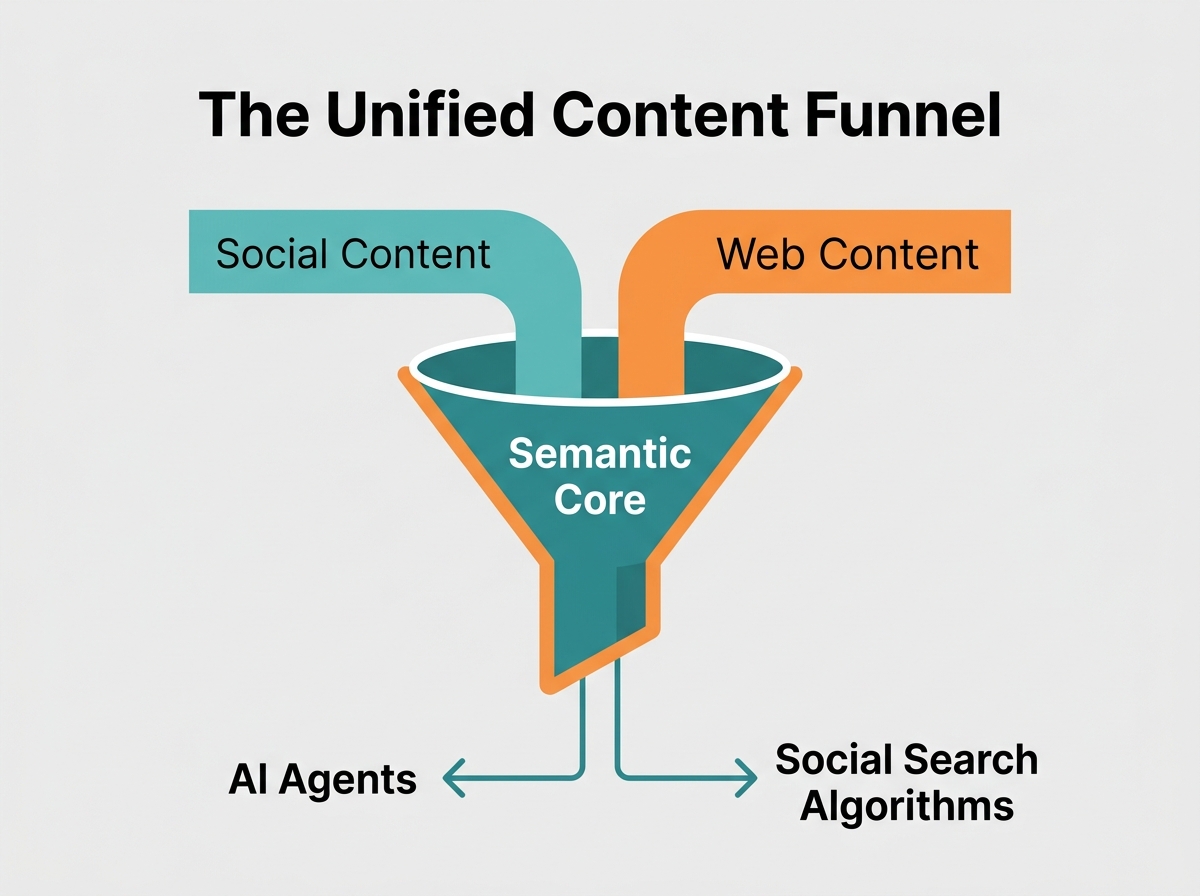
The Real-World Workflow: One Asset, Two Engines
Let’s look at a practical workflow for a brand using TikTok Shop to expand globally, a trend highlighted by Modern Retail [S3]. If you are a brand like Oura or Lemme, your workflow shouldn't start with 'what's trending on TikTok.' It should start with 'what question does our product answer?'
- The Core Insight: Users are searching for 'how to improve deep sleep without pills.'
- The Semantic Asset: Create a 60-second video that explains the science of a specific ingredient. Use clear, spoken-word terminology.
- Social SEO Layer: The caption uses natural language, not just tags. "Why we used L-Theanine to help with REM cycles" is better than "#sleep #biohacking."
- Agentic Layer: The same video is transcribed and uploaded to a blog post with 'How-To' schema markup.
When the AI agent crawls the web, it finds the blog. When it looks for social proof, it finds the TikTok video with high engagement. Because the terminology matches perfectly, the agent cites you as the definitive source. You aren't just a search result; you are a recommendation.
Deal-Breakers: Where the Strategies Diverge (And How to Bridge Them)
While the semantic core is the same, the 'deal-breakers' for each platform differ. For an AI agent, the deal-breaker is hallucination or lack of citations. If your site is a mess of broken links and unverified claims, an agent like Perplexity will deprioritize you. Trust is the currency of agentic search.
For social search, the deal-breaker is friction. Instagram is currently testing new ways for users to customize their own algorithms [S4][S5]. If your content is too 'SEO-heavy' and lacks the aesthetic or emotional hook that users have trained their personal algorithms to crave, you’ll be filtered out—not by the bot, but by the user’s own settings.
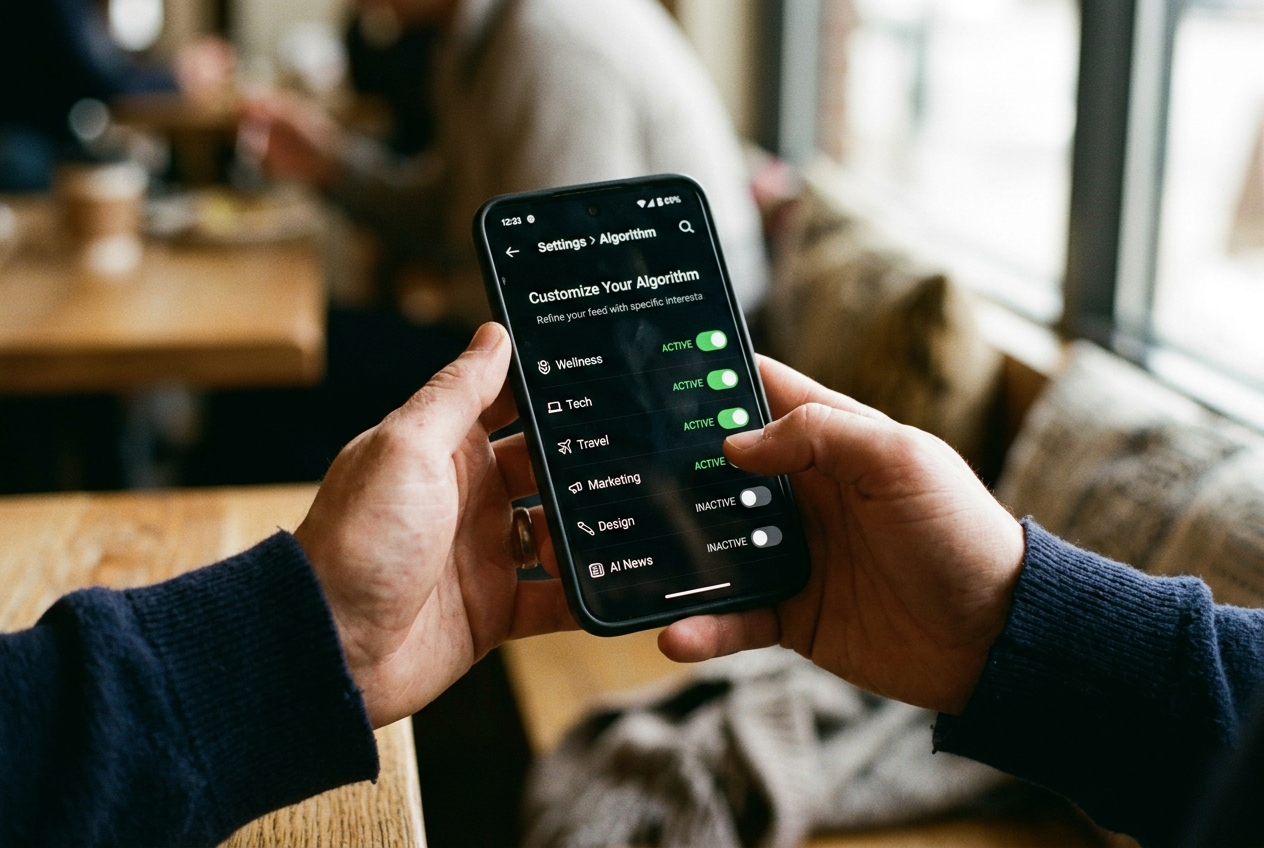
To bridge this, your content must be 'Scientifically Sound but Culturally Relevant.' Use the hard data that agents love in the transcript and the metadata, but use the visual storytelling that social users demand in the actual footage.
LLM Visibility: The New Frontier of Brand Tracking
How do you measure if you’re winning in agentic search? It’s not about 'blue links' anymore. It’s about 'Share of Model.' We are seeing the rise of tools that track how often a brand is mentioned in ChatGPT or Claude responses for specific categories.
Top 5 tools for tracking LLM brand mentions
Interestingly, there is a direct correlation between TikTok search volume and LLM visibility. As users search for a brand on social, the 'noise' increases, which AI models pick up during their training or browsing phases. If you’re a wellness brand and you aren’t appearing in the 'Your Algorithm' settings that users are now fine-tuning [S5], you are effectively invisible to the AI agents that use social signals to gauge what's trending and trustworthy.
The Verdict Matrix: Which Strategy Should You Prioritize?
While we argue for a single playbook, your weighting depends on your business model. Use this matrix to decide where to put your primary energy.
| If your goal is... | Prioritize... | Why? |
|---|---|---|
| Direct Sales (D2C) | Social Search (TikTok Shop) | High conversion intent and immediate checkout [S3]. |
| B2B Thought Leadership | Agentic Search (LLM) | Professionals use agents to summarize complex topics. |
| New Product Launch | Social Search | Needs the 'push' algorithm to find an audience. |
| Customer Support/FAQ | Agentic Search | Agents are better at parsing 'how-to' documentation. |
How to Apply This Tomorrow
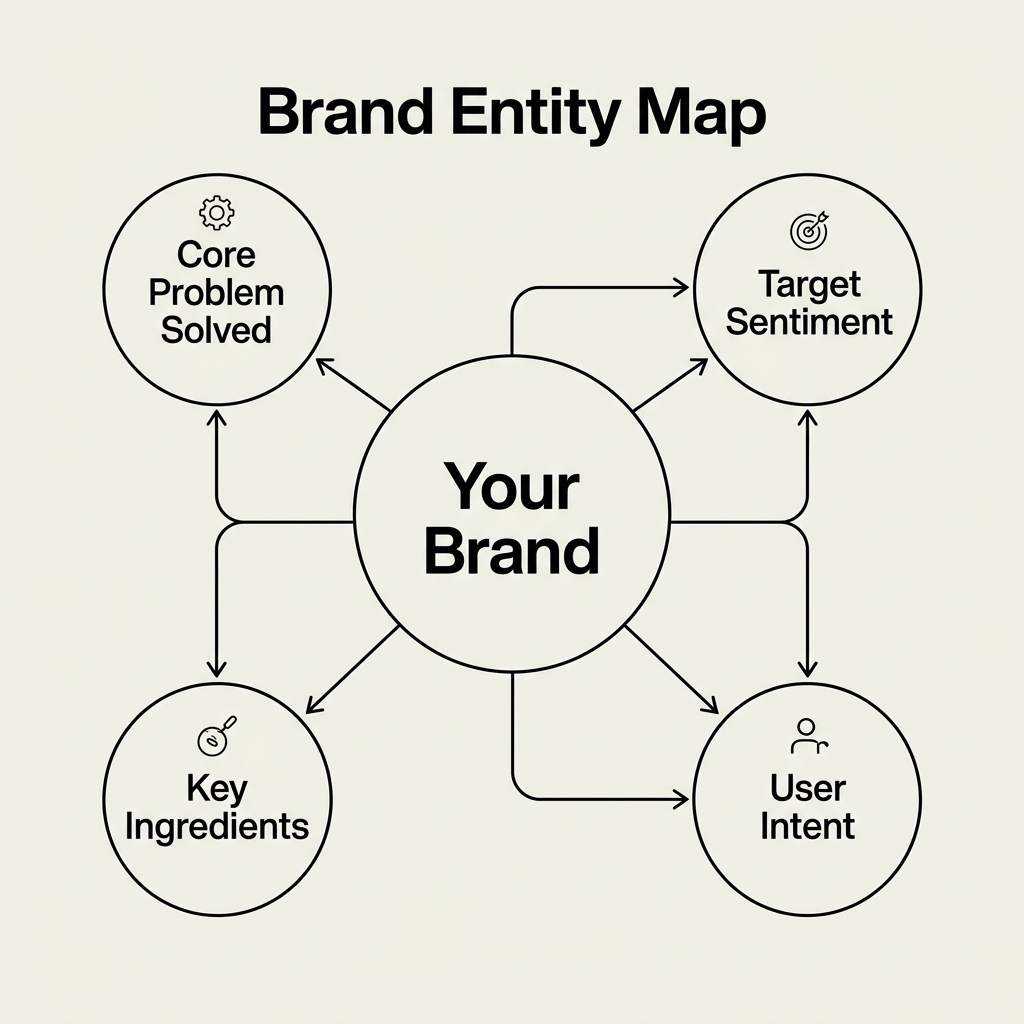
You don't need a new department; you need a new document. Create a 'Semantic Entity Map' for your brand. This document should list the 10 core problems your brand solves and the specific language (not just keywords) used to describe them.
Ensure every TikTok script, every Instagram caption, and every product description on your site uses this unified language. When Instagram rolls out more ways to 'reset' or 'customize' the algorithm [S4], your brand should be so clearly categorized that you survive the reset. You want to be the brand that the user manually adds back into their feed because you provide the exact utility they searched for.
Stop chasing the 'hack' for TikTok and the 'hack' for Google. The machines have moved past hacks. They are looking for meaning. Give it to them in a single, coherent voice across every digital touchpoint. That is how you win the era of the agent.
FAQ