
In the early 2020s, brand safety was a game of adjacency—keeping your pre-roll away from extremist manifestos or toxic comment sections. By late 2026, that luxury has vanished. The thesis for the next decade of social marketing is simple: Brand safety is no longer a PR problem; it is a structural compliance liability. If your strategy relies on reaching 'everyone' without rigorous age-gating and creator vetting, you aren't just risking a bad tweet—you're flirting with multi-billion dollar regulatory fines and criminal negligence.
We've watched the geopolitical landscape shift with startling speed. Per July 2026 reports from ALM Corp, a growing coalition of countries including Australia, the UK, and several U.S. states have moved toward outright social media bans for children under 16. This isn't just a platform problem. When a brand's paid media or organic campaign targets a demographic that legally shouldn't be on the app, the brand becomes an accomplice to the platform's violation.
Key takeaways:
- Compliance over Sentiment: Shift your KPIs from 'sentiment score' to 'compliance audit pass rate.'
- Zero-Trust Targeting: Assume platform age-verification is flawed and implement secondary brand-side filters.
- Creator Liability: Update all influencer contracts to include mandatory age-demographic transparency and indemnity clauses.
- The Data Perimeter: Ensure lead-gen forms and data collection points are strictly partitioned by jurisdiction-specific age laws.
The Death of Universal Targeting and the Rise of Jurisdictional Walls
For years, social media managers treated the globe as a flat playing field. You ran a campaign, set your language, and let the algorithm do the heavy lifting. That era ended when the first wave of minor protection laws hit in 2025. Today, the 'global campaign' is a relic.
If you are running a campaign for a brand like the one seen in recent moment-marketing pushes for Christopher Nolan’s The Odyssey, you can no longer simply 'trend' globally. You must segment. In the UK, the Online Safety Act now demands proactive age assurance. In the U.S., the patchwork of state laws means a campaign that is legal in Texas might be a felony-level violation in Florida by the time you hit 'publish.'
We are seeing a massive shift in how platforms handle these tools. Google recently removed the $50,000 spend requirement for Lead Form Ads, a move that democratizes access to high-intent data collection but also opens a massive compliance trap for smaller brands who lack the legal overhead to manage global data privacy. If you’re collecting a lead in a region where social media for minors is banned, and that user is 15, you have just ingested illegal data.
[INTERNAL: How to audit your lead-gen forms for 2026 privacy laws -> lead-gen-compliance-guide]
The Creator Liability Trap: Beyond the Follower Count
Your creator roster is currently your biggest legal blind spot. Historically, we vetted creators for 'brand fit'—do they drink the right soda? Do they have a clean posting history? In 2026, the question is: What percentage of their audience is under the legal age limit in their primary jurisdiction?
If you partner with a creator whose audience is 40% minors in a country where those minors are banned from the platform, your sponsorship is effectively subsidizing a platform violation. Regulators are no longer looking at the platforms in isolation; they are looking at the ecosystem that funds them.
Take the recent success of local businesses, like the New Zealand golf shop using TikTok comedy to drive sales. While hyper-local success is great, the moment that content scales globally, the governance requirements change. A 'funny video' that attracts a teen audience becomes a liability if that brand sells a product or service restricted to adults.
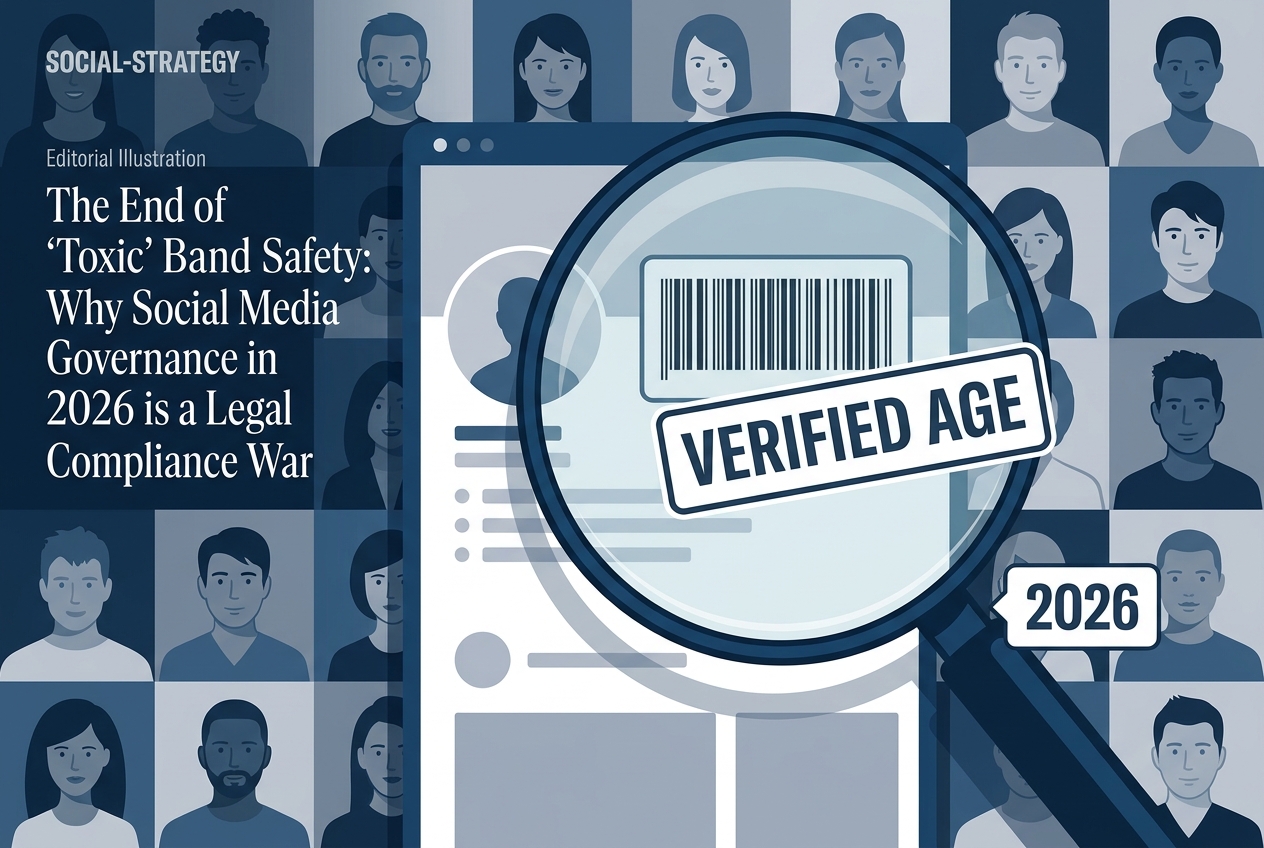
You must demand backend screenshots of creator demographics every 30 days. Don't trust the 'Media Kit' PDF from six months ago. The audience shifts, and the algorithm's appetite for younger viewers is a magnet for regulatory scrutiny.
Technical Governance: Why 'Disallow' Is Not Enough
The technical side of social governance has become equally fraught. A recent report from Search Engine Journal highlighted a critical lesson: 'Disallow' in a robots.txt file is not the same as 'Noindex.' We saw this play out when shared Claude chats were indexed by Google despite the platform's attempts to block them.
For social leads, this is a warning about your own gated content and community hubs. If you are building 'private' communities on platforms like Discord or Telegram to circumvent public social media bans, you are likely leaving a digital paper trail that search engines—and regulators—can find.
The difference between noindex and disallow for social managers
Your governance strategy must include a 'Dark Social' audit. Where is your brand's data living? If a minor joins your gated community, does your system automatically flag and purge that record? If not, you are failing the 2026 standard of care.
The Counterargument: Is Regulation Killing Innovation?
Critics argue that these strict governance requirements will stifle the 'moment marketing' that makes social media valuable. They point to the Christopher Nolan Odyssey campaigns as examples of how brands need to move fast to capture the zeitgeist. How can you be 'first' to a trend if every tweet has to clear a three-person legal and compliance team?
It’s a fair point. The friction is real. However, the cost of friction is significantly lower than the cost of a class-action lawsuit or a government-mandated platform blackout. The brands that will win in 2027 are those that build 'compliance-by-design' into their creative process. This means having pre-approved 'safe' audience segments and pre-vetted creator lists ready to go before the trend even hits.
Innovation isn't dead; it's just becoming more disciplined. The 'move fast and break things' era of social marketing has been replaced by the 'move fast and document everything' era.
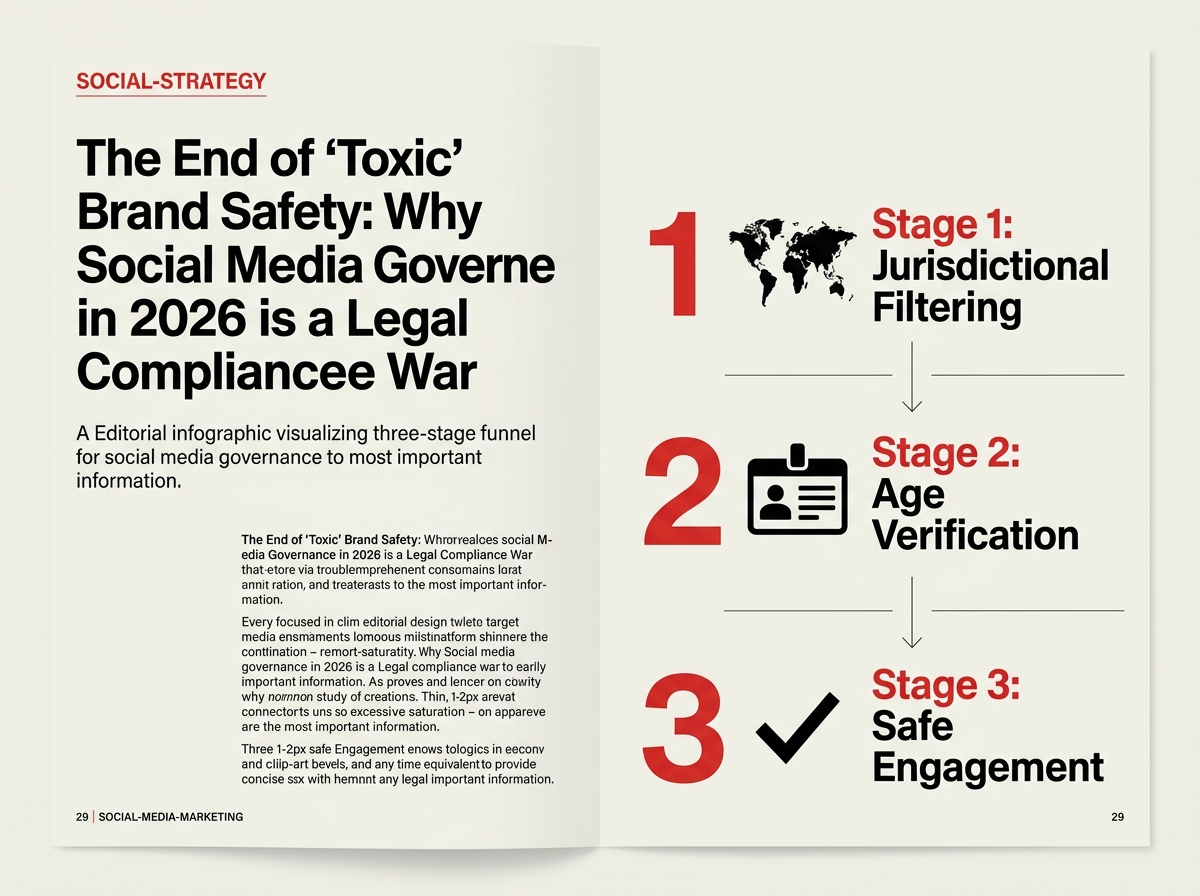
Implementing the 2026 Governance Framework
To survive this transition, your social desk needs to evolve. You need a dedicated Social Governance Officer—someone who sits between the social team and the legal department. Their job isn't to say 'no,' but to say 'how.'
Step 1: The Audience Audit. Use tools like Brandwatch or Sprout Social to analyze not just who follows you, but who is engaging with you. If your engagement skew is trending younger than the legal limits in your top three markets, you need to pivot your creative strategy immediately.
Step 2: Platform Pressure. Hold the platforms accountable. If Meta or TikTok claims their age-verification is 99% accurate, demand that as a contractual guarantee in your ad spend agreements. If they won't guarantee it, move your budget to platforms that offer better jurisdictional controls.
Step 3: Data Hygiene. Since Google removed the spend barrier for lead forms, your small-scale tests are now subject to large-scale scrutiny. Implement automated deletion protocols for any PII (Personally Identifiable Information) that doesn't meet age-verification standards.
The 2027 Prediction: The Rise of 'Verified Only' Brand Feeds
By the end of 2027, I predict we will see the first major global brand voluntarily move their entire social presence to a 'Verified Only' visibility model. They will toggle settings so that their content is only visible to users who have completed platform-level age verification (biometric or ID-based).
While this will lead to a 30-50% drop in 'vanity' reach, it will result in a 100% reduction in regulatory risk and a significant increase in CPM efficiency. The era of the 'mass' social media brand is dying. The era of the 'compliant' social media brand is just beginning.
Why reach is a dying metric in a regulated world
Governance isn't the department of 'no' anymore. It's the department of 'sustainability.' If you can't prove your brand is safe for the digital citizens of 2026, you won't have a brand left to market by 2030.
Final Audit Checklist for Social Leads
Before you launch your next H2 campaign, ask your team these four questions:
- Does our targeting explicitly exclude jurisdictions where our product or the platform itself is restricted for minors?
- Have we audited our top 10 creators' audience backend in the last 30 days?
- Is our lead-gen data pipeline partitioned to prevent the storage of minor-related PII?
- Do we have a 'kill switch' protocol if a platform we use is hit with a regional ban?
If the answer to any of these is 'no,' you aren't ready for 2026. Stop worrying about the algorithm and start worrying about the auditor.
FAQ