
By the end of this audit, you will have a baseline for your brand’s 'Answer Share'—the percentage of time an AI model recommends your product or cites your content as the primary source for a query. In 2026, standard rank tracking is a vanity metric. What matters is the citation link in a Gemini snippet or the verbal recommendation in a ChatGPT voice session. Before starting, you will need access to your site’s server logs (or a tool like Cloudflare Radar), a list of 50 high-intent 'discovery' keywords, and a clean browser environment for manual LLM testing.
TL;DR
- Shift from SERP to AEO: Generative Engine Optimization (GEO) now dictates top-of-funnel traffic.
- Citation Tracking: Use referral traffic headers to identify which AI agents (GPTBot, PerplexityBot) are driving users.
- Social Signal Integration: Algorithms on LinkedIn and Instagram now feed directly into AI training sets; high-engagement social posts are often the primary citations for 'trending' queries.
Step 1: Map your AI referral traffic and 'Ghost' sessions
You cannot manage what you do not measure. In 2026, a significant portion of your traffic comes from AI agents scraping your site or users clicking 'Source' links in an AI response. These often appear as direct traffic or are misattributed in legacy analytics suites. You must isolate these to understand your current baseline visibility.
Why it matters: If you don't know which AI engine is driving current conversions, you'll waste your GEO (Generative Engine Optimization) budget on the wrong model. Perplexity might be driving your high-intent buyers while ChatGPT is merely summarizing your blog for students. You need to distinguish between the two.
What to do:
- Open your server logs or advanced analytics (e.g., Amplitude or a hardened GA5 instance).
- Filter by User-Agent strings. Look for
GPTBot,Google-Other(often Gemini's crawler), andPerplexityBot. - Create a custom segment for 'AI Referrals'. In 2026, most AI engines have finally agreed to include a specific
utm_source=ai_answer_engineor similar header when a user clicks a citation. - Compare this traffic to your organic search traffic. If AI referral traffic is growing while organic is flat, your AEO strategy is working even if your 'rankings' look stagnant.
Common Pitfall: Many marketers forget that AI engines often cache content for weeks. A spike in 'crawling' from an AI bot doesn't mean an immediate spike in visibility. Don't correlate crawl frequency with immediate traffic; correlate it with citation updates.
Step 2: Conduct 'Answer Share' manual audits for high-intent queries
Automated tools for tracking AI answers are still in their infancy in early 2026. To get a real sense of your brand's presence, you must perform 'Clean Room' searches. This involves querying the major models (ChatGPT-5, Gemini 2.0, and Perplexity) without the bias of your personal search history.
Why it matters: AI models are highly personal. If you search for your own brand constantly, the AI will learn to show it to you. This creates a false sense of security. You need to know what a 'cold' prospect sees when they ask, "What is the best enterprise CRM for mid-sized healthcare firms?"
What to do:
- Identify 50 'Discovery' queries. These shouldn't be your brand name; they should be the problems you solve.
- Use a 'Clean Room' environment—VPN set to a neutral location, logged out of all accounts, and using an incognito window.
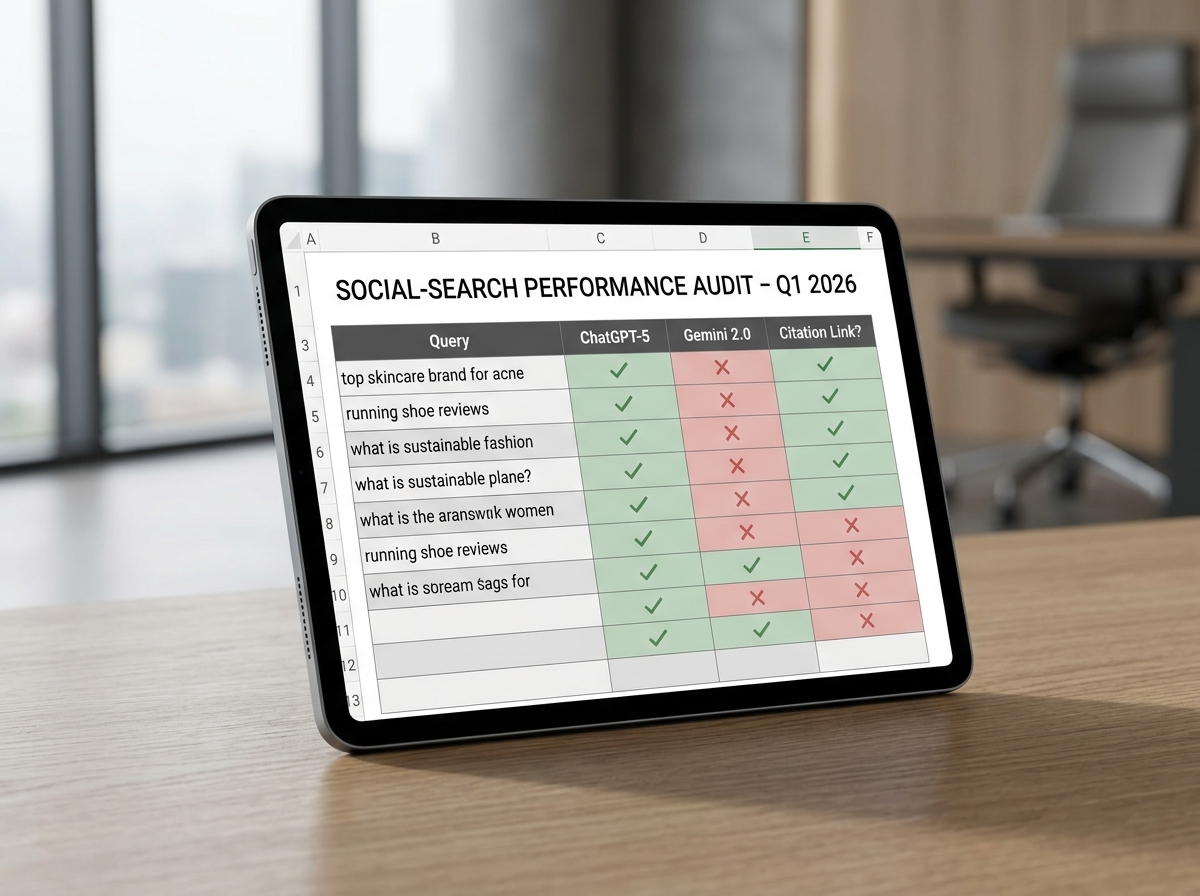
- Query each of the 'Big Three' models. Record three data points: Was your brand mentioned? Was your brand the FIRST mentioned? Did the AI provide a direct link to your site?
- Assign a score. (e.g., 3 points for a link, 1 point for a mention, 0 for nothing).
Common Pitfall: Don't use leading questions. Asking "Why is [Brand] the best?" is useless. Use open-ended, comparative prompts like "Compare the top three options for [Category]." This mimics real user behavior in 2026.
Step 3: Audit your social-to-AI pipeline visibility
As of the June 2026 LinkedIn algorithm update LinkedIn Algorithm 2026 deep dive, social signals are more tightly integrated into AI training loops than ever. AI engines now prioritize 'verified' human perspectives found on social platforms to avoid the 'SEO-slop' of the open web. If you aren't visible on LinkedIn or Instagram, you are becoming invisible to AI.
Why it matters: Per the latest Hootsuite data on Instagram Instagram 2026 algorithm tips, the platform now acts as a primary discovery engine for Gen Alpha and Gen Z. AI models like Gemini now use real-time Instagram Reels data to answer 'What's trending' or 'Where should I go' queries. If your brand isn't being talked about by creators, the AI has no 'social proof' to cite.
What to do:
- Check your 'Social Citation' rate. Ask an AI: "What are people on social media saying about [Brand]?"
- Look for specific citations of your executive's LinkedIn posts or your brand's TikTok campaigns.
- Use a tool like Brandwatch to track 'Cross-Platform Sentiment'. If your sentiment is negative on Reddit but positive on LinkedIn, see which one the AI prioritizes. Usually, it's the one with the most 'recent' high-engagement signals.
- Analyze your posting times. According to 2026 benchmarks Best times to post on Instagram 2026, timing your social content to hit right before peak AI-query hours (usually 10 AM and 8 PM EST) can help your content get indexed faster by real-time AI agents.
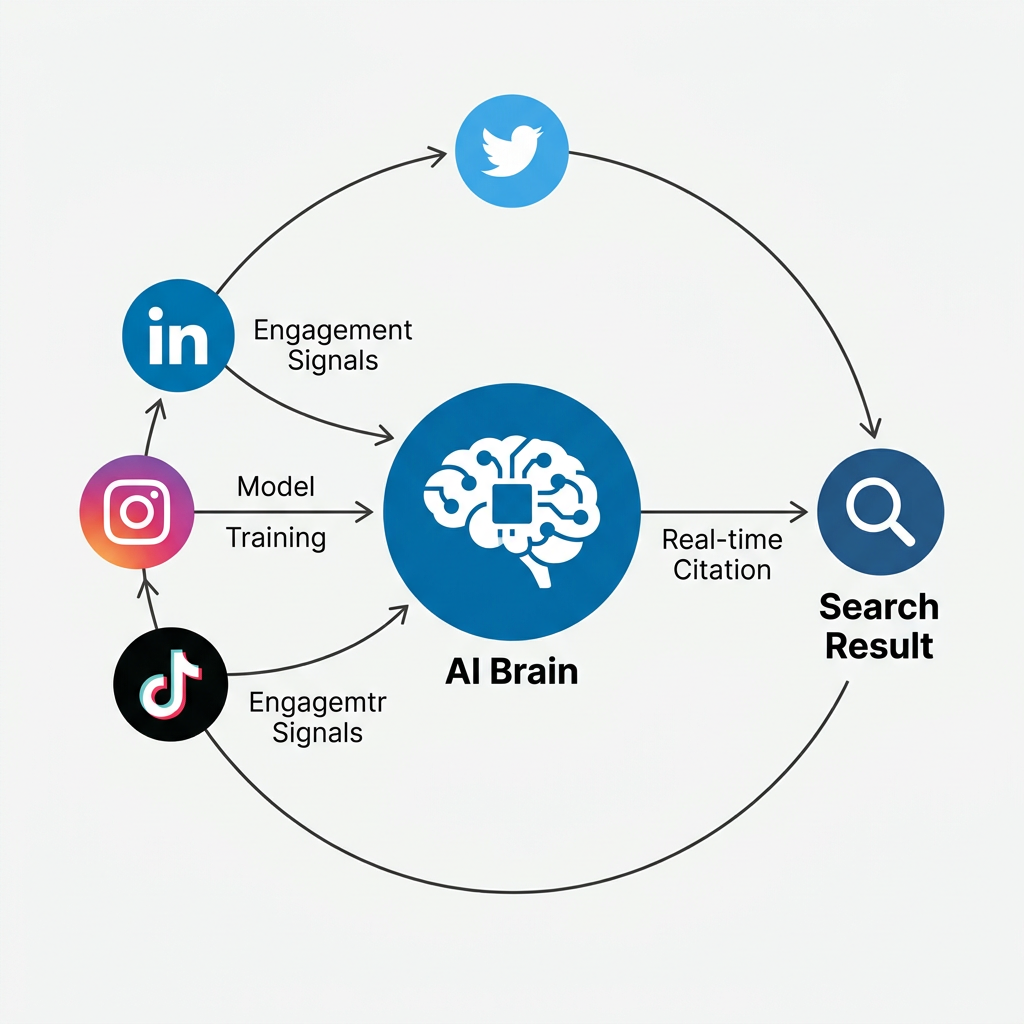
Common Pitfall: Relying solely on corporate accounts. AI models in 2026 are heavily weighted toward 'Individual Identity' signals. A post from your CEO often carries more weight in an AI summary than a post from your brand's official page.
Step 4: Map your 'Citation Map' and Entity Relationship
AI engines don't see keywords; they see entities and relationships. Your brand is an entity. Your products are entities. The goal of this step is to see what other entities the AI associates with you. If you are a high-end coffee brand, but the AI associates you with 'cheap' and 'discount,' your GEO strategy is failing.
Why it matters: This is the core of GEO strategy. You want to be the 'Authority' entity for specific clusters. If an AI thinks your brand is related to 'Product A' but you've pivoted to 'Product B,' the AI will continue to provide outdated or irrelevant answers to users.
What to do:
- Use a 'Knowledge Graph' visualization tool or simply ask an AI: "Create a conceptual map of the industry [Category] and show where [Brand] fits."
- Identify 'Missing Links.' Are your competitors linked to 'Innovation' while you are linked to 'Legacy'?
- Update your structured data (Schema.org). In 2026, AI-specific schema tags (like
ai-optimized-summary) are being tested. Ensure your site's JSON-LD is flawless. - Audit your local presence. As noted by Search Engine Journal [S2], local marketing complexity is at an all-time high. Ensure your Google Business Profile and other local citations are unified, as Gemini uses these as primary 'truth' sources for local AI search.
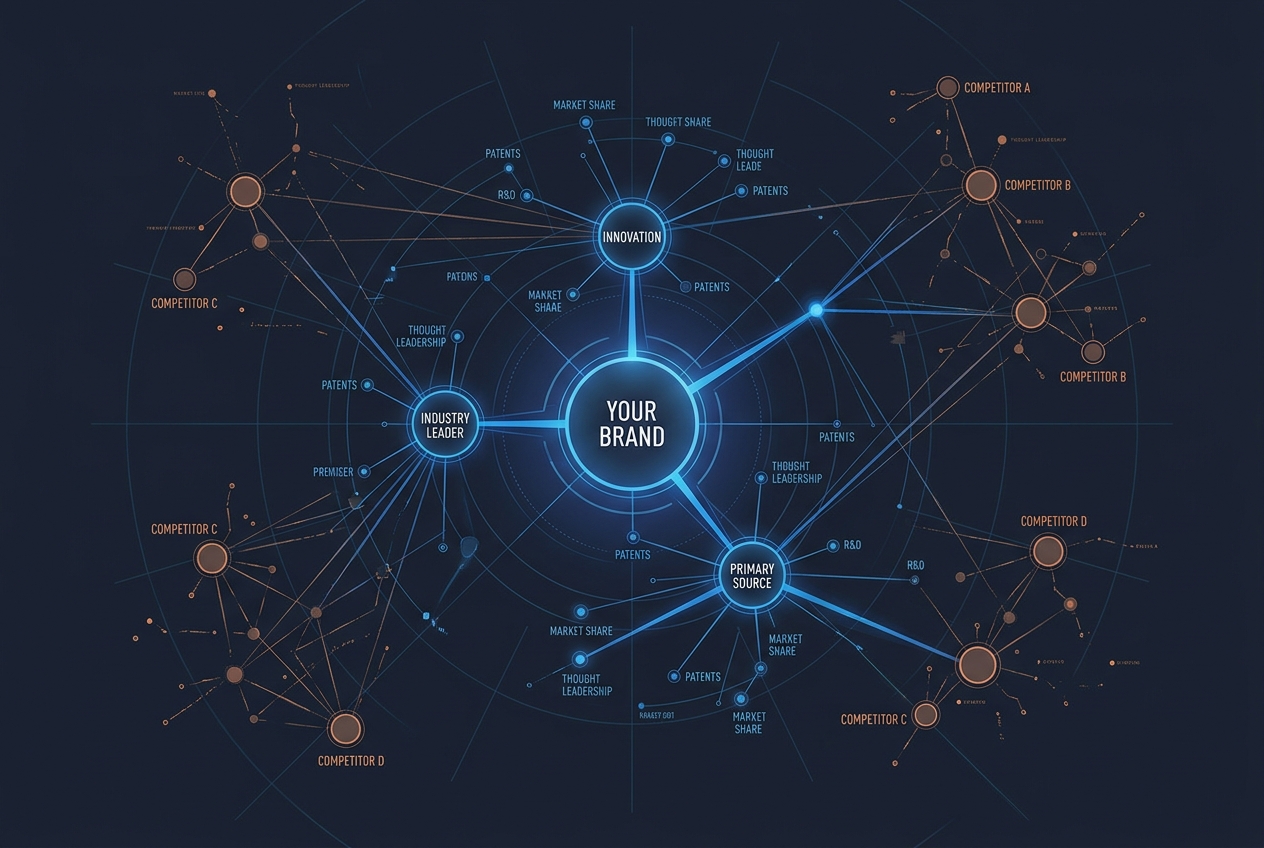
Common Pitfall: Neglecting 'Negative Entities.' If the AI associates your brand with a scandal from 2022, you need to flood the 'Social-to-AI pipeline' (Step 3) with new, high-authority content to shift the entity relationship. You can't delete the old data, but you can out-rank it in the AI's 'Current Context' window.
Step 5: Verification — The 'Citation Loop' Test
How do you know your audit and subsequent optimizations worked? You perform the Citation Loop test. This is the final verification that your brand has moved from being 'known' by the AI to being 'trusted' as a primary source.
Why it matters: Verification ensures your budget is actually moving the needle on 'Answer Share' rather than just increasing 'Impressions' that don't lead to clicks.
What to do:
- Pick a specific claim your brand makes (e.g., "Our software reduces churn by 22%").
- Ask the AI a question that should lead to that claim: "Which churn reduction software has the best proven results?"
- If the AI makes the claim AND cites your specific whitepaper or social post, you have successfully closed the loop.
- Track the 'Click-Through Rate' from that specific AI citation in your logs from Step 1.
Common Pitfall: Celebrating a mention without a link. A mention is good for brand awareness, but in 2026, without a citation link, the user journey often ends inside the AI interface. You want the click.
Three Related Tactics to Try Next
Once you have mastered the basic AI audit, you can move into more aggressive GEO tactics to expand your footprint.
- Creator-Led Storytelling for AI Indexing: As seen in the 'Wanderlust Week' campaign by TikTok and the DOT [S5], high-production, creator-led series create a massive footprint of 'Human-First' content that AI engines love to cite for travel and lifestyle queries. Consider a 'Series' approach to your niche.
- AI-Native Press Releases: Stop writing for journalists; start writing for LLM parsers. Use clear, declarative headers, bulleted lists of facts, and explicitly labeled 'Data Points' that an AI can easily extract and cite as a primary source.
- The 'Reddit-First' Seed Strategy: Since AI engines have multi-billion dollar licensing deals with platforms like Reddit, seeding high-value, helpful discussions in relevant subreddits is now a primary SEO tactic. Answering a question on Reddit today often leads to being the 'Top Answer' in a Gemini snippet tomorrow.
By following this audit, you shift your marketing from a reactive 'hope we rank' stance to a proactive 'ensure we are the answer' strategy. The 2026 landscape doesn't reward the loudest brand; it rewards the most cited one.
FAQ