

TikTok and DoubleVerify (DV) announced on August 14, 2026, the expansion of their measurement partnership to include Pangle, TikTok’s mobile advertising network. This integration provides third-party brand safety and suitability verification for ad placements across Pangle’s reach of 2.9 billion monthly active users. The rollout aims to bring standardized oversight to off-platform inventory that has historically functioned as a black box for performance marketers.
For social media buyers, this matters because Pangle represents the "Audience Network" equivalent for TikTok. While it offers massive scale and often lower CPMs, the lack of granular visibility has led many risk-averse brands to opt-out entirely. With DV now auditing these placements, buyers can validate that their ads appear next to content that meets the Global Alliance for Responsible Media (GARM) standards, potentially unlocking massive reach without the traditional brand safety gamble.
Key Takeaways
- Third-Party Validation: DoubleVerify now provides post-campaign brand safety and suitability measurement for TikTok Pangle placements.
- Scale without Risk: Marketers can access Pangle’s 2.9 billion users with the same transparency previously reserved for the main TikTok feed.
- Standardized Reporting: The integration uses DV’s Pinnacle platform to align Pangle metrics with broader cross-platform media buys.
- Fraud Protection: The expansion includes enhanced detection for invalid traffic (IVT) and ad fraud across the Pangle app ecosystem.
The Pangle Problem: Why Transparency Was Overdue
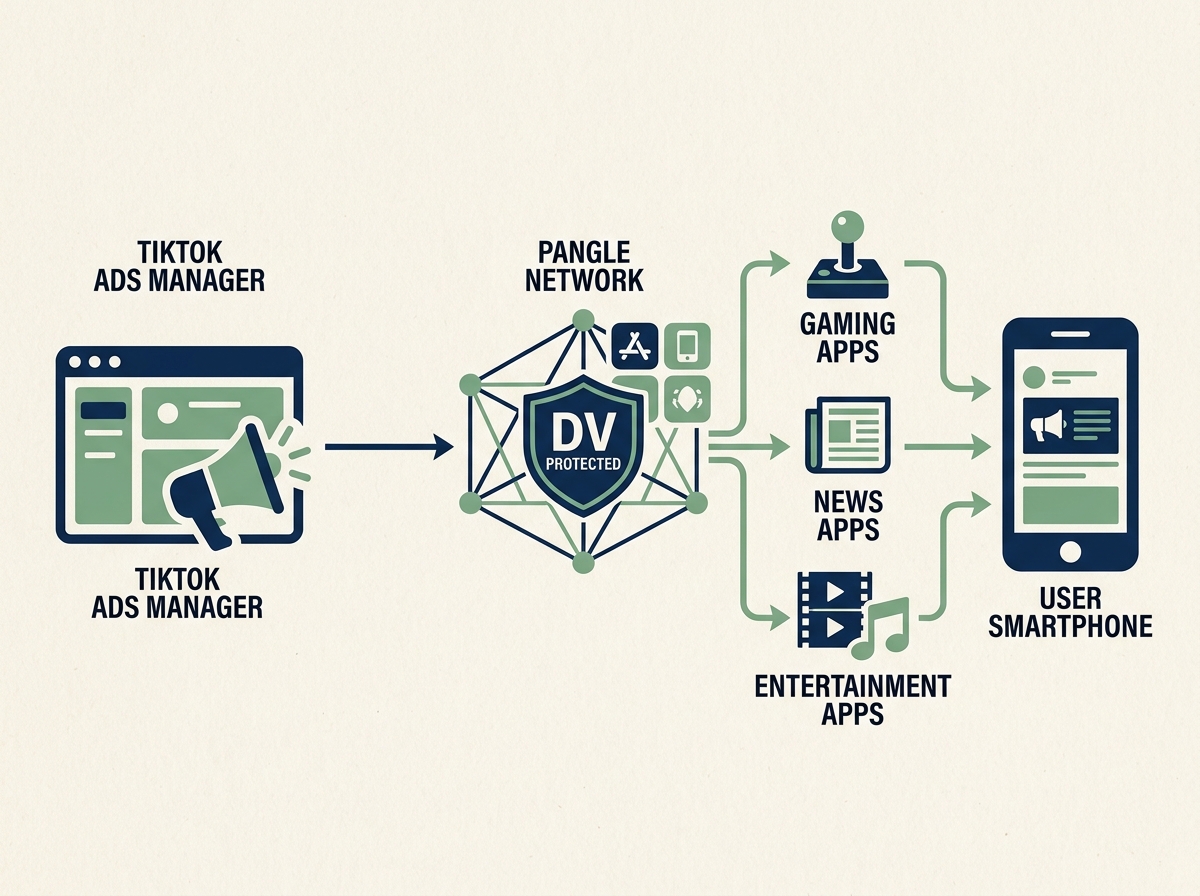
Pangle has long been a polarizing tool in the TikTok Ads Manager arsenal. As the platform's video-first advertising network, it allows brands to extend their reach into thousands of third-party apps, ranging from gaming to entertainment and utilities. However, since its inception, the network has suffered from the same reputation issues that plagued Meta’s Audience Network and Google’s Display Network in their early years: a lack of transparency regarding exactly where an ad appears.
Social buyers have historically treated Pangle as a "reach play" rather than a "quality play." According to internal agency benchmarks from Q1 2026, Pangle often delivers CPMs 40-60% lower than the primary TikTok For You Page (FYP). Yet, without third-party verification, those savings were frequently offset by concerns over "made-for-advertising" (MFA) sites and low-quality app environments. By bringing DoubleVerify into the fold, TikTok is effectively signaling that Pangle is ready for enterprise-level spend.
How Meta’s new Reels ranking changes paid budget pacing
How the DoubleVerify Integration Works
The technical implementation allows advertisers to view DV’s brand safety and suitability metrics directly within the DV Pinnacle dashboard. This isn't just a simple "safe/unsafe" binary. The measurement covers categories like adult content, arms, crime, and death, allowing brands to set their own thresholds for suitability based on their specific corporate values.
DoubleVerify uses its proprietary Semantic Science technology to analyze the context of the apps within the Pangle network. This is a significant step up from basic blocklists. Instead of just avoiding a specific app name, the system analyzes the actual content environment. For a supplement brand looking to scale via TokShop Agency's Austin expansion, this means ensuring their high-ticket health products aren't appearing in apps with misleading medical claims or low-quality clickbait.
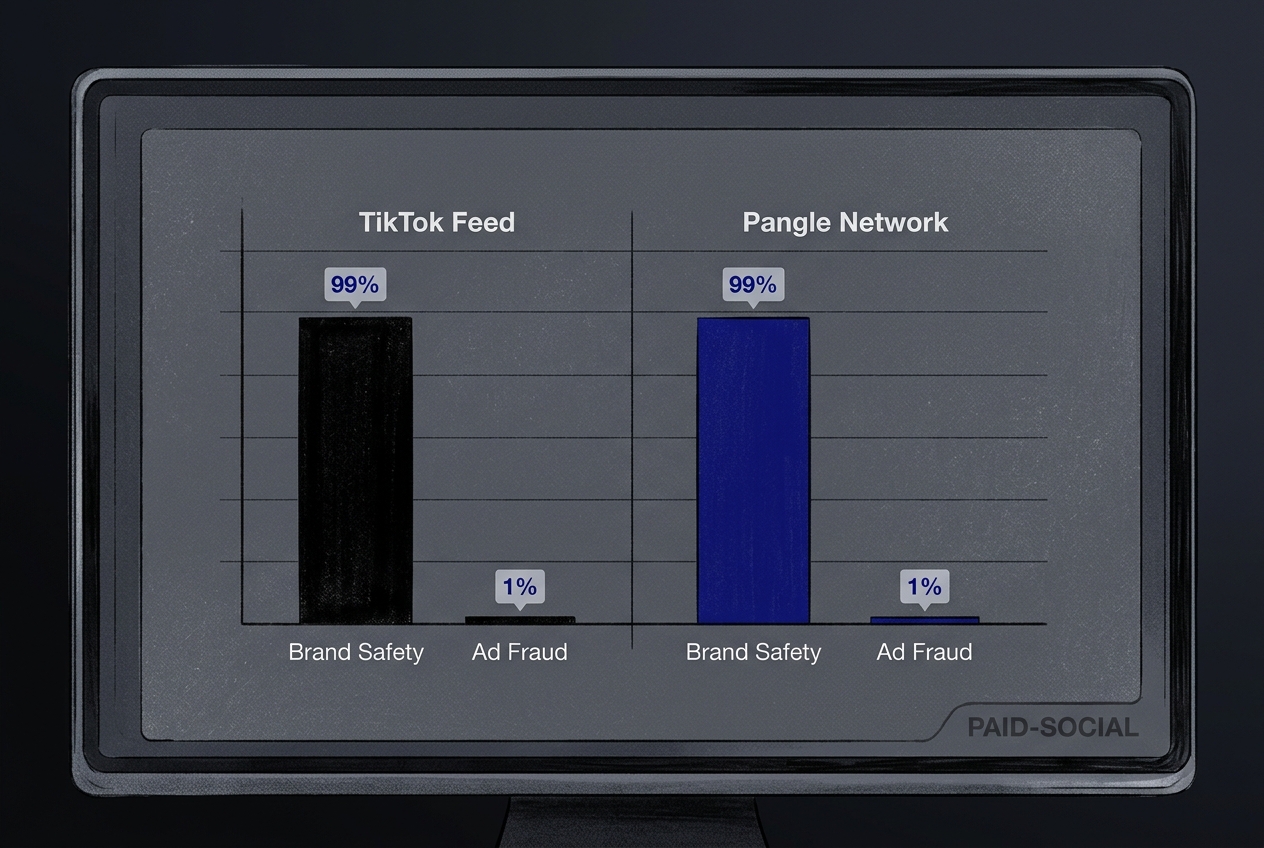
The Impact on ROAS and Ad Fraud
One of the most immediate benefits of the DV expansion is the crackdown on ad fraud. In the world of mobile ad networks, invalid traffic (IVT) is a constant drain on budgets. Bots, click farms, and hidden ad placements can inflate performance metrics while delivering zero real-world value. DoubleVerify’s Q2 2026 Global Insights Report noted that mobile app fraud remains a primary concern for 74% of digital marketers.
By applying DV’s fraud detection to Pangle, TikTok is providing a layer of protection that should, in theory, improve Return on Ad Spend (ROAS). When you strip away the 5-10% of traffic that might be non-human, your remaining budget is working harder. For performance buyers, this makes Pangle a more viable option for conversion-focused campaigns rather than just top-of-funnel awareness.
Standardizing the Social Buy
This move by TikTok comes at a time when the industry is moving toward total automation, often at the expense of control. We saw this recently with Google Ads removing language targeting from Search campaigns. As platforms take more control over the "who" and "where" through AI, third-party auditors like DoubleVerify and Integral Ad Science (IAS) become the only way for brands to verify they are getting what they paid for.
For a social media manager, this means the conversation with the CMO becomes much easier. Instead of saying, "We think Pangle is safe," you can now point to a DV report that proves it. This alignment is crucial as we head into the high-stakes Q4 period, especially as Meta publishes holiday marketing guides and TikTok prepares for its own commerce-heavy season.
Navigating the Global Landscape
It is also worth considering the geographic implications. TikTok’s Pangle network is particularly dominant in Southeast Asia and Japan. In markets like the Philippines, where TikTok recently launched the #ThinkTwice campaign to promote digital safety, the addition of DV oversight reinforces the platform's commitment to a healthier ecosystem.
For global brands, having a single source of truth across different regions is a massive operational win. If you are running a campaign across the US, UK, and Japan, you can now apply the same DV suitability profile to your Pangle spend in Tokyo as you do to your FYP spend in New York. This level of consistency is what separates professional-grade social buying from experimental testing.
What to Watch Next
The next logical step for TikTok will be pre-bid filtering. Currently, the DV integration is primarily post-bid measurement—meaning you see where you appeared after the money is spent. The industry's "holy grail" is pre-bid avoidance, where the system prevents the ad from serving in the first place if the environment doesn't meet the brand's criteria.
Furthermore, the looming Nielsen takeover mentioned in recent industry reports suggests a broader consolidation of the measurement space. Marketers should prepare for a future where platform-native data is always cross-referenced with at least one, if not two, independent third parties. For now, the advice is simple: if you’ve been avoiding Pangle due to safety concerns, it’s time to run a small-scale test with DV measurement enabled. The results might surprise you.
FAQ