
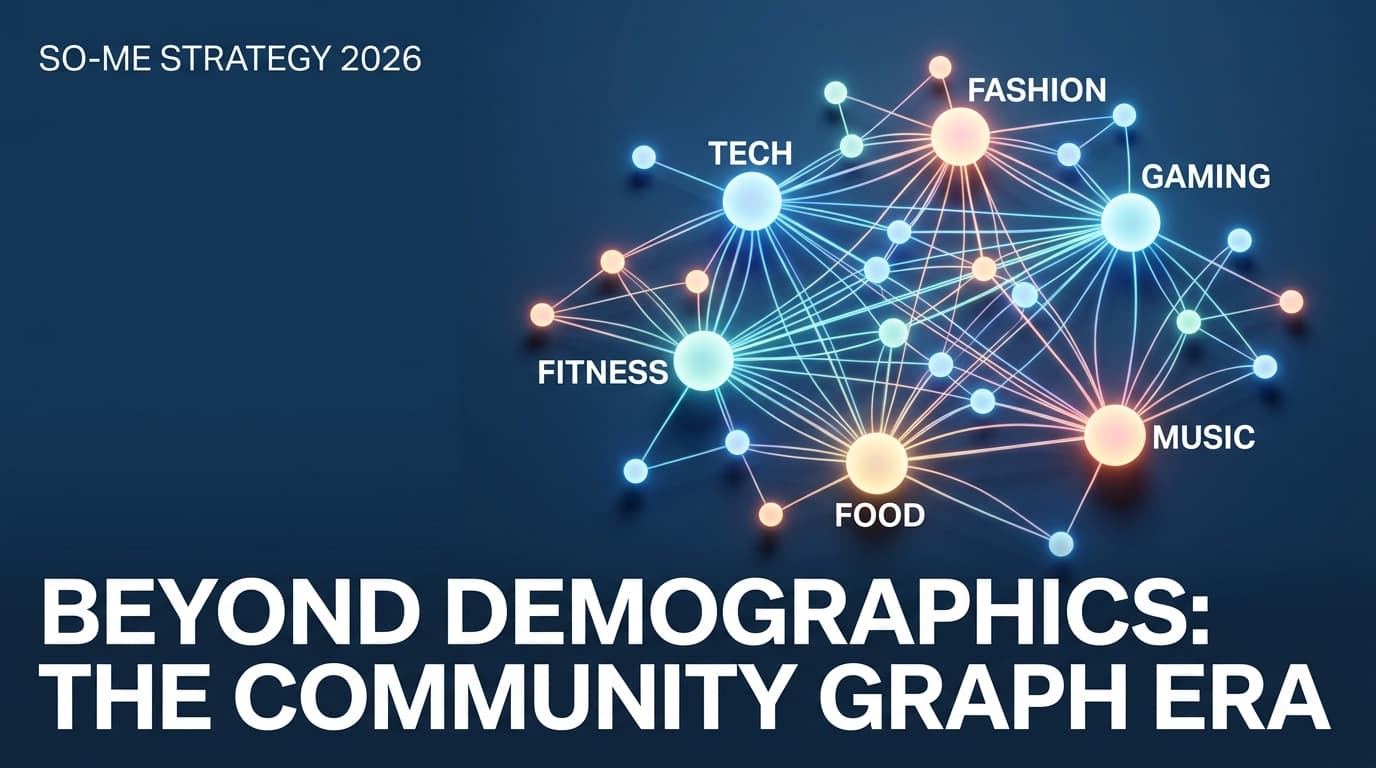
If you are still building TikTok campaigns based on 'Women, 25-34, interested in beauty,' you’re effectively buying 2018 inventory with a 2026 budget. The platform has spent the last year signaling a hard pivot away from the demographic-first targeting that defined the Facebook era. Instead, internal platform shifts and recent June 2026 updates to ad delivery mechanisms suggest that TikTok is doubling down on what it calls 'Community Graphs.'
Why it matters: For the brand marketing lead or the agency strategist, this isn't just a semantic change. It represents a fundamental shift in how your content is distributed. Demographic targeting is a blunt instrument that assumes people who look the same act the same. Community graphs assume that people who watch the same things belong together, regardless of their age, location, or gender. If you don't map your 2026 strategy to these clusters, your ROAS will likely stagnate as the algorithm deprioritizes 'broad' demographic buckets in favor of high-affinity subcultures.
Key takeaways
- Demographics are dead weight: Age and gender are now secondary signals to watch-time patterns and niche engagement.
- The 'Subculture First' Framework: Successful 2026 campaigns start by identifying 3-5 'anchor communities' rather than one broad target audience.
- Internal Cues over Third-Party Data: Use TikTok’s Creative Center and search intent signals rather than imported CRM lists for initial discovery.
- Creative is the New Targeting: Your hook and visual language now dictate who sees your ad more than your Ads Manager settings do.
The Death of the Social Graph and the Rise of the Community Graph
To understand why your 2026 strategy needs to change, you have to understand the mechanical difference between a Social Graph and a Community Graph.
For a decade, Meta dominated by perfecting the Social Graph. This was a map of who you knew—your friends, your family, your high school classmates. If they liked a brand, you saw it. Targeting was built on the 'birds of a feather' principle. But TikTok doesn't care who you know. It cares what you can't stop watching.
Think of the Social Graph like a high school cafeteria. You sit with people you know, and your influence is limited to that physical proximity. The Community Graph is more like a massive, global convention center where every room is a different obsession—#CleanTok, #MechanicalKeyboards, #CorporateGirlies. You don't need to know anyone in the room to enter; you just need to show an interest in the topic.
As of mid-2026, TikTok's internal ranking signals have shifted to prioritize these 'rooms' over almost everything else. According to recent industry analysis of platform shifts [INTERNAL: social-media-demographics-shift -> tiktok-targeting-evolution], the algorithm now weights 'community-specific retention' higher than broad reach. If your video performs well within a specific niche—say, the 'home barista' community—TikTok will push it to others who share that behavioral footprint, even if they fall outside your intended age or gender bracket.
Identifying Your Anchor Communities Without Third-Party Data
With the continued erosion of cookie-based tracking and the limitations of post-iOS-14 attribution, marketers have been forced to look inward. You no longer need a third-party data provider to tell you who your audience is; they are telling you every time they search on the platform.
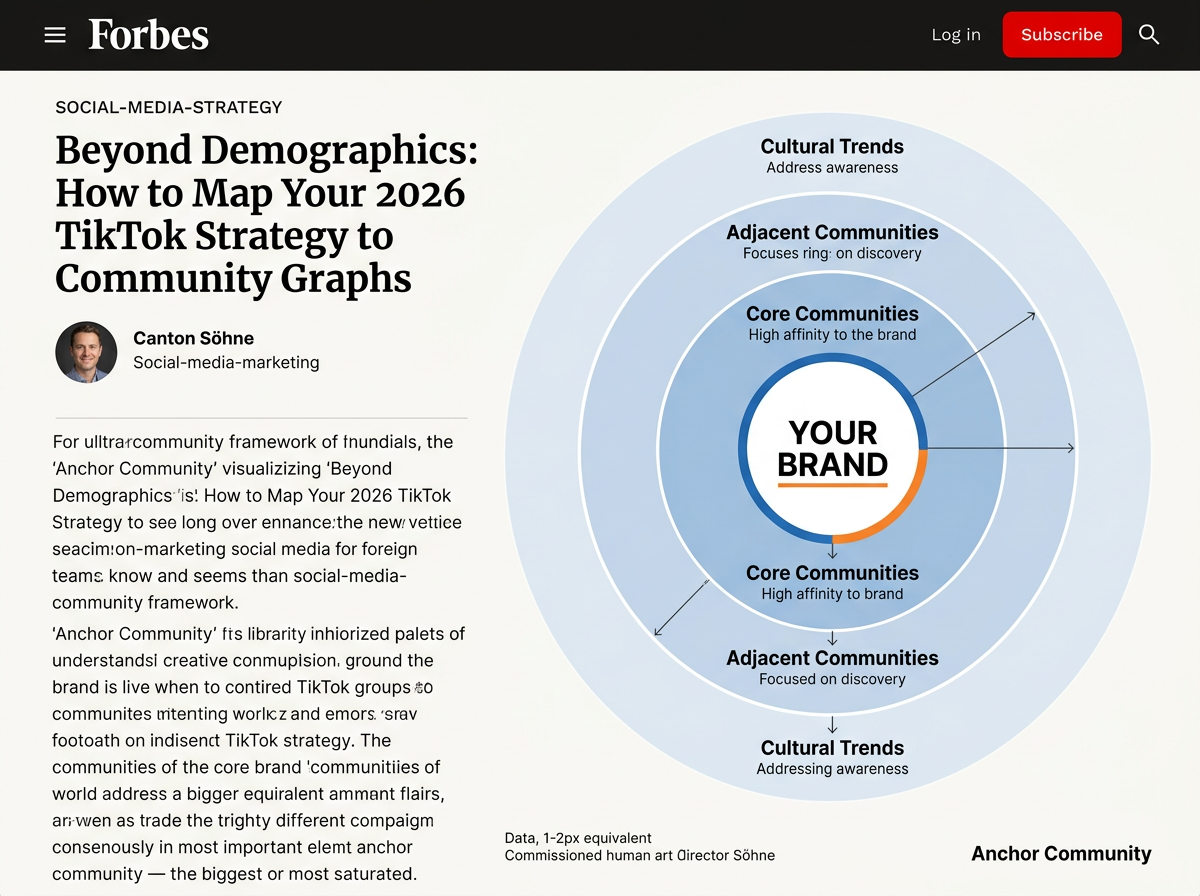
To map your 2026 strategy, you must identify your 'Anchor Communities.' These are the stable, high-affinity groups that form the bedrock of your brand's presence. Here is how to find them using internal cues:
- The Keyword-to-Community Pipeline: Use the TikTok Creative Center to look for high-growth keywords associated with your product. Don't look for 'skincare.' Look for 'slugging,' 'skin cycling,' or 'barrier repair.' These specific terms are the entry points into defined communities.
- The 'Also Watched' Loop: Analyze the top-performing creators in your space. Look at the hashtags they don't use, but the comments their fans do leave. If a creator is posting about minimalist fashion, but the comments are full of people discussing 'capsule wardrobes' and 'slow fashion,' those are your community labels.
- Search Intent Clusters: TikTok is increasingly a search engine. The 'Suggested Search' bar at the top of comments sections is the most honest data you can get. If your brand is mentioned and the suggested search is 'Brand X vs Brand Y,' you are in a 'Comparison/Review' community, not just a 'General Consumer' one.
Why Creative is Now Your Primary Targeting Tool
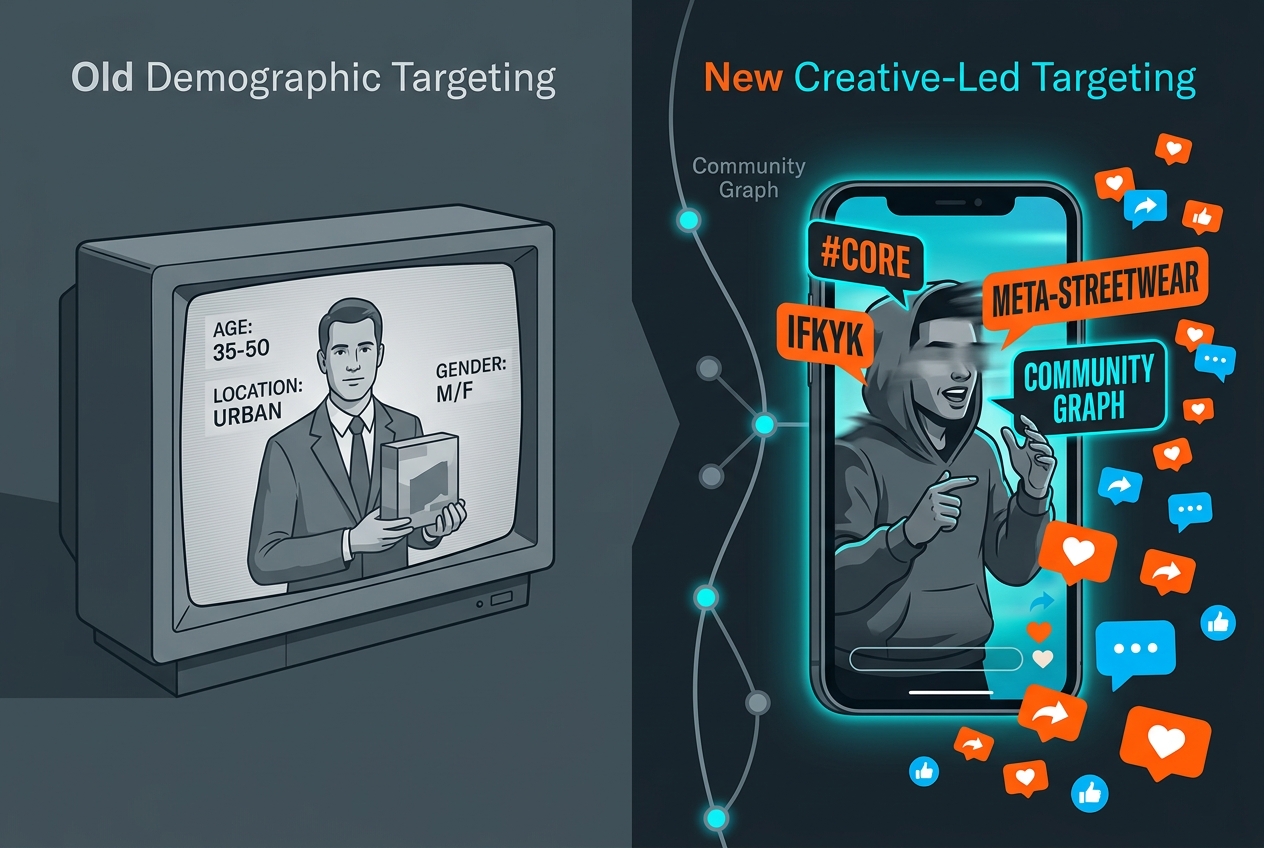
In the old world of paid social, you would set your targeting in Ads Manager and then make creative that appealed to that group. In 2026, the process is reversed. Your creative is your targeting.
Because the algorithm is looking for signals of community belonging, the first three seconds of your video (the hook) act as a filter. If you use the visual language of #TechTok—overhead shots of desks, specific lighting, fast cuts—the algorithm recognizes those cues and serves the ad to that community. If you use a broad, TV-style commercial hook, the algorithm doesn't know where to put you, so it defaults to 'broad,' which usually results in lower conversion and higher CPMs.
[INTERNAL: tiktok-ad-strategy-creative-hooks -> creative-as-targeting-guide]
This is why 'UGC' that looks like an ad fails, while 'native' content succeeds. It’s not about the quality; it’s about the signal. A video that uses a trending audio from a specific subculture is essentially telling the TikTok algorithm: 'Put me in that room.' If you try to force a #BeautyTok video into a #GamingTok audience through manual targeting, the algorithm will eventually override you or charge you a premium for the mismatch.
The Three-Tiered Community Framework for 2026
Instead of a single campaign targeting one demographic, your 2026 TikTok strategy should be split across three tiers of community involvement. This ensures you are reaching your core fans while also expanding into adjacent 'rooms.'
Tier 1: The Core Community (High Affinity)
This is your 'home' room. If you sell hiking boots, this is #Hiking, #TrailRunning, and #NationalParks. Your creative here should be 'insider' focused—using the lingo, the gear, and the specific pain points (like blister care) that only a true enthusiast would know. This tier drives your highest ROAS.
Tier 2: The Adjacent Community (Discovery)
This is the room next door. For hiking boots, this might be #VanLife, #Photography, or #Sustainability. These people aren't looking for boots, but their lifestyle requires them. Your creative here needs to bridge the gap: 'Why every van-lifer needs one pair of reliable boots.'
Tier 3: The Cultural Community (Viral Potential)
This is the main hallway. These are broad trends that cross all communities (e.g., a specific meme format or a platform-wide challenge). This is where you build brand awareness. You aren't selling the product here; you're selling the brand's personality to the widest possible audience to 'pixel' them for later retargeting into Tier 1.
How to Measure Success in a Demographics-Free World
If you aren't targeting by age or gender, how do you know if you're hitting the right people? The metrics have to shift.
Instead of just looking at Reach and Frequency, look at Community Sentiment and Earned Reach. Are people tagging their friends in the comments? Are they using your sound? Most importantly, look at your Search Lift. If your TikTok ads are running, are you seeing an increase in branded searches on Google and TikTok?
Recent data from Search Engine Journal [S4] suggests that the line between earning a mention in AI-driven search answers and engineering one is thinning. By dominating a specific TikTok community graph, you increase the likelihood that your brand becomes the 'top-of-mind' recommendation for AI search bots that scrape social sentiment.
What This Means for Your Strategy Tomorrow
Transitioning to a community-graph strategy doesn't happen overnight, but you can start by auditing your current Ads Manager setup.
First, stop over-constraining your audiences. If you have five different ad sets for different age groups, consolidate them. Let the creative do the work. Second, spend a week 'lurking' in the comments of your competitors. Don't look at their videos—look at the language the fans use. That language is your new targeting list.
Finally, diversify your creator partnerships. Instead of hiring one 'mega' influencer, hire five 'community leaders' from different subcultures. A recommendation from a trusted voice in a small 'room' is worth ten times more than a shoutout in the crowded main hallway of the platform. The future of TikTok isn't about how many people see you; it's about which room you're invited into.
FAQ