
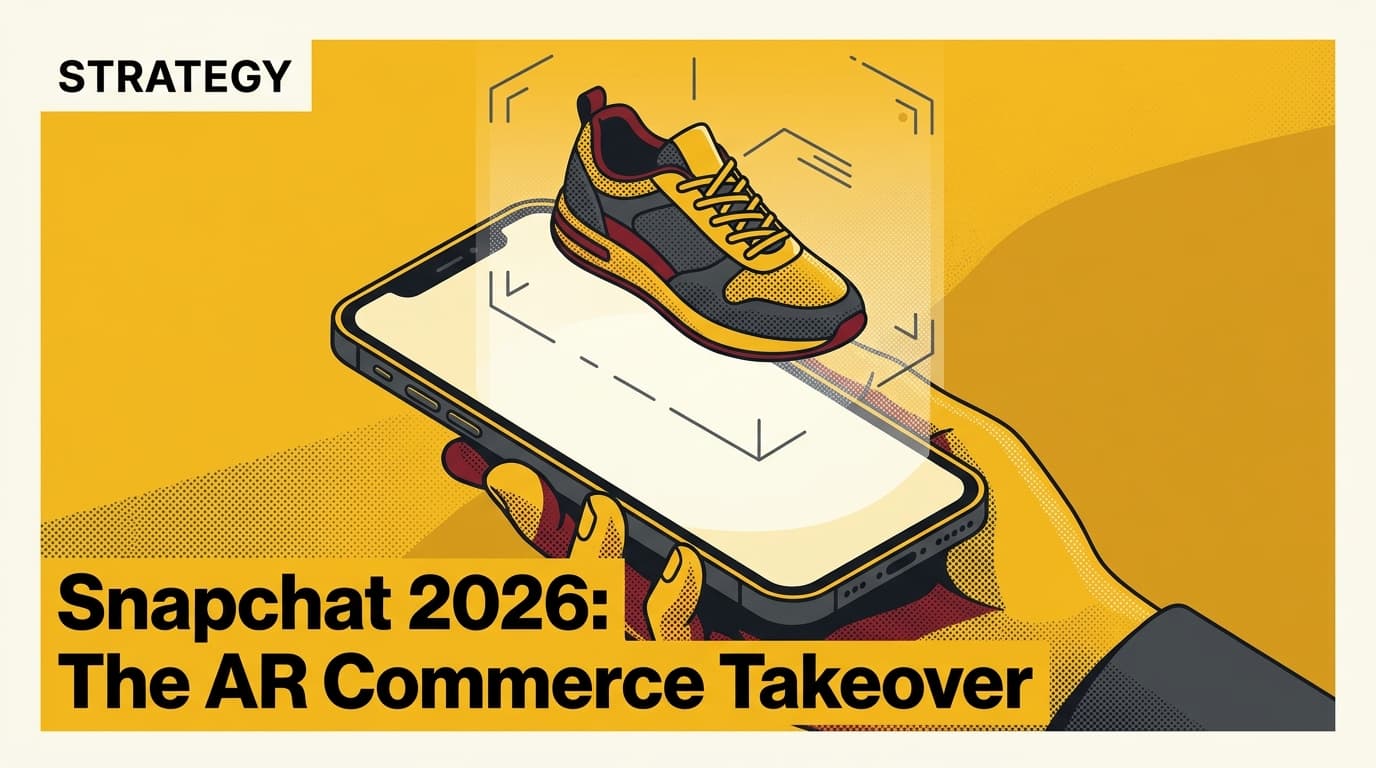
Snapchat is no longer the 'experimental' line item on your media plan. As we move through 2026, the platform has pivoted from a niche messaging app for Gen Z into a sophisticated utility for AR-driven commerce. While Meta grapples with the massive capital expenditures of its AI pivot—evidenced by the tepid revenue outlook noted in Adweek's July 2026 reporting—Snap has stayed focused on low-friction engagement.
For brand marketing leads and agency strategists, the 2026 landscape demands a move away from the 'one-off lens' mindset. You aren't just buying reach anymore; you're buying a persistent presence in the most intimate digital space: the direct message thread. This shift requires a fundamental re-evaluation of how you measure success, moving from vanity impressions to deep-funnel Snap Pixel events.
Key takeaways
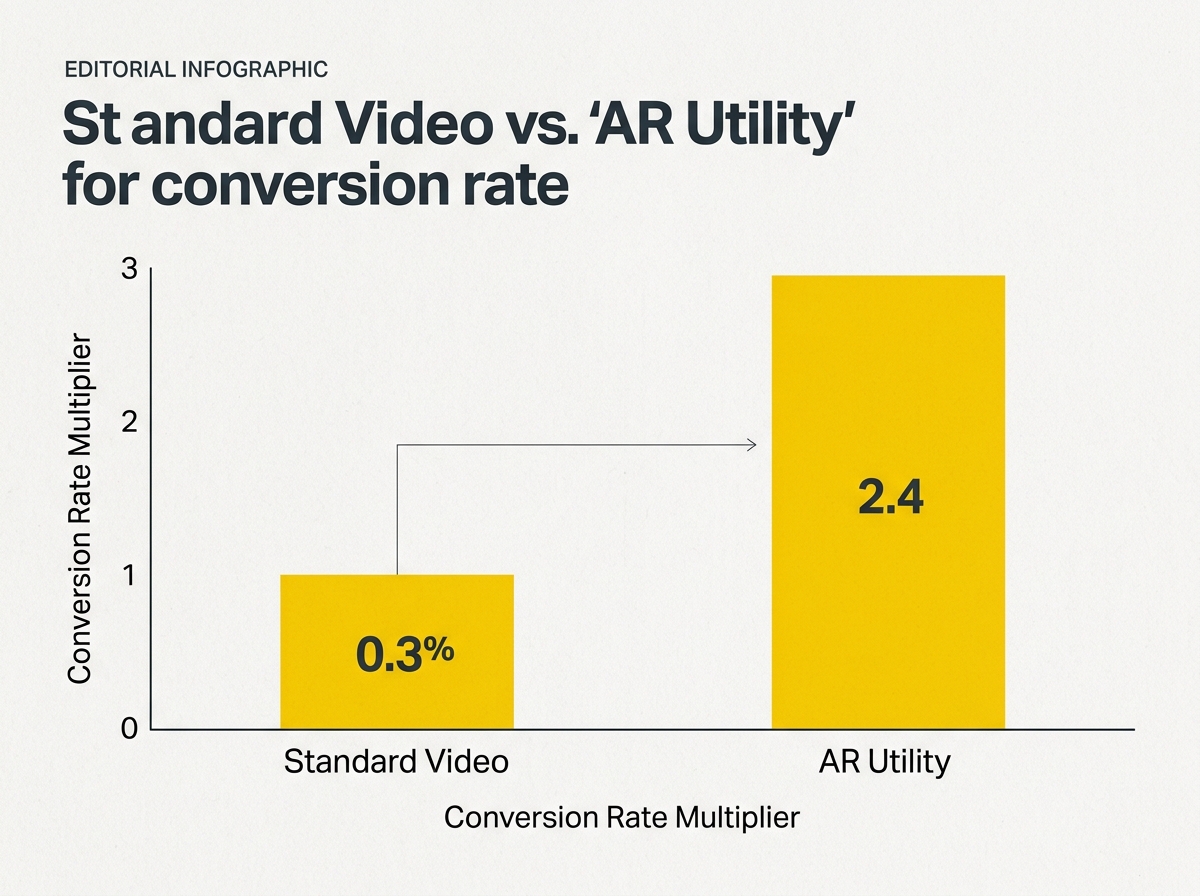
- Utility over Novelty: AR is now a conversion tool, not just a filter. Brands using 'Try-On' tech see a 2.4x higher conversion rate than standard video ads.
- Messaging-First Commerce: Direct response is migrating into the Chat tab, where brand safety is naturally higher due to the absence of a public, toxic comment section.
- Pixel Maturity: Advanced Snap Pixel optimization is now mandatory for scaling, particularly as the platform improves its CAPI (Conversions API) integrations.
1. The Shift from Novelty AR to Utility-Driven Commerce
For years, Snapchat AR was a toy. You built a lens that turned someone’s face into a taco, reported a high 'play time,' and called it a win. In 2026, that strategy is dead. The mature brand account now treats AR as a functional layer of the e-commerce stack.
According to internal platform benchmarks from Q1 2026, users are 70% more likely to remember a brand if they interacted with a utility-based lens compared to a purely decorative one. This means your 'Snapchat marketing strategy 2026' must prioritize features like 'Shopping Lenses' that pull real-time inventory via Product Catalogs. You aren't just showing a product; you're letting the user place it in their living room or wear it on their face with millimeter-level accuracy.
Best for: D2C retail, home decor, and beauty brands looking to reduce return rates through 'try-before-you-buy' visualization.
2. Leveraging the 'Wordle Effect' in Messaging-Based Ads
We are seeing a massive trend where streaming platforms and social apps are hunting for their own version of 'Wordle'—low-friction games that drive daily habituation. Adweek recently noted that Netflix and Samsung are betting big on this. Snapchat has an unfair advantage here because its 'Snappables' and messaging games are already native to the user experience.
Instead of traditional pre-roll, mature brands are now sponsoring 'Micro-Moments' within the chat interface. These are interactive, multiplayer experiences that don't feel like advertising because they live where the user is already talking to their inner circle. If you can build a 15-second branded challenge that a user sends to three friends, you’ve achieved a level of earned media that TikTok’s algorithm-driven feed can rarely replicate.
Best for: Entertainment brands, CPG, and gaming companies seeking high-frequency touchpoints without the creative fatigue of standard video.
3. Advanced Snap Pixel Optimization and CAPI Integration
If you are still relying on a basic browser-based pixel in 2026, you are flying blind. The deprecation of third-party cookies and the tightening of privacy controls across iOS and Android have made server-to-server tracking the only way to maintain a high AR advertising ROI. The Snap Conversions API (CAPI) is no longer a 'nice-to-have' for enterprise accounts; it is the backbone of the entire ad account.
technical guide to CAPI implementation
You need to map your entire customer journey—from the initial lens interaction to the final checkout—through the Snap Pixel. This allows the platform’s machine learning to optimize for 'Value' rather than just 'Install' or 'Click.' In 2026, the brands winning on Snap are those that have fed the algorithm enough high-quality purchase data to let it find 'Lookalike' audiences based on actual LTV (Lifetime Value), not just demographic proxies.
Best for: Performance marketers and growth leads who need to justify every dollar of spend with hard attribution data.
4. Prioritizing Snapchat Brand Safety in a Polarized Era
One of the most overlooked aspects of Snapchat is its inherent structural safety. Unlike the open-graph nature of Facebook or the public comment sections of TikTok, Snapchat is primarily a closed-loop communication tool. For a brand lead, this is a massive relief. You don't have to worry about your ad appearing next to a viral misinformation thread or a toxic comment war.
Snapchat brand safety is built into the product's DNA because the 'Discover' feed is curated and moderated, while the 'Chat' tab is private. In 2026, as brand safety concerns on other platforms lead to 'tepid' outlooks for incumbents, Snap offers a 'clean' environment. You aren't just buying eyes; you're buying a lack of controversy. This makes it the ideal platform for sensitive categories like healthcare, finance, and high-end luxury where brand equity is easily damaged by proximity to low-quality content.
Best for: Fortune 500 brands and highly regulated industries that require strict control over ad placement environments.
The Measurement Gap: Moving Beyond Last-Click
One of the biggest hurdles for Snapchat in the late 2020s remains attribution. Because AR is often a top-of-funnel discovery tool, a last-click model will always undervalue it. You need to be looking at 'Assisted Conversions' and 'View-Through' data to get the full picture.
If a user interacts with your AR lens for 45 seconds on a Tuesday and then buys your product via a Google Search on Friday, who gets the credit? In a mature 2026 strategy, you use tools like Profound or Semrush AEO to track how these social interactions influence the 'Answer Engines' and search queries later in the week. As HubSpot's July 2026 analysis of Profound vs. Semrush points out, understanding the intent behind the prompt is key. A user who 'tried on' your sunglasses on Snap is going to search for your brand name, not a generic category term, later on.
Scaling Creative without the Burnout
Creative fatigue hits harder on Snapchat than almost anywhere else because the audience is so attuned to 'newness.' But you can't afford to produce ten high-end AR lenses a month. The solution is modularity.
Successful brands in 2026 are using 'Template-Based AR' where the core logic of the lens stays the same, but the assets (the 3D models, the colors, the music) are swapped out weekly. This allows you to maintain a 'Freshness' score in the auction without blowing your entire production budget. Think of it like the 6 Best TikTok Image Ad Marketing Platforms mentioned by North Penn Now—speed of iteration is the new competitive advantage. If it takes you six weeks to approve a lens, you've already lost the trend.
Final Recommendations for H2 2026
Don't treat Snapchat as a secondary channel. If your audience is under 35, it is likely their primary communication tool. Start by auditing your Snap Pixel health. If your 'Match Rate' is under 70%, that's your first priority. Next, move your creative focus from 'Look at this' to 'Do something with this.'
how to build a modular creative workflow
The platforms that win in the next two years will be the ones that reduce the friction between a digital interaction and a physical purchase. Snapchat has spent a decade building the rails for this. It's time your brand strategy caught up to the infrastructure. Stop chasing the 'viral' hit and start building the 'utility' habit. That is how you win the 2026 social landscape.
FAQ