
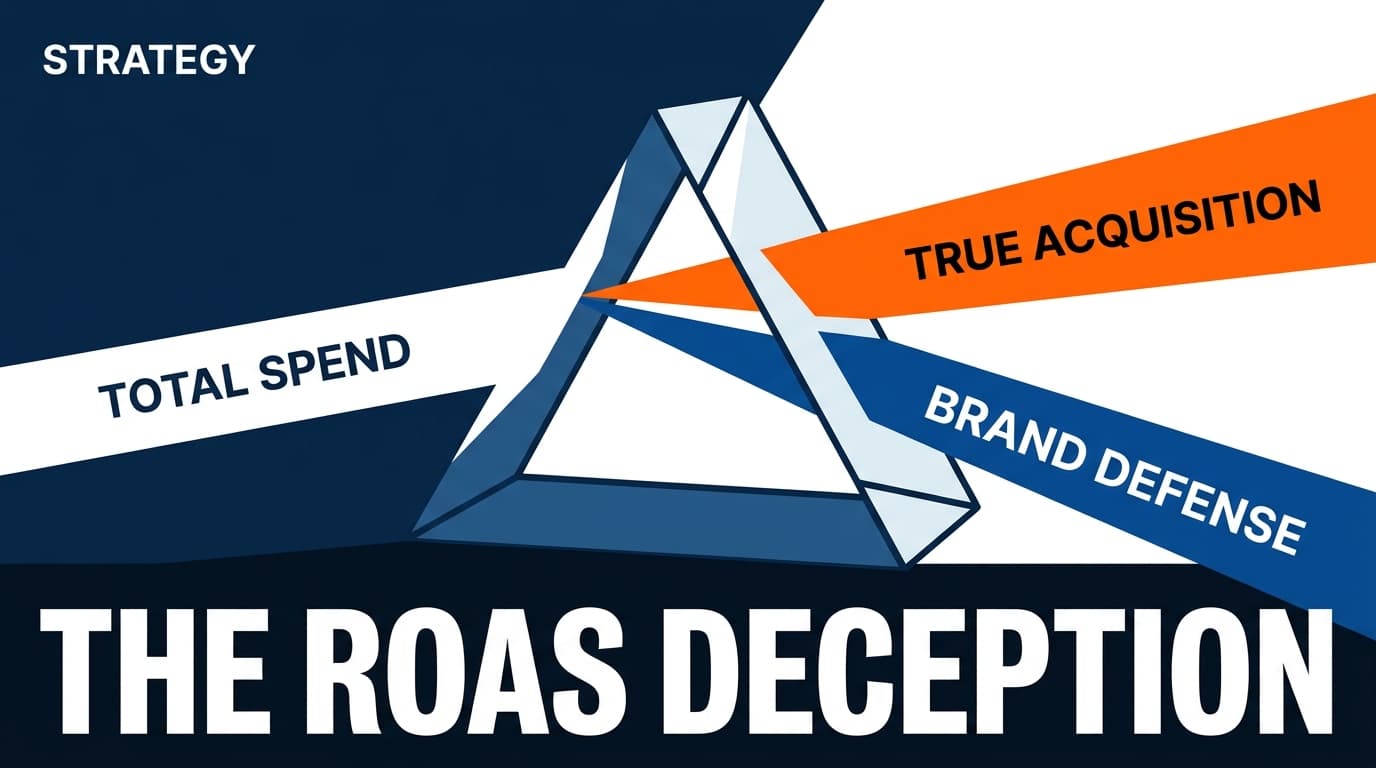
If your blended ROAS looks fantastic but your top-line revenue is flat, you aren't growing; you're just paying for customers who were already going to buy. This is the 'brand tax' of modern social advertising. When you mix prospecting audiences with high-intent retargeting and brand-keyword searchers, the algorithm naturally gravitates toward the latter to hit your CPA targets. The result is a reporting loop that validates your spend without actually driving incremental lift.
By the end of this guide, you will have a clean room environment for your social spend. You’ll be able to tell your CFO exactly how many dollars came from people who had never heard of your brand versus those who were simply looking for the 'Buy' button.
Before you start, ensure you have full access to your Meta Events Manager, TikTok Pixel/Events API, and a clean list of existing customers (CSV or CRM sync) from the last 180 days.
TL;DR
- Isolate Intent: Separate campaigns by 'Brand' (high intent/retargeting) and 'Non-Brand' (prospecting) to see true customer acquisition costs.
- Exclusion Lists are Critical: You must aggressively exclude existing customers and brand-interactors from prospecting sets to prevent ROAS inflation.
- Measure Incrementality: Use geo-testing or platform-native lift studies to verify that your non-brand spend is actually moving the needle.
Step 1: Define Your Brand and Non-Brand Buckets
You can't separate what you haven't defined. In the context of paid social, 'Brand' isn't just people searching for your name; it’s anyone who has already entered your orbit. This includes website visitors, social engagers, and existing customers. 'Non-Brand' is pure acquisition—people who are mathematically likely to be in your target market but have shown zero specific intent toward your brand.
Why it matters: If you don't draw a hard line, Meta’s Advantage+ Shopping Campaigns (ASC) will often spend 30-50% of your budget on 'Existing Customers' or 'Engaged Audiences' because they convert at a 10x higher rate than cold traffic. This makes your dashboard ROAS look like a 5.0, but your true acquisition ROAS is likely a 1.2.
To start, audit your current campaign structure. Look at your 'Audience Breakdown' in Meta Ads Manager. If your 'New Customers' vs. 'Returning Customers' ratio is heavily skewed toward returning, you are running a brand defense campaign disguised as prospecting.
Common Pitfall: Many strategists assume 'Broad' targeting is non-brand. It isn't. If the algorithm knows a user visited your site yesterday, a 'Broad' campaign will still target them if it thinks that's the easiest way to get a conversion. You must use explicit exclusions.
Step 2: Technical Setup for Meta Exclusion Architecture
To isolate non-brand spend on Meta, you need to create a 'negative audience' moat. This requires three distinct layers of custom audiences. First, upload your CRM list of all-time purchasers. Second, create a 180-day website visitor audience. Third, create a 365-day social engager audience (Instagram and Facebook).
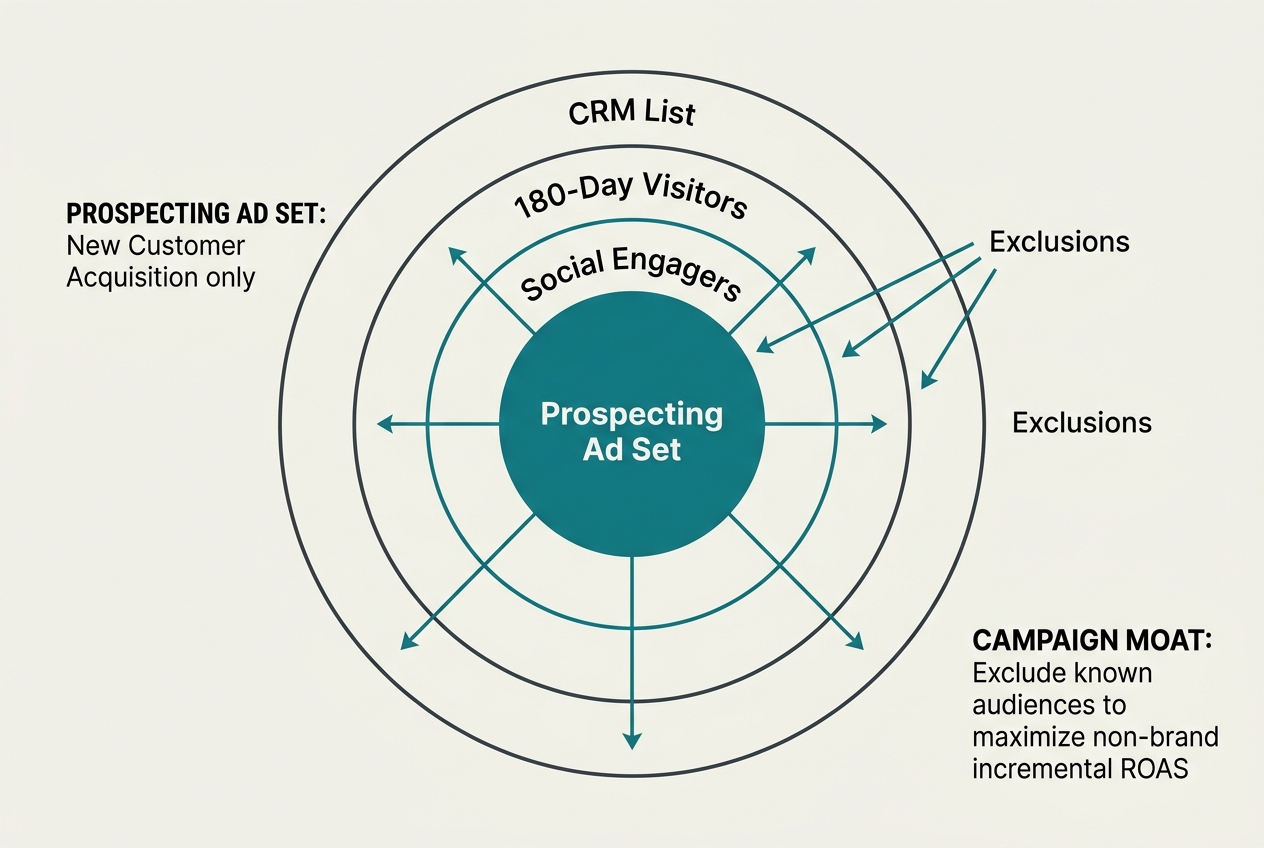
What to do: Create a new Prospecting Campaign. Inside the Ad Set, go to the 'Audience' section. Under 'Exclude', add all three audiences mentioned above. If you are using Advantage+ Shopping Campaigns, go to the 'Account Settings' and define your 'Existing Customers' list. Then, in the ASC campaign settings, set a 'Budget Cap' for existing customers at 0% or 5% maximum.
Why it matters: This forces the algorithm to find 'incremental' users. Your ROAS will drop—prepare your stakeholders for this—but your 'New Customer Acquisition' (NCA) will be pure. You are now paying for reach, not for credit on a transaction that was already in the mail.
How Meta's new Reels ranking changes paid budget pacing
Common Pitfall: Forgetting to update your CRM upload. If you use a static CSV, the 'moat' gets holes in it every day as new people buy. Use a tool like Zapier or a direct integration with your ESP to keep this list dynamic.
Step 3: TikTok Shop and Top-of-Funnel Separation
With the recent acquisition of Reach Social Commerce by AMZ Advisers [S2], the shift toward social commerce is accelerating. TikTok is no longer just a discovery engine; it’s a closing engine. This makes separating brand and non-brand even more complex because TikTok Shop data often sits in a silo.
What to do: On TikTok, you must separate your 'Spark Ads' (using creator handles) into two distinct campaign types. Type A uses 'Complete Payment' as the optimization goal but excludes all shop viewers and followers. Type B is your 'Brand Defense,' targeting your followers and previous shop visitors specifically to drive repeat purchases.
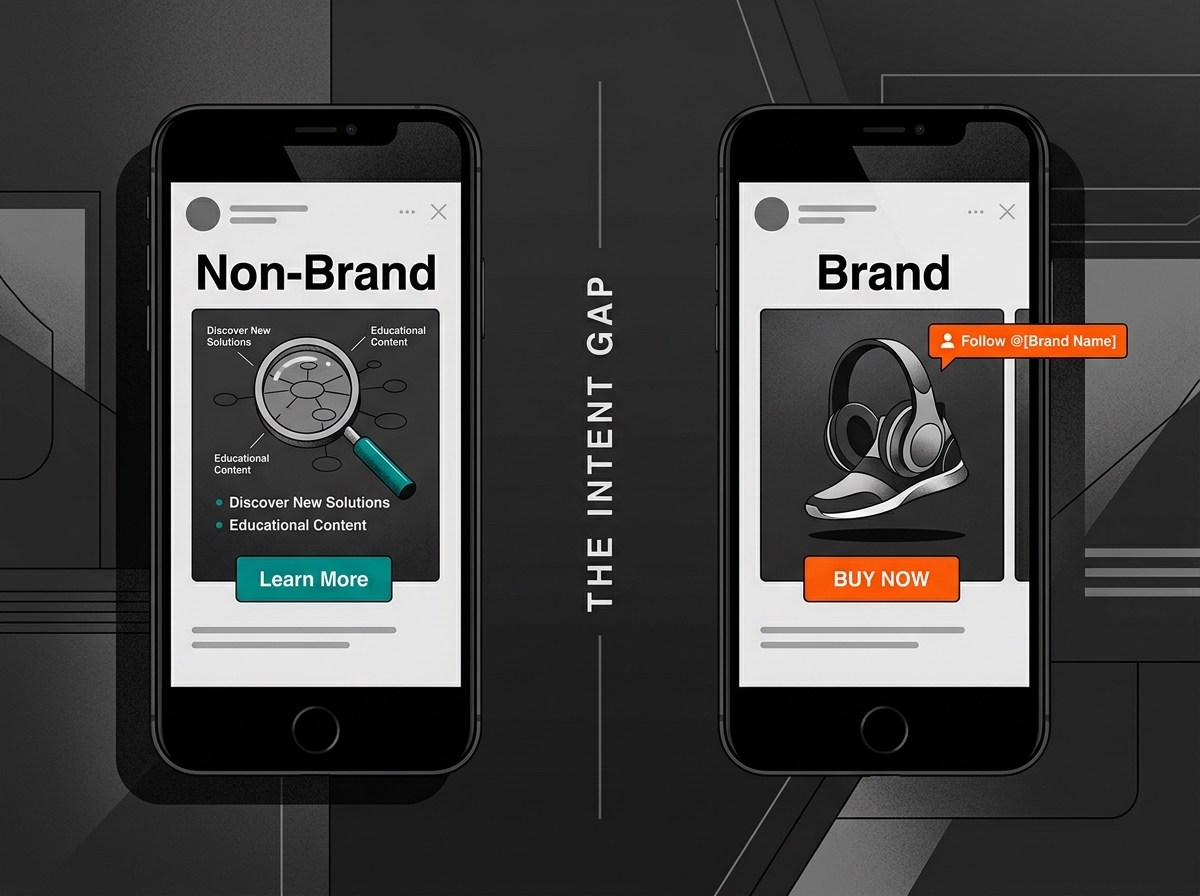
Why it matters: TikTok’s algorithm is notoriously aggressive at retargeting users who have interacted with a video. If you don't separate these, you won't know if your viral video actually brought in new blood or just converted your existing fans for the third time. According to recent salary guides for social media strategists [S4], the ability to prove 'incremental lift' is now a top-tier skill that separates senior leads from junior executors.
Common Pitfall: Over-relying on the TikTok Pixel without the Events API. Browser-based tracking often misses the 'Brand' signal if users have opted out of tracking, leading to 'Non-Brand' campaigns accidentally hitting existing customers.
Step 4: Normalizing Attribution Across the Divide
Once your campaigns are physically separated, you’ll notice a massive discrepancy in ROAS. Your Brand campaigns might show a 12.0 ROAS, while Non-Brand shows a 0.8. The temptation is to move budget to the 12.0. Resist this. The 12.0 is your 'Efficiency' metric; the 0.8 is your 'Growth' engine.
What to do: Use a unified dashboard like Sprout Social [S3] to view these side-by-side. You need to calculate a 'Blended CAC' (Customer Acquisition Cost) for the Non-Brand side and a 'Retention ROI' for the Brand side. Do not compare them to each other. Compare Non-Brand ROAS to your historical baseline for cold traffic only.
Why it matters: Platform attribution is biased toward last-touch or heavily weighted toward the brand. By separating the views, you can see the 'Assisted Conversions' that Non-Brand spend provides to your Brand campaigns. If you turn off the 0.8 ROAS campaign, you will eventually see the 12.0 ROAS campaign shrink in volume, proving the dependency.
[INTERNAL: The three creators who broke 1M followers this week using audio-first -> creator-growth-trends]
Common Pitfall: Using a 7-day click / 1-day view attribution model for both. Non-brand campaigns need a longer window (at least 7-day click) to capture the discovery phase, while Brand campaigns should be measured on a strict 1-day click to ensure you aren't just taking credit for organic traffic.
Step 5: Verification Through Incrementality Testing
How do you know this setup is actually working? You run a 'Holdout Test.' This is the gold standard for proving that your non-brand social media ROAS is real.
What to do: Select two statistically similar geographic regions (e.g., two mid-sized cities with similar demographics). In Region A, run your new 'Non-Brand' isolated campaigns. In Region B (the control), turn off all non-brand social spend. Keep your 'Brand Defense' and Retargeting spend identical in both. After 14–21 days, compare the total revenue lift in Region A versus Region B.
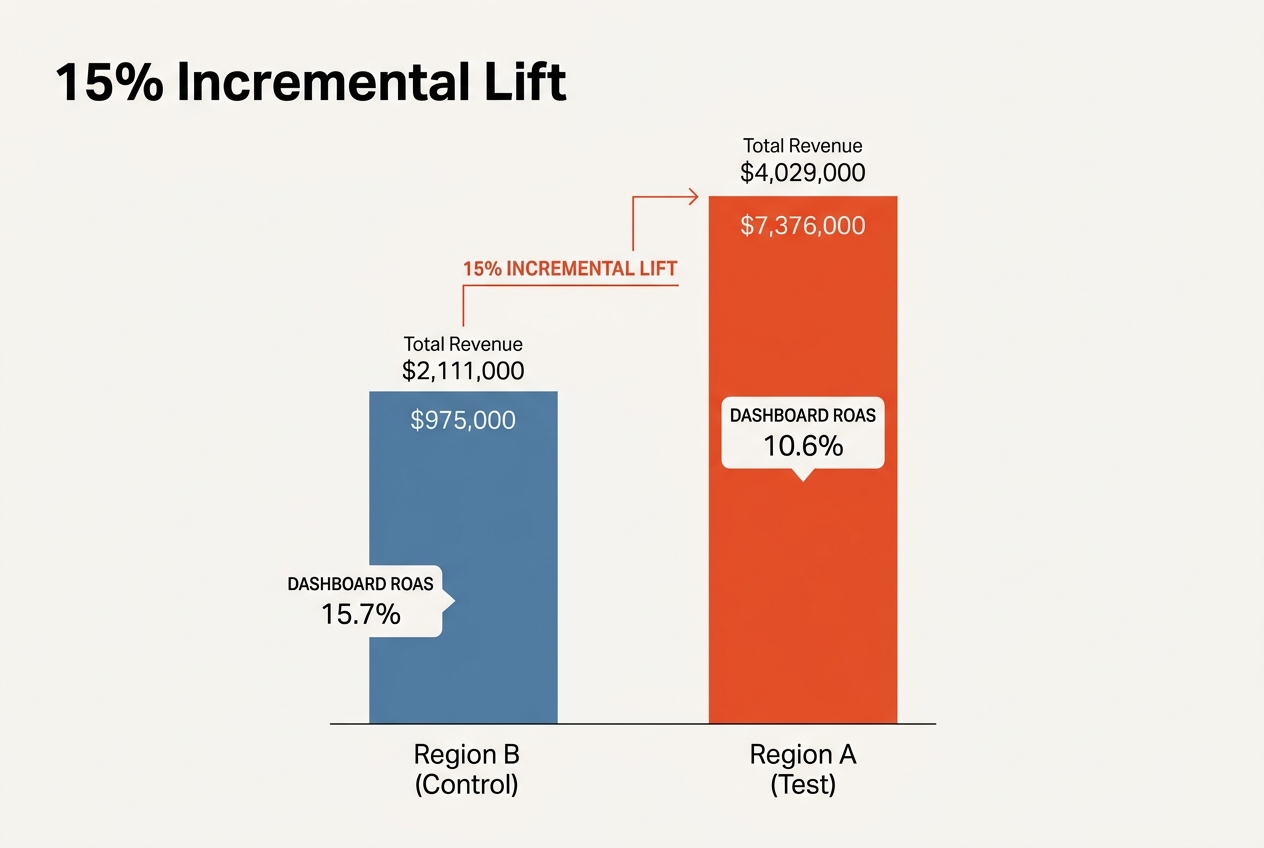
Why it matters: This removes the platform’s 'self-grading' homework. If Region A shows a 15% higher total revenue than Region B, your non-brand social spend is truly incremental. If the revenue is the same, your 'Non-Brand' ads were just reaching people who were going to find you through organic search or other channels anyway.
Common Pitfall: Running the test for too short a period. Most consumer journeys, especially for high-AOV (Average Order Value) brands, take longer than a week. A 7-day test will only capture the 'low hanging fruit,' which is exactly what we are trying to filter out.
Three Related Tactics to Try Next
- Creative-Led Prospecting: Instead of using interest targeting, use 'broad' targeting with creative that is specifically designed for a cold audience. Use educational 'Problem/Solution' hooks that wouldn't make sense to an existing customer. If the creative only appeals to new users, the algorithm will naturally find them.
- Zero-Party Data Loops: Use lead-gen forms or post-purchase surveys to ask customers 'How did you first hear about us?' Compare this to your platform attribution. If users say 'Instagram' but the platform says 'Direct,' your non-brand isolation is working—you're capturing the 'Dark Social' effect.
- Accessibility-First Creative: As AI-generated content becomes more prevalent, accessibility gaps are widening [S1]. Ensure your non-brand ads use high-contrast text and burned-in captions. This isn't just for compliance; it increases the 'stop-rate' for cold audiences who are scrolling with sound off, directly impacting your top-of-funnel efficiency.
By decoupling your brand defense from your growth engine, you stop the cycle of 'vanity ROAS.' You might spend more time explaining to your boss why the dashboard numbers went down, but you'll be able to prove, with data, that the business is actually going up.
FAQ