
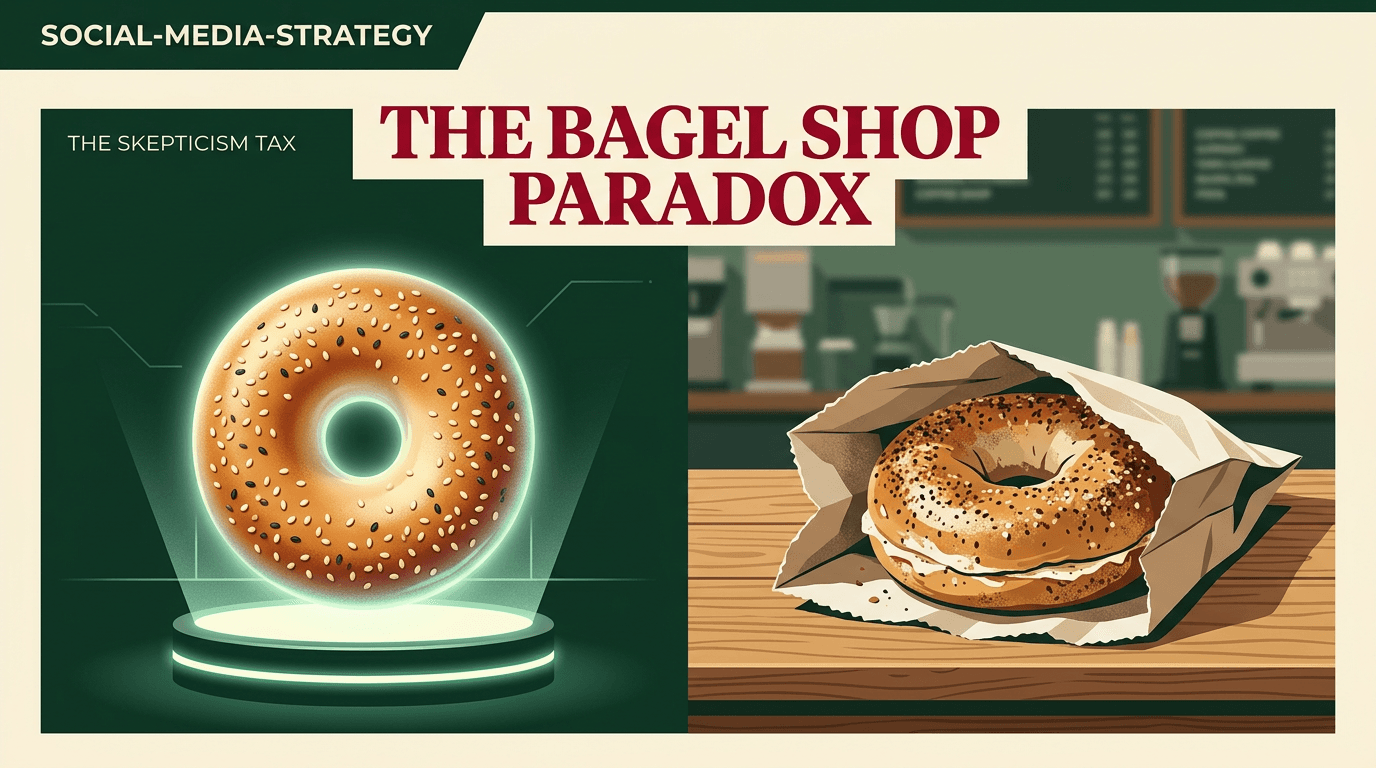
Local marketing changed the moment a suburban bagel shop posted a high-resolution, AI-generated image of a 'perfect' poppy seed bagel that didn't exist in their physical inventory. Within four hours, the comment section wasn't filled with orders; it was a graveyard of one-star sentiment. Customers didn't just feel misled—they felt insulted. This is the Bagel Shop Paradox: the more a local brand uses generative AI to appear polished, the faster it erodes the unique trust that allows it to compete with national chains.
Why it matters: For the small business owner or the agency strategist managing local accounts, the 'uncanny valley' of automated content is no longer a creative hurdle—it is a financial liability. As platforms like Instagram move to penalize 'unoriginal' posts (per Engadget's May 2026 reporting), the 'skepticism tax' on AI-heavy brands is becoming a permanent fixture of the social economy.
TL;DR
- The Uncanny Valley: Local customers value the 'flaws' of reality; AI-generated perfection signals a lack of physical presence.
- Algorithm Penalties: Instagram and TikTok are actively deprioritizing unoriginal and AI-heavy content in favor of 'human-first' signals.
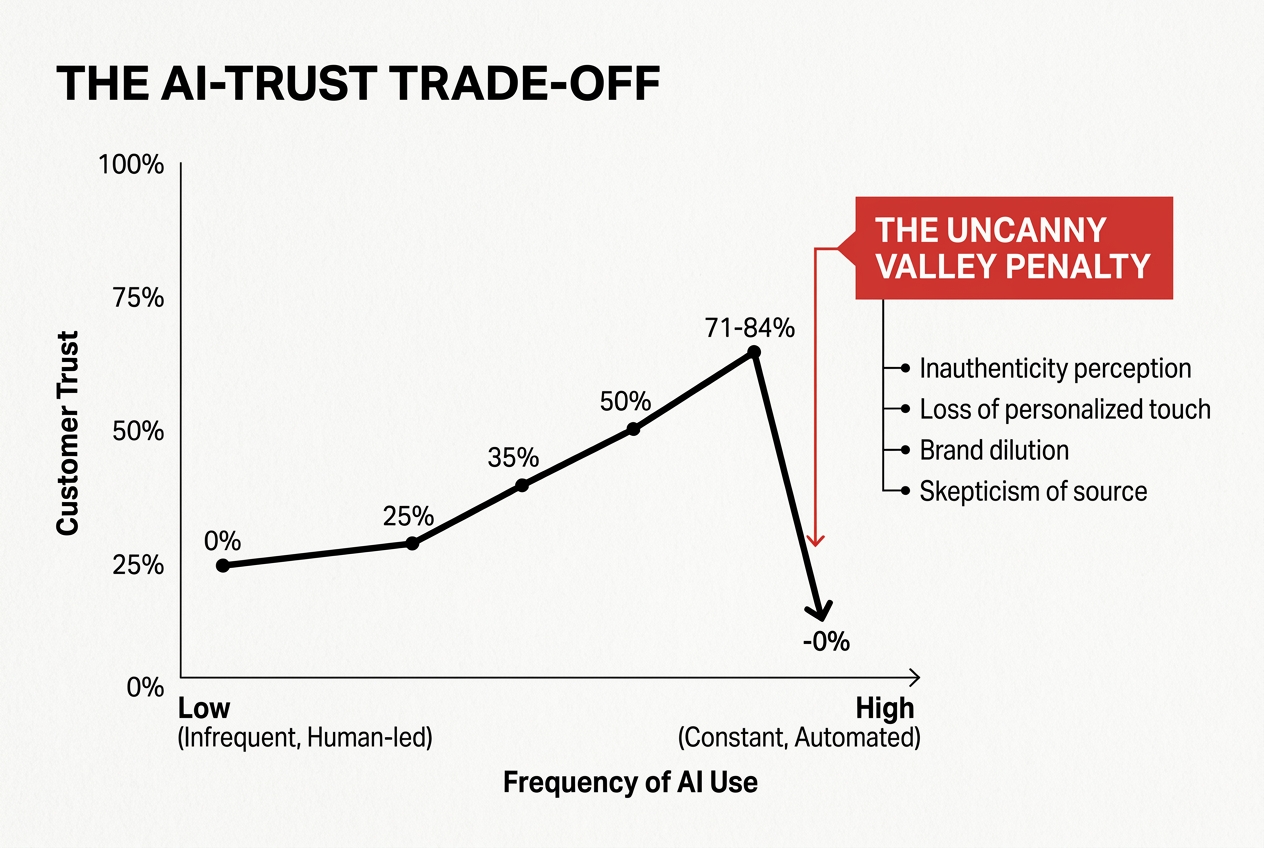
- The Skepticism Tax: Once a follower identifies a post as AI, every subsequent organic post is viewed through a lens of doubt, reducing conversion rates by double digits.
The high cost of the 'Uncanny Valley' in local feeds
When a global brand like Coca-Cola or Nike uses generative AI, it is framed as a high-concept creative experiment. When the corner hardware store or a local bakery does it, it feels like a lie. This discrepancy exists because the value proposition of a local business is built on physical proximity and human accountability.
You've likely seen the shift. A local realtor posts an AI-generated headshot where their teeth are a little too white and the lighting is impossibly cinematic. Instead of looking professional, they look like a bot. This 'uncanny valley' effect creates an immediate cognitive dissonance. The reader knows what the local street looks like; they know what the shop's lighting actually feels like. When the digital representation deviates into AI-generated perfection, the brain flags it as a scam.
Recent data from consumer sentiment surveys in early 2026 suggests that 68% of users feel 'less connected' to local brands that use synthetic imagery for their primary products. This isn't just a matter of taste. It's a fundamental breakdown of the social contract. If you can't be bothered to take a photo of your actual bagel, why should I believe you'll be bothered to toast it correctly?
The 'Skepticism Tax' and the erosion of brand equity
Once you use a generative AI tool to create a persona or a product shot, you've opted into the skepticism tax. This is the hidden cost where every future post—even the authentic ones—requires more effort to prove its reality.
Consider the case of a mid-sized boutique in Des Moines. After adopting an 'AI-first' social strategy to save on photography costs, their engagement-to-foot-traffic conversion dropped by 22% over one quarter. Even when they returned to posting iPhone photos of their staff, the comments remained cynical. 'Is this a real person?' became the default heckle.
We see this reflected in the academic world too. As Professor Watson noted in his May 2024 curriculum update at the University of Iowa, the shift toward AI-powered campaign strategies must be balanced with 'radical transparency' to avoid alienating core demographics. For a local business, your 'core demographic' is your neighbor. Neighbors don't like being catfished by an algorithm.
Platform shifts: Why the algorithm is turning on the 'Bot-Like'
If the loss of customer trust doesn't scare you, the platform updates should. In May 2026, Instagram introduced a feature allowing users to 'reset' or specifically tune their Reels algorithm away from repetitive content patterns. Simultaneously, Meta has doubled down on its promise to penalize 'unoriginal' content.
What does 'unoriginal' mean in the age of AI? It means content that lacks a unique metadata signature of a real-world capture. When you upload a Midjourney-generated image, you aren't just uploading a file; you're uploading a signal to the platform that this content was not produced by a human in a specific geographic location. For local SEO and discovery, this is a death knell.
TikTok is following a similar path. While they've announced new AI ad formats via TikTok One, they are also tightening the requirements for 'Creator Authenticity' badges. The platforms realize that if the feed becomes a hall of mirrors filled with synthetic influencers and AI-generated product shots, users will leave. To save the product, they must punish the bots. As a local brand, you do not want to be caught in that dragnet.

The counterargument: Can AI 'assist' without destroying trust?
Critics of this 'anti-AI' stance argue that small business owners are too busy to be content creators. They argue that tools like Famoid’s new AI-driven engagement solutions are a lifeline for the time-strapped entrepreneur. If an AI can handle the mundane task of responding to 'What are your hours?' or generating a background for a product photo, isn't that a net win?
Yes, for utility. No, for community.
The mistake is confusing efficiency with efficacy. It is efficient to have an AI write your 'About Us' page. It is ineffective because the AI doesn't know why your grandfather started the business in 1974. It doesn't know the specific smell of the shop after a rainstorm. These are the 'high-friction' details that AI smooths over, but they are exactly the details that make a local brand worth following.
Use AI for your spreadsheets. Use it to analyze your Q1 ad spend. Use it to suggest three different hooks for a video you've already filmed. But never let it be the face of the brand. The moment the AI becomes the 'creator,' the brand becomes a commodity. And commodities are always replaced by the cheapest alternative.
Practical steps: Reclaiming the 'Human' in your social desk
If you've already leaned too hard into the AI trend, the road back requires a deliberate 'de-optimization' of your feed. You need to reintroduce friction.
- The 'Behind the Grain' Rule: For every polished post, you need three 'lo-fi' videos. Show the mess. Show the staff meeting. Show the delivery truck arriving. These are high-trust signals that AI cannot currently replicate with the necessary local specificity.
- Audit your Metadata: Ensure your photos are taken within the app or uploaded with full EXIF data intact. Platforms use this to verify the 'local' in local marketing.
- Human-Led Engagement: Stop using automated comment responders for anything other than basic FAQ. If someone leaves a heartfelt comment, a human needs to reply with a specific reference to that person's history with the shop.
What to watch next: The rise of the 'Verified Human' badge
By 2027, I predict we will see a formal 'Verified Human-Made' tag on major social platforms, similar to the 'Paid Partnership' label. This won't be a luxury; it will be a requirement for local businesses that want to maintain their reach in a sea of synthetic noise.
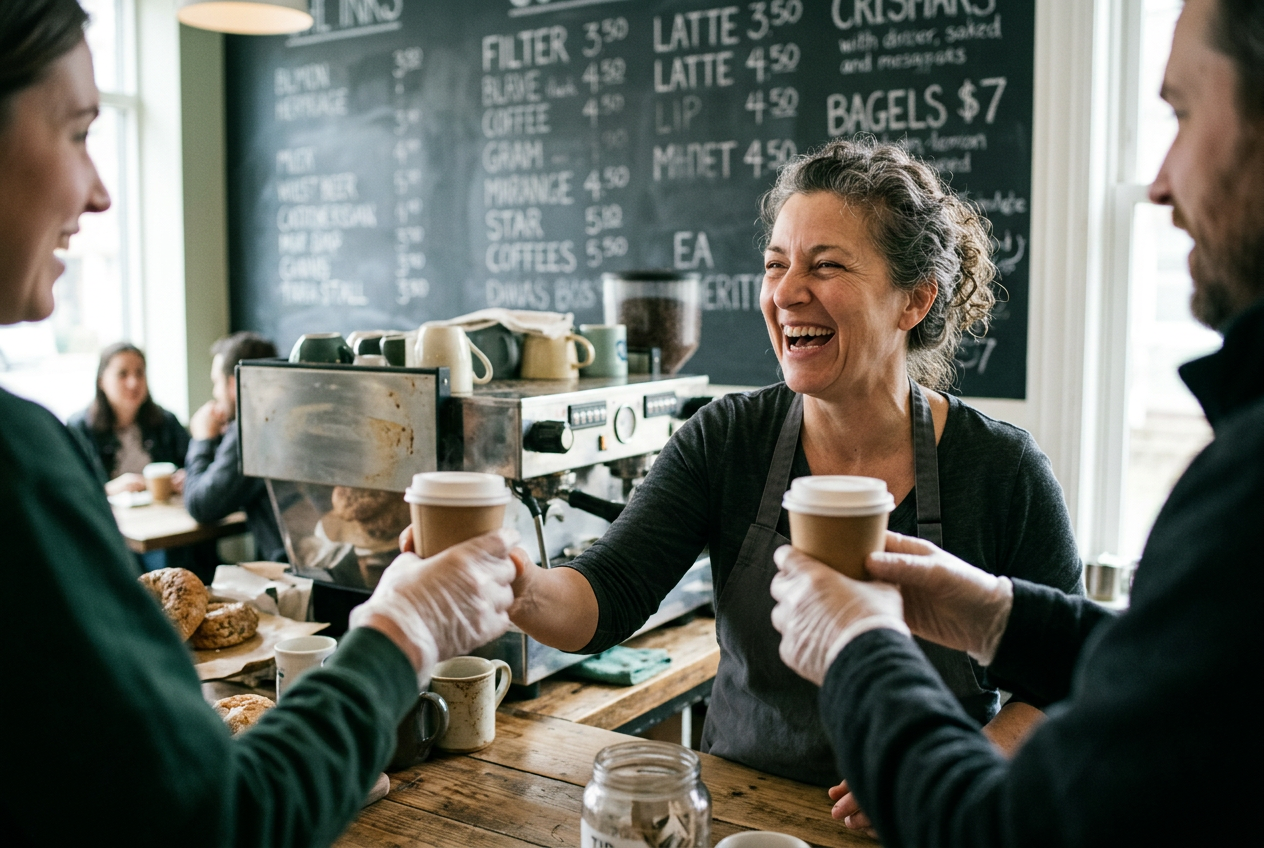
The businesses that thrive in the next 24 months won't be the ones with the most 'perfect' feeds. They will be the ones that lean into their local eccentricities. They will be the ones who realize that in an automated world, the most valuable thing you can offer is a real person behind a real counter, selling a real bagel that—poppy seeds and all—is gloriously imperfect.
FAQ