
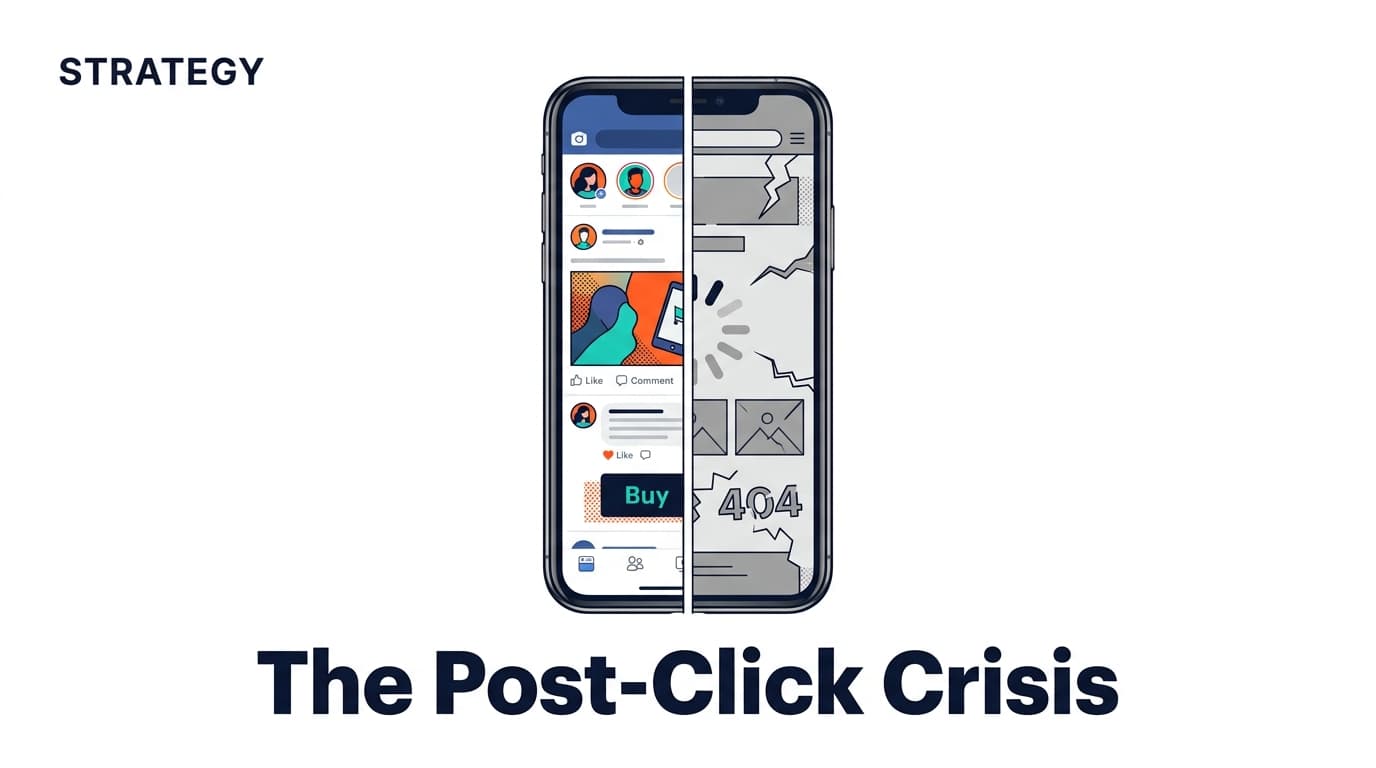
Why does a campaign with a 15% click-through rate still fail to hit its revenue targets? You’ve built the creative, the algorithm found the audience, and the thumb stopped. But the moment that user leaves the walled garden of Meta or TikTok, the experience dissolves. This is the post-click crisis—a structural failure where marketers spend 90% of their budget on the 'shout' and less than 10% on the 'conversation' that happens once the user actually arrives.
In the current climate, paid media ROI isn't just a function of better targeting; it's a function of what happens after the thumb taps. As platforms like TikTok Shop integrate AI-driven video product placement (as noted in recent AdExchanger reporting from July 2026), the friction of the external web is becoming more apparent. If you aren't optimizing the bridge between the ad and the checkout, you're effectively paying for traffic that you've already decided to lose.
TL;DR
- The Handoff Gap: Most brands lose 40-60% of potential revenue because the landing page doesn't match the ad's visual or emotional intent.
- Platform Inertia: Meta and TikTok are incentivized to keep users in-app; your external landing page is often a jarring technical downgrade.
- The Fix: Transition from static landing pages to 'post-click flows' that mirror the social platform's UI and speed.
The Psychology of Landing Page Fatigue
Think of your ad as a high-end concierge. It promises a specific, curated experience. But when the user clicks, they are often dumped into a generic lobby—your homepage or a bloated product detail page (PDP). This cognitive dissonance is what we call 'landing page fatigue.'
In the early 2020s, you could get away with a mismatch because CPMs were low enough to brute-force a return. Today, with rising competition and the death of granular tracking, every bounce is a catastrophic waste of capital. Your audience is trained by TikTok’s vertical, high-velocity feed. When they hit a page that takes 3 seconds to load or asks them to navigate a desktop-first menu on a mobile device, they don't just leave; they develop a subconscious bias against your brand.
We see this in the data. Per recent industry benchmarks, mobile bounce rates for social traffic remain 20-30% higher than search traffic. Why? Because searchers are looking for an answer, while social users are following a vibe. If the landing page doesn't maintain that vibe, the transaction dies.
Bridging the Visual and Technical Chasm
You've likely spent weeks on a creator-led video for a Meta Advantage+ campaign. You’ve used the right hooks, the right lighting, and the right trending audio. But then, the 'Shop Now' button leads to a Shopify product page designed in 2021. This isn't just a design flaw; it's a technical chasm.
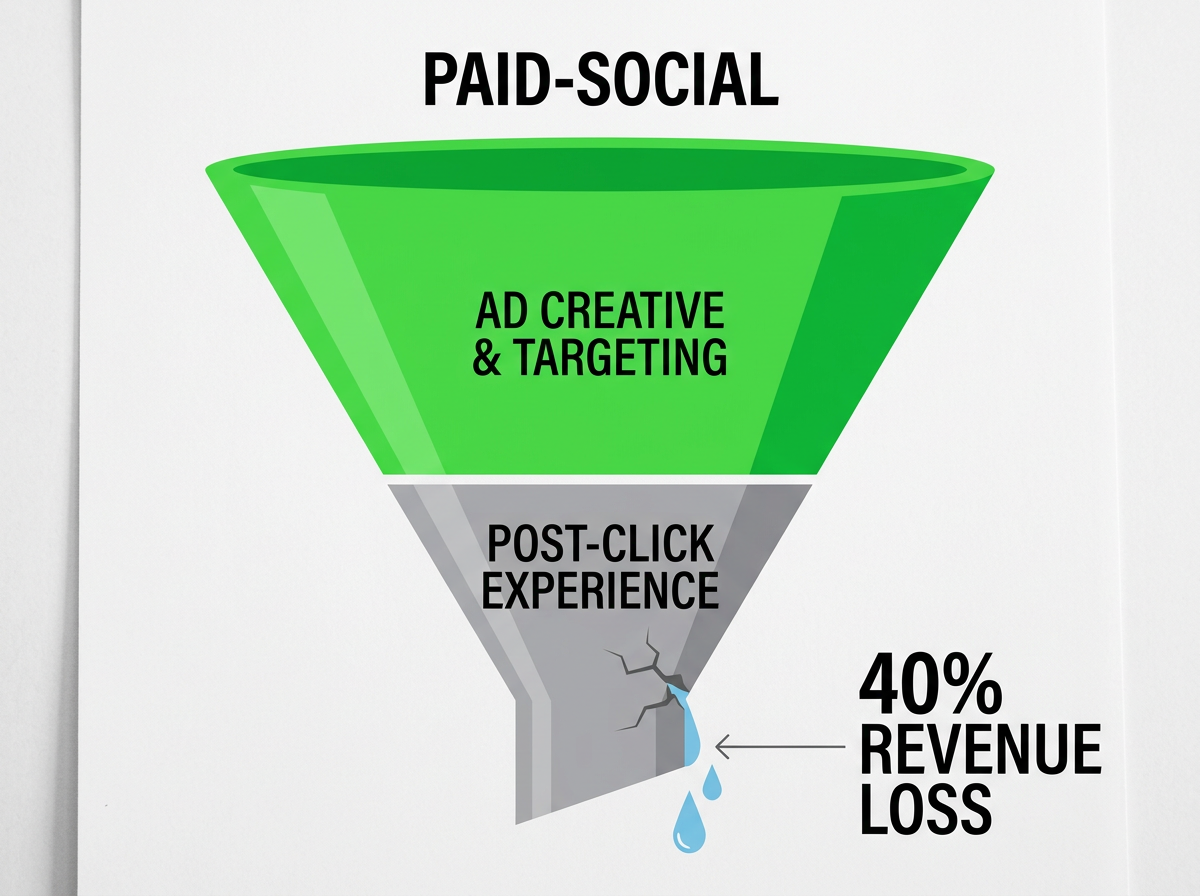
Post-click optimization requires three specific alignments:
- Visual Continuity: If the ad features a specific influencer, that influencer’s face should be the first thing the user sees on the landing page.
- Message Match: If the ad promises a '30% off summer sale,' the landing page shouldn't force the user to hunt for a promo code. It should be pre-applied or prominently displayed.
- Speed Parity: TikTok and Instagram are lightning-fast. Your site must be too. A one-second delay in mobile load time can impact conversion rates by up to 20%, according to long-standing Google performance data.
How to audit your mobile site speed for social traffic
Why Ad Spend Efficiency is Moving In-App
We are witnessing a massive shift toward keeping the transaction within the social ecosystem. AdExchanger’s July 2026 coverage of TikTok Shop’s expansion into AI-driven video commerce highlights a grim reality for traditional e-commerce sites: the platforms want to kill the external link.
When a user buys via TikTok Shop or Instagram Checkout, the 'post-click' experience is managed by the platform. It’s fast, it’s familiar, and it has their credit card on file. For marketers, this increases ad spend efficiency significantly because the friction of the 'handoff' is removed. However, this comes at a cost—the loss of first-party data and the ability to upsell through a custom-branded experience.
If you choose to send traffic to your own site, you are competing with the seamless nature of in-app shops. Your landing page can't just be 'good enough'; it has to be better than the platform's native experience to justify the friction of the click-out.
The Anatomy of a High-Conversion Social Landing Page
To fix the 50% of the funnel you're currently ignoring, you need to stop thinking about 'pages' and start thinking about 'stories.' A high-performing post-click experience for social traffic looks nothing like a traditional website.
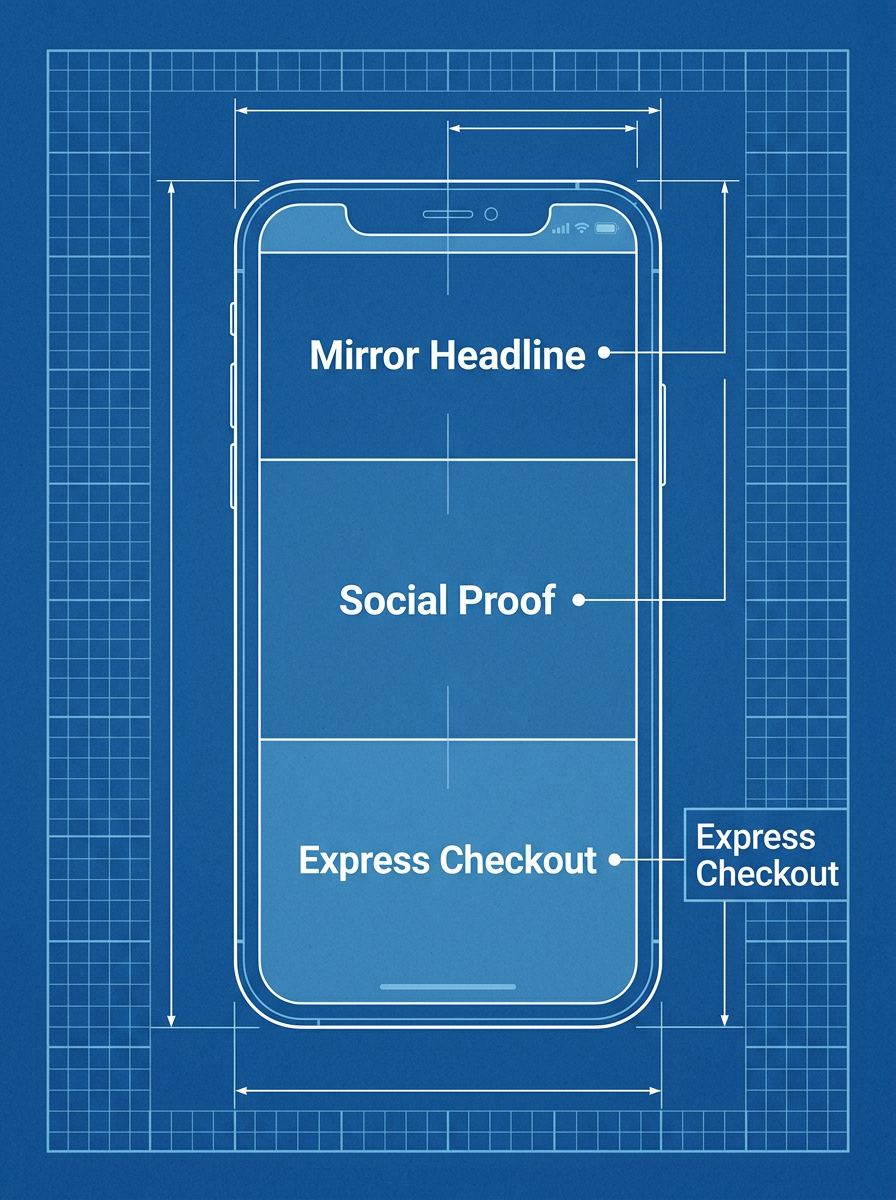
Here is the hierarchy of a page that actually converts paid social traffic:
- The 0.5-Second Hook: A headline that exactly mirrors the ad's primary hook. If the ad says 'The last water bottle you'll ever buy,' the page starts with 'Why this is the last water bottle you'll ever buy.'
- Social Proof Integration: Don't just bury reviews at the bottom. Use 'As Seen On' ribbons or 'Verified Buyer' callouts immediately below the hero image.
- Frictionless CTA: Use Apple Pay, Google Pay, or Shop Pay. If a user has to manually type their credit card number on a bus or in a waiting room, you've lost them.
- Zero Navigation: Remove the header and footer. On a landing page, there are only two options: buy or leave. Don't give them a 'Learn More about our History' link to get lost in.
[INTERNAL: The best checkout tools for high-volume social brands -> checkout-tech-stack]
Data Gaps and the Attribution Mirage
One reason marketers ignore the post-click experience is that it’s harder to measure than a click. Meta's Ads Manager will tell you exactly how many people clicked, but it won't tell you that 40% of them bounced before the tracking pixel even loaded. This is the 'Attribution Mirage.'
You see a low CPA in the dashboard and think the campaign is winning, but your bank account tells a different story. This often happens because of 'ghost clicks'—accidental taps or bot traffic that never actually engages with your site.
To combat this, sophisticated agencies are moving toward 'Landing Page Views' or 'Time on Page' as their primary optimization signals rather than just 'Clicks.' If a user doesn't stay for at least 10 seconds, that click shouldn't be counted as a success in your internal reporting.
What This Means for Your Strategy Tomorrow
You don't need a million-dollar rebrand to fix your post-click ROI. You need a shift in resource allocation. If you have $10,000 to spend on a new campaign, spend $8,000 on the ads and $2,000 on a dedicated, high-speed landing page for those ads.
Start by identifying your top-spending ad set. Click the ad yourself on a mobile device. Count how many seconds it takes to see the product. Count how many clicks it takes to get to the 'Thank You' page. If either number is higher than three, you have a post-click crisis.
In an era where Google’s AI search features are sending 'billions of clicks' with questionable transparency (per Search Engine Journal’s analysis of recent Google statements), owning the conversion experience is the only way to ensure those clicks actually turn into revenue. Don't let the platforms win by being the only ones who understand how to keep a user's attention.
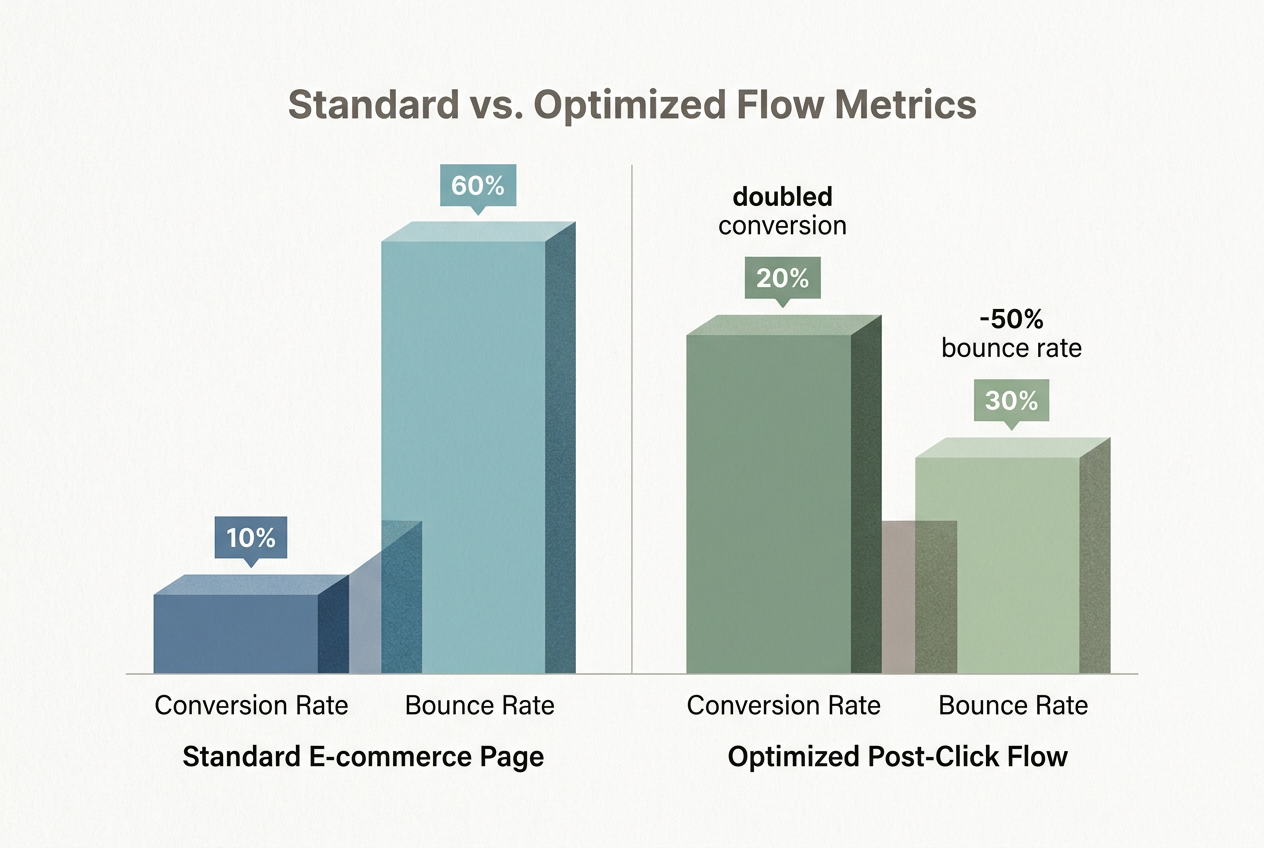
Stop optimizing for the algorithm and start optimizing for the human on the other side of the tap. The first half of the funnel gets them to look; the second half gets them to stay. If you're only doing one, you're only doing half your job.
FAQ