
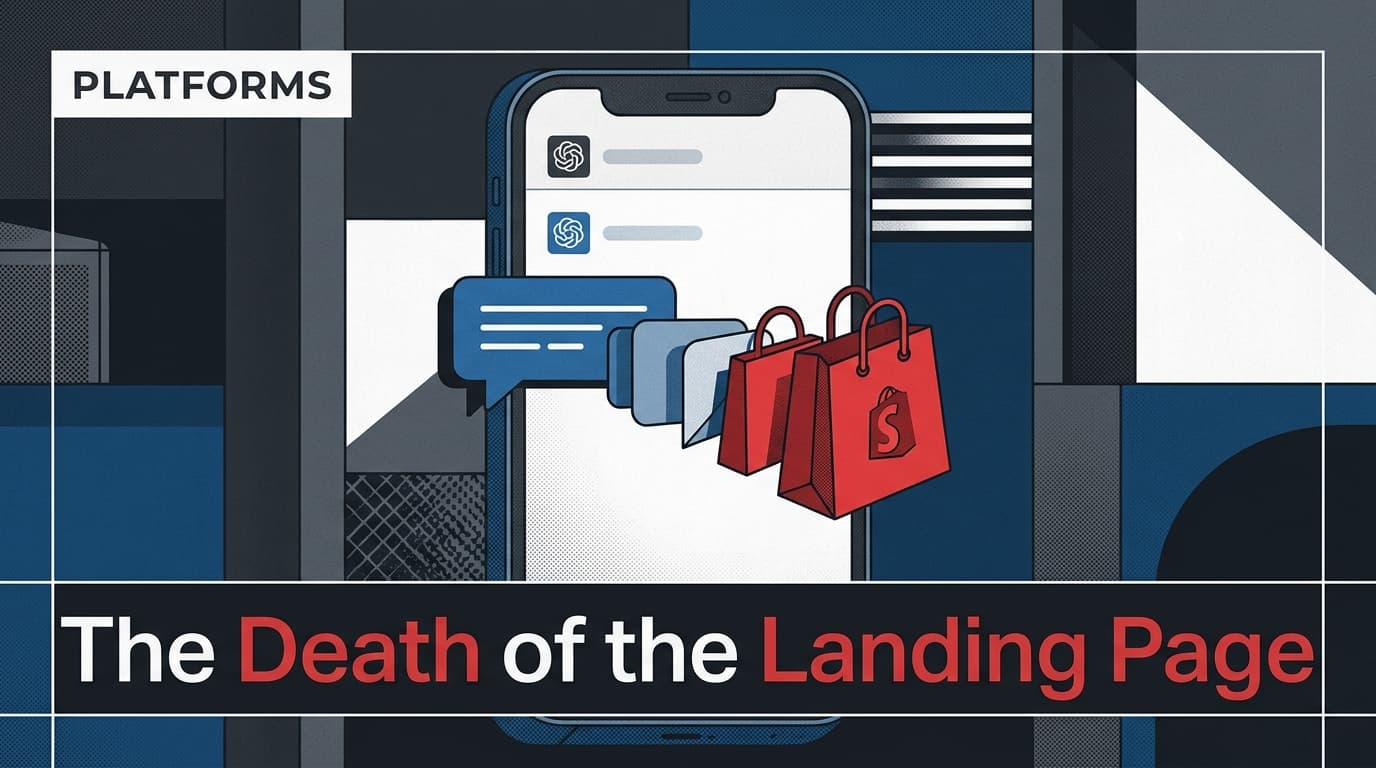
OpenAI has officially entered the performance marketing arena, beginning closed-beta testing for a new ad format that bypasses the traditional web browser. Rather than clicking a link to a brand’s landing page, users interacting with sponsored content in ChatGPT are now directed into a dedicated, brand-specific AI business agent designed to qualify leads and complete transactions within the chat interface.
For social media marketers and paid-media buyers, this marks the first major departure from the click-to-site model that has governed digital advertising since the mid-1990s. If OpenAI successfully scales these agentic funnels, the industry’s reliance on pixel-based tracking and third-party cookies—already weakened by Apple’s App Tracking Transparency (ATT)—could face its final obsolescence. You aren't just buying traffic anymore; you're buying a persistent customer dialogue.
TL;DR: The Agentic Shift
- No More Clicks: Ads trigger an AI agent, not a URL redirect.
- Zero-Party Data: Brands capture intent through conversation, bypassing pixel-based measurement hurdles.
- Workflow Impact: Creative teams must shift from designing static landing pages to training conversational logic and guardrails.
- The Challenge: Traditional attribution models (last-click, multi-touch) are incompatible with non-linear AI dialogues.
The Architecture of the Conversational Funnel
Traditional digital advertising is built on a linear path: Impression -> Click -> Landing Page -> Conversion. OpenAI’s pilot program effectively collapses the middle two steps. When a user queries ChatGPT about a specific need—say, "What's the best luggage for a two-week trip to Japan?"—the platform can now surface a sponsored agent from a brand like Away or Samsonite.
This isn't a simple chatbot. These agents are built on OpenAI’s latest reasoning models, allowing them to access real-time inventory, process secure payments, and handle complex customer objections. Unlike a static webpage that serves the same content to every visitor, the agentic funnel adapts in real-time. If the user mentions they have a back injury, the agent prioritizes lightweight, ergonomic options.
Stagwell CEO Mark Penn recently noted the increasing competition among holding companies to capture these new types of digital demand. As Stagwell doubles its new business team to focus on the "next 1,000 people" the firm will hire [S4], the skill sets required are shifting. The agency strategist of 2026 isn't just a media buyer; they are a prompt engineer and a conversation architect.
Why Pixel-Based Tracking is Failing the AI Era
Since Meta deprecated CrowdTangle in August 2024 and Google’s ongoing (albeit messy) transition away from cookies, marketers have struggled with the "black box" of attribution. OpenAI’s native ads offer a solution that is both a blessing and a curse.
Because the entire interaction happens within the ChatGPT ecosystem, the brand receives what we call "Zero-Party Data"—information the customer explicitly shares. However, this data stays within the walled garden of the AI. You cannot place a Meta Pixel inside an OpenAI agent. This creates a massive measurement gap for teams used to seeing their data flow into a unified dashboard like Sprout Social or Sprinklr.
[INTERNAL: The rise of zero-party data in a post-cookie world -> zero-party-data-marketing-strategy]
We are seeing a return to server-to-server tracking. Brands participating in the beta are forced to rely on API-based conversion uploads to match their CRM data with OpenAI's internal identifiers. It is a technical hurdle that smaller agencies may not be equipped to clear, potentially favoring larger holding companies that have already invested in bespoke AI middleware.
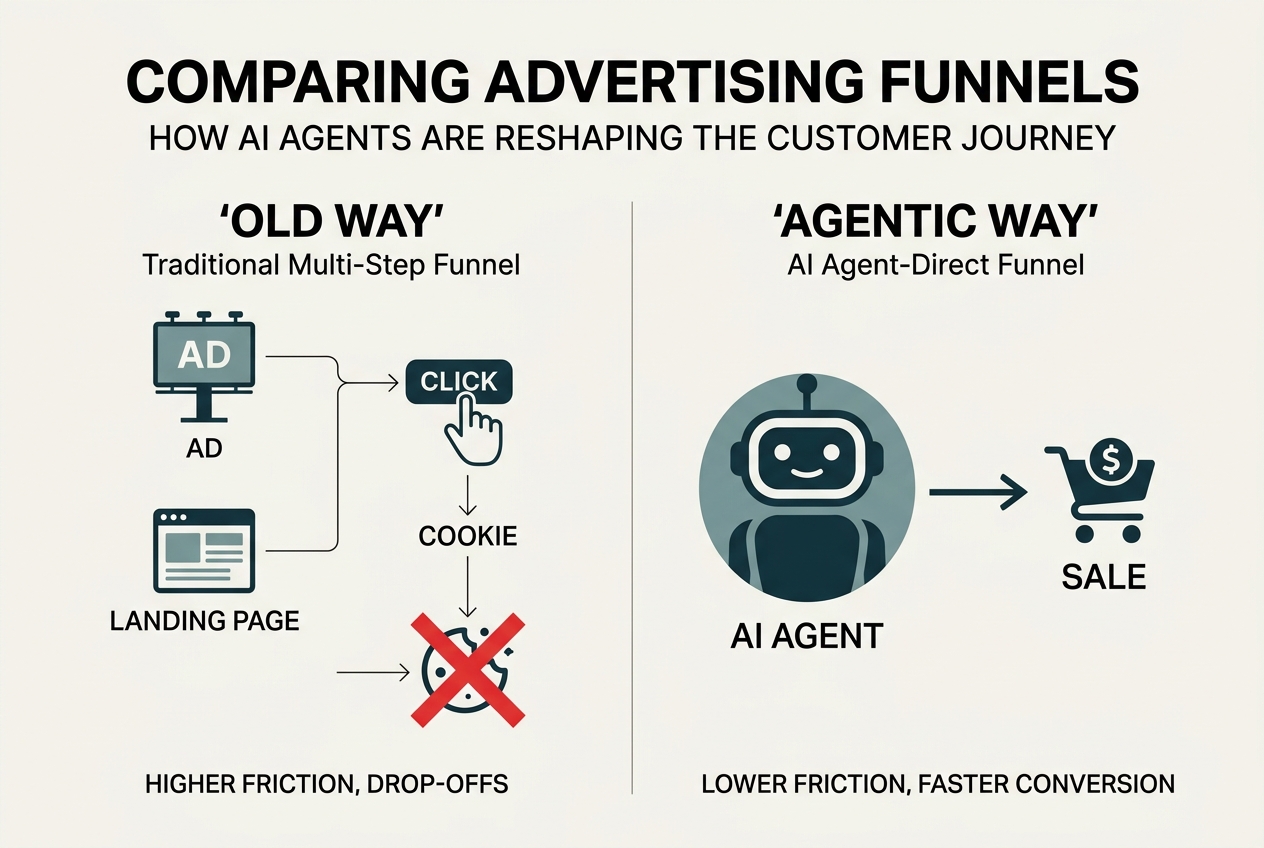
The Creative Shift: From Copywriting to Logic Mapping
The most significant change for social media managers isn't the technology, but the creative output. In a traditional campaign, you might spend weeks A/B testing a headline or a hero image. In an agentic funnel, the "creative" is the agent's personality, its knowledge base, and its ability to steer a user toward a purchase without being intrusive.
Think about how Shark Week evolved from a TV program into a multi-platform cultural event [S5]. It succeeded because it created a cohesive narrative across every touchpoint. OpenAI ads require the same level of narrative consistency. If your Instagram ad has a cheeky, irreverent tone, but your ChatGPT business agent responds like a dry legal document, the conversion will fail.
Marketers now need to develop "Brand Voice Guidelines for AI" that go beyond adjectives. You need to define how an agent handles a request for a discount, how it responds to a competitor mention, and how it gracefully exits a conversation when it can't help. This is a massive expansion of the social media manager's remit. You are no longer just managing a community; you are managing a fleet of automated sales representatives.
Competitive Pressure and the SMM Panel Evolution
As OpenAI moves into the space, the broader social media ecosystem is reacting. We have seen a surge in demand for automated engagement tools. Reports on the "Best SMM Panel for Instagram, YouTube & TikTok in 2026" show that platforms like SMMWIZ are growing rapidly [S3] because brands are desperate to maintain visibility in increasingly crowded feeds.
However, OpenAI's model suggests that "visibility" is the wrong metric. In a world of agentic AI, the goal isn't to be seen; it's to be recommended. If a user asks an AI for a recommendation, the brand that has the most robust, well-trained agent is the one that wins the transaction. This is a shift from "Top of Mind" to "Top of Model."
This also changes the stakes for cable news and traditional media. While networks like Fox News and CNN saw growth in total viewers in July 2026 [S1], their ability to drive direct commerce is being challenged by platforms that can close the loop instantly. A viewer sees a product on a news broadcast, asks their AI assistant about it, and buys it—all without ever visiting the brand's website.
The Privacy Paradox: Trust as a Conversion Metric
OpenAI is positioning these agents as a more private alternative to the web. Because the agent doesn't need to follow you across the internet with retargeting ads, it theoretically offers a cleaner user experience. But for the marketer, this means you have one shot.
If the user closes the chat, you have no way to "stalk" them with display banners later. This places immense pressure on the initial interaction. You must provide enough value in the first three exchanges to earn the user’s permission for a follow-up.
[INTERNAL: How to build trust in AI-driven customer service -> ai-customer-trust-benchmarks]
We expect to see brands offering "Agent Incentives"—exclusive discounts or early access to products that are only available through the ChatGPT interface. This mirrors the early days of "Mobile App Only" deals, used to train consumer behavior.
What to Watch Next: The API Wars
The next 12 months will be defined by how Meta and Google respond. Meta already has the infrastructure with WhatsApp and Messenger; they are likely to roll out similar "Llama-powered" business agents to their millions of advertisers. Google, meanwhile, has the advantage of Search intent.
For now, OpenAI has the first-mover advantage in high-intent, long-form conversation. If you are a brand marketing lead, your priority shouldn't be buying OpenAI ads today, but rather ensuring your product data is "AI-ready." That means clean, structured data that an agent can ingest and explain to a human.
The landing page isn't dead yet, but it's certainly on life support. The future of social media marketing is no longer about where you send the user—it’s about who (or what) meets them there.
FAQ