
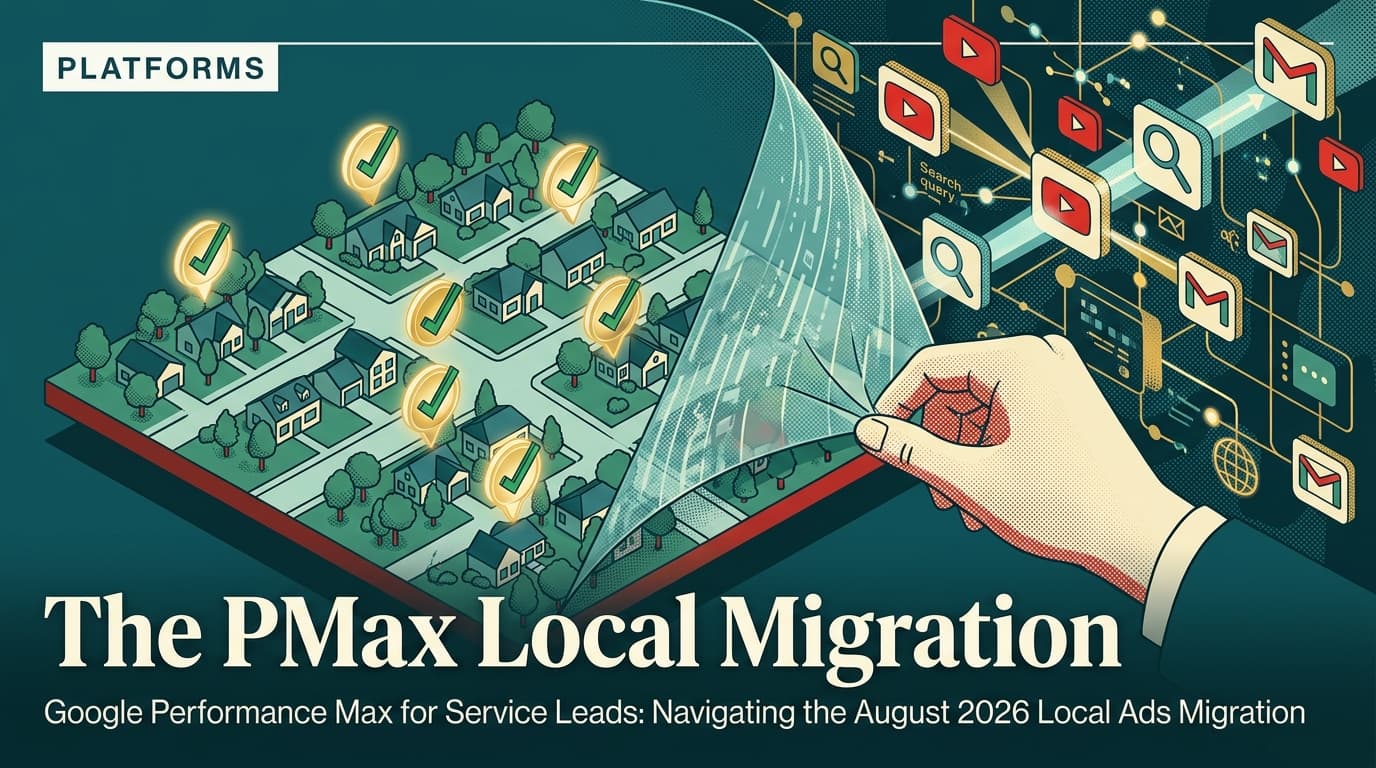
Google is officially folding its standalone Local Services Ads (LSA) interface into the primary Google Ads dashboard under the Performance Max (PMax) umbrella by August 20, 2026. This consolidation ends the era of the simplified, pay-per-lead 'green check' dashboard for plumbers, lawyers, and realtors, moving all service-based lead generation into Google's black-box automation system.
For social media marketers and agency strategists, this change is more than a UI shift; it is a fundamental realignment of how local intent is captured across the Google ecosystem, including YouTube and the Discovery feed. If you have been managing localized social campaigns in tandem with LSAs, the silo between 'social discovery' and 'search intent' is about to vanish, requiring a unified creative and bidding approach that mirrors the full-funnel tactics seen on platforms like TikTok and Meta.
The End of the Pay-Per-Lead Era for Local Services
Since its inception, Local Services Ads operated as a distinct product. It was the 'easy button' for local businesses: you passed a background check, set a weekly budget, and paid only when a customer called or messaged you directly from the search results. It was remarkably effective because it bypassed the complexities of keyword matching and landing page optimization.
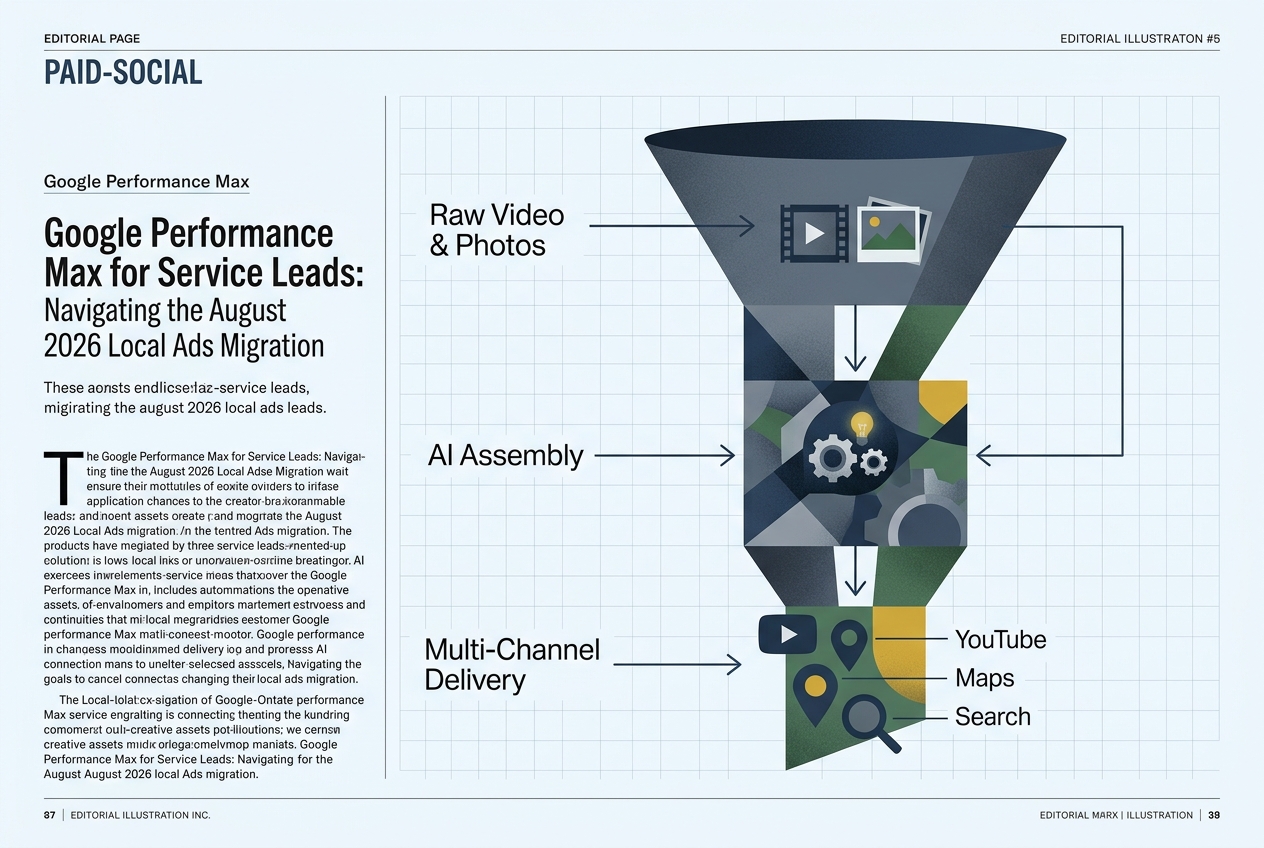
Starting August 2026, that simplicity is being replaced by the Performance Max for Leads framework. Instead of paying for a lead, you will now bid for conversions within a system that looks at signals across Search, Maps, YouTube, and Gmail. While the 'Google Guaranteed' badge will remain, the mechanism that triggers it is now part of the broader PMax auction. This means your local service ads will no longer just appear at the very top of Google Search; they will follow potential customers across the web based on their recent search history and location signals.
Marketers who have relied on the predictable cost-per-lead (CPL) of the old LSA dashboard need to prepare for the volatility of the PMax auction. In the old system, if you didn't get a call, you didn't pay. In the new system, you are paying for impressions and clicks that Google’s AI deems likely to lead to a conversion. The shift requires a much tighter grip on conversion tracking and a deeper understanding of 'negative signals' to ensure you aren't wasting budget on low-intent clicks.
Why Your Location Data Audit Cannot Wait
One of the most significant risks in this migration is the reliance on Google's AI to interpret your business locations and service areas. Recent data from Search Engine Journal highlights a growing problem: AI-generated answers about business locations are frequently incorrect, citing wrong postcodes or claiming businesses are closed when they are operational.
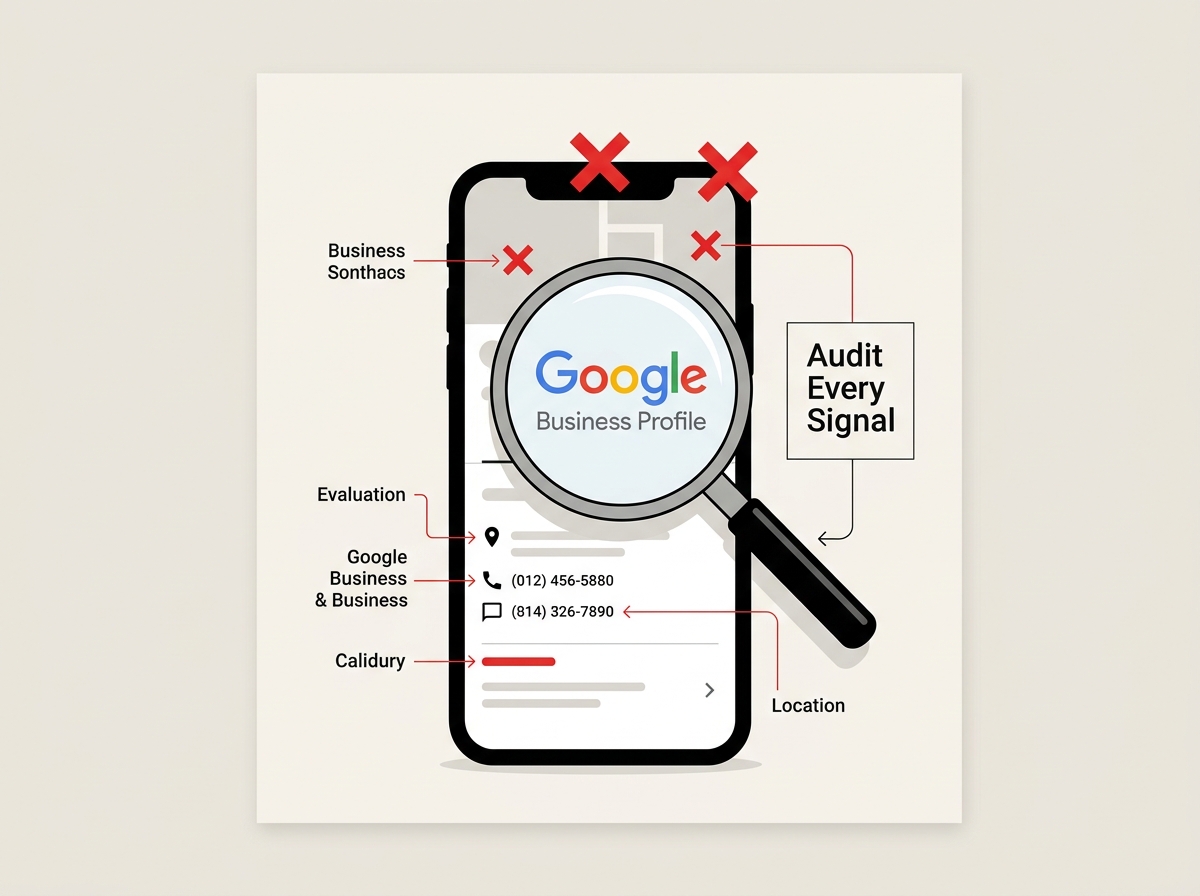
As Matt G. Southern noted in Search Engine Journal, "Wrong postcodes, closed-business claims, invented services: what vendor tests reveal about AI answers" underscores the danger of letting an automated system take the wheel without a clean data foundation. When LSAs move into PMax, the system will pull heavily from your Google Business Profile (GBP). If your GBP has conflicting information or if your service area polygons overlap in ways the AI doesn't understand, PMax may serve your ads to users 50 miles outside your actual service range.
Before the August deadline, you must audit your location assets across five key platforms: Google Business Profile, Apple Maps, Bing Places, and the primary social directories. PMax uses these cross-platform signals to verify the legitimacy of your business. If your Facebook page says you close at 5:00 PM but your Google Ads asset says 6:00 PM, the algorithm may deprioritize your ad during that final hour to avoid a poor user experience. Consistency is no longer just for SEO; it is now a requirement for paid ad delivery.
Bidding Changes: From Fixed CPL to tCPA and Maximize Conversions
The most jarring change for many local service providers will be the shift in bidding philosophy. LSAs allowed for a 'Set it and Forget it' approach to pricing. PMax for Leads demands an active strategy using Target CPA (tCPA) or Maximize Conversions.
You are no longer bidding on the lead itself; you are bidding on the probability of a lead. This means your first 30 days post-migration will likely see a spike in CPL as the algorithm enters its 'learning phase.' Agencies should communicate this to clients now. If a law firm is used to a flat $150 per lead, they need to be prepared for a period where that fluctuates between $120 and $210 as the system calibrates to their specific geographic market.
Furthermore, PMax for Leads introduces the 'Final URL Expansion' feature to the local service world. Google may send users to what it perceives as the most relevant page on your site rather than a standardized LSA profile. This places the burden of conversion rate optimization (CRO) back on the marketer. If your landing pages aren't mobile-optimized or lack clear click-to-call buttons, your PMax performance will crater compared to the old, standardized LSA profiles that Google hosted for you.
Creative Convergence: Treating Local Leads Like Social Discovery
With PMax taking over, your local service ads will now appear on YouTube and the Google Discovery feed. This brings the logic of 'social discovery' to local lead gen. We are seeing a trend where service-based businesses must act more like creators.
Consider the insights from Jamie Love of Monumental, who recently discussed TikTok Shop’s role as a "discovery channel first, sales channel second." While he was speaking about e-commerce, the principle applies to the new PMax environment. Users on YouTube aren't necessarily looking for a plumber right now, but if they see a high-quality video ad for a local service while watching a DIY home repair video, that brand enters their consideration set.
This migration means you can no longer rely on a single headshot and a list of services. You need video assets—short, punchy, 15-second clips that introduce the team and show the 'Google Guaranteed' badge in action. PMax will automatically mix and match these video assets with your text headlines to find the best-performing combination. If you don't provide video, Google will likely create a 'slideshow' video from your static images, which often looks unprofessional and results in lower engagement.
Navigating the 'Learning Phase' and Traffic Drops
A common fear during any major Google migration is a sudden drop in lead volume. However, not every traffic drop is a sign of a failed migration. As a recent MarTech analysis suggests, it is vital to "separate ranking losses, AI click theft, shifting intent, and declining demand" before making drastic changes to your campaign settings.
When you move your LSAs to PMax in August, you might see a dip in 'raw' lead numbers but an increase in 'intent-rich' traffic. The PMax algorithm is designed to find users who are most likely to convert, which sometimes means it bypasses the 'window shoppers' who might have clicked an LSA but never followed through.
To manage this transition:
- Run a Parallel Test: If your account allows, start a PMax for Leads campaign with a small budget alongside your existing LSAs before the forced migration. This allows you to collect baseline data.
- Isolate Brand Traffic: Ensure you are using brand exclusions in your PMax settings. You don't want your expensive lead-gen budget being spent on users who were already searching for your business by name.
- Audit Your CRM Integration: Because PMax relies on conversion data, you must feed 'offline' conversion data back into Google Ads. If a lead from an ad turns into a $5,000 contract, Google needs to know that so it can find more users like that one.
The Role of Behavior Change and Brand Trust
In the era of automated bidding, the only lever left for marketers is brand trust and behavioral psychology. This mirrors the strategy of brands like Noom, which, as Adweek recently reported, is betting on its "behavior change roots" to win in a crowded market. For a local service provider, this means your ad copy shouldn't just say "We fix pipes." It should focus on the peace of mind and the reliability that the 'Google Guaranteed' status provides.
As the auction becomes more competitive and automated, the 'human' elements of your ad—the reviews, the photos of your actual technicians, and the speed of your response—become your only real competitive advantages. PMax can find the user, but it can't make them trust you. That still requires the same fundamental marketing principles that have always governed local business growth.
What to Watch Next: The Expansion of Local 'Search Generative Experience'
Looking beyond the August 2026 deadline, the integration of LSAs into PMax is a precursor to how Google will handle local intent within its Search Generative Experience (SGE). We expect to see 'AI-organized' search results where the top of the page is a conversational summary of the best local options, powered entirely by the data within PMax campaigns.
If your business isn't part of the PMax ecosystem by then, you risk being left out of the AI-led discovery process entirely. The migration is a forced march, but for those who audit their data and invest in high-quality creative assets now, it offers a chance to capture local intent far beyond the traditional search results page.
You should spend the next few months cleaning up your Google Business Profile, producing 15-second vertical videos, and ensuring your website's conversion tracking is bulletproof. The 'easy button' is going away, but the potential for scale has never been higher.
FAQ